










Choosing a 4-ton AC unit isn’t just about size. It’s about understanding what 14 kilowatts of cooling power can do for your home.
The problem? Many homeowners pick units based on guesswork, leading to underperformance in heatwaves or high electricity bills.
This guide covers everything, from what to consider before buying, to pros and cons. So you can decide if a 4-ton air conditioner is the right one before calling your air conditioning services. So, let’s get started.
What is a 4-Ton AC Unit?
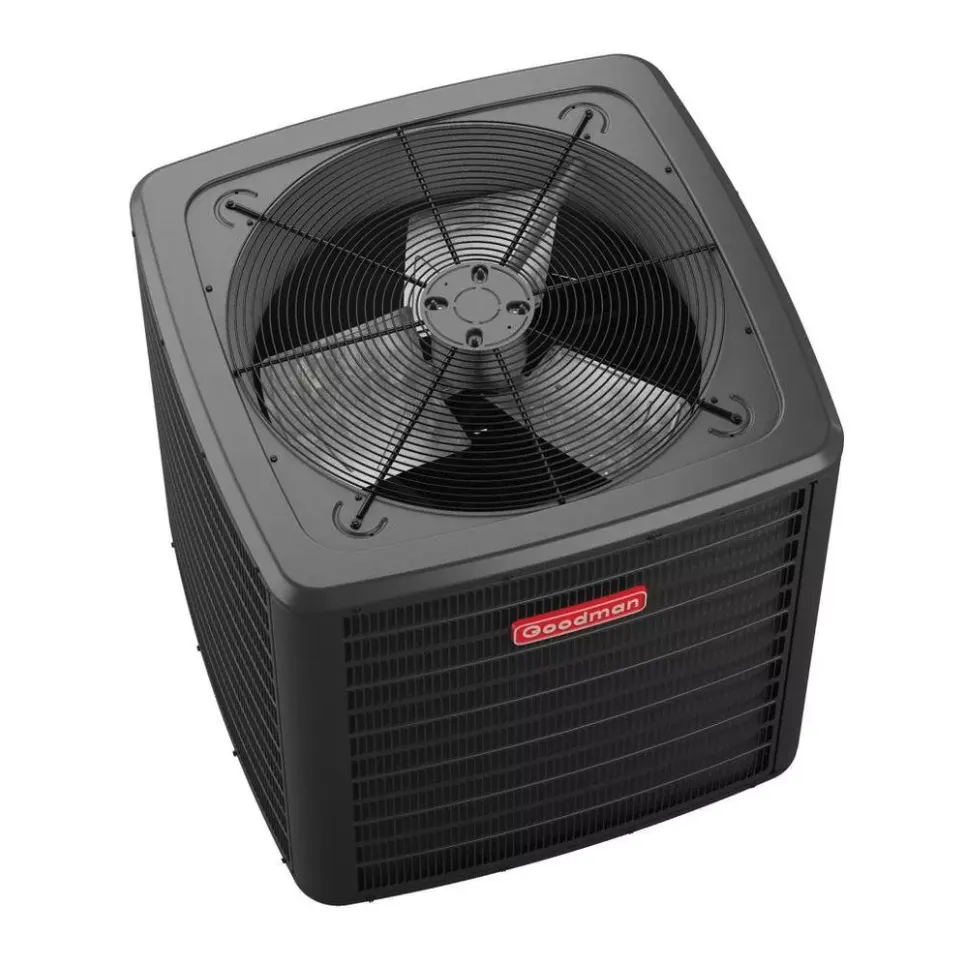
A 4-ton AC unit is one cooling option if you need to remove 48,000 BTUs of heat per hour, or about 14kW of cooling power.
Remember, the term 4-ton comes from old American ice-cooling days. One ton of cooling power is the heat needed to melt a ton of ice in 24 hours. In Australia, that’s 3.5kW per ton.
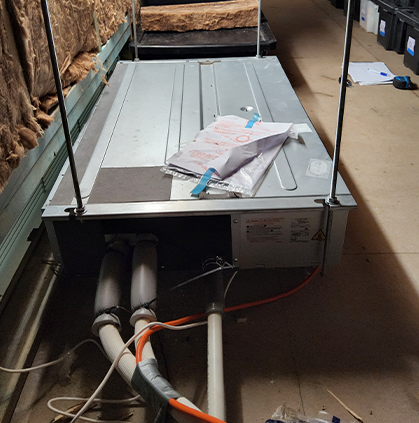
At this size, you usually choose between a ducted system or a multi-head split systems installation.
But how do you know if you need it?
A 4-ton AC system typically handles homes between 180 to 250 square metres. If you have a big 3-4 bedroom house with open living spaces or a two-story home, this unit is for you.
And here’s the main point: a 4-ton unit cools your whole house, not just one or two. This is where it differs from a 3.5kW split system.
Many homeowners choose 3.5kW splits because they cool one or two specific zones like a bedroom. But a 4-ton ducted system cools every room at once.
So, if you want even cooling all over without hot spots, this 4-ton air conditioner makes the most sense. It can handle intense summers without constant short cycling or going for far stronger options like 5-ton ones.
But whether it’s the best fit depends on more than just the size of cooling power in BTU, which we’ll dive into next.
What Should You Consider Before Installing a 4-Ton AC Unit?
Before you go with a 4-ton AC unit, there are some important things you need to think about:
1. Home Size and Layout
Most people size their AC unit like this: “I have a 200-square-metre home, so I need a 4-ton unit.”
But the logic breaks here: a 200m² fully insulated single-storey cottage with small windows is much easier to cool than a 200m² open-plan home with cathedral ceilings and extensive north-facing glass.
Merging living, dining, and kitchen spaces with 3.5m ceilings means conditioning air volume, not just area. The same 100m² with 2.4m ceilings has less air, so less cooling power is needed.
2. Budget Constraints
Budget means only the AC unit price? That’s a mistake. You also need to think about these extra costs to make sure you can finish your plan to install the new 4-ton AC unit.
Most people only think about the upfront cost. They see a 4-ton unit priced at 5,000–8,000 and think, “I can afford that.”
But what if the electrician says you need a service upgrade to handle the increased amperage, or the HVAC installer says your ductwork needs modifications to handle the higher airflow?
3. Climate Zone
A 4-ton AC unit works everywhere, but it doesn’t give the same results.
In hot areas like far north Australia, a 4-ton AC unit may struggle cooling open-plan spaces in summer. But in milder places like Sydney, it’s ideal for a 3–4 bedroom home with standard layouts.
So, don’t assume your 4-ton AC unit fits everywhere. Your climate determines if it’s just right, slightly small, or too powerful for your cooling needs.
4. Insulation Quality
Insulation almost tricks everyone. It’s the key factor that makes or breaks your properly sized AC unit. Why?
You think you’re cooling three bedrooms, but poor insulation causes cool air to escape through walls and gaps.
That 4-ton system ends up trying to cool four or five areas, not just three. It runs all the time, never hits the temperature you want, and your power bill goes up.
5. Occupancy
Are you living alone or with family in a separate room? The number of people with you matters more than you think when choosing the right-sized AC unit.
The gap between solo living and a family with kids and frequent guests can mean the difference between a 4-ton being overkill or undersized.
Most people size based on their average occupancy, then get surprised when the house fills up for summer gatherings. So, think about your actual occupancy pattern to predict if a 4-ton air conditioner is the right one.
6. Number of Zones
When it comes to a 4-ton AC, you know it’s meant for multiple rooms or areas. A 4-ton unit is already powerful.
But without zoning, it might cool your entire house, which might make you think it’s not as cool as you expect. The real issue is cooling everywhere, not just where you need it.
Before installing, think about this: do you want to cool just living areas and the kitchen during the day, or the whole house at once?
7. Occupancy
More people mean more heat. But many forget to think about the difference between usual occupancy and peak when choosing an air conditioner.
A 4-ton unit may seem right for your home’s size and insulation. But do you usually stay alone or have frequent guests? If you often host, you might need a larger or more powerful unit.
8. Unit Placement
The last thing you want is to do all the calculations for floor size, occupancy, and insulation, only to find no space for your 4-ton outdoor AC unit. It happens and causes problems.
A 4-ton condenser is big and needs room on all sides for air to flow. If your yard is small, the alley is tight, or the roof is limited, it’s hard to find a good spot.
If it’s in direct afternoon sun, it will work harder. If it’s too close to a neighbour’s bedroom, you might get complaints.
9. Electrical Capacity
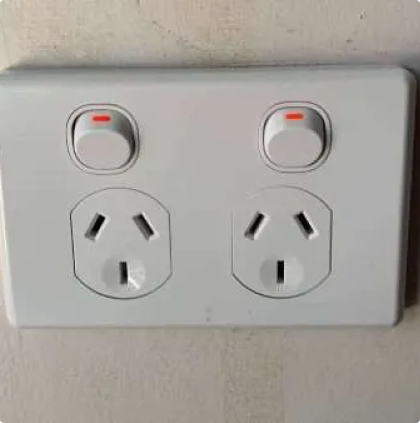
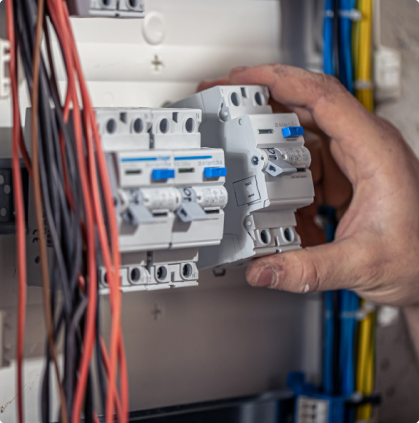
This is where a 4-ton AC unit differs from smaller units. It might use the same single-phase power as smaller units, but draws much more current. So an electrical panel upgrade might be needed.
The upgrade can cost 2,500–6,000, and you can’t skip it. If your electrical system isn’t strong enough, your 4-ton system just won’t work.
You might have great insulation, the best placement, and the right zoning, but if your electrical panel can’t provide enough power, everything else won’t matter.
10. Ductwork Condition
Before installing a 4-ton AC unit in your duct system, check your ducts first. Old or narrow ducts might not be able to handle it.
Gaps and loose connections let cool air escape, so your rooms won’t get cold enough. This makes your system work harder and costs more money.
If your ducts are too small or damaged, you’ll notice more noise, uneven cooling, and higher energy bills. You may need repairs or new ducts to make sure your AC works the right way.
Potential Costs of a 4-Ton AC Unit

Knowing the cost helps you budget for your investment. Here’s the breakdown of it
Installation Cost
A typical 4-ton AC unit costs 10,000 to 18,000 to install, depending on your home’s size, location, complexity, and labour rates.
Basic installation
Basic back-to-back 4-ton installations start at 10,000–12,000. Here’s what’s included:
- Unit price (average brand like Samsung or LG): 5,000–6,000
- Labour (30 hours at 90/hour plus GST): $2,700–3,000
- Ductwork modifications (minimal, existing ducts suitable): 1,000–1,500
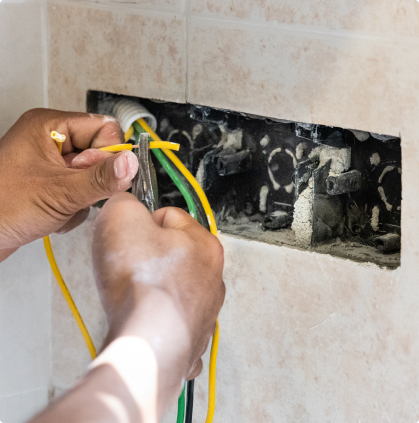
- Electrical work (new circuit, weatherproofing): 500–1,000
Complex installation
Complex 4-ton installations can cost 15,000–18,000. Two-storey homes requiring roof-mounted outdoor units or extensive ductwork adjustments tend to be more expensive:
- Labour (40 hours at 95/hour plus GST): $3,800–4,200
- Ductwork replacement (new installation or major modifications): 2,000–3,000
- Switchboard upgrades (capacity increase): 1,500–2,000
- Electrical service upgrade (three-phase conversion or switchboard replacement if needed): 2,500–4,500
- Concrete pads for outdoor units: 400–600
Running Cost
Running a 4-ton AC unit can increase your electricity bill. A 14kW unit uses about 4.0-4.2kW when it’s working hard, and costs around 1.15-0.28-0.34 per kWh.
Monthly running costs
For a standard summer month (6 hours daily average over 30 days):
- Power consumption: 4.1kW × 6 hours × 30 days = 738kWh
- Electricity cost: 738kWh × 0.28-0.34/kWh
- Monthly total: 207-251
Maintenance Cost
A well-maintained 4-ton AC costs $300–$500 a year for maintenance of some of its AC unit parts. Skipping it can lead to major problems costing $1,500 to over 4,000. Here’s the full breakdown:
Regular Maintenance
- Professional service (annually or every 18 months): 150–250. Includes refrigerant pressure check, coil cleaning, filter inspection, and electrical testing.
- Filter cleaning/replacement (every 1–3 months): 20–80–600 annually. Daily use requires monthly cleaning; light use every 3 months.
- Condenser coil cleaning (annually): 100–200. Prevents dirt buildup that restricts cooling efficiency and forces the compressor to work harder.
- Condensate drain inspection (annually): Included in service or 50–100. Prevents clogs that can damage the indoor unit.
Pros and Cons of a 4-Ton AC Unit
Every system has trade-offs. Here’s what you need to know:
Pros
- Faster cooling – A 4-ton AC unit cools your 300m² home’s 4 bedrooms much faster, lowering the temperature by 10°C in big rooms in just 15-20 minutes. A 3 ton AC unit might need more time.
- Complete zone control – Want to cool just the two bedrooms at night and leave the living areas alone? The 4-ton system with 6–8 zones can do this and uses less energy.
- Handles hot temperatures – During a heatwave over 40°C, a 4-ton AC keeps your home at 22°C efficiently, while a smaller unit runs nonstop but never reaches the temperature.
- Whole-home comfort – For a 350m² open-plan house, a 4 ton AC system keeps the temperature even everywhere, so it doesn’t have the 5°C differences that smaller systems in big houses can cause.
- Higher property value – If you plan to sell in 5-10 years, some buyers prefer homes with ducted cooling. A 4-ton system can make your home’s price higher compared to houses with just split systems.
- Aesthetic appeal – With a 4-ton air conditioning system, you can go with a ducted setup which looks nicer. It only shows small ceiling vents inside. No need to see big wall units.
Cons
- High electrical load – If you live in a suburban home with single-phase power, upgrading to three-phase is often needed for a 4-ton system. It costs $2,000 and is a key infrastructure expense with no shortcuts.
- Complex installation – A 4-ton installation takes 5-7 days with roof access. Homes with cathedral ceilings, complex angles, or a second story may need more time, access, and equipment.
- Ductwork modifications often required – If your ducts are poorly insulated, a 4-ton AC unit may whistle and cool unevenly. Fixing or replacing the ducts costs 1,500-3,000, sometimes doubling the price.
- High upfront investment – Investing 10,000-18,000 upfront is a big deal, especially if you’re new to buying a home or just starting out with not much saved.
- Maintenance access — Roof-space ductwork and zone components can be harder to inspect and repair than a simple single split.
When Should You Choose a 4-Ton AC Unit?

Choose a 4-ton air conditioner if these things fit your home and how you use it:
- Your home is 250m² or bigger. Larger, open spaces generally need a 4-ton unit.
- You live in hot areas like inland Queensland, NSW, WA, or tropical regions where summer temperatures often go over 35°C.- Your home has two stories. You’ll need a 4-ton system with more fan power to push air through the taller ductwork for cooling the upper floor properly.
- Your house has three-phase power. Although many 4-ton units are single-phase, three-phase support benefits high-efficiency models and avoids costly electrical upgrades.
- You plan to stay in the house for more than 10 years because you might be spending 10,000–18,000 for this.
- You’re doing ducted air conditioning repair with a 4-ton one. It’s usually easy after a professional heat check, because your current system already has good airflow.
- Extreme heat is your main concern. If you need to maintain a steady 22°C even during 40°C+ heatwaves, the extra capacity of a 4-ton unit provides the necessary “headroom” to do so.
FAQ about 4-Ton AC Unit
Here are straight answers to the most common questions homeowners ask about a 4-ton AC unit:
What size house will a 4-ton AC unit cool?
A 4-ton AC unit suits homes of 180 to 250 square metres, but capacity varies with ceiling height, insulation, and climate. Open-plan homes need more. A professional heat load calculation helps find the right size.
How many kW to run a 4-ton AC?
A 4-ton air conditioner uses 3.5 to 4.5kW of power when running at full speed, which costs 1.20 to 0.30–0.35 per kWh. Modern inverter systems use significantly less power than older fixed-speed units.
How many BTU is a 4-ton AC unit?
A 4-ton air conditioning unit gives 48,000 BTU of cooling each hour, which is about 14 kilowatts in Australian units. This is the normal size for home cooling systems.
Conclusion
You might have thought a 4-ton AC unit was enough for your 250m² home. But floor size isn’t everything. Insulation, climate, and occupancy matter just as much.
And this isn’t something to guess about. Proper cooling needs experts to do detailed calculations that take all these factors into account.
No worries. Our HVAC specialists will check if your 4-ton unit is right for you or if you need a different one. Contact us at Lightning Bult.