






Did you know your AC can shut off and restart up to 72 times a day? And each cycle can waste energy. That’s why inverter air conditioners have become homeowners’ preferred choice when installing new units now.
So, before you call an air conditioning service to help you with installation, let’s learn the differences between inverter and non-inverter systems, and whether the investment is worth it. Read on.
What is an Inverter Air Conditioner?
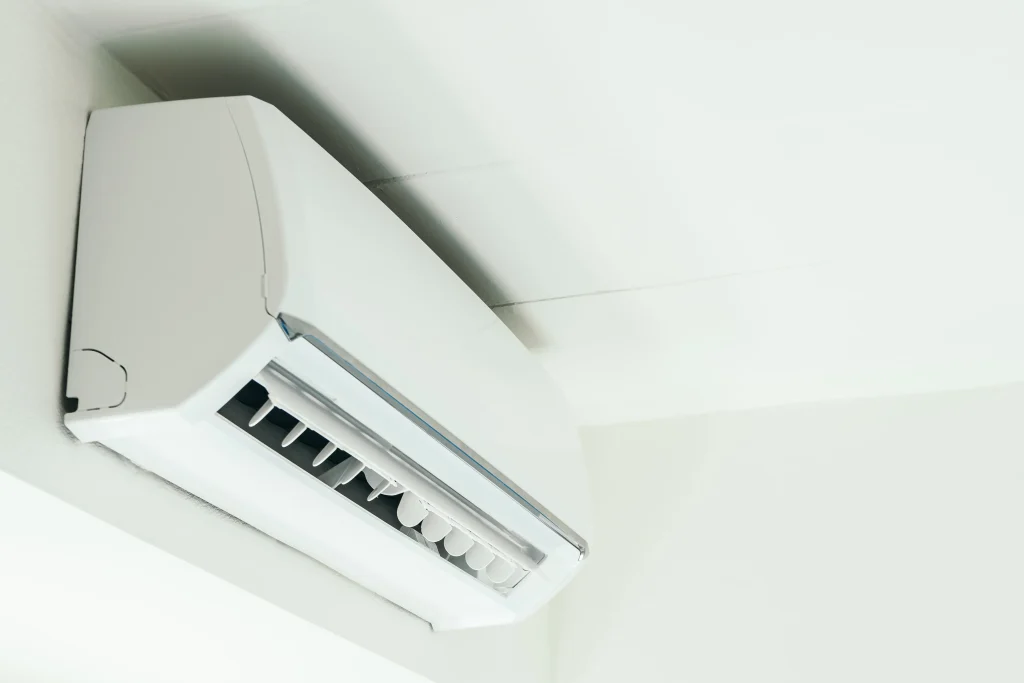
image by lifeforstock on freepik
An inverter air conditioner is a type of AC that uses a compressor that can run at variable speeds to get different levels of cooling. This HVAC system is designed to keep a steady temperature efficiently.
This idea began in Japan in the 1980s to cut energy waste from old fixed‑speed AC units. Those older models ran at 100% all the time, causing big temperature swings and high electricity bills for homeowners.
To control this variable speed, the cooling system uses a smart inverter drive. It starts with a rectifier that changes the alternating current (AC) from your home’s outlet into direct current (DC).
Once the power is in DC form, the inverter turns it back into a variable‑frequency AC signal. The compressor motor speed follows this frequency, so it can speed up for quick cooling or slow down to a whisper.
Inside an inverter air conditioner, you’ll find:
- Printed Circuit Board (PCB) — The brain that monitors sensors and calculates the frequency the compressor needs.
- Variable Speed Compressor — The core that modulates output to match the room’s cooling load.
- Brushless DC (BLDC) Motor — Efficient motor using permanent magnets for high torque at low speeds.
- Electronic Expansion Valve (EEV) — Regulates refrigerant flow for optimal pressure and temperature exchange.
- Galvanised Steel Cabinet — Rugged, powder-coated exterior protecting internal AC unit parts from UV and salt air.
- Copper Tubing and Aluminium Fins — Heat exchanger materials enabling rapid thermal transfer.
- Serrated Fan Blades — Designed to move large air volumes while keeping noise within limits.
These components work together to minimize power usage while maintaining a steadier temperature better.
If you know how an AC system works, you’ll understand why inverted air conditioners are the standard for most new Australian setups.
How Does an Inverter Air Conditioner Work?
In short, a microprocessor monitors room temperature, adjusting compressor speed and refrigerant flow through a variable-frequency drive. This eliminates the energy-heavy on-off cycling found in regular units
1. Initial Startup
When you turn your inverter air conditioner on, the thermostat reads the delta, the gap between your current room temperature and your setpoint.
Unlike fixed-speed units that stay at 100%, the inverter’s microprocessor starts a Turbo phase, temporarily boosting the compressor to 110%.
This quick ramp uses a soft-start sequence, slowly increasing electrical frequency to stop the big power surges that make lights flicker.
2. Microprocessor Modulation
As the temperature drops, the system enters its most advanced phase.
Thermistors in the return air and on the condenser coils feed data to the microprocessor, which computes the exact frequency required. It converts 240V AC to DC, then back to a Variable Frequency AC signal.
By rapidly flipping the motor’s magnetic polarity, the inverter drive slows the compressor rotor with precision.
At the same time, it adjusts an Electronic Expansion Valve (EEV) to keep refrigerant pressure in line with the slower speed.
3. Steady-State Maintenance
Rather than shutting down at your setpoint like in regular split systems installation, the compressor slides into cruise mode, running at 20%–40% capacity.
This steady, low-speed operation keeps the indoor climate within a tight 0.5°C margin, avoiding disruptive restarts of fixed-speed systems.
Because the motor never stops, internal components stay at a stable temperature. This reduces thermal stress and spares you the bill shock of repeated high-torque startups.
4. Adaptive Response and Humidity Control
The final stage is constant monitoring of the room’s thermal balance. The system tracks heat gains like extra people in the room, and nudges the compressor frequency just enough to offset the load without a power spike.
This continuous operation also helps with dehumidification and to make sure no such issues like AC not blowing cold air. The indoor coil stays cool, pulling moisture from the air to keep you comfortable.
Inverter vs. Non-Inverter Air Conditioners: Key Differences
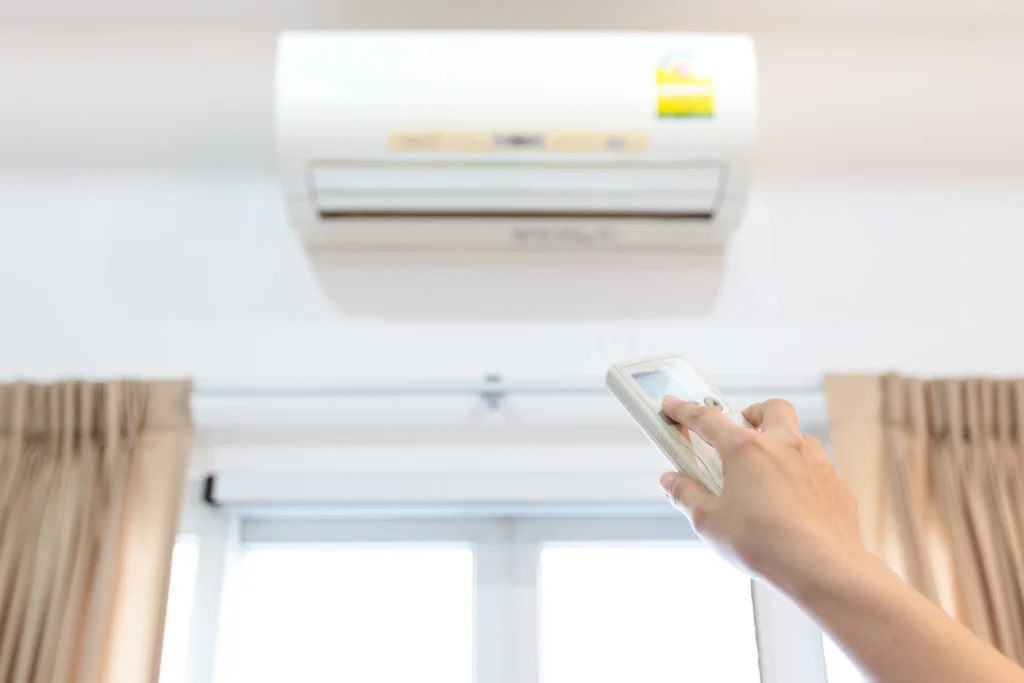
Image by EyeEm on Freepik
Here’s how inverter air conditioners and non-inverter ones are different:
1. Energy Efficiency
The first difference is how the AC systems handle electrical load. Non-inverter ACs run at a fixed speed: 100% or 0%. This causes high power use and inrush currents five to six times normal at each restart.
Inverter air conditioners use variable-speed technology to stop cycling. The microprocessor slows the motor after the room cools, which keeps a steady pace. This keeps the system running and cuts power use by 30% to 50%.
And star ratings tell the story. Inverter models usually get 4–10 stars for cooling, while non-inverters rarely get above 2–3.5 stars. Higher star ratings mean lower ongoing power use.
2. Temperature Control
The next difference is temperature stability. Non-inverter systems run in a start-stop cycle, so the room temperature swings. The unit usually lets the room heat up about 1.5–2°C above the setpoint.
That doesn’t happen with inverter ACs. They cut swings by modulating capacity. Sensors monitor the room, and the processor tweaks the compressor in tiny steps. Once the target temp is reached, it stays within 0.5°C.
This is one of the most important factors when installing a new AC, just like when you decide between mini split vs central AC systems
3. Noise Levels
The “noise events” are also what separate the inverter from the non-inverter.
Non-inverter systems run in a binary cycle, making this disruptive sound: a quiet room at 35 dB suddenly gets hit with a 55 dB surge and a mechanical clank.
In contrast, the inverter air conditioners use variable-frequency drives to avoid harsh changes. After reaching the target temp, the motor slows but stays on, keeping a steady 19–30 dB.
This differentiation matters for meeting NSW EPA noise rules. Under local regulations, an outdoor unit can’t be more than 5 dB(A) above the background noise at the property boundary during the day.
4. Costs
For a standard 7kW setup in Australia, inverter air conditioners typically cost 1,800–2,800–400–1,200 on the first bill.
But once it’s running, who owns it changes the costs. At Sydney’s $0.37 per kWh rate, a non-inverter unit can’t adjust power, so it uses a lot more electricity to reach the target.
Over 10 years, inverters end up costing less when you add the purchase price and electricity bills. The upfront extra is balanced out by about 2,000–4,000 in electricity savings.
5. Lifespan
The biggest threat to an AC’s life is cycling wear. In a non-inverter system, the compressor motor jumps from 0 to 100% power dozens of times daily. This stresses valves and bearings and trims life to about 10–15 years.
Inverter ACs use soft-start technology. The motor speeds up slowly at first, then runs steadily to cut friction and heat, helping it last about 15–20 years with regular maintenance.
Pros and Cons of Inverter Air Conditioners
Like any technology, inverter air conditioners aren’t perfect for every situation. Let’s learn their strengths and limits, and you’ll figure out what fits your needs:
Pros
- Great Energy Savings — Inverter technology uses less electricity than fixed-speed units, by about 20-50%. For Australian homes, cooling can make up 20-50% of energy bills. This means big savings over the unit’s 15-20 year life.
- Quieter Operation — After the initial cool-down, inverters run at nearly silent low speeds, with many modern units at about 19 decibels. This is perfect for bedrooms and quiet spaces where noise matters.
- Faster Cooling and Heating — Inverter air conditioners can go beyond full capacity to reach your set temperature faster than fixed-speed units with Turbo or boost modes.
- Superior Temperature Control — Running continuously at different speeds keeps your temperature steady and precise. This prevents big swings between hot and cold, helping you stay comfortable day and night.
- Better Humidity Control — With this inverter technology, you’ll get more consistent dehumidification than with those intermittent, non-inverter systems. You’ll want this in humid Australian climates.
- Extended Lifespan — Reduced wear from continuous low-speed operation means inverter compressors typically last longer than their non-inverter counterparts. Less mechanical stress equals fewer breakdowns.
- Eco-Friendly Performance — Many inverter models use eco-friendly refrigerants and smart sensors to optimise efficiency. This reduces energy use and carbon dioxide emissions.
Cons
- Higher Upfront Cost —An $800–$2,500 purchase price versus $500–$1,500 for non‑inverter models runs $300–$1,000 more upfront, depending on size and brand. That extra spend can strain a budget.
- Complex Repair Cost — Advanced microprocessors and inverter‑driven compressor parts need technicians who know variable‑speed technology. Service visits typically run 150–250, and replacement parts are pricier than those for fixed‑speed models.
- Requires Professional Installation — Inverter systems should be installed by licensed air‑conditioning technicians. DIY isn’t an option. Finding experienced installers who specialise in inverter AC systems is crucial for top performance.
- Limited Benefits for Occasional Use — If you only run your AC for short bursts, you won’t see all the energy savings. True efficiency comes when it runs longer and settles into its low‑speed, economical mode.
Is an Inverter AC Worth the Investment?

Image by h9images on Freepik
Yes. Inverter air conditioners are worth the investment for most Australian homes.
The first reason is that when evaluating a new air conditioner, many homeowners focus on the sticker price. But the true cost isn’t what you pay the installer. It’s what you pay your energy retailer over the next 15 years.
A standard 7 kW non-inverter AC unit may be cheaper at first, but with Sydney electricity rates averaging 37c per kWh, running costs soon beat that initial saving.
Not to mention that heating and cooling make up 40% of the typical home’s energy use. With this in mind, the compressor efficiency is the biggest factor in your quarterly budget.
And please note that high-efficiency inverter models can save between 100 and 1,500–4,000 compared to a fixed-speed model.
So, you can estimate that the break-even happens in about 2–4 years for households that run air conditioning more than 8 hours a day during the December–February peak.
But, keep in mind that if you don’t use the AC unit that often, then the answer is No.
Maybe it’s only for a guest room you use once a year. Or you’re after the cheapest installation for short-term rentals as a property owner.
FAQ About Inverter Air Conditioners
These FAQs cover the common concerns homeowners need when evaluating inverter technology.
Is an air conditioner with an inverter better?
Yes, inverter air conditioners beat non-inverter models in most cases, especially for efficiency. They use 30–50% less energy, stay within ±0.5°C, run quietly at 19–30 dB, and get higher Zoned Energy Rating Labels (ZERL).
This type of AC is perfect if you run it more than 6 hours a day in summer, want low noise, and lower running costs or a cooling system.
What is the lifespan of an inverter AC?
With regular professional servicing, a high-quality inverter system typically lasts 15 to 20 years. Premium Australian brands like Daikin and Fujitsu usually last up to 20 years when serviced before each summer season.
Compare that to 10–15 years for non-inverter systems, which wear out faster from constant on-off cycling.
Does an inverter aircon use a lot of electricity?
No. Inverter ACs use way less power than non-inverter models. They cut electricity use by running at low frequencies after hitting the target temp. It avoids high current spikes during compressor restarts.
This efficiency matters in Sydney, where peak summer tariffs exceed $0.37 per kWh.
How long can an inverter AC run continuously?
Inverter air conditioners are built to run 24/7 without damage or overheating. The optimal use is about 8–12 hours daily, with the thermostat set to a comfortable 24–25°C for efficiency and comfort.
Don’t worry, continuous operation runs more efficiently than frequent on-off cycling because the variable-speed technology adjusts output smoothly.
How to properly use an inverter aircon?
For optimal efficiency, you can set your thermostat to a consistent 24°C and avoid manual on-off toggling. You can use energy-saving or eco mode when available.
Remember, lower settings don’t cool faster and waste energy. Plus, keep doors and windows closed while the system runs.
Conclusion
An inverter air conditioner is now the standard for efficiency. It uses microprocessors to steady motor speed, matching your room’s exact temperature needs.
It runs quietly and extends the system’s lifespan. This makes it the better choice for Australian homeowners.
Ready to get your inverter air conditioner installed today? Contact Lightning Bult for professional installation by our licensed technicians. And call now to schedule your upgrade.