








In winter, it’s 9°C outside and 13°C inside a 1970s home. In summer, hot air sticks near the high ceilings, and comfort slips. This often makes people end up Googling HVAC options for old houses to see what cools best.
Older homes aren’t built for modern climate control. Their poor insulation makes standard systems work twice as hard. And replacing the system can risk damaging period features if you don’t plan it well.
So, before you call an air conditioning service, learn why old houses are harder to cool and what options exist.
Key Takeaways
- If you lack ductwork, ductless mini-split and multi-split systems cool efficiently without major renovations. They’re ideal for solid-wall homes.
- For whole-home cooling with little visual impact, ducted air conditioning works well if you have enough ceiling or under-floor space. Slimline units can fit around decorative ceilings.
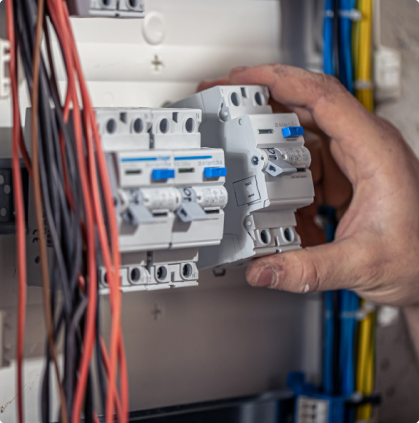
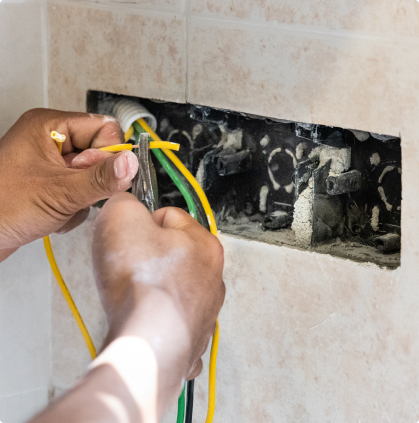
- Older homes may need electrical upgrades to run modern air conditioning. Expect switchboard checks and possible wiring updates to meet current Australian Standards.
- The best time to install AC is during renovations, so you can run ducts, upgrade power, and boost insulation all at once. This saves you time and money.
- Reverse-cycle systems take care of both summer heat and winter cold. They offer year-round climate control in a single, efficient unit.
Why Old Houses Are Harder to Cool
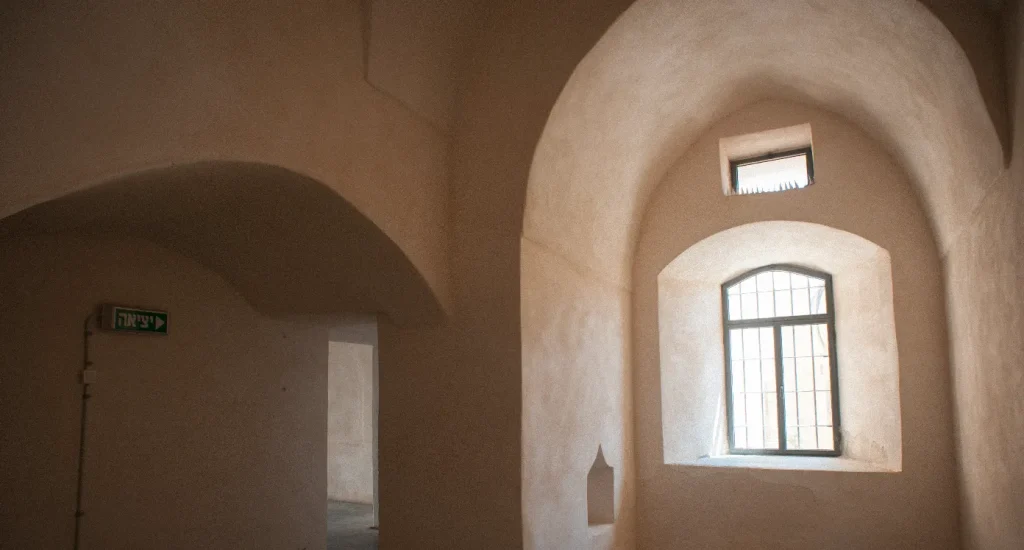
Image by wirestock on Freepik
The simple answer is that old houses aren’t built for the mechanical cooling we rely on today. They lack the design and materials modern climate control expects, so cooling them takes more time and effort.
1. It’s All About Thermal Mass
Did you know double-brick homes act like big thermal batteries? That’s why it can feel like your old house is harder to cool.
With two dense clay brick layers, these walls do more than block heat on a 38°C day. They absorb and store it, beyond what modern insulation can hold.
2. High Ceilings Make Your AC Work Slower
Notice your friend’s new apartment cools in 15 minutes, but your Federation terrace takes an hour? You can blame the ceiling height.
An air conditioning system cools at a fixed rate in kilowatts. A 2.5 kW unit removes the same heat in a modern flat or a period home But, your AC takes 50% more time to drop the temperature, because there’s more air to cool.
That’s why you need to know how to calculate air-conditioner size to make sure this issue doesn’t happen.
3. Old Houses Typically Have Poor Insulation
Before air conditioning, the goal was to keep dampness and rot away, not cool the air. So, older houses were built for natural ventilation and to “breathe.”
They’re poorly insulated by today’s standards. When you switch on your AC, you’re battling incoming heat. Gaps around your doors mean 15 air changes every hour, so your cool air is escaping just as fast as the AC makes it.
4. No Existing Ductwork Pathways
Modern homes, with proper ceiling cavities, return paths, and equipment rooms sized for ducted systems, make new installations and repairs simpler.
But old houses struggle without air conditioning ductwork. Limited ceiling cavity space, typically 200–300 mm between ceiling and roof, means standard 400 mm ducted systems don’t fit.
5. Preserving Structure Compromises Cooling
Old homes are harder to cool, partly because you can’t install systems where they’d work best. You must protect the building’s character first.
Some homeowners must go through development approvals to install air conditioning, adding 6–12 weeks and 2,000–4,000 in fees. Many give up and choose the smallest compliant system instead.
5 HVAC Options for Old Houses
Let’s explore HVAC options for older houses in Australia, considering space, budget, and preservation needs:
1. Split System Air Conditioners
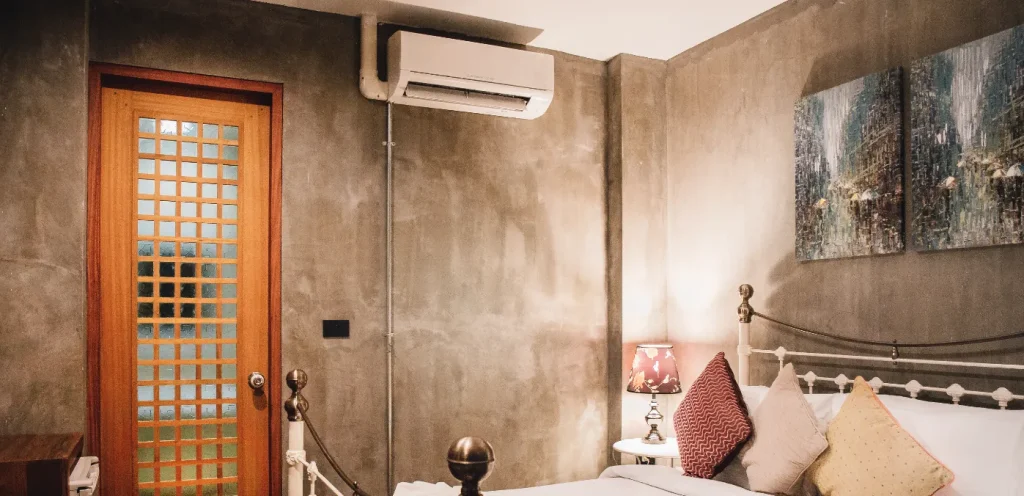
Image by benzoix on Freepik
The first HVAC option for an old house is a split system air conditioner with an indoor unit high on a wall and an outdoor compressor connected by refrigerant lines through a 65mm wall hole.
And most new units are reverse-cycling now. That means heating in winter and cooling in summer with one system.
What’s more, mini split air conditioning system need minimal structural changes. Just drill a small hole through brick to run the refrigerant pipes and electrical cables. And that’s it.
They’re great for double-brick Federation homes or solid masonry terraces where ductwork would disturb ceilings or cornices. Each unit cools 20-40 square metres, with capacities from 2.5 kW to 7 kW.
Pros:
- Reliable all-day installation typically 4–8 hours
- Each room has its own temperature
- Can intentionally oversize to counter brick thermal mass
- Complies with heritage facade restrictions
Cons:
- Multiple outdoor compressors needed for whole-home cooling
- Refrigerant line length max 15m
- Wall-mounted indoor unit takes wall space
- Large open areas (over 50 m²) need several units
2. Multi-Split Systems
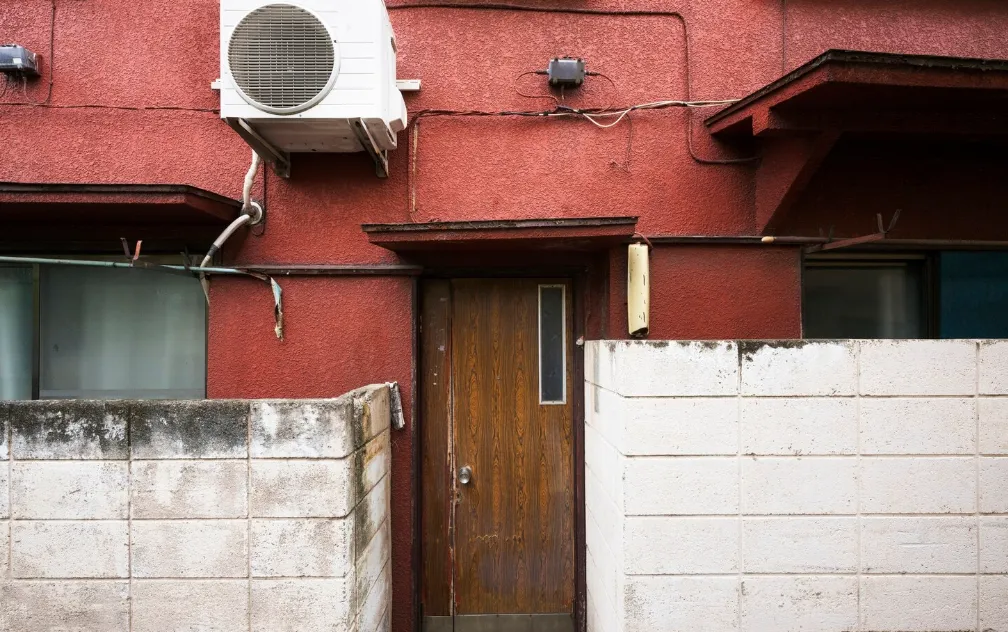
Image by Freepik
If the ductless split feels perfect but you worry about more outdoor units, then go for a multi-split system. This is also a strong HVAC option for older houses.
One outdoor compressor powers 2–5 indoor units, each with its own wall-mounted head and independent temperature control.
This option solves a common issue for older terraced homes or narrow side passages by avoiding multiple bulky compressors in a courtyard.
For cooling 3–4 rooms without ducted ceiling space, this system works. It is even better if you opt for the latest variable speed air conditioner which is more energy-efficient.
Pros:
- You can turn off unused zones to cut running costs.
- Cleaner look since it needs fewer external conduits than multiple separate splits.
- One electrical connection point makes the switchboard easier.
Cons:
- If the compressor fails, the whole system goes down in all rooms.
- You can’t add extra rooms later; the outdoor unit has to be sized for all heads upfront
- Servicing needs a tech who knows multi-zone systems
3. Ducted Air Conditioning
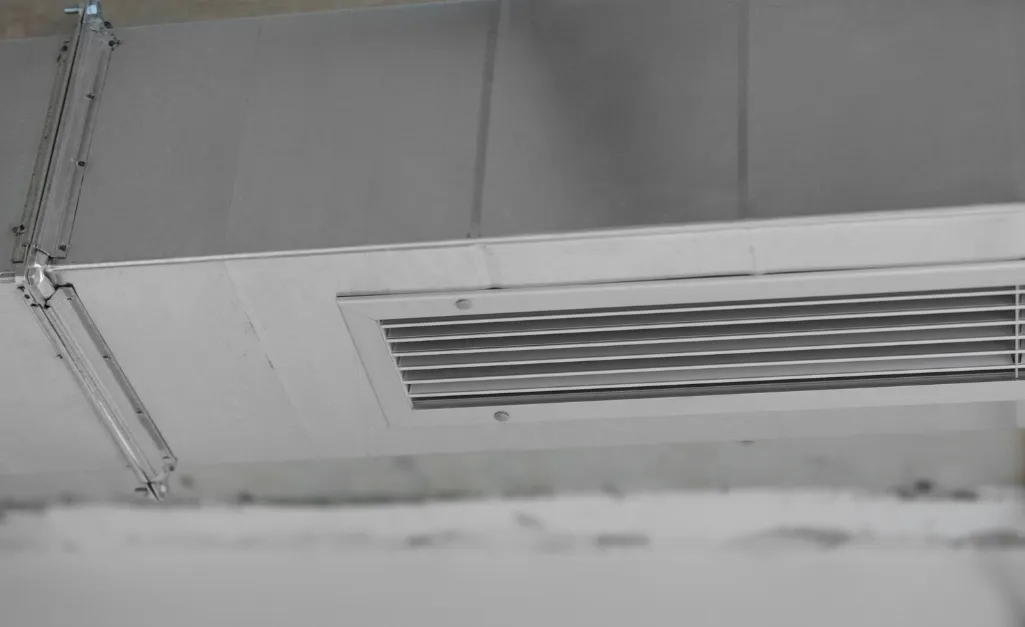
Image by Freepik
If aesthetics matter as much as cooling, you can go for a ducted air conditioning in Sydney over a mini-split. Why? For those who want less clutter, wall-mounted splits can feel like a bulky intrusion on a curated interior.
The ducted AC is an HVAC option for an old house that takes a different approach. It sits in your roof cavity and sends air through flexible ducts to discreet ceiling vents.
No indoor units cluttering walls. No outdoor compressors multiplying across your courtyard. Just invisible climate control. This is always a consideration between ductless mini split vs central air for some homeowners.
If you have heritage homes with ornate plasterwork, character houses with decorative cornices you want to keep, think about this option.
Pros:
- Completely hidden system that preserves architectural character
- Even temperature throughout home, with no hot hallways
- Adds property value as integrated feature
Cons:
- Installation needs roof cavity access
- Can’t cool single room independently
- Higher investment than staged split system approach
4. Ceiling Cassette Air Conditioners
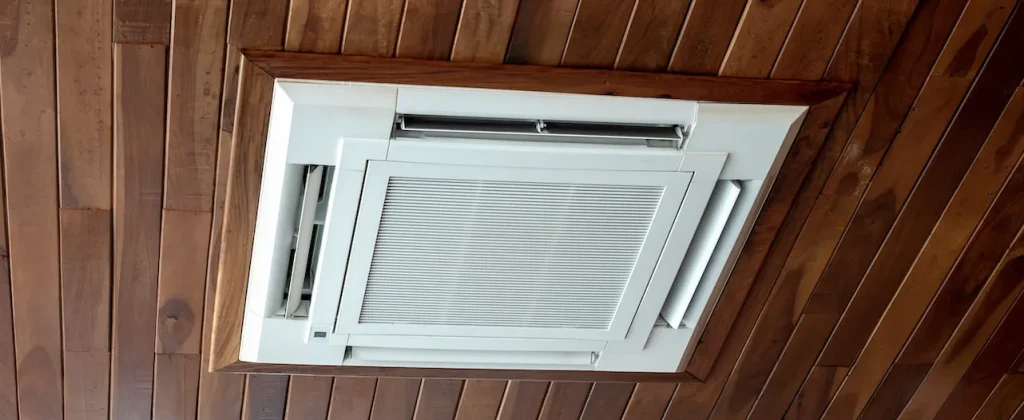
Image by tete_escape
If you want to cool a big room without a bulky unit messing with the old wallpaper, a ceiling cassette is usually the best hidden option.
Mounted flush to the ceiling, these units are a solid alternative to standard wall splits. They pull warm air up through the center and push cooled air out through four vents.
This 360-degree air curtain keeps cool air spreading evenly through the room, not just blasted in one direction.
Pros:
- Four-way vents prevent corner hotspots in large rooms with high ceilings.
- Keeps heritage walls clear for furniture, fireplaces, and original features.
- Large surface-area filters provide standard filtration for big air volumes.
Cons:
- Old ceilings need asbestos testing before any cutting happens.
- Original hardwood joists can stop you from centering the unit, since structural beams can’t be cut.
- You need a dedicated electrical circuit for AS/NZS 3000 safety.
5. Floor Console Air Conditioner
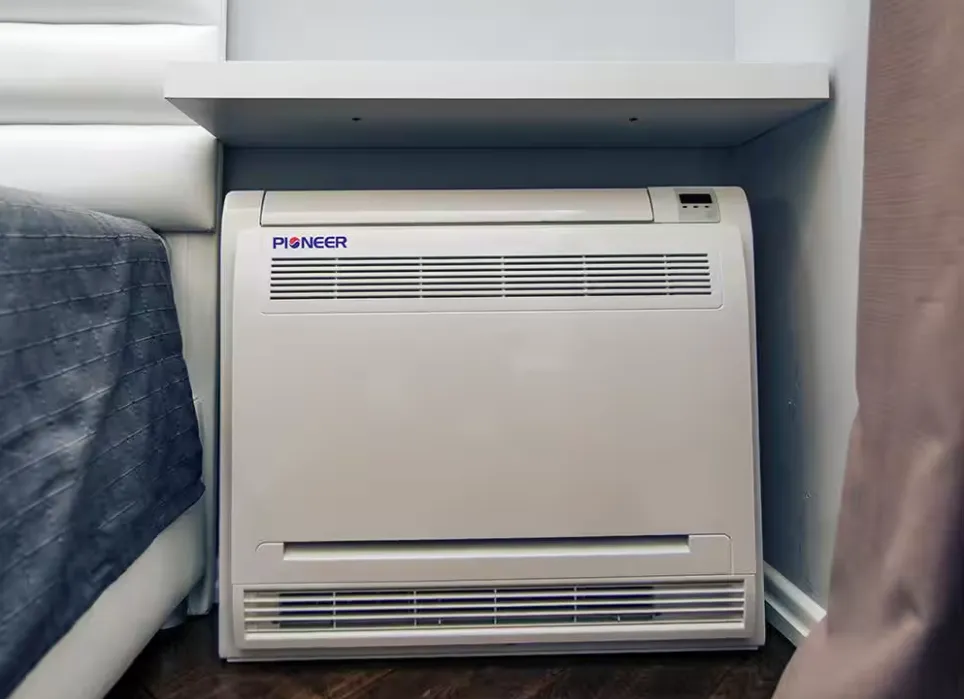
Image by Nepalubuy.com
Floor consoles work like wall splits: an outdoor compressor, an indoor unit, and a refrigerant line connector. The twist is that the indoor unit sits on the floor, not up on the wall.
These HVAC units measure about 600–800 mm wide, 150–200 mm deep, and 600–700 mm tall. They fit well in rooms with limited or tricky wall space.
This is one of HVAC options for old houses if you want quiet operation. Floor-mounted design minimizes vibration transfer to walls and ceilings, reducing sound leakage and making the living space more comfortable.
Pros:
- Easier to install on double-brick walls since the pipes can hide under floorboards
- Warmer, more even heat in winter than wall units
- Maintenance is easier with filters you can reach at waist height
Cons:
- Uses floor space and can be blocked by low furniture
- Usually costs about 20% more than a standard wall-mounted unit
- Needs its own electrical circuit to meet modern safety standards
- Can pick up more dust and pet hair because the intake is low to the ground
How to Prepare an Older Home for AC Installation
Preparation makes AC installation faster, safer, and more cost-effective. Here’s what you need to do:
- Check your electrical setup — Before requesting AC quotes, have an electrician check your electrical box and wiring to decide your home’s maximum demand for a possible dedicated reverse-cycle AC circuit.
- Check ceiling and under-floor access — See if pipes or wires are blocking the way and if it’s easy to reach. If your house has a concrete slab, there might not be any space under the floor.
- Improve insulation — Upgrade your ceiling insulation to R-5 or R-6 for better air conditioner performance and lower electricity bills. Seal window and door gaps to keep cold air in and hot air out.
- Plan outdoor unit placement — Outdoor compressors need space, flat ground, and protection from weather. For old homes, put units at or behind the back line of the building like in back courtyards.
- Schedule it with renovations —Talk to your installer early to rough-in ductwork and refrigerant lines while walls are open; reserve final grilles and system testing for near project completion.
- Get multiple like-for-like quotes — Get quotes from at least three installers experienced with older homes. Request photos of similar projects and check reviews. This gives you better financing options.
What to Expect from Professional AC Installation

Image by DCStudio on Freepik
Professional air conditioning installation follows a structured process ensuring quality, safety, and compliance.
- Site Inspection — A technician visits to check suitability. They’ll measure rooms, examine access, check switchboard, and assess outdoor unit placement. This decides system feasibility and provides accurate air conditioner installation cost.
- System Recommendation — Installers suggest the optimal system type (split, multi-split, or ducted), explaining how options suit your home’s constraints and budget, and providing detailed quotes.
- Placement Plan — Installers create detailed plans: the indoor unit, outdoor compressor, refrigerant lines, electrical, and ductwork. This plan makes sure everyone understands the final setup.
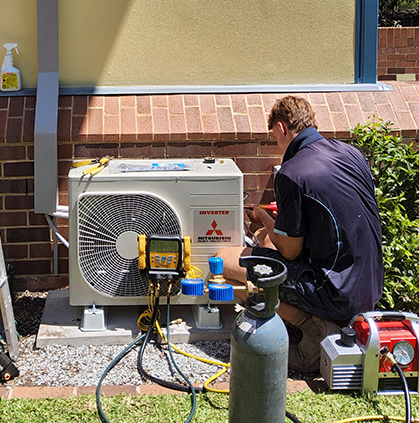
- Installation Day — Professional teams arrive with tools to mount indoor/outdoor units, drill penetrations, run lines, and make electrical connections. Quality installers protect your home’s finishes.
- Testing — Technicians start up the system, fill it with refrigerant, and check controls, thermostats, airflow, and wiring. They also demonstrate operation to homeowners.
- Compliance Certification — Licensed electricians provide AS/NZS 3000 compliance certificates for electrical work. Air conditioning installations include refrigerant handling, pressure test results, and warranty registration documentation.
FAQ About Air Conditioning Options for Old Houses
Homeowners often ask these questions about air conditioning options for old houses:
Can you install air conditioning in an old house?
Sure. But make sure you choose the right HVAC options for old houses. It needs careful planning and a professional installer to avoid surprise renovation costs.
For example, split systems suit solid brick walls with minimal wall cutting, while multi-split setups cool multiple rooms without ducts. Your installers will match systems to the building’s structure and heritage features.
Can you put a ducted air con in an old house?
Yes. Ducted AC can work in older homes if there’s enough ceiling or roof space, typically at least 500–600mm clearance for standard units, or 300mm for slimline units.
Slimline units suit Federation homes with ornate ceilings. Terrace houses often prefer multi-split systems due to low roof voids. But remember, a professional structural assessment is vital before ducted installation.
How do I know what size air conditioner I need in an older home?
Consult your AC service for proper sizing. Professionals use load calculations, considering insulation, window area, ceiling height, orientation, and room usage.
While older homes often need 12–16 kW for 3–4 bedrooms, avoid guesswork. Undersized units fail in extreme heat, and oversized ones waste energy through short-cycling.
Conclusion
Modern AC fits older homes when you set it up right. Split systems for individual rooms, multi-split for whole-home comfort, and a ducted option where roof space allows. The key is matching the system to your home.
Want it done properly? Make sure you ask for help from professional installers. Contact Lightning Bult to book a visit, and we’ll recommend and install the right air conditioning system for your old home.