



A pool heat pump can make a huge difference to how often you use your pool. But even the best system can struggle if it’s installed in the wrong spot.
This is one of the most common issues we see across Sydney homes. The unit might be powerful enough, but poor placement can lead to weak airflow, higher running costs, extra noise, and slower heating.
So before installation starts, it helps to know what makes a good pool heat pump location.
If you’re planning pool heating for your home, here’s what to look for.
Why Pool Heat Pump Location Matters
A pool heat pump works by pulling warmth from the air and transferring it into your pool water.
That means airflow is everything.
If the unit can’t pull in enough fresh air or gets blocked by walls, fences, or tight spaces, it has to work harder. This lowers efficiency and can wear the system out faster.
Location also affects:
- how easily water flows through the unit
- how simple it is to service later
- how much noise you hear around the house
- how much heat gets lost through long pipe runs
A good setup makes the whole system work better.
The Best Place to Install a Pool Heat Pump
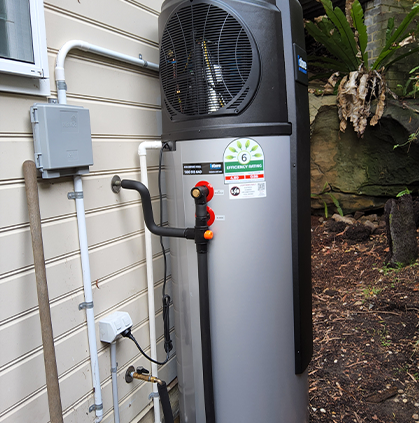
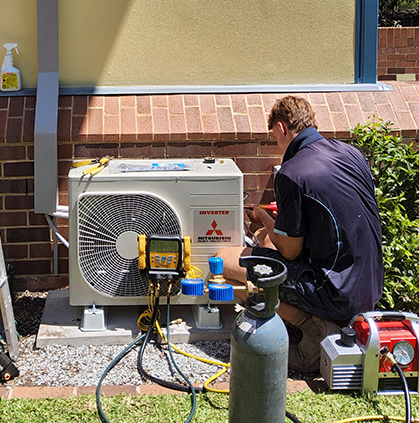
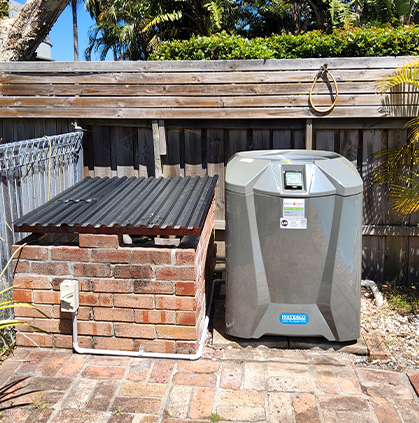
In most cases, the best pool heat pump location is outdoors, on a flat surface, close to your pool equipment.
Outdoor installation gives the unit access to fresh air, which is what it needs to heat properly.
It should also sit in an open area where cold air can leave freely after passing through the system.
Think of it like an air conditioner. If the air has nowhere to go, performance drops.
For most Sydney homes, this usually means:
- beside the pool pump area
- next to the filter system
- along an open side yard
- at the rear of the house with enough space around it
Keeping it close to your existing equipment usually makes installation easier too.
How Much Clearance Does a Pool Heat Pump Need?
Clearance matters more than many people realise.
Every manufacturer gives minimum spacing requirements, and these should always be followed. But as a general guide:
For front-discharge units:
- Front: at least 1.5 metres
- Rear: 500–700mm
- Sides: 300–500mm
For top-discharge units:
- Sides: at least 300mm
- Top: clear open space above
More space is always better.
If cold air gets trapped and pulled back into the unit, the heat pump loses efficiency. This is called recirculation, and it’s one of the main reasons heating performance drops.
This is especially common in narrow side passages in Sydney homes.
Should It Be Close to the Pool or Pump?
It’s usually better to install the heat pump closer to the pool pump and filter, not necessarily the pool itself.
That’s because the heat pump connects into your filtration line.
Shorter pipe runs help with:
- better water flow
- less pressure loss
- less heat loss
- easier servicing
Long pipe runs can force your circulation pump to work harder. In some cases, if the pipework is too long, the heat pump may show low-flow errors or shut down. If your equipment area is already set up well, it often makes sense to keep everything together.
Places to Avoid
Not every spot around the house is suitable. Some locations can cause problems straight away. Avoid installing your pool heat pump:
In tight corners
Small enclosed spaces restrict airflow. The heat pump needs room to breathe.
Under low decks or patios
Low overhead clearance can trap cold exhaust air.
Right beside bedroom windows
Heat pumps are fairly quiet, but you’ll still hear the fan and compressor.
Under heavy trees
Leaves and debris can block airflow and clog the evaporator coil.
Against fences or walls
If the discharged air bounces straight back, efficiency drops. We’ve seen plenty of pool heaters squeezed into “whatever space was left” and it almost always creates problems later.
Ground Surface Matters Too
Your pool heat pump should always sit on a stable, level base.
A solid base helps reduce vibration, noise, and movement.
Common options include:
- concrete slabs
- pavers
- reinforced decking
Avoid soft soil or uneven ground.
Heat pumps also create condensation while running. This is normal.
On humid Sydney days, you might notice a steady drip of water underneath the unit. That’s not usually a leak.
Good drainage underneath the system helps stop water from pooling around the base.
Noise and Neighbour Considerations
Pool heat pumps are quieter than gas heaters, but they still make noise.
This matters when choosing the final spot.
Try not to install it:
- directly outside bedrooms
- near entertaining areas
- close to neighbouring fences
- in narrow spaces where sound can bounce
Sound can carry more than people expect.
A unit tucked between two walls can sound louder simply because the noise reflects.
In suburbs across the Northern Beaches and North Shore where homes can sit close together, smart placement makes a big difference.
Can You Install a Pool Heat Pump Indoors?
Technically, yes.
But it’s usually not the best option.
Indoor installation needs proper ventilation so the heat pump can pull fresh air in and push cold air out. Without that, the room gets colder and the unit becomes less efficient. You may also need extra ducting, which adds to installation costs.
For most residential pools, outdoor installation is the better choice. It’s simpler, cleaner, and usually performs better.
FAQs About Pool Heat Pump Location
Can a pool heat pump go under a deck?
Only if there’s enough clearance and open airflow. Tight spaces can trap discharged air and reduce performance.
How far should a pool heat pump be from a fence?
This depends on the model, but 1.5 metres in front is a common guide. Side and rear spacing will vary.
Can a pool heat pump be installed above pool level?
Yes, as long as your pool pump can maintain the correct water flow rate.
Does a pool heat pump need direct sunlight?
No. It uses heat from the surrounding air, not direct sun.
Can I install it myself?
Some plumbing setups are straightforward, but electrical work in NSW must be completed by a licensed electrician. Professional installation also helps avoid warranty issues.
Conclusion
The best pool heat pump location is simple.
Keep it outdoors, close to your filtration equipment, with plenty of airflow and enough space around it.
A solid base, proper drainage, and smart positioning can make a big difference to how well the system performs.
Get the location wrong and even a good heat pump can struggle. Get it right and your pool stays warmer, runs more efficiently, and costs less to maintain.
Not sure where your pool heat pump should go?
Lightning Bult‘s pool heating team can inspect your pool setup, recommend the right location, and handle the full installation. We work across Sydney’s Northern Beaches, North Shore and Eastern Suburbs, helping homeowners get reliable pool heating that works properly from day one.
We also provide provide professional services across local areas including Artarmon, Brookvale, Dee Why, and many more. Contact us today!