





It’s not as simple as “gas is better” or “electric is easier.” Take that shortcut when comparing gas vs. electric fireplace options, and you might end up with the wrong heating system for your home.
Gas fireplaces may be overkill for small, insulated rooms, while electric units often feel underpowered in large, draughty spaces.
This comparison highlights the real trade-offs, helping you decide between a simple plug-in unit and a professional gas fireplace services for installation. Keep reading
How Gas and Electric Fireplaces Actually Work
Gas and electric fireplaces can look almost identical from across the room. Behind the glass, they are nothing alike.
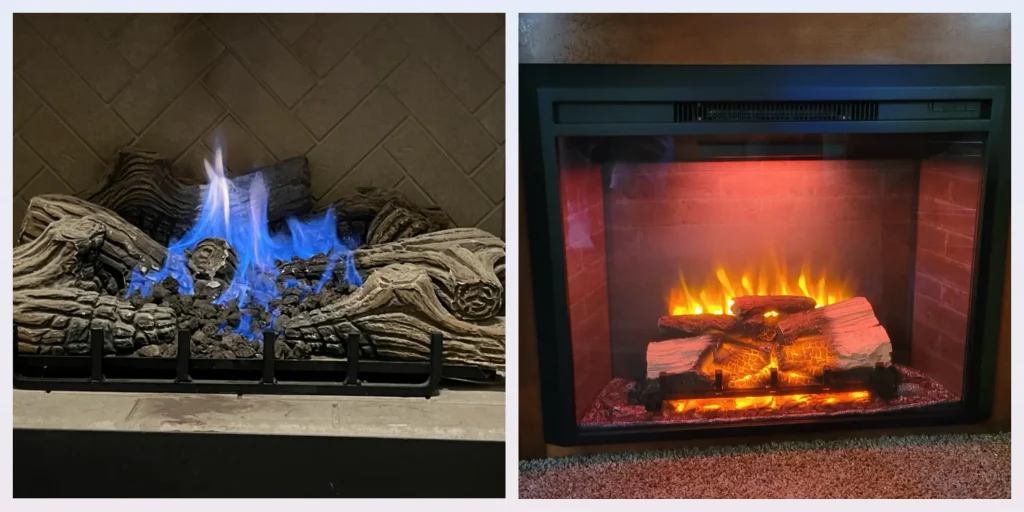
Image: amazon.com/reddit.com
A gas fireplace runs on combustion:
- Natural gas or LPG enters the fireplace through a fixed gas connection.
- The ignition system lights the gas at the burner.
- The flame heats the firebox, glass, logs, stones, or internal media.
- Heat enters the room through radiant warmth, convection, or fan-assisted airflow.
- Combustion gases move out through the approved flue or ventilation pathway.
- The cycle keeps going while the unit is on: gas feeds the burner, the burner produces flame, and the exhaust system removes combustion byproducts.
Most gas fireplaces have a flue or vent. Some don’t, but those have stricter rules for ventilation and air quality. And in NSW, you must hire a licensed gasfitter to install your fireplace.
An electric fireplace works more like a space heater with a flame display attached:
- Electricity powers the unit through a standard power point or hardwired connection.
- An internal heating element warms up.
- A fan may pull room air across the element and push warm air back into the space.
- The flame effect runs separately through LED, LCD, screen-based, projection, or reflective technology.
- Many electric fireplaces let you switch on the flame display without turning on the heat.
- The process continues until the unit is switched off: electricity powers the heater, airflow system, and visual flame effect.
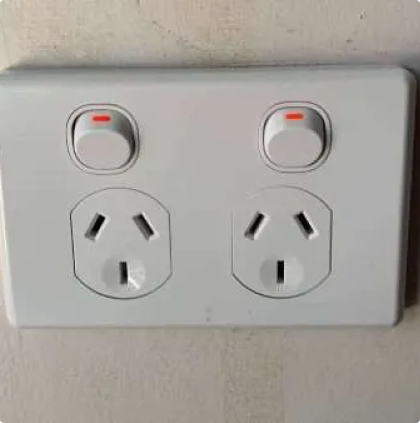
No combustion means no gas line, no flue, and no exhaust. A plug-in electric fireplace needs only a standard outlet. Even so, for built-in models, hire a licensed electrician in Sydney to install a new outlet or dedicated circuit.
Gas vs Electric Fireplaces: Key Differences Compared
Let’s get into the details that matter when choosing between a gas fireplace and an electric fireplace:
1. Flame Realism and Ambience
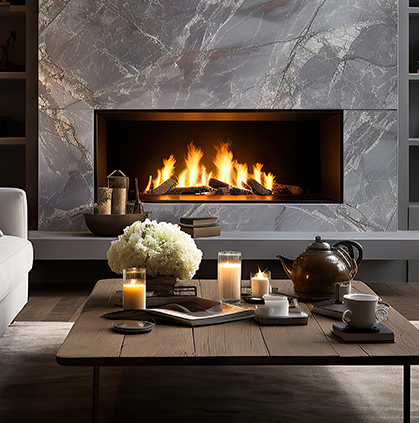
A gas fireplace gives you a real flame. It burns natural gas or LPG inside the unit, and that combustion creates an uneven flicker and a live ember glow.
You can see the light shifts across the glass, logs, stones, and the firebox in a way that electric displays still struggle to copy.
With an electric fireplace, you are looking at LED lights, screens, or projections pretending to be a fire. Sure, the best models look convincing in low light, especially when you step back a few metres.
But in the end, it’s still just technology doing a job. And that changes the whole mood of a room.
When you sit in front of a gas fireplace, it feels like a traditional hearth because the heat, the flame, and the glow all come from that one single source. It has a presence that feels alive.
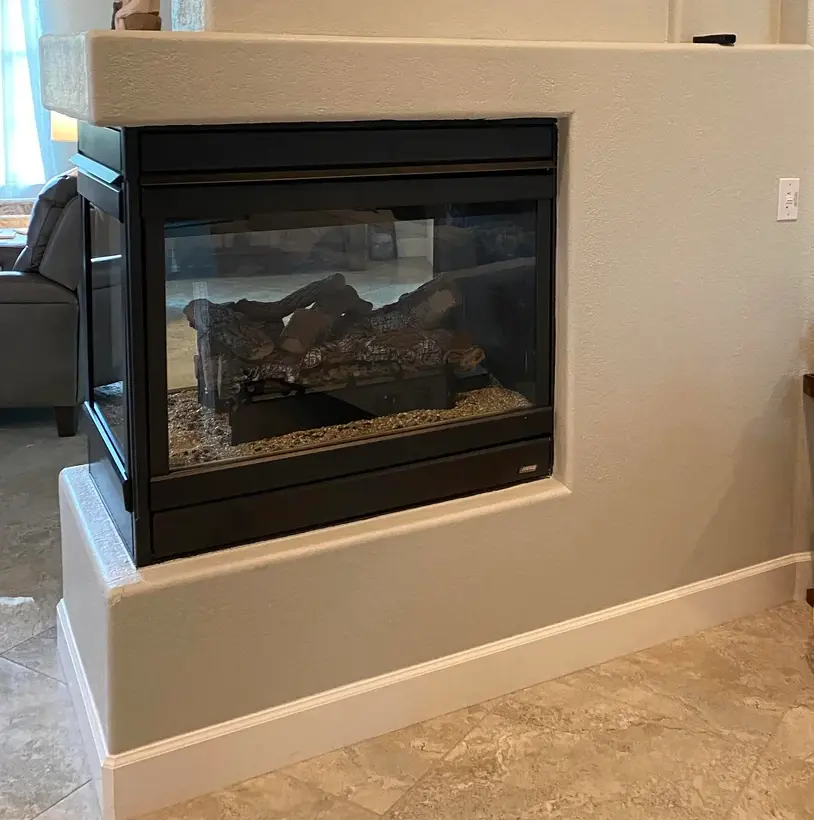
Image: Reddit.com @janiceagullo
But electric units feel cleaner and they are so much easier to manage. You can run the flame display without turning on the heat at all. That’s perfect on those mild nights when you just want the cozy look.
If you are choosing for a main living area or a big open-plan space, gas wins. But for bedrooms, apartments, and smaller spaces, an electric fireplace works well.
2. Heat Output and Efficiency
Gas fireplaces beat electric models when it comes to raw heat output.
Most electric units max out at 2.0 kW, which is only enough for small bedrooms or compact apartments. Gas models typically deliver 4 to 11 kW, making them perfect for large, open-plan living areas.
Now, if you look at efficiency, you get a different story. Electric heaters are nearly 100% efficient because all the power turns into heat right in the room.
But remember, being efficient doesn’t make a small heater powerful. A highly efficient 2 kW heater is still just a 2 kW heater. It won’t warm a whole house.
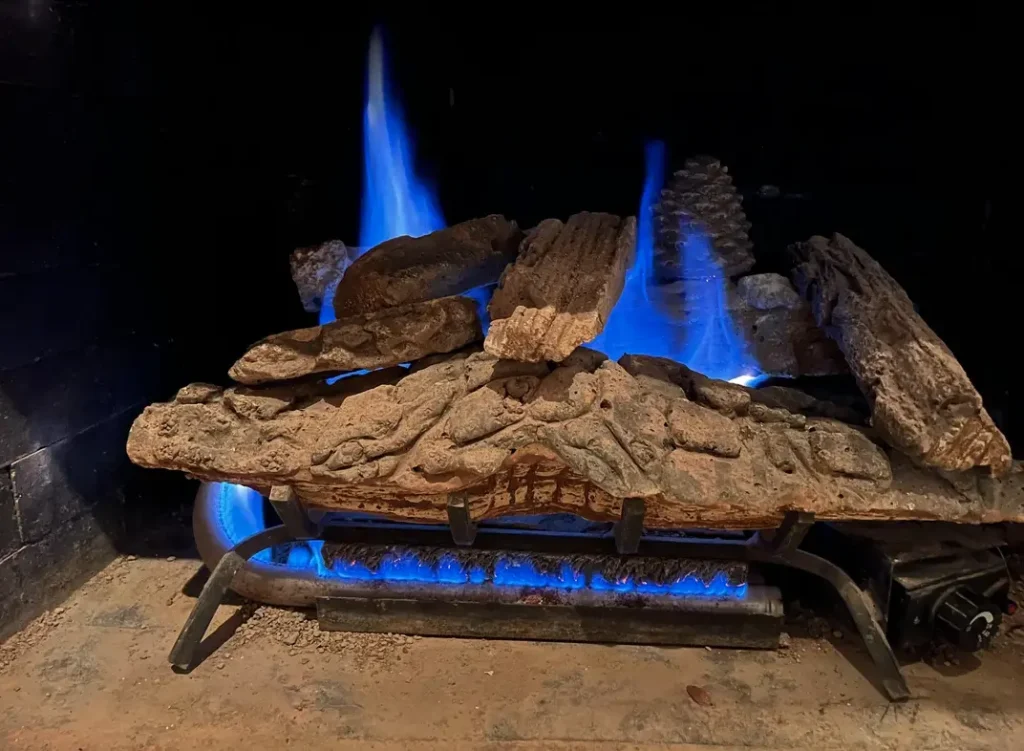
Image: Reddit.com
Gas efficiency depends on the model. Older designs waste more energy than modern ones. Still, a well-installed, modern gas fire makes up for it by efficiently heating large, draughty living spaces.
And since Sydney has mild winters, a 1.5–2 kW electric unit is fine for small rooms. But if you’re trying to heat a 40 m² open-plan space on a cold night, an electric heater will struggle.
That’s when you need the extra power of gas. The same logic applies when comparing gas and electric heating.
| Gas fireplace | Electric fireplace | |
|---|---|---|
| Typical heat output | 4–11kW+ | 0.9–2kW |
| Efficiency | 70–95% (flued) | ~100% at point of use |
| Best suited to | Medium–large living areas | Bedrooms, studies, small lounges |
| Flame | Real combustion flame | LED/LCD simulation |
3. Running Costs
Don’t assume one fireplace is always cheaper. Check your actual energy bills instead. You can calculate your costs using these formulas:
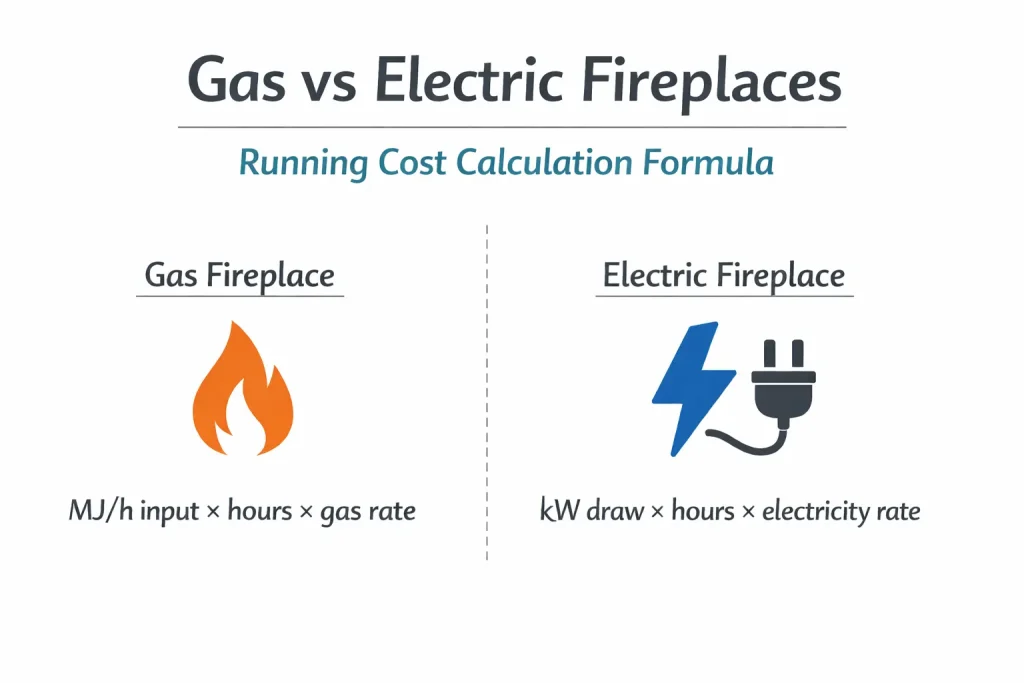
If you don’t have a gas connection, use Sydney’s average rates to get a realistic idea of your costs.
A mid-size 25MJ/h flued gas fireplace with 80% efficiency gives you 5.5kW of heat. Running it for three hours uses 75MJ, costing you about $2.60 to $5.00.
To get that same 5.5kW of heat from electric heating, you’d need 16.5kWh over three hours. At NSW rates, that costs $6.00 to $6.60.
Remember, most plug-in electric heaters only reach 2kW, so you’d need several of them to match one flued gas fireplace.
Basically, gas wins for serious heating. But electricity prices are changing. The Australian Energy Regulator’s default market offer is cutting NSW residential prices by up to 7.7% starting 1 July.
That makes the price gap smaller, but gas is still cheaper if you run your heater hard all winter.
4. Installation Requirements and Costs
Installing a gas fireplace is a big project. You’ll need a gas line, a flue, and a licensed gasfitter to handle the NSW compliance paperwork. It usually costs between $2,000 and $5,000, so get a quote for your home first.
Electric fireplaces are easier. You can just plug freestanding or wall-hung models into a standard outlet. If you want a premium built-in unit, you’ll need an electrician to hardwire it.
That usually adds just $200 to $800 to the job. But for complete installation, it starts at $950.
Your home type makes the choice for you. Electric is great for newer apartments that don’t have gas lines or chimneys.
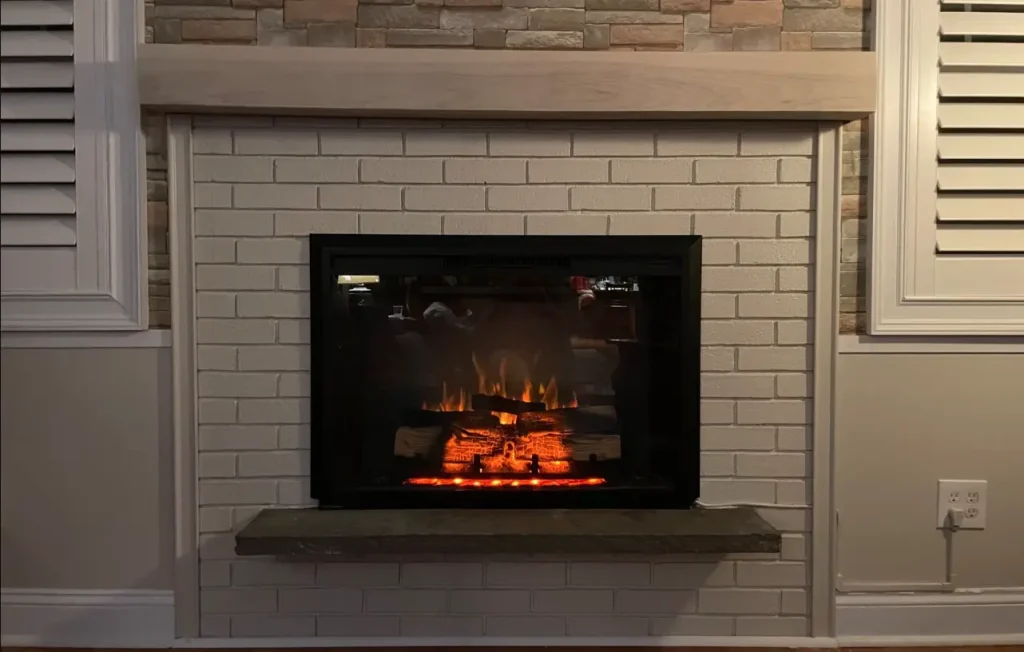
Image: amazon.com
But, if you own an older home in the Inner West, Eastern Suburbs, or the North Shore, you likely already have a brick fireplace or a gas point. In those houses, a gas insert is a seamless, premium upgrade
5. Safety Considerations
A gas fireplace uses real combustion, so ventilation isn’t optional.
Balanced flue models are safe because they pull in fresh air from outside and vent exhaust outdoors, keeping your indoor air clean.
But unflued heaters? They release emissions right into your room. NSW Health warns you not to use them in bedrooms, bathrooms, or any poorly ventilated space.
And what about electric fireplaces? They avoid these issues entirely since they don’t produce carbon monoxide or smoke.
With built-in safety features like thermal cut-offs, they’re a great choice for bedrooms, nurseries, and smaller rooms.
For a main living room, a flued gas fireplace is still a safe, high-efficiency heating choice when installed correctly. The rule is simple: hire licensed gas plumbing services and keep the system tested.
To keep your home compliant and venting safely, book a certified technician through Lightning Bult’s licensed Sydney gas fitting team.
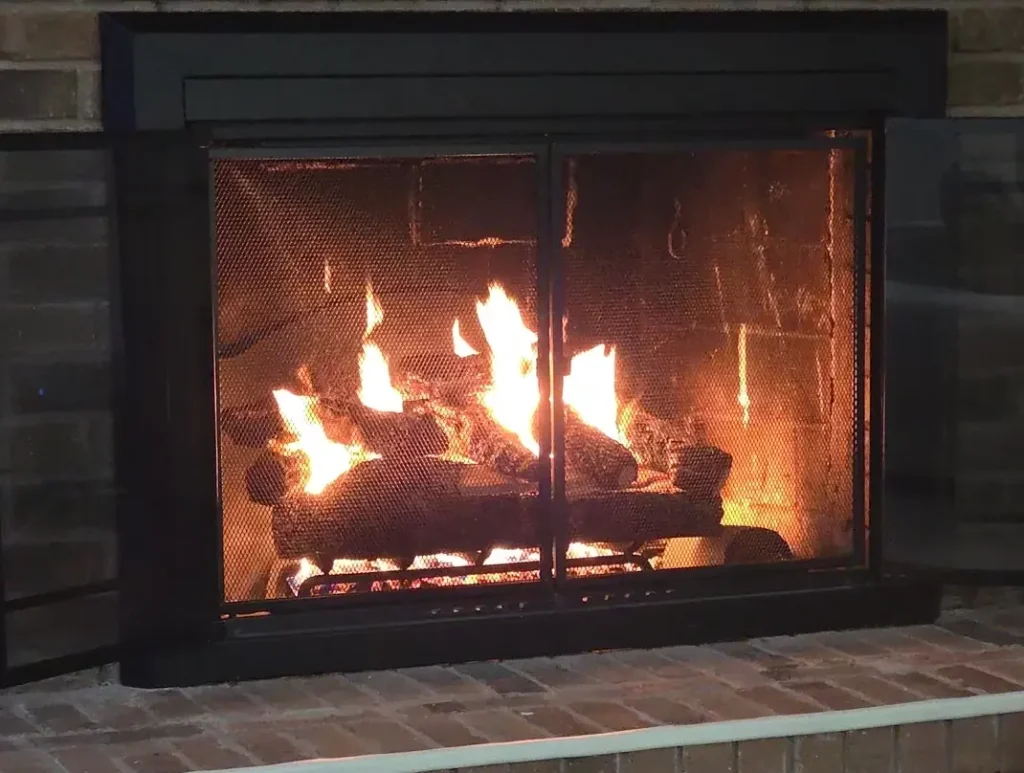
Image: Reddit.com @Neither_Drive_3327
6. Maintenance Requirements
Choosing between a gas fireplace vs electric fireplace isn’t just about day-one installation. It’s about how much attention it asks from you over the next ten winters.
Gas fireplaces need a professional to check them and test for carbon monoxide every two years, or every year if you use them daily.
If you do that, it keeps your heat efficient, your air safe, and helps catch worn parts early. Budget $150–$300 per visit to keep your flame safe, efficient, and compliant.
Electric fireplaces are much easier. You just need to dust them, clean the filters, and occasionally replace an LED bulb. For a busy Sydney household, that low-maintenance setup is a huge plus.
7. Installation Flexibility and Placement Options
Electric fireplaces are versatile. Whether they are wall-mounted, freestanding, or recessed, they only need a standard powerpoint.
Electric units are plug-and-play, so they are perfect for rentals where you can’t make permanent changes.
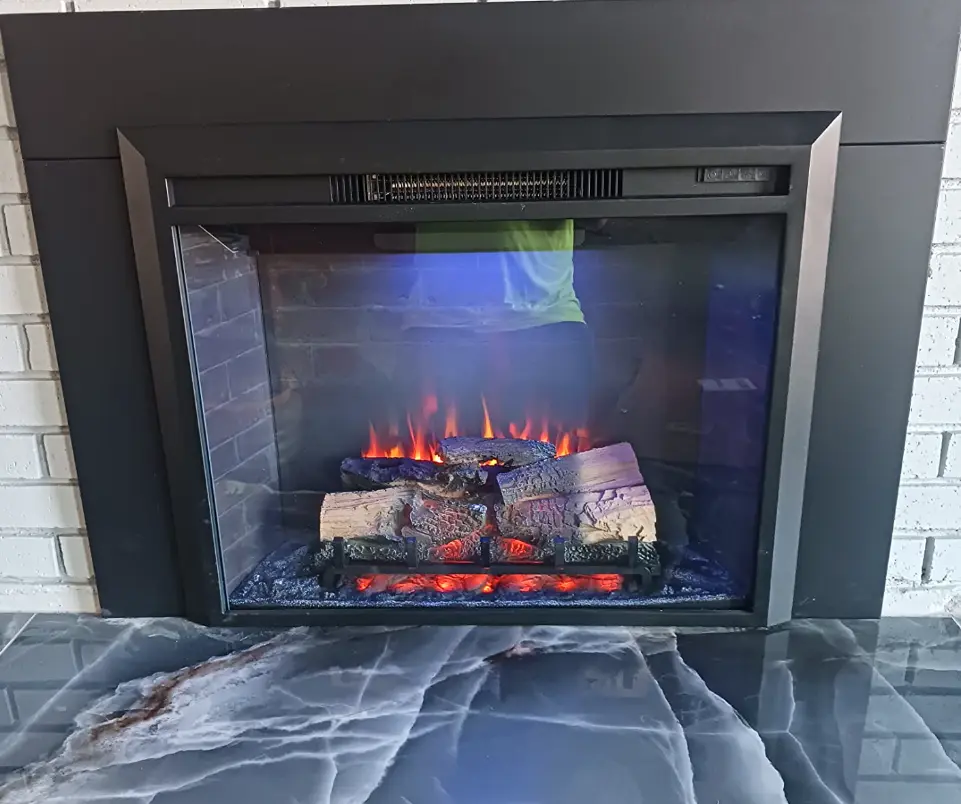
Image: Amazon.com
Gas fireplaces take more work since you need a gas line and a flue. Sure, modern direct-vent systems let you run a small flue through an outside wall. But if you live in an apartment, you’ll likely need strata approval first.
Standalone homes have it easier. If you own a terrace in the Inner West, a Federation home on the Lower North Shore, or a semi in the Eastern Suburbs, a gas fireplace is a great choice.
Many already have an old hearth or a gas point, which makes installation much simpler.
Gas vs Electric Fireplace: Which Is Right for You?
Neither option is better than the other. The wrong choice just means it doesn’t fit your need and lifestyle.
| If your home or lifestyle looks like this… | Your best fit is… | Because… |
|---|---|---|
| Existing gas connection and large living area | Gas | It delivers stronger heat output and creates a real flame zone for bigger rooms. |
| Older Sydney terrace or character home | Gas | It can turn an existing masonry fireplace opening into a clean gas insert retrofit. |
| Apartment, townhouse, or strata property | Electric | No flue, no external wall drilling, and fewer body corporate issues. |
| Bedroom, nursery, or small home office | Electric | No combustion emissions, no gas exhaust, and safer operation in enclosed rooms. |
| Rental property or short-term living setup | Electric | Freestanding units can move with you when the lease ends. |
| Mood lighting and visual atmosphere | Electric | The flame effect can run without heat on mild nights. |
So, look at the room first. Check the room size, ceiling height, insulation, and how much heat you actually need. Then check the property itself.
- Do you already have a gas meter?
- Is there an old fireplace opening?
- Can a flue run safely through an external wall or roof?
- Are you dealing with strata rules?
For apartments, rentals, bedrooms, and visual comfort, choose electric. It is simpler, cleaner, and easier to place.
For older Sydney homes, large living rooms, and serious winter heating, choose gas. Real flame still feels better.
FAQs about Gas vs Electric Fireplaces
These are the questions Sydney homeowners ask most when comparing gas and electric fireplaces.
Do I need a gas line for a gas fireplace?
Yes. A gas fireplace connects to either natural mains gas or an LPG tank. Under NSW law, a licensed gas fitter must perform this connection. If your home lacks a gas supply, factor that cost into your decision early.
Can I install an electric fireplace myself in Sydney?
If it’s a freestanding or plug-in unit, yes. Just plug it into an existing outlet. But, anything requiring a new power point or a dedicated circuit must be installed by a licensed electrician. DIY electrical work is illegal in NSW.
Is a gas fireplace cheaper to run than electric in Sydney?
Yes, for daily use. But check your tariff first. For occasional use, the gap narrows. Electric heating’s lower upfront cost may offer better value, even if the hourly rate is slightly higher.
How often does a gas fireplace need to be serviced?
Schedule carbon monoxide and safety checks at least every two years, or annually if used throughout winter. A licensed gas technician must inspect the burner, flue, seals, and connections.
Can I have a gas fireplace in a Sydney apartment?
Usually not without strata approval. Most apartment by-laws restrict gas appliances and flues, and mains gas is rare in newer builds. Electric is almost always the realistic option. Check with your strata manager before choosing gas.
So, Which One to Choose: Gas Fireplace vs Electric Fireplace?
When it comes to gas vs. electric fireplaces, the final decision is personal. It depends on your property’s layout and your heating needs.
For high-rise apartment rentals without gas lines, an electric fireplace is the most practical way to add instant visual ambiance and gentle warmth.
But if a gas connection is available, a flued gas fireplace offers the deep heat and real flickering flame that makes it a premium long-term investment.
Ready to see what fits your home? Lightning Bult’s expert team can safely check your space. Reach out now for a professional gas fireplace installation or safety check.