





Is your gas fireplace remote control not working? Battery replacement and a resync usually fix it. But if the problem sits in the gas valve, pilot light, or wiring, that’s licensed work only.
This article guides you through the first two checks, explains what breaks a remote, and shows when to call a gas fireplace service team to diagnose the issues. Keep reading.
Try These Two Checks Before Anything Else
Image: Unsplash
Check the batteries in both the handheld remote and the receiver box. Most gas fireplace owners only think about the remote in their hand. They forget the receiver.
Your handheld transmitter takes AA or AAA batteries, but the receiver which is hidden behind the grille or in the control compartment needs its own set too.
Swap both with fresh, name-brand alkaline cells, and make sure they’re in the right way. And replace them at the same time.
Use the manual or isolation switch on the receiver to test the fireplace directly. Many receivers have an OFF / REMOTE / ON switch.
Follow your appliance manual to set it to manual ON and see if the fireplace lights without the remote. This single test tells you almost everything.
If it works manually but ignores the remote, the issue’s in the remote chain. If manual ON does nothing, the problem’s elsewhere and needs a professional for this.
Why Your Gas Fireplace Remote Has Stopped Responding
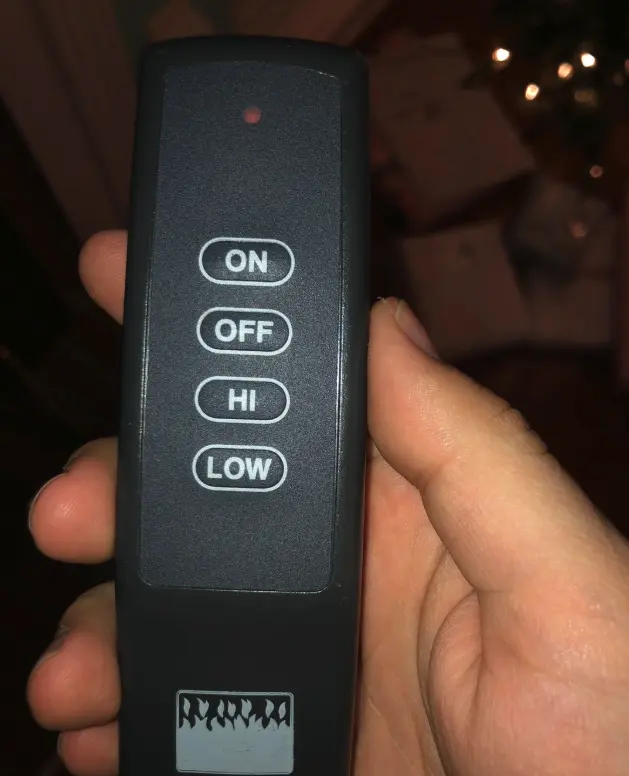
Image: frankonator21 on Reddit
There are many reasons a gas fireplace remote stops working:
1. Flat or Corroded Batteries
Flat batteries are one of the most common causes of remote failure across the brands sold in Australia. But, don’t forget about corroded batteries.
In the Northern Beaches and Eastern Suburbs, coastal humidity often corrodes battery contacts within months. Potassium hydroxide leaks from ageing battery casings and eats into the metal terminals.
So check the contacts even if the batteries look “new enough”. A white or green crust on the terminals will kill the connection just as fast as a flat cell.
Use fresh alkaline batteries for your gas fireplace remote control. Avoid rechargeables unless your manufacturer explicitly approves them.
2. The Remote Has Lost Sync With the Receiver
It’s common after battery changes or winter outages. It trips up many Sydney homeowners who’ve done everything right, but the fireplace won’t respond.
Think of it as a broken digital handshake. The remote and receiver work fine, but they’ve forgotten how to communicate. When the pairing breaks, the receiver ignores the remote’s signals. You can fix this by resyncing them.
3. Thermostat Mode Left On
Most people don’t realise leaving thermostat mode on keeps the receiver drawing power, even when the display looks idle.
It’s listening for temperature changes around the clock, draining batteries faster than manual mode.
If batteries last weeks instead of a full heating season, thermostat mode is likely the cause. Check for a thermostat icon and switch back to manual.
Also, if transmitter batteries die in thermostat mode, the appliance may shut off as a safety measure. It’s just a setting, not a fault.
4. Isolation Switch or Power Point Issue
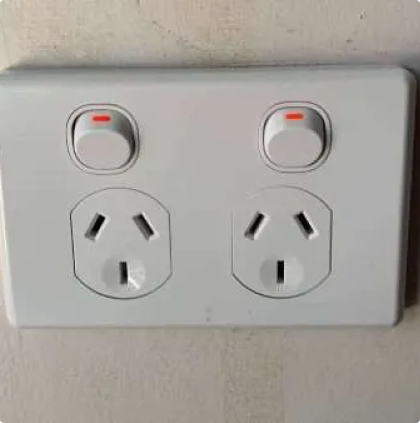
Modern fan-forced gas fireplaces don’t just run on remotes. They need 240V mains power from a dedicated point connected to a wall isolation switch.
This switch looks like a standard light switch or red toggle, usually on the wall near the fireplace or inside a nearby cupboard.
If it’s flipped off during cleaning or renovations, the fan and ignition won’t work, even with fresh batteries and a strong signal. So, make sure the switch is ON.
If your fireplace has a standard power point behind the lower control louvre, check the plug hasn’t come loose.
5. Wiring Fault at the Receiver or Fascia Switch
This often happens after new installs or DIY wiring. If a wall switch and remote receiver connect without proper isolation, they can conflict and leave the fireplace unresponsive.
It’s common in older Sydney homes where previous owners added switches without professional checks.
Remember, the Gas and Electricity (Consumer Safety) Act 2017 sets safety and compliance rules for electrical and gas work in NSW.
How to Resync a Gas Fireplace Remote to the Receiver
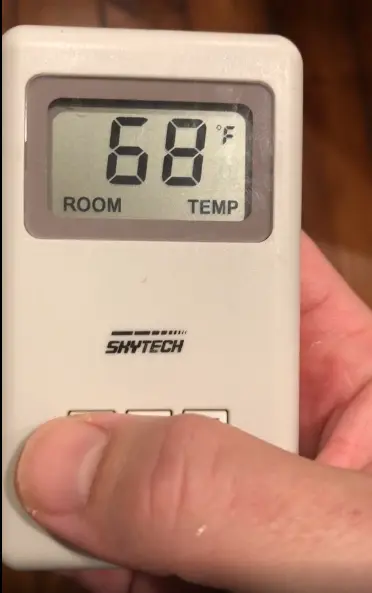
Image: FrasierCraned on Reddit
If your gas fireplace remote isn’t working despite fresh batteries, the digital handshake is broken. You can resync them in a minute. Just make sure the remote is OFF.
- Set the receiver to remote mode — On receivers with a three-way slide switch (behind the bottom grill), slide it to the REMOTE position.
- Find and press the LEARN button — Look for the small hole labelled LEARN or PRG on the receiver. Push it with a paperclip or pen. The receiver will make a beep.
- Send the sync signal from your remote — Grab your remote. Within the pairing window specified by your manual, press the ON or POWER button.
- Listen for the confirmation beeps — The receiver will emit beeps to show the sync worked.
This works for many Sydney fireplaces, but some brands do it differently. You might need to hold LEARN for 5 seconds until it beeps, then press ON within 30 seconds.
Others want you to remove both units’ batteries for 30 seconds. Reinsert the receiver’s batteries first, then the remote’s, and hold MODE for 5 seconds until the screen flashes to pair.
Gas Fireplace Brands We Troubleshoot and Service Across Sydney
We service and repair all major gas fireplace brands. While remote and receiver systems vary, these battery and resync checks are useful across many systems.
Here’s what you should know about your system’s brand-specific traits:
- Rinnai: Models like the LS800, LS1000, and LS1500 use special receivers (some Wi-Fi compatible) and need enough battery voltage to start. When voltage drops too low, the ignition may fail for safety.
- Real Flame: Their Nuvo lines use special pairing systems. They’re reliable but can still have receiver connection issues after power events.
- Regency: Units like the City Series use Proflame’s built-in receiver, so the resync steps in the right manual apply straight.
- Lopi: Classic 864 Clean Face or Linear models like 3615 often use the GreenSmart system. For older battery-only receivers that drain AA cells, Lopi sells a plug-in AC adapter kit.
- Escea: High-efficiency models like the DF Series and frameless DS Series have digital remotes controlling multiple sensors. If the receiver stops working, a technician might need to do a hard module reset.
- Jetmaster: Many setups use Skytech or IntelliFire remote kits, so regular battery terminal cleaning is vital.
- Illusion: Australian-made Luminar (1000–6000) series have multi-speed fans. If the remote fails after a battery change, a lost pairing signal is a common cause.
- Cannon: Classic built-in units like the Fitzroy and Canterbury series are workhorses in older Sydney renovations. Their electronic ignitions need stable power and good receiver batteries.
It’s Not the Remote? Here are Signs to Call a Licensed Gas Fitter
Fixing a dropped remote signal is a quick, safe win. But if your system shows any of these signs, it’s time to call a licensed gas fitter:
1. You Can Smell Gas
If you smell rotten eggs near your fireplace, get out immediately.
- Don’t touch any electrical switches or lights.
- Don’t light matches or use naked flames.
- If safe, turn off your main gas supply at the meter.
Once outside, call 000 for NSW Fire and Rescue, then contact a licensed gas fitter to find the leak.
2. The Fireplace Won’t Ignite Manually Either
If you followed our steps, slid the switch to ON, and the fireplace still won’t light or click, the problem isn’t your remote.
The fault is deeper like a stuck gas valve, blocked pilot injector, or broken ignition module. Messing with these parts involves your main gas supply and isn’t safe for DIY.
3. The Pilot Light Won’t Stay Lit
On older standing-pilot models, if the small blue flame sputters or dies when you let go of the control dial, you’re likely dealing with a worn thermocouple or thermopile.
Since most modern gas fireplaces need a steady pilot flame to power the gas valve, your remote won’t work until this key part is replaced.
4. Visible Damage to Wiring or the Receiver Box
If you pull off the lower louvre panel and spot melted insulation, scorch marks, or rodent-chewed wiring, stop. Turning on a system with damaged electrical connections is a big fire risk.
5. NSW Gas Fitting Licensing Laws: The Hard Line
In NSW, basic home fireplace tasks are limited to things like swapping external batteries and running a manual remote sync. Under the Gas and Electricity (Consumer Safety) Act 2017, any gasfitting work on internal gas appliance components must be done by a licensed gasfitter.
This isn’t just red tape. Unlicensed gas work has severe penalties, with fines up to $22,000 for individuals. Plus, it can affect your home insurance if something goes wrong.
FAQ about Gas Fireplace Remote Troubleshooting
These are a few extra questions Sydney homeowners ask about gas fireplace remotes.
Why Does My Remote Need Batteries in Two Places?
Your remote’s transmitter sends signals via its batteries, while the fireplace’s receiver powers the gas control. It’s a backup system that keeps your fireplace running during blackouts. Both need fresh alkaline batteries to work reliably.
How Often Should I Replace Batteries?
Replace both sets every 6–12 months. And swap them at the same time. The receiver won’t work on old cells while the transmitter’s fresh. Coastal areas and year-round thermostat use mean you’ll replace them sooner.
Can I Repair a Gas Fireplace Remote Myself?
Feel free to change the batteries yourself, but leave everything else to a professional. DIY repairs for electrical, valve, or ignition issues void your warranty and risk gas leaks, carbon monoxide, or fire.
My Remote Display Is On but the Fireplace Won’t Turn On. Why?
A lit screen just means the transmitter has power. It doesn’t confirm the receiver, wiring, or gas valve status. Run the manual override test per your manual. If that doesn’t fire the flames, call a gasfitter to diagnose the issue.
Still No Heat After Batteries and Resync?
Still no heat after swapping batteries and following the manufacturer’s resync steps? The problem’s likely inside the fireplace, not your remote. Stop troubleshooting and call a licensed gasfitter.
Lightning Bult services gas fireplaces across Sydney’s Northern Beaches, North Shore, Eastern Suburbs, and Inner West. Call us today for a fast, safe, reliable fix.