





A calm Sydney evening can feel muggy even after sunset. At that point, installing an outdoor ceiling fan seems like the obvious solution. Choose a model, mount it, done.
But not every ceiling fan is recommended to install outdoors. That assumption is what leads to rusted motors, voided warranties and expensive redos. Plus, you need a licensed electrician to do the job.
This guide walks you through choosing the right rating, sizing the fan to your space, and what a safe, compliant installation involves.
What Makes a Ceiling Fan Suitable for Outdoor Use?
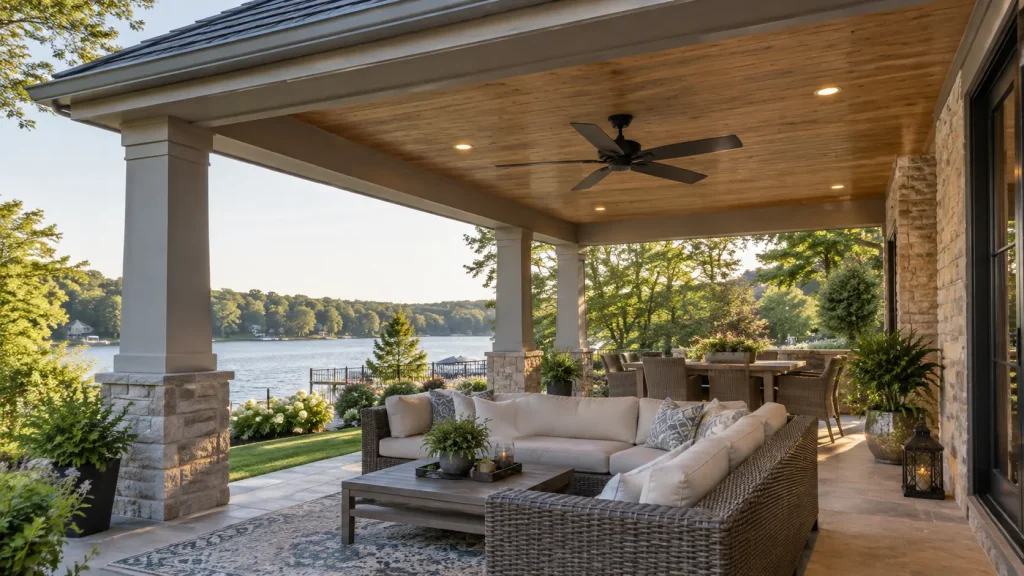
Choosing an outdoor ceiling fan starts with its approved installation location. Depending on the spot, outdoor ceiling fans can face humidity, rain, dust, UV light, and coastal salt.
Standard indoor fans lack the protection for these conditions. Moisture and salt can trigger corrosion, blade damage, or component failure, which might void your warranty.
Always check the instructions and the IP (Ingress Protection) rating. The first digit measures dust protection, the second measures water resistance.
While outdoor models range from IP44 to IP66, the rating doesn’t override the manufacturer’s location rules.
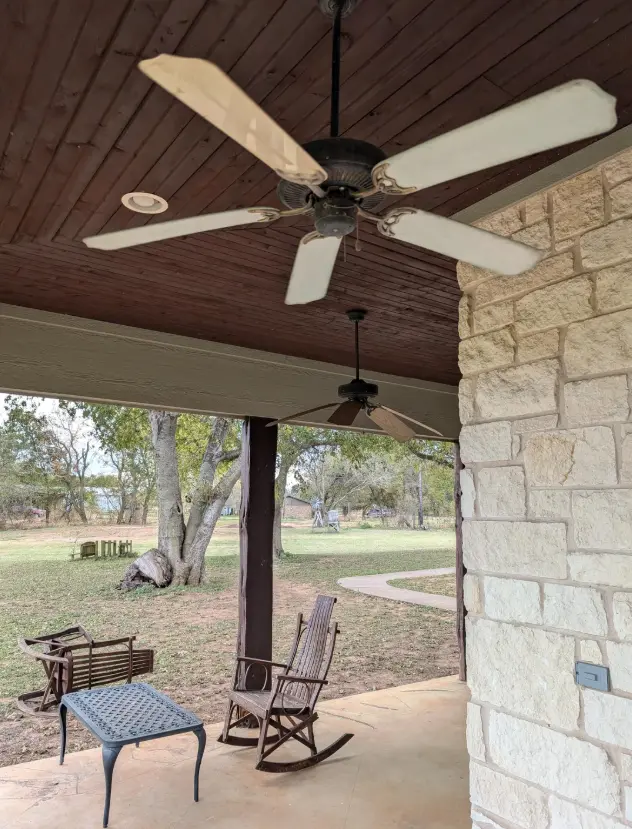
Image: xdubyagx on Reddit
Brands usually group outdoor fans into key categories:
- Covered use: An outdoor fan rated around IP44 may suit an alfresco area under a solid, continuous roof, as long as it stays protected from direct and wind-driven rain.
- Exposed use: For an open pergola, uncovered deck, or other area where rain or splashing can reach the fan, pick a model that’s approved for that exposure. These fans may carry ratings such as IP55, IP65, or IP66.
- Coastal use: Salt air creates a separate corrosion battle. Choose a fan that’s explicitly coastal-rated with sealed components and keep up with the recommended washdowns, even under a deep patio roof.
Requirements differ between brands. Some covered outdoor models must be mounted at least 1.5 metres in from the roofline, protected from rain, wind and direct sunlight.
Matching the IP Rating to Where You Live in Sydney
Your outdoor ceiling fan rating isn’t just about where you live. It’s more about where the fan is installed.
- Sheltered courtyards in the Inner West or North Shore: If a solid roof keeps rain off, a damp-rated outdoor ceiling fan (around IP44) will do the job. Your licensed electrician still needs to check manufacturer setback rules though. Driving rain can blow across the ceiling line on windy days.
- Open pergolas, uncovered decks, or poolside patios anywhere in Sydney: Direct rain and hose splash demand a wet-rated fan (IP55 or higher). Suburb means little here. What matters is whether water can reach the motor housing.
- Northern Beaches, Eastern Suburbs, and waterfront properties — Salt in the air eats through metal, causing pitting and galvanic corrosion. An IP rating only measures water and particulate dust ingress, not salt. That’s why a coastal-rated fan built from UV-stabilised ABS plastic or 316 marine-grade stainless steel is worth every cent.
So, don’t guess IP levels. Match the physical spot to the fan’s published installation terms and warranty fine print.
How to Choose the Right Size for Your Patio or Alfresco
Most homeowners assume bigger means better when they buy outdoor ceiling fans. It doesn’t. Effective cooling relies on matching blade span to usable floor area, not brute size.
Go too small, and a sticky Sydney afternoon swallows the breeze. Oversize it, and you get a wind tunnel that flings napkins across the deck instead of cooling a quiet drink.
So, start with these baseline spans, then cross-check the volumetric airflow output in cubic metres per hour:
- Up to about 12 m² — A 120 cm fan keeps air moving over a compact courtyard, whereas anything larger overwhelms the footprint.
- About 12–20 m² — Step up to a 130–150 cm model for balanced airflow across standard entertaining zones. You’ll avoid dead air without the gale.
- Over 20–25 m² — Mount two smaller units over distinct seating areas. That’s far more effective than one massive fan stuck in the geometric centre.
For a standard 4 m × 5 m alfresco (20 m²) with a dining table, a single 132–152 cm fan is the right start. Just check its airflow volume, clearances, and covered-location requirements first.
Put a barbecue and dining table at one end and a lounge at the other, and that single fan won’t reach. It leaves both spots on the perimeter of useful air movement.
Instead, use two smaller fans centred over the two zones for better control. Your electrician must check the roof can take the weight at both points and that blades maintain required clearances.
A low ceiling, raked rafters, exposed beams, or open weather edges can shift your plan fast.
Motor Type, Blade Material and Style
Once you have the weather rating and sizing pinned down, look closely at motor design and materials:
DC vs AC Motors
Modern outdoor ceiling fans often use DC motors. They are whisper-quiet, give you better speed control, and use very little power, usually between 20 and 40 watts.
That quiet performance suits outdoor areas where motor hum easily carries across the dinner table.
Traditional AC motors remain a dependable, cost-effective choice. They cost less upfront and connect to simple wall switches, making them a sensible option for occasional-use spaces like secondary decks or utility verandas.
For a detailed breakdown of running costs and motor efficiency, explore Lightning Bult’s energy-efficient ceiling fan guide.
Blade Material for Sydney’s Climate
Your outdoor ceiling fan blades need to handle the same conditions as the unit itself. Choose a material suited to your home’s moisture, sun and salt exposure.
- ABS plastic: The most common, practical choice for outdoor blades. Moulded composite plastic won’t rot, warp from humidity, or corrode over time.
- Marine-grade (316) stainless steel or aluminium: Ideal for coastal properties with heavy salt exposure. Both resist pitting, though they still need routine freshwater wipe-downs.
- Timber-look blades: Natural timber absorbs humidity and throws bearings out of alignment. Unless they’re fully sealed all-weather composites, save timber looks for enclosed alfresco rooms.
Picking a Style That Suits the Space
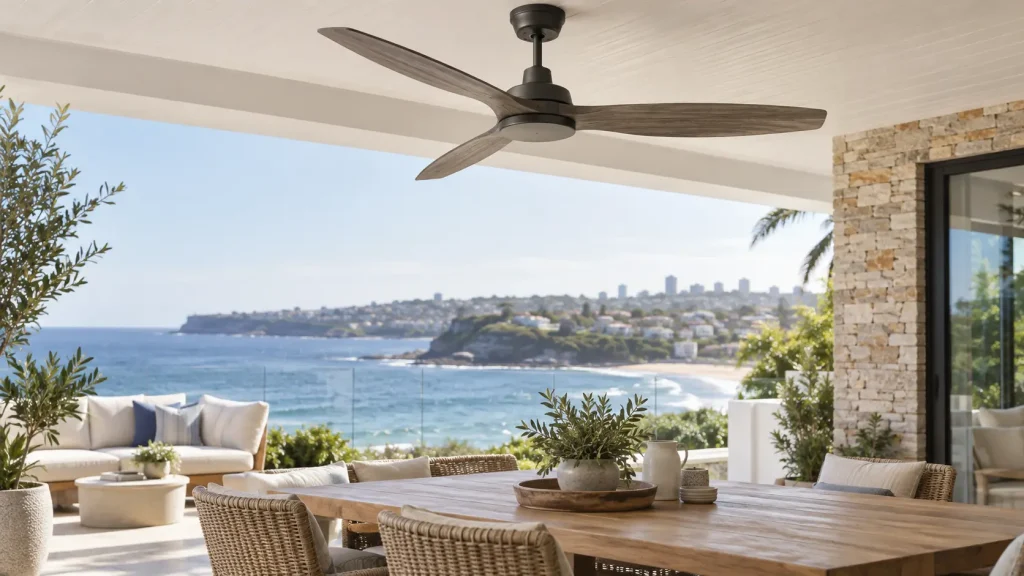
You can match your new fan to your outdoor setup. Matte black suits modern pergolas and dark aluminium, crisp white blends into light ceilings, and timber adds warmth to raw brick.
If your alfresco area needs lights, grab a model with built-in LED so you get both a breeze and a light from one spot.
What a Compliant Outdoor Ceiling Fan Installation Actually Involves
Choosing the right outdoor ceiling fan is half the job. The other half is making sure it’s installed safely and legally.
NSW Electrical Compliance Requirements
Under the Home Building Act 1989, connecting a fixed outdoor ceiling fan to mains power counts as electrical wiring work. A licensed electrician must handle the job.
Yes, every connection must also comply with the AS/NZS 3000 Wiring Rules.
That’s why you need an electrician to install your ceiling fan. Unlicensed electrical work is illegal and may affect your insurance cover if a faulty connection contributes to a fire, electric shock or property damage.
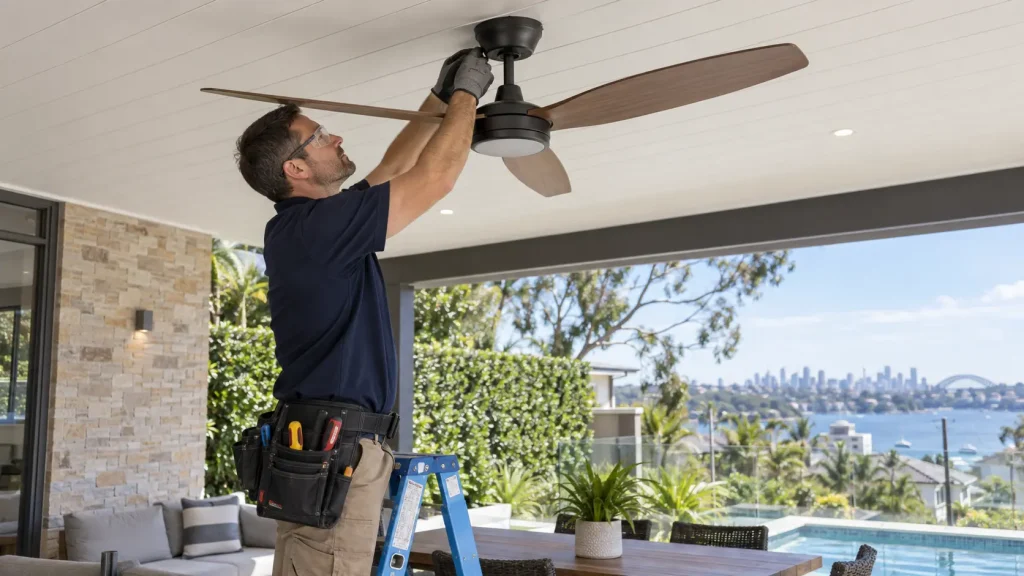
Not only that, your electrician will lodge a Certificate of Compliance for Electrical Work (CCEW) through the NSW digital portal once the work is complete.
Keep the certificate with your home records as evidence that the electrical work was completed and documented.
Weatherproofing the Electrical Connection
A safe outdoor installation involves far more than connecting three wires. Your electrician will evaluate:
- the junction box and connections have suitable protection for the outdoor location;
- any wall switch or controller mounted outside is appropriately rated;
- existing wiring has enough capacity and correct earthing, especially in an older home; and
- the mounting structure can safely support the fan and its movement.
Plus, you might need to use extra support or shift the spot if the ceiling, roof access, or beams don’t work out.
Safety Switch (RCD) Protection
New or modified outdoor circuits might need safety-switch protection under current rules. An RCD cuts power when it detects current leakage, reducing the risk of electric shock in a damp environment.
An RCD doesn’t replace proper earthing, weatherproof connections or compliant setup. Your sparky can test what’s already there and spot any needed changes.
If your switchboard needs updated protection, Lightning Bult offers safety switch installation and testing.
When There’s No Existing Power in the Patio Ceiling
Not every patio or pergola has a ceiling point ready to go, and that changes the job of ceiling fan installation. This is common with newer alfresco additions or pergolas built long after the home’s original electrical fit-out.
No existing mount means a licensed electrician must run a dedicated cable path from your main switchboard. This takes more time and money than a straight fan swap.
Your installer has to check switchboard capacity, drill structural penetrations, and thread wiring through tight roof cavities.
Exterior wiring needs tough protection against the weather. Electricians use UV-stable conduit, weather-sealed glands and external isolators to keep moisture away from live terminals.
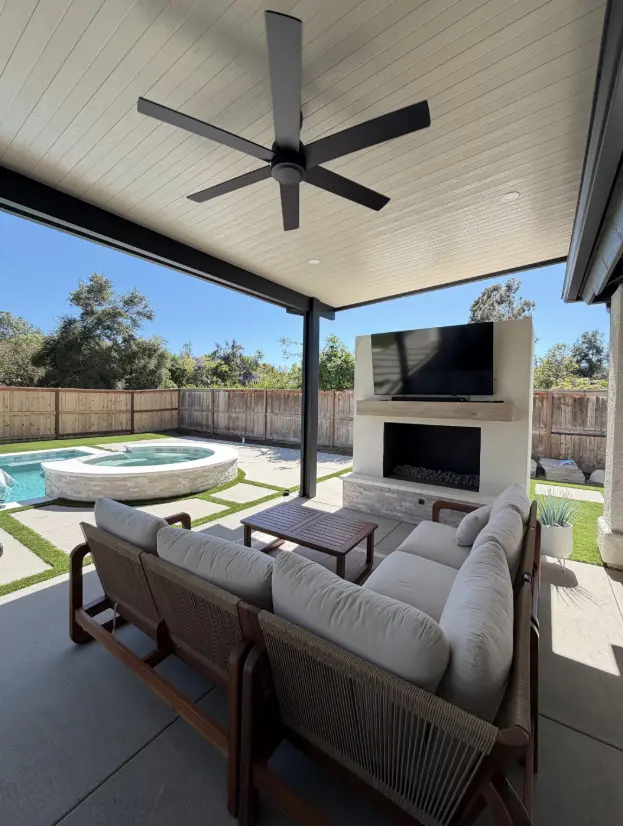
Image: cheezebergereddie on Reddit
Outdoor Ceiling Fan Quick Reference for Your Home
Use this table to narrow the field. The product instructions and a site assessment take priority.
| Patio scenario | Size starting point | Exposure requirement | Extra check |
|---|---|---|---|
| Covered courtyard up to about 12 m² | 120–122 cm | Manufacturer-approved for the sheltered outdoor location | Roof-edge setback, wall cover and mounting support |
| Covered alfresco about 12–20 m² | 132–152 cm | Rating and instructions matched to wind-driven moisture | Airflow output, ceiling height and occupied zone |
| Open pergola, exposed deck or poolside area | Choose from area, shape and airflow data | Model expressly approved for direct water exposure | Splashing, wind, controls and electrical enclosures |
| Coastal or waterfront patio | Choose from occupied area and airflow data | Explicit coastal approval as well as suitable water protection | Corrosion-resistant components and cleaning schedule |
These are starting points, not approvals. Lightning Bult’s licensed electricians can assess the intended position, mounting and wiring before installation.
How Much Does It Cost to Run and Install an Outdoor Ceiling Fan?
Running costs depend on your fan’s wattage, speed, hours used, and electricity tariff. Use this formula:
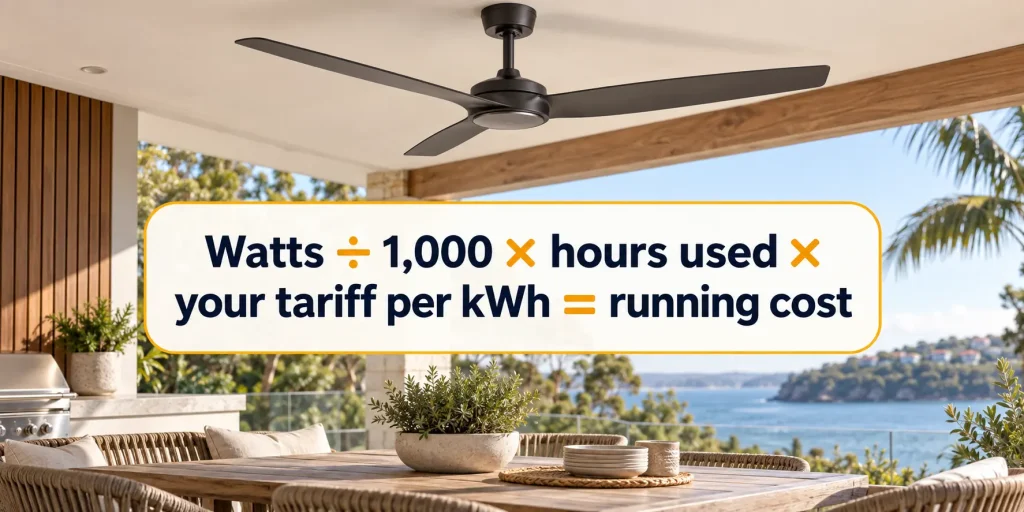
For example, a 35W fan used four hours nightly for 120 nights uses 16.8 kWh. Multiply 16.8 by your bill’s usage rate for a local estimate that won’t confuse usage with fixed supply charges.
How about ceiling fan installation cost? It varies based on your existing ceiling point, support, access, height, switchboard, cabling, controller, and weatherproofing.
FAQ About Outdoor Ceiling Fans
Here are questions about outdoor ceiling fans that Sydney owners often ask:
Can I Install an Outdoor Ceiling Fan Myself?
Not when it’s wired into the house. NSW law says electrical work needs a licensed sparky. You’re fine comparing products and clearing access, but leave connecting, testing and certifying to the electrician.
What Is the Difference Between Covered-Outdoor and Wet-Rated Fans?
A covered-outdoor fan is rated only for protected locations that stay clear of direct rain and heavy wind. A wet-rated fan is sealed to handle rain, wind-driven moisture, and wash-downs.
Always check the installation manual’s permitted locations and setback rules rather than trust loose retail labels like “damp-proof”.
Do I Need a Light on My Outdoor Fan?
Only if your patio needs extra ambient illumination. An integrated LED fan is a tidy two-in-one fix if you only have one ceiling opening.
Make sure you check brightness, colour temperature, dimming capabilities, and whether the LED module can be replaced down the track.
How Long Do Outdoor Ceiling Fans Last in Coastal Sydney?
Lifespan varies based on surf proximity, wind exposure, overhang depth, material quality, and washing frequency.
Buy a coastal-rated unit, follow the manual, and check brackets and fasteners periodically for pitting or movement.
Ready to Plan Your Outdoor Ceiling Fan Installation?
Choosing an outdoor ceiling fan in Sydney isn’t complicated once you know what’s needed: an exposure rating, a size for your space, and a motor for how often you will use it.
Whether it’s a beachfront balcony or shaded alfresco, match the fan to the conditions. The key is getting the installation right from the start.
Picked your fan, but aren’t sure if it needs a new circuit or a simple swap? Lightning Bult’s licensed sparkies can check your patio, confirm the right rating and size, and do the full setup safely.
Reach out for a free quote across the Northern Beaches, North Shore, Eastern Suburbs and Inner West.