





How much does a ceiling fan installation cost in Sydney? A basic replacement runs $150–$250, but a brand-new install costs more.
The fan itself is usually extra, ranging from $100 to over $1,000. And for outdoor jobs, you’ll also need weather-rated parts and extra checks that may cost more.
This guide covers typical costs for common ceiling fan jobs, what a licensed electrician checks, and how to prepare for an on-site quote.
How Much Does Ceiling Fan Installation Cost in Sydney?
The table below shows typical Sydney price ranges for common installation jobs:
| Installation scenario | Typical price range | What it covers |
|---|---|---|
| Swapping an existing fan | $100–$325 | Removing and replacing a fan at an existing point where the wiring and support are suitable |
| Replacing a light fitting with a fan | $180–$320 | Converting an existing light point, with any required fan support or switching changes |
| Installing a new fan point with new wiring | $250–$680+ | Running new cable, adding a switch and completing the electrical work needed for a new location |
| Outdoor or alfresco fan | $280–$520 on an existing point; $580–$980 on a new point | Installing a suitable fan in an exposed area, with the cost changing if new wiring is needed |
| Extra fans during the same visit | $180–$280 | Additional fan installations where the electrician is already on site |
Grouping the work into one booking may reduce the quote. There’s one call-out, and the electrician can complete the jobs in the same visit.
Swapping an Existing Ceiling Fan
This is usually the quickest, cheapest option. The wiring, switch, and ceiling brace are already there, so a standard swap takes 45–75 minutes and costs $150–$260 in labour.
But you can’t DIY it. A like-for-like swap is regulated electrical work, so an electrician must test the connections and lodge a Certificate of Compliance for Electrical Work (CCEW) through the NSW portal.
Costs can add up, though. Remote receivers, light kits, high or raked ceilings, and extra bracing all cost more, and hard-to-reach ceilings in units can slow the job down.
Replacing a Light Fitting with a Fan
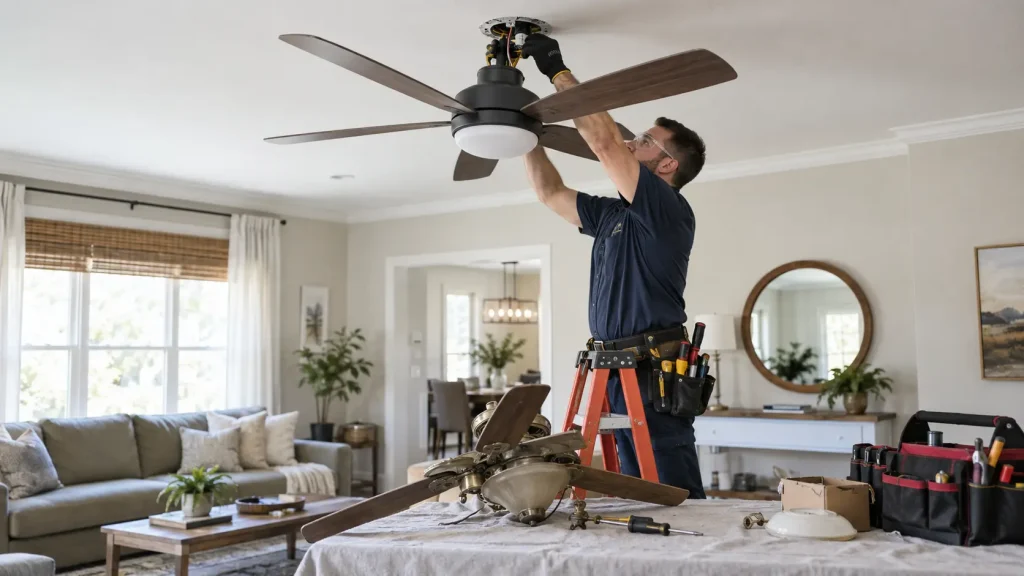
This is the most common upgrade in older Inner West and Eastern Suburbs homes. Since the ceiling already has power for the light, the electrician can usually use the existing lighting installation circuit.
Two things push up the price. First, the brace. The NSW Government requires a heavy-duty ceiling brace. Standard parts only hold 2 to 3 kg, so fans over 3.5 kg need a proper brace. That extra work adds $40 to $80.
Second, the light. A fan with a built-in light needs an extra wall wire so it can have its own switches. That means more work and more cost. Budget around $60–$120, or about $90 plus GST for an AC fan with a wall switch.
Installing a Fan Where There’s no Wiring
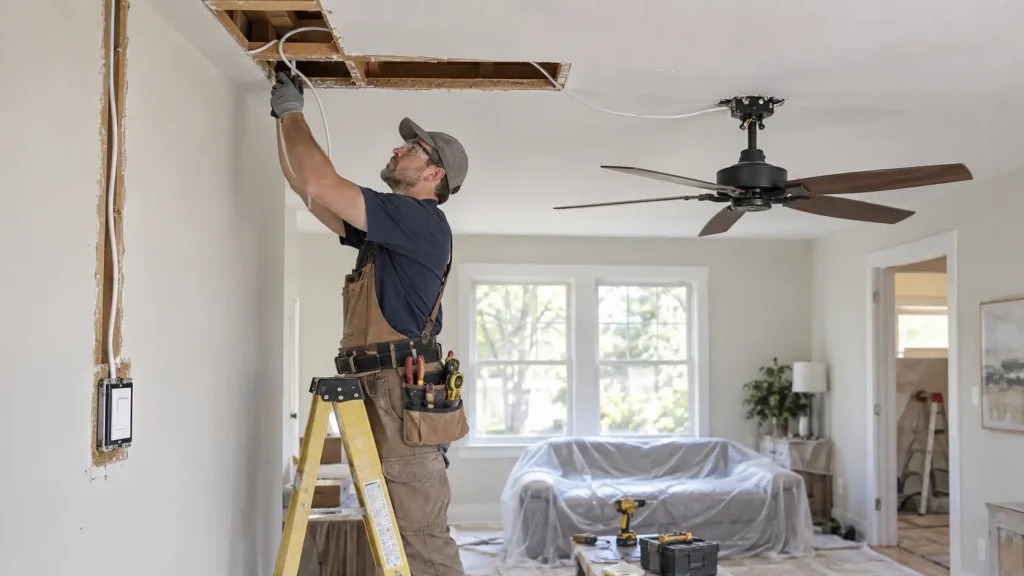
Installing a fan without an existing outlet costs more. The electricians must run cable, add a switch, and secure ceiling support.
And accessibility decides the job. A clear roof cavity is simple, while concrete slabs or tight spaces need surface conduit, patched walls, and extra time.
For a standard new point, expect $350 to $700 or more in labor and two to four hours of work. Adding a switch usually tacks on $50–$150.
These estimates assume your switchboard has room. Old or full boards need upgrades costing $800–$2,500 (up to $3,500 for asbestos). An on-site visit confirms the exact requirements.
Outdoor and Alfresco Fans
Outdoor fans cost more because they need weather protection, sealed joints, and outdoor-rated fittings. Budget $280–$520 at an existing point, or $580–$980 if you need new wiring.
The right fan depends on how exposed the spot is. A deep, covered patio has different needs than a shallow deck facing wind-driven rain.
For homes on the Northern Beaches, check that your fan and fittings suit the site’s exposure to salt air before you buy.
Worked Example: What a Three-Fan Job Might Cost
Here’s an example for one visit, based on the standard market-rate estimates rather than a formal quote:
| Job Description | Scenario | Estimated Cost |
|---|---|---|
| Bedroom 1 | Swap an old, clicking fan | $180 |
| Living Room | Replace a light fitting with a new fan (requires brace and switch wiring) | $260 |
| Back Patio | Install an outdoor fan on an existing alfresco point | $280 |
| Total Labour | Three fans installed in one visit | $720 |
Grouping the work into one booking may reduce the quote. There’s one call-out, and the electrician can complete the jobs in the same visit.
What Else Affects the Price of Installing a Ceiling Fan?
The room type matters, but access and equipment change the job. Two neighbors asking for the same fan can still get different ceiling fan installation costs.
1. Ceiling Height Ceiling Type And Access
High or raked ceilings need specialized mounting and access equipment. Plasterboard needs extra support, while concrete demands different fixings and a cable-route review.
You can’t reliably price existing damage or hidden wiring from a photo alone.
The ACCC mandates 2.1 m from blades to the floor and 300 mm to the ceiling, with final placement decided by product instructions and the electrician. Check clearances first, then choose your downrod length.
2. AC Vs DC Motors And Fan Features
NSW Government guidance recommends DC fans as they are quieter and roughly 70% more efficient than AC models. While they cost more upfront, installation is usually the same.
That efficiency suits frequently used living room fans. But a pricier DC model isn’t worth it for a spare room.
Remotes, lights, and smart controls take a bit longer to set up. Budget about $50–$150 for these extras, depending on your fan and controls.
Not sure about this? You can read our guide on choosing an energy-efficient ceiling fan.
3. Who Supplies The Fan
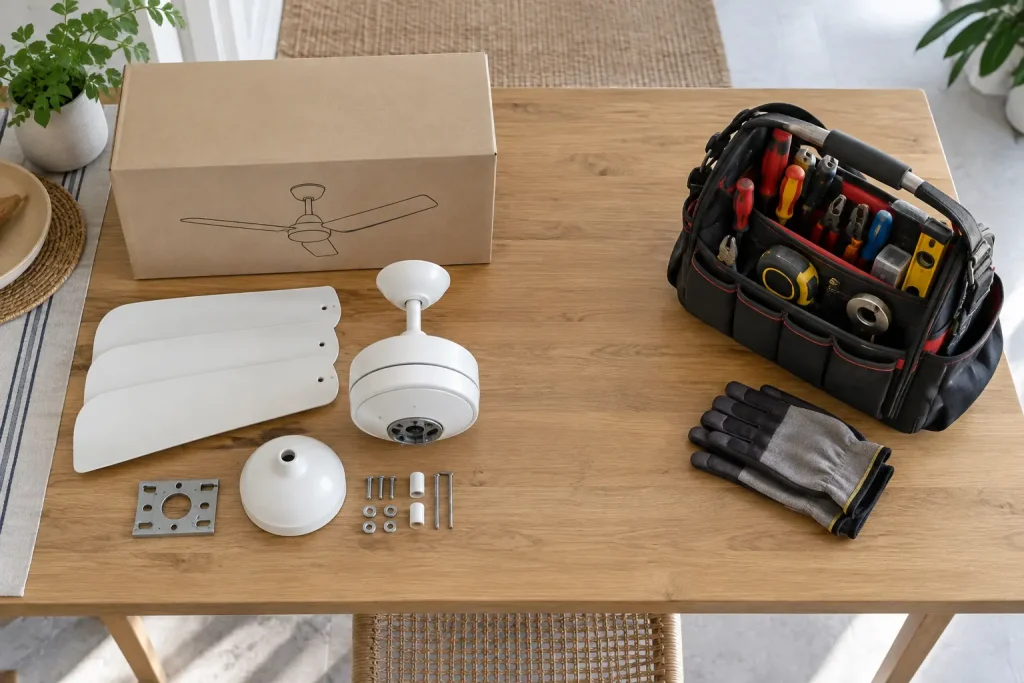
You can buy the fan yourself or ask for a supply-and-install quote. A fan you supply should be approved for use in Australia and suit the room, ceiling, and controls.
Ask who handles product faults and whether return labour is included. If the electrician supplies the fan, ask for the model, supply price, and installation price separately.
4. Timing And After Hours Work
Sparkies’ summer schedules fill up fast. Booking before the first heatwave gives you more date choices and helps you avoid an urgent call-out.
Remember, after-hours and weekend work can cost more. Ask if the quote includes a call-out fee and if the price is fixed or hourly.
What Does a Professional Ceiling Fan Installation Include?
When comparing Sydney electrician quotes, check what’s included. A quote may include:
- Power isolation and circuit assessment: Shutting off power at the switchboard, checking the circuit, and inspecting the current wiring, insulation, and earthing.
- Fan-rated support: Checking the ceiling structure and fitting the right support for the fan. This might involve timber nogging between ceiling joists or an approved fan-rated mounting box.
- Wiring and controls: Connecting the fan motor and light kit, fitting a remote receiver, and installing wall switches or controllers, as needed.
- Testing and blade balancing: Checking the fan’s speeds and operation, then balancing the blades to cut down on wobble, noise, and wear.
- Safety checks and CCEW: Doing the required electrical checks and lodging a Certificate of Compliance for Electrical Work (CCEW). Under NSW requirements, the electrician must lodge the certificate within seven days and provide you with a copy.
- Old fitting removal and clean-up: Disconnecting and removing the old fan or light fitting, protecting the work area, and cleaning up. Check whether disposal’s included.
- Workmanship guarantee: Ask what guarantee applies to the installation. Lightning Bult offers a lifetime workmanship guarantee.
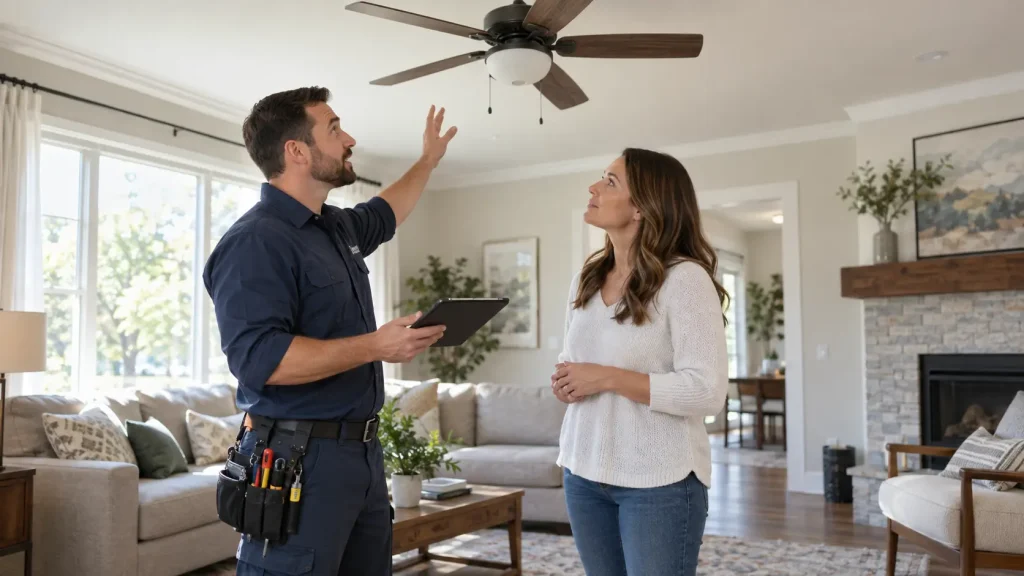
If a quote is much cheaper, check if it includes all required work like fan-rated support, testing, removal, and CCEW lodgement. Comparing the same scope helps spot extra charges before installation.
Can You Install a Ceiling Fan Yourself in NSW?
No. Installing or replacing a ceiling fan is electrical work that must be done by a licensed electrician.
The same rule applies to general handymen. They can do non-electrical work around the fan, like patching gyprock, but they can’t connect or replace its wiring.
And doing it yourself isn’t just dangerous, you’ll face fines and your insurance won’t cover you if something goes wrong. That’s why a licensed electrician needs to install ceiling fans safely and legally.
Also, you can’t hire just any electrician. Before you book, check their licence on the NSW public register. NSW Fair Trading strictly requires anyone doing electrical installations to hold the right contractor licence.
Also, once installed, the electrician must test the circuit and lodge a numbered Certificate of Compliance for Electrical Work (CCEW) within seven days.
Keep a copy with your warranty records, or give it to your landlord/agent if you rent.
How Much Does It Cost to Run a Ceiling Fan?
Running a ceiling fan costs far less than you would expect. It’s just 1–3 cents an hour. And at 2 cents an hour, leaving yours on all day costs about 48 cents. That’s still way cheaper than AC.
If you use fans alongside your AC, you can slash your energy use by up to 76%. The breeze makes you feel 2–3°C cooler, so you can turn your AC up to 24–25°C and still stay comfortable.
The simple rule is this: fans cool people, not empty rooms. Turn the fan off when you leave.
FAQ About Ceiling Fan Installation Cost
Some of the most common questions people ask about the ceiling fan installation cost in Sydney:
How much does an electrician charge to install a ceiling fan in Sydney?
NSW guidelines state professional installation adds $150–$350 to a fan purchase. Always request an itemised quote, especially for new wiring or outdoor units.
How much does it cost to replace an existing ceiling fan?
While like-for-like replacements are simpler than new installations, existing support, controls, and wiring still need inspection. As verified Lightning Bult swap prices aren’t public, request a detailed replacement quote.
How long does ceiling fan installation take?
A simple swap takes less work than running a new cable, though official job times aren’t provided. Ask your electrician for a time window once they know the fan model and access points.
Do I need to upgrade my switchboard to add a ceiling fan?
Don’t assume either answer from the fan’s low power. Have the electrician check the circuit and switchboard. Ask for any repair work and its price separately.
Is a ceiling fan cheaper to run than air conditioning?
Ceiling fans use far less electricity than air conditioners. It costs just 1–3 cents per hour. Since they don’t lower air temperature, on hot days they work best alongside occasional air conditioning rather than as a total replacement.
Getting a Firm Price for Your Ceiling Fan Installation
Your ceiling fan installation cost depends on the existing wiring, ceiling access, mounting, and fan model. Share these details when you’re asking for an itemised quote.
Don’t forget to check that it covers labour, fan supply, GST, access, and CCEW paperwork.
Not sure where to start? Lightning Bult’s licensed electrician can check your setup and give you a site-specific price. We look after homes across the Northern Beaches, North Shore, Eastern Suburbs, and Inner West.