






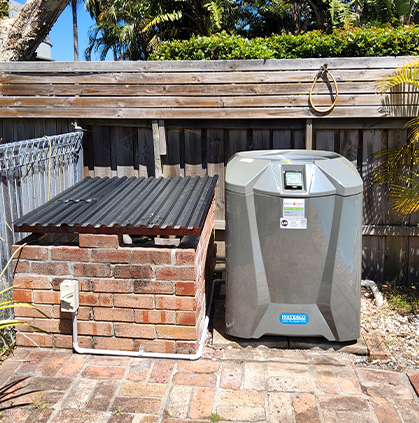

Do you really need to learn all the AC parts, like the AC condenser? Yes, you do. Ignoring this outdoor unit can triple your power bill and significantly reduce your air conditioning system‘s lifespan.
The condenser is the outdoor box that releases heat from your home. It houses key parts that keep your home cool. If any of the components break, your entire system stops working.
So, let’s learn how it works, what the common problems are, and when to call a professional when issues arise.
What Is an AC Condenser?
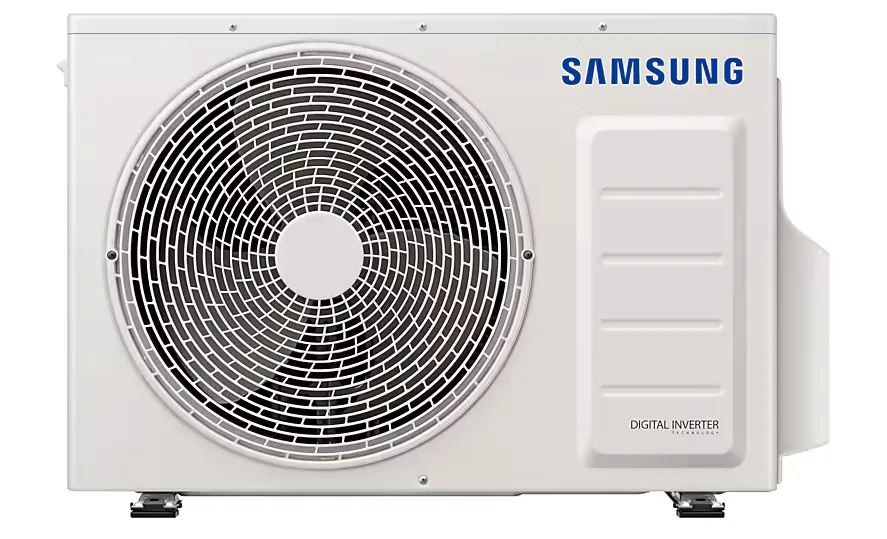
Samsung.com
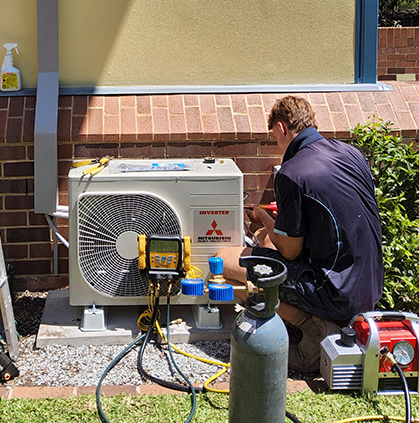
The AC condenser is the outdoor unit of your air conditioning system, found in ducted and split systems. Its main role is to release heat absorbed from your home into the outside air.
Unlike most air conditioner parts like the thermostat, filter, or capacitor, which are single components, the AC condenser is an assembly that contains three parts:
- Compressor – pumps refrigerant, raising its pressure and temperature to absorb heat inside the house.
- Condenser coil – releases heat to the outdoor air and turns the hot refrigerant gas back into a liquid.
- Fan – draws air across the coil, improving heat transfer and keeping it cool for efficiency.
Together, they form the system’s heat rejection point.
Physically, the condenser is made of weather-proof metal and is placed outside on a concrete slab or wall brackets.
This outdoor placement gives it constant access to fresh air, which is vital for releasing heat efficiently. But, this same exposure makes it vulnerable to dirt, leaves, salt corrosion, and physical damage.
For homeowners, the main concern is airflow. The condenser coil inside the unit has closely packed metal fins designed to maximise heat transfer. When these fins get blocked, the unit can’t release heat properly.
How Does an AC Condenser Work?
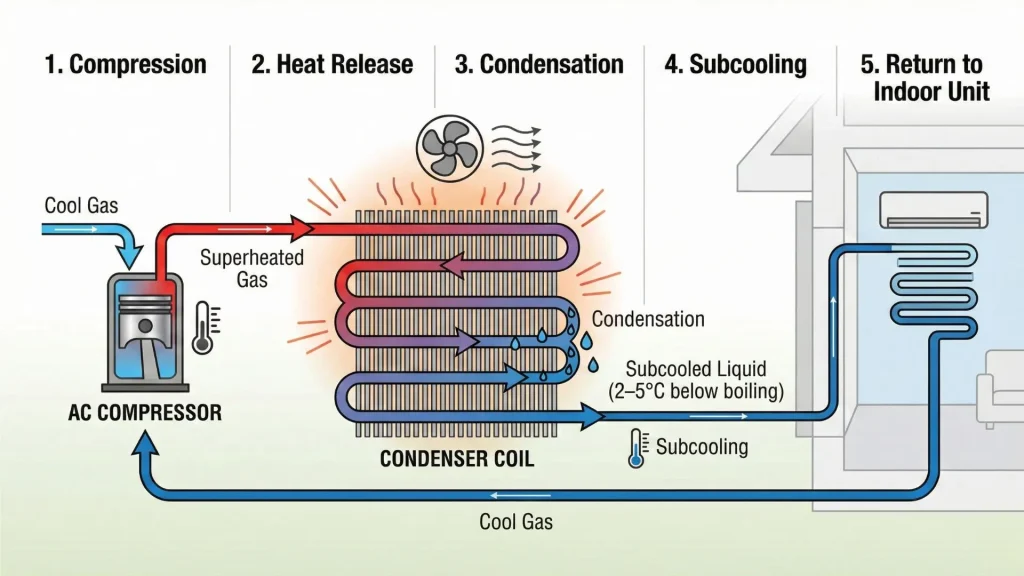
The condenser works through a refrigeration cycle that has four steps and keeps going in a loop:
- Compression — The AC compressor squeezes cool gas from inside, heating it to 50–80°C. Since it’s hotter than outside air, heat escapes easily. The superheated gas then enters the condenser coil.
- Heat Release — The fan blows outside air over the coil, removing the extra heat. The gas cools towards its saturation point, where it’s ready to turn into a liquid.
- Condensation — As the refrigerant moves through the coil, it cools below saturation temperature. It releases more heat and becomes a liquid. This phase change, called condensation, releases most of the cooling power.
- Subcooling — The liquid refrigerant cools 2–5°C below its boiling point, creating subcooling. This prevents “flash gas” at the expansion valve and keeps the system efficient.
- Return to Indoor Unit — The high-pressure, cool liquid flows back inside, absorbs heat from your rooms, turns back into gas, and the cycle begins again.
3 Types of AC Condensers
Different AC condenser units use different methods to cool the refrigerant:
1. Air-Cooled Condensers
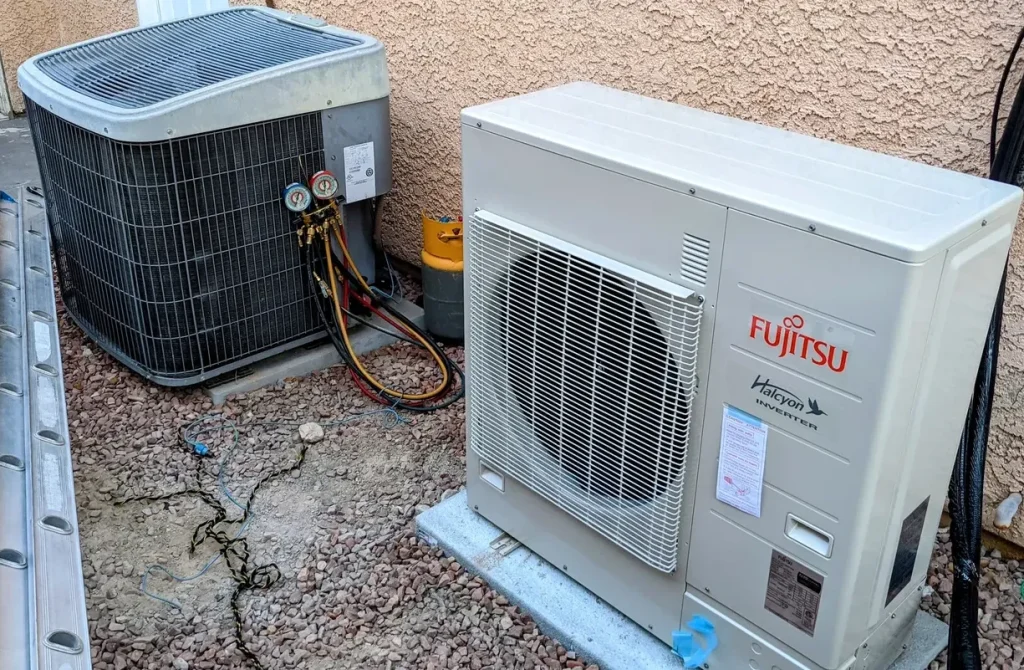
Image: Reddit from the heatpumpguy.com
Air-cooled condensers use the surrounding air to cool the refrigerant. They are the most common type of AC condenser in Australia, especially for residential split systems installation.
These units sit outside on a concrete pad next to your house. And there are two main types:
- Top-discharge — Cube-shaped, with a fan blowing cooled air upward, making installation flexible if the indoor unit is nearby.
- Side-discharge — Slim, with a fan blowing air horizontally, ideal for wall-mounted or tight spaces.
These AC condensers have copper tubes with aluminium fins to remove heat, and a large fan blows air over the coils. They are easy to install and maintain, and it costs 800–1,500.
These condensers are reliable. Their main downside is reduced efficiency in very hot weather. Regular cleaning like cleaning the AC coils is needed to remove dust, and debris that block airflow and lower performance.
2. Water-Cooled Condensers
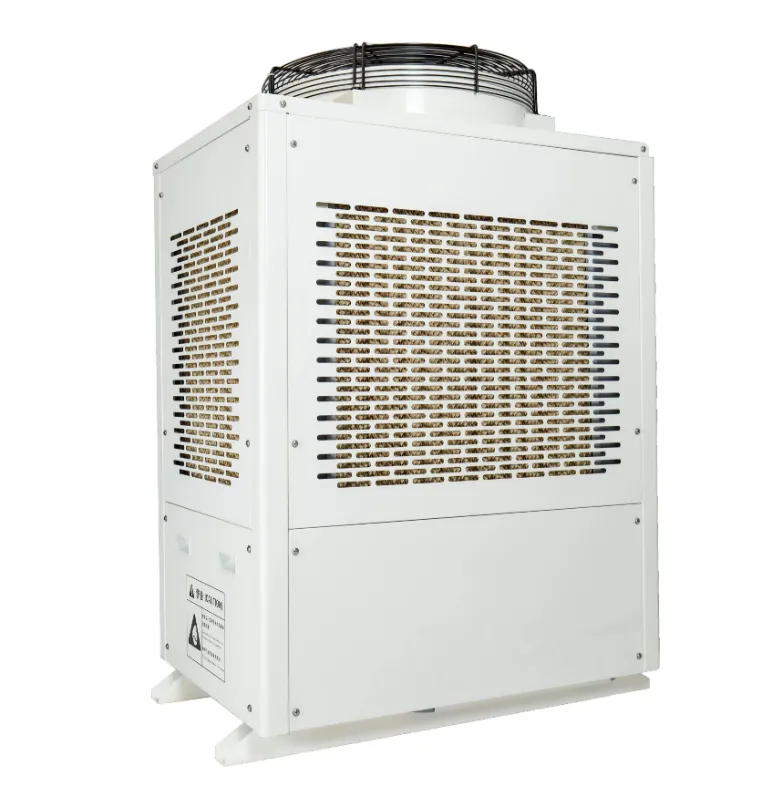
Image: Alibaba.com
Water-cooled AC condensers use flowing water to remove heat from the refrigerant. The refrigerant passes through one set of tubes, while cool water flows through another.
These condensers are usually in steel tanks with copper parts. Because water absorbs heat better than air, they are smaller and don’t need big coils or fans, making them more compact.
However, for most Australian homeowners, water-cooled systems are not practical. They are better for large properties with special cooling needs due to higher water use, complexity, and costs over $10,000.
3. Evaporative Condensers
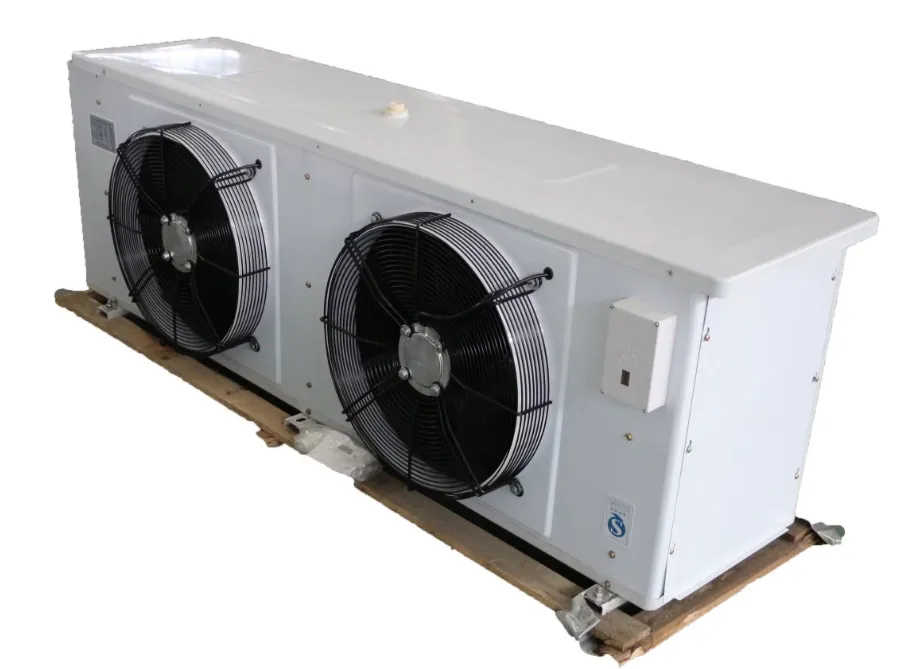
Image: made-in-china.com
In this design, water is sprayed onto the condenser coils, and a fan blows air through them. The water evaporates quickly, removing heat more efficiently than air alone.
This evaporative cooling method uses less water than traditional systems and is very effective.
These outdoor units are often on rooftops of large buildings like shopping centres, offices, and factories. Made from special steel, these AC condensers resist water and rust.
Evaporative condensers are common in big commercial places, not in typical homes.
How to Choose the Right AC Condenser
Choosing the right AC condenser isn’t about the cheapest or largest; it’s about what best suits your needs:
1. Sizing (kW)
Cooling capacity shows how much heat an AC condenser can remove per hour, measured in Kilowatts (kW). Using the wrong size can lead to breakdowns.
An undersized condenser forces the compressor to run non-stop and overheat. An oversized one cools too fast, causing short cycles that damage the system.
In most Australian homes with 2.4-metre ceilings, you need about 0.15 kW per square metre. So, for a 50-square-metre room, that’s around 7.5 kW.
2. Energy Efficiency Ratings
Please check the Zoned Energy Rating Label (ZERL), which shows how much electricity your AC uses. The star ratings go from 1 to 10; the higher, the better.
Keep in mind that Australia has three zones: hot like Darwin, average like Sydney, and cold like Melbourne. Each zone has its own ratings, so choose based on your location.
Go for at least 3.5 to 4 stars in your area. Lower ratings cost more to run, especially in summer when the condenser runs 8-10 hours daily.
3. Brand Reputation
When choosing an outdoor AC unit, pick trusted brands like Daikin or Mitsubishi Electric. It’s easier to find parts and get them fixed.
Buying a cheaper, less-known brand might save money now but could mean longer waits for parts later.
Also, you need to check the warranty before buying. Most good units have 5 years of parts and labour covered, some up to 7 years.
4. Refrigerant Type
You need to check which refrigerant your AC condenser uses. It’s important for future use and performance.
R410A was common but is being phased out in Australia due to its high Global Warming Potential. It’s more expensive and hard to get, so buying an R410A unit now could mean costly recharging later.
R32 is the new standard. It has a third of R410A’s GWP, uses less energy, and transfers heat 10-20% better, saving you money.
5. Noise Levels
When choosing a condenser, think about noise levels, too. It relates to your comfort and local rules compliance.
Most new condensers make 46-58 dB of noise. So, choose the quietest, ideally under 50 dB, especially if you will place it near bedrooms or neighbours.
Also, regulations state that before 10 pm, noise must be no more than 5 dB above background at the neighbour’s boundary. After 10 pm on weekends and holidays, it must be completely silent inside their home.
6. Durability & Climate Suitability
Your condenser is outside year-round, so it needs to be durable. If you’re near the coast within 5-10 km, salt spray can cause rust and damage aluminium fins quickly.
So, you need to look for features like corrosion-resistant coatings and strong fan motors that keep moisture out.
Also, check the temperature range. Australian summers can reach 40°C or higher, so make sure your condenser can cool effectively up to at least 46°C or 48°C.
7. Installation Clearance
Your space helps decide which AC condenser you need. The wrong one can reduce efficiency, no matter the brand.
For narrow spaces between a wall and fence, pick a side-discharge condenser. It fits tight spots and pushes hot air sideways, as long as the front isn’t blocked.
If you have an open yard or no overhead obstacles, a top-discharge condenser is best. It vents heat straight up, avoiding hot air hitting fences or walls.
What Are the Differences Between AC Condenser and AC Compressor?
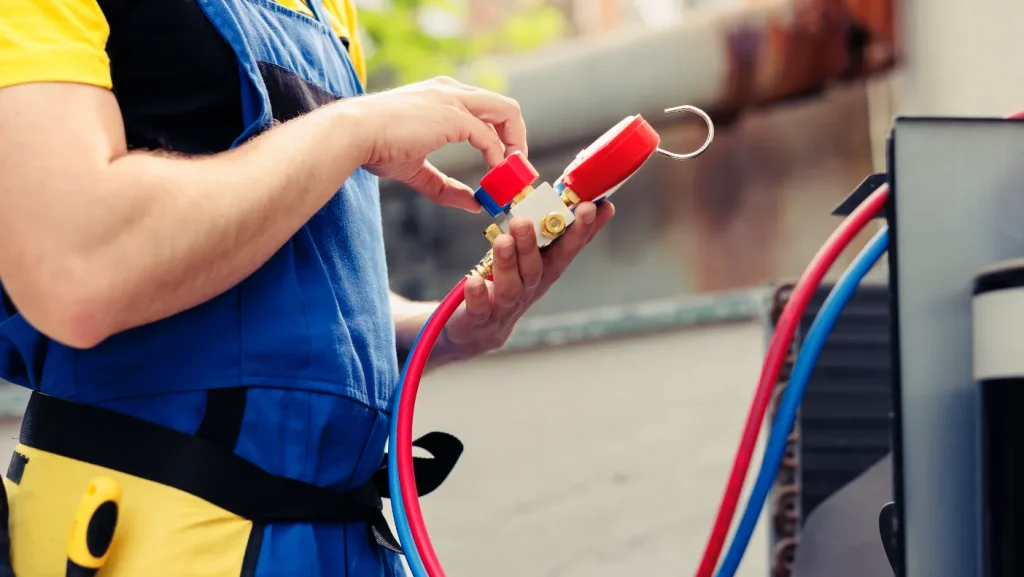
Image by DC Studio on Freepik
The AC condenser and the compressor often get mixed up because both are in the outdoor unit.
- The AC condenser is the outdoor unit that cools refrigerant by releasing heat to the outside air. It contains coils, a fan, a compressor, and controls. Its main job is to turn hot, high-pressure refrigerant gas into a cooler liquid.
- The AC compressor is one part inside that outdoor box. It acts like a pump, squeezing the refrigerant to increase its pressure and temperature. It takes low-pressure gas from the evaporator and compresses it into hot, high-pressure gas.
Think of it this way: the compressor is a part inside the larger condenser unit. The compressor does the mechanical work of pressurising refrigerant, while the condenser handles heat rejection.
| Aspect | AC Condenser | AC Compressor |
| Function | Releases heat and condenses refrigerant from gas to liquid | Pressurises refrigerant gas to raise its temperature and pressure. |
| Location | Entire outdoor unit cabinet | Component inside the outdoor unit |
| Components | Includes coils, fan, compressor, controls | Mechanical pump with motor and pistons or scrolls |
| Role in Cycle | Cooling refrigerant in a heat exchanger | Refrigerant circulation pump |
Common AC Condenser Problems
Even well-maintained AC condensers can develop problems over time, and most failures are interconnected.
1. Blocked Airflow
Dirt, dust, leaves, grass clippings, and cottonwood seeds can block your condenser coils, stopping airflow. This can reduce cooling power by up to 30% and cause the compressor to run non-stop.
This buildup usually happens over 2–3 years without yearly maintenance but can worsen quickly in dusty rural areas or near construction sites.
2. Fan Not Spinning or Making Noises
If your outdoor fan isn’t spinning, the condenser can’t release heat, so the system shuts down to prevent overheating. Usually, you’ll hear grinding or squealing for weeks before the motor fails.
Only a licensed ARCtick technician or electrician should replace the motor, as it involves electrical parts and refrigerant lines.
3. Ice Forming on Coils or Hissing Sounds Near the Unit
Refrigerant leaks may show as ice on outdoor coils or hissing/bubbling sounds near connections. Most leaks happen within 3 years from poor installation or after 8–10 years due to wear at joints.
If you have an R410A system with a major leak, consider replacing it with an R32 model.
4. Unit Clicks or Hums
Clicking or humming without the compressor starting means the capacitor is broken. It stores electricity to help start the motor. When this happens, your AC doesn’t blow cold air.
Replacing it is cheap, but ignoring the issue and repeatedly trying to start the system can damage the compressor, turning a 150 fix into a 2,500 replacement.
5. Compressor Won’t Turn On
Compressor failure is the most expensive problem for your AC condenser. It can happen because of electrical issues, refrigerant leaks, or overheating from blocked coils.
You might hear loud banging or grinding, or see the outdoor unit won’t turn on even if the fan runs.
If your condenser is over 10 years old and the compressor breaks, most experts suggest replacing the whole outdoor unit.
6. Visible Bent Fins on Coils
Aluminium fins on condenser coils are fragile. Hail, debris, or a kicked football can bend them, blocking airflow.
A few bent fins are fine, but 30–40% damage can slow the system. Small bends cost about 25 to fix with a fin comb, while more damage needs a HVAC professional, costing $150–220.
FAQ About AC Condenser Units
Common questions about condensers and their real-life answers:
Can I Replace Just the Condenser Unit?
You can replace only the outdoor condenser, but it’s not ideal. For best performance, both units should be from the same manufacturer and model. Mismatched units often run less efficiently and may void your warranty.
If your indoor unit still works, a technician might find an outdoor unit that matches. But replacing the whole system usually works better.
How Long Does an AC Condenser Last?
A well-maintained AC condenser lasts about 12 to 18 years. But its lifespan depends on usage, climate, and maintenance.
Coastal units with salty air may fail sooner, while those in milder climates with regular maintenance last longer. If your condenser is over 15 years old and needs major repairs, replacing it with a new model is usually cheaper.
Why Is My AC Condenser Blowing Cold Air?
Your AC condenser should blow warm air to release heat. If it blows cold, the system isn’t working correctly. It possibly has reversed flow, a faulty reversing valve, or is in heating mode.
Turn it off and call a licensed technician before using it again.
Conclusion
The AC condenser is the outdoor unit of your split system that removes heat and compresses the refrigerant. This component is absolutely vital to your AC working at all.
Knowing how it works and finding problems early can stop expensive breakdowns. But because high-voltage electricity and pressurised refrigerant are involved, don’t try to fix it yourself.
For expert help, proper installation, or maintenance, contact us at Lightning Bult. Our licensed technicians can diagnose and repair issues to keep your system running efficiently.