


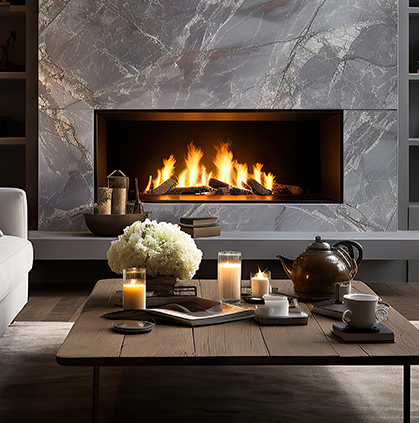

You’re here for one of two reasons. You’re planning a new install and want to know the gas fireplace running cost first. Or your last gas bill shocked you, so you’re wondering why.
We’ll break down hourly and seasonal costs, compare gas to reverse-cycle heating, and explain when gas fireplace specialists can restore efficiency to help keep bills under control.
What Actually Drives a Gas Fireplace’s Running Cost
Four things drive your gas fireplace running cost. Here they are:
1. The Fireplace’s MJ/h Rating
Every gas fireplace has an MJ/h rating on its data plate. That’s megajoules per hour. Your bill is calculated from your measured gas consumption. Simple: more MJ/h means you burn more gas and pay more.
- Decorative units sit at 15–20 MJ/h.
- Standard living-area fires run 25–35 MJ/h.
- Large open-plan heaters built for open-plan spaces over 100 m² reach 40 MJ/h or higher.
Keep in mind that MJ/h number is energy input, not heat reaching your lounge. Two fireplaces rated 30 MJ/h can heat a room differently.
And a 40 MJ/h unit isn’t wasteful, even though it seems huge. It’s only a waste if it heats a small 20 m² room.
2. Your NSW Gas Rate
Your gas rate turns megajoules into dollars on your bill. In Sydney, natural gas rates vary by plan, plus a daily supply charge.
Most Sydney plans use block-rate pricing. Your baseline usage—hot water, cooking—burns through your plan’s first block (usually 20–40 MJ daily) at the base rate.
Some plans have secondary blocks, some don’t. One might charge 3.2¢/MJ up to 4¢/MJ, then 4.1¢/MJ. Another runs 2.9¢ and 4.5¢.
So, check your latest bill. Find your plan’s rate structure on the back. That’s an important number for estimating your fireplace costs.
3. How Many Hours You Run It
Hours of use is where it gets real. MJ/h tells you the burn rate and your gas rate sets the price, but hours of use are what drives up your bill.
Run a 30 MJ/h fireplace for an hour a night and it’s cheap. Run it four or five hours all winter, and it’ll rival your hot water system.
Most Sydney homes don’t run them all day. People light them for evening ambience, typically a 3-to-4-hour window while they’re home, which keeps costs predictable.
Plus, modern thermostats give you an edge. A modulating fire running six hours mostly on low can cost less than a basic fire running three hours flat out. Check for modulation, or you waste gas keeping it high.
4. Natural Gas vs LPG
Fuel type drives running costs. Most metro Sydney homes connect to the Jemena mains natural gas network, where secondary usage rates vary by plan.
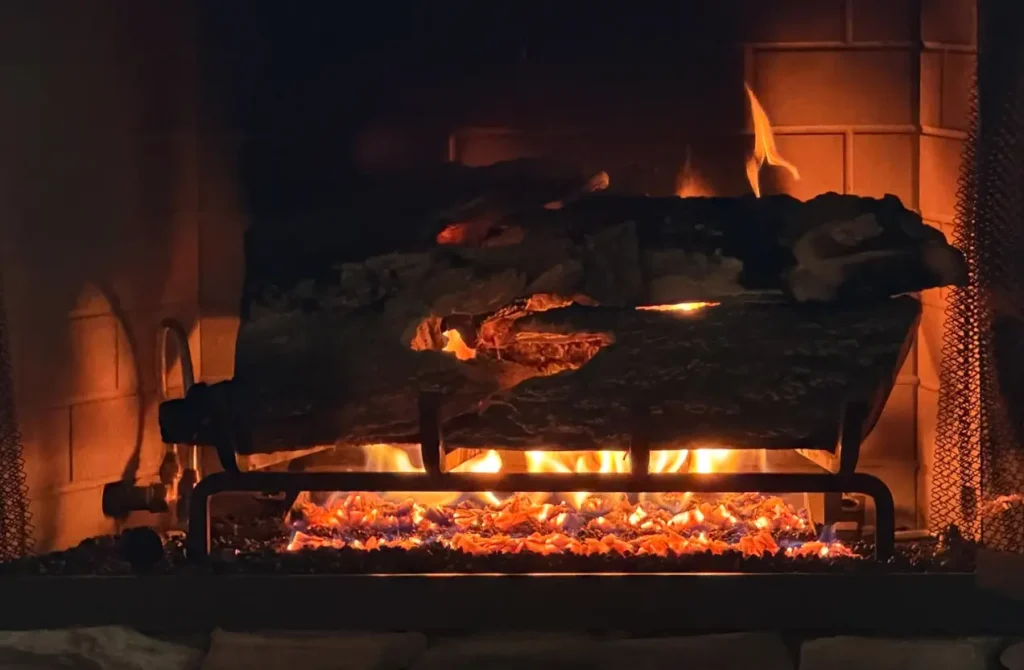
Image: Madison Thomas on Amazon
Outer suburbs and pockets without mains infrastructure use 45kg LPG cylinders. Refills cost $120 to $170 per bottle, plus annual rental and delivery fees.
Remember, LPG costs nearly double per megajoule. Running a standard 30 MJ/h fireplace for four hours costs different amounts depending on the mains gas or LPG tariff.
Over winter, LPG turns a gas fireplace into a larger heating expense. If mains natural gas isn’t available at your property, budget for these higher ongoing fuel costs or consider reverse cycle air conditioning Sydney.
Gas Fireplace Running Costs in Sydney: Per Hour, Per Day, Per Season
This table shows gas fireplace running costs using Jemena natural gas rates at 3.5¢/MJ. It’s a solid baseline, sitting right between the 2.2¢ and 4.9¢.
| Appliance Size | Per Hour | Per Evening (3 hrs) | Per Month (30 hrs) | Per Season (60 hrs) |
|---|---|---|---|---|
| Small (~20 MJ/h) | $0.70 | $2.10 | $21.00 | $42.00 |
| Medium (~30 MJ/h) | $1.05 | $3.15 | $31.50 | $63.00 |
| Large (~40 MJ/h) | $1.40 | $4.20 | $42.00 | $84.00 |
All figures use: MJ/h × hours × (3.5¢/MJ ÷ 100). The seasonal total assumes 60 hours over Sydney’s 8–9 week winter.
Don’t assume your gas fireplace’s running costs match someone’s in Melbourne or Canberra. Sydney’s heating season is much shorter. You won’t run it for 12 or 16 weeks like people down south.
Six to nine weeks make up a real winter, plus a bit more time if May or September turns cold. That shorter span keeps your seasonal cost lower than interstate equivalents, even if your hourly rate is similar.
Over a full winter at three hours daily, Sydney residents typically add $158–$263 to their quarterly bill running a gas fireplace.
Most fireplaces also let you dial the flame down. That 30 MJ/h medium unit? You can often run it at 50–60% output and cut consumption to 15–18 MJ/h on mild nights.
The cost per evening drops instantly, and you still get the warmth. Check your unit’s specifications for its range.
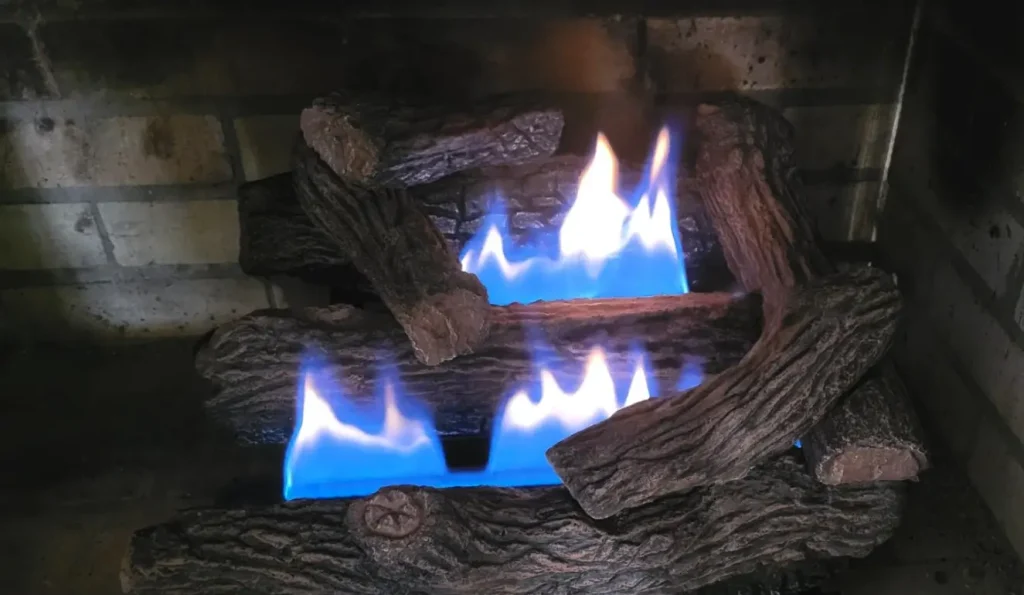
Image: Jennifer Walker on Amazon
One more thing worth flagging: these numbers cover gas consumption only. Your daily supply charge applies to your connection no matter if the fireplace runs. Don’t fold that into running-cost decisions.
How to Keep Your Gas Fireplace Running Costs Down
You know what drives gas fireplace costs. Want to keep those bills down? Here are a few ways:
- Get the right size. A 40 MJ/h fireplace in a room needing just 20 MJ/h wastes money. If you’re still shopping, size by room volume, not floor area alone. And high Sydney ceilings need about 1 MJ/h per 1.5 to 2 m². Note: oversized units constantly cycle on and off, and efficiency drops.
- Use your thermostat. Once the room hits temperature, a thermostat dials the flame back instead of running at full output for the rest of the evening. And if you have an older heater with a standing pilot light, turn it off during the warmer months to save $25 to $50 a month.
- Heat just the room you’re in instead of warming the whole house with ducted heat. Close doors to seal off unused hallways. Set ceiling fans to winter mode (clockwise on low) to push heat trapped at ceiling height back down into the living space without creating a cool breeze.
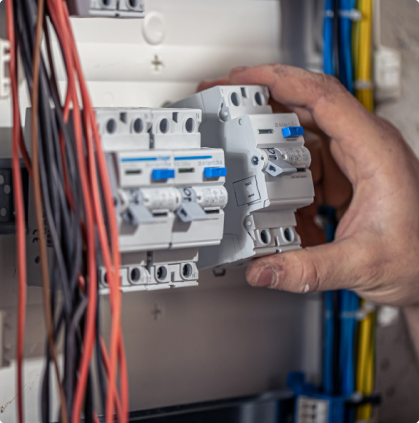
- Get an annual service. Soot build-up and dirty injector jets disrupt the air-to-gas ratio. That causes incomplete combustion and drops efficiency. Lightning Bult’s gas plumbing services team cleans burner ports, tests gas pressure, and checks flue draught during standard services.
- Block draughts and clear vents. Single-glazed windows and unsealed doors can bleed up to 40% of a room’s heat. Hang heavy curtains, seal gaps, and keep 1 metre of space around fan outlets so warm air circulates freely and units don’t run overtime.
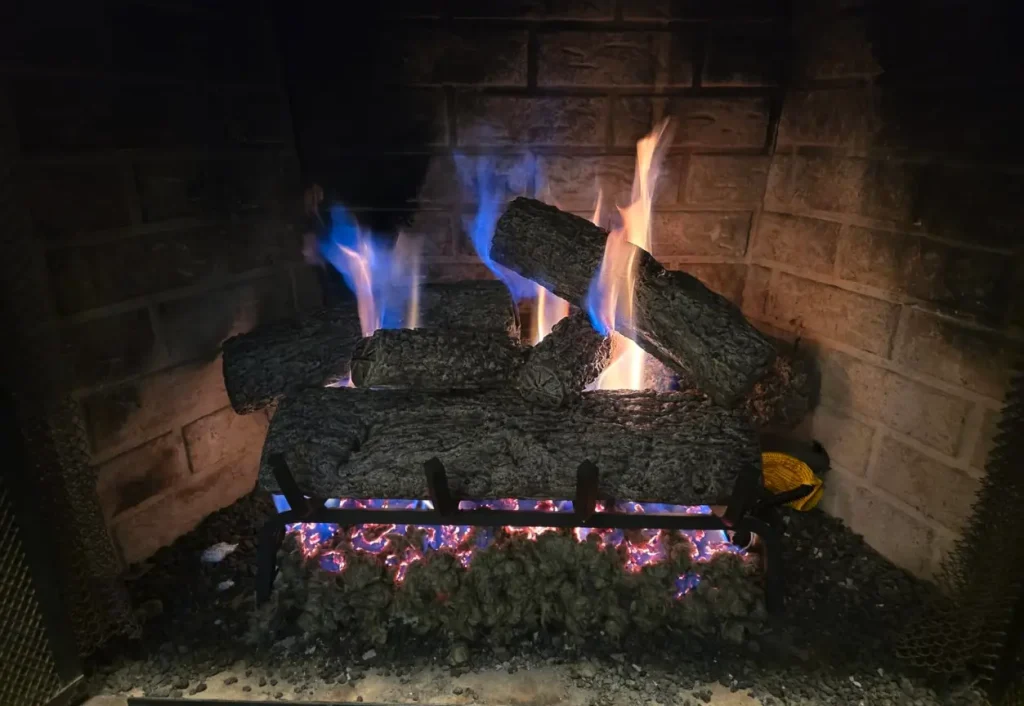
Image: David on Amazon
When Rising Running Costs Signal a Problem
Steady running costs are normal. Sudden jumps aren’t. So, if your habits haven’t changed and your bill has, something may be wrong with the unit or gas plan.
Three common causes are:
- A dirty burner or blocked vent makes the fireplace run longer to heat the room. It’s working harder for less output, and you’re paying for that waste every evening. Dirty burners or fouled pilots drop efficiency by 10–15%, meaning your fireplace burns more gas to deliver the same heat.
- A failing thermocouple causes the fireplace to turn off repeatedly. The flame lights, but the safety valve won’t hold open as it should. Thermocouples typically last 5–10 years depending on use; as they wear out, they may stop providing the pilot flame and make the system shut down, disrupting heat output.
- Incorrect gas pressure ruins the whole balance. Too low, and the unit underperforms and runs longer to make up for it. Too high, and it’s wasting fuel. Pressure issues get checked with pressure testing, which is part of any licensed gas inspection.
None of these are DIY fixes. Gas pressure testing and thermocouple replacement are licensed gas fitting work under NSW law and applicable gas-installation standards. And that’s for good reason.
A failed thermocouple doesn’t just waste fuel. It can also shut off the gas supply.
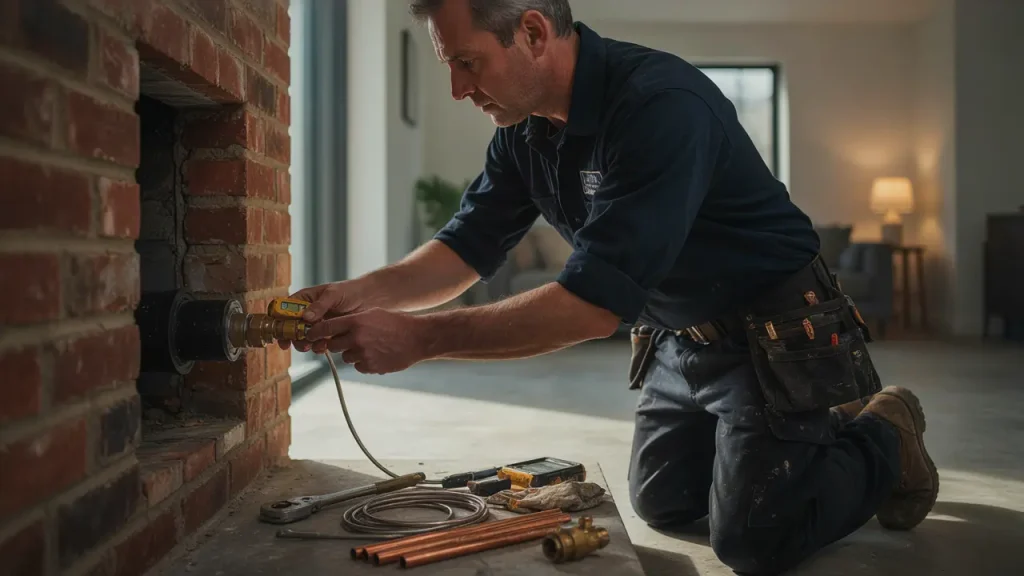
Image: AI Generated
So, if your bill jumps without a clear reason, our gas fireplace repairs Sydney service finds the actual cause rather than leaving you to guess.
FAQ About Gas Fireplace Running Costs
Here are Sydney homeowners’ main questions about gas fireplace running costs:
How much does it cost to run a gas fireplace per hour in Sydney?
Small units (20 MJ/h) cost about $0.70 per hour, while large ones (40 MJ/h) reach $1.40, based on Sydney’s 3.5¢/MJ rate. Your actual cost depends on your plan (2.2–4.9¢/MJ). Check your latest bill for your exact rate.
Does a gas fireplace use a lot of gas?
It depends on the model. Small decorative units use 15–20 MJ/h, while large ones exceed 40 MJ/h. A medium fireplace is comparable to running two gas cooktop burners at once. Most households run them 3–5 hours on cold evenings, not all day.
Is it cheaper to run a gas fireplace or reverse cycle air conditioning?
Reverse cycle wins at $0.38 to $0.60 an hour, but they are different. Gas provides radiant warmth and works during power cuts, whereas AC circulates air. Many Sydney homes use AC for the whole house and gas for living-room comfort.
Does the pilot light cost money when the fireplace isn’t in use?
Yes. A standing pilot burns 1–2 MJ/h continuously. Newer models use electronic ignition for zero standby cost. If yours is older, consult a professional regarding an upgrade for significant savings.
Is LPG or natural gas cheaper for a gas fireplace?
Natural gas is about half the cost of LPG in Sydney, making bottled LPG significantly pricier. Factor this in, as mains connection usually wins on cost.
So How Much Does It Cost To Run A Gas Fireplace?
A mid-size Sydney living room unit usually costs $1 to $1.50 an hour. And a correctly sized unit, serviced annually, stays cheap and stable all winter with no surprise jumps.
Curious what yours costs, or why your bill jumped? Lightning Bult‘s licensed team can service, repair, or size your unit. We cover the Northern Beaches, North Shore, Eastern Suburbs, and Inner West.