




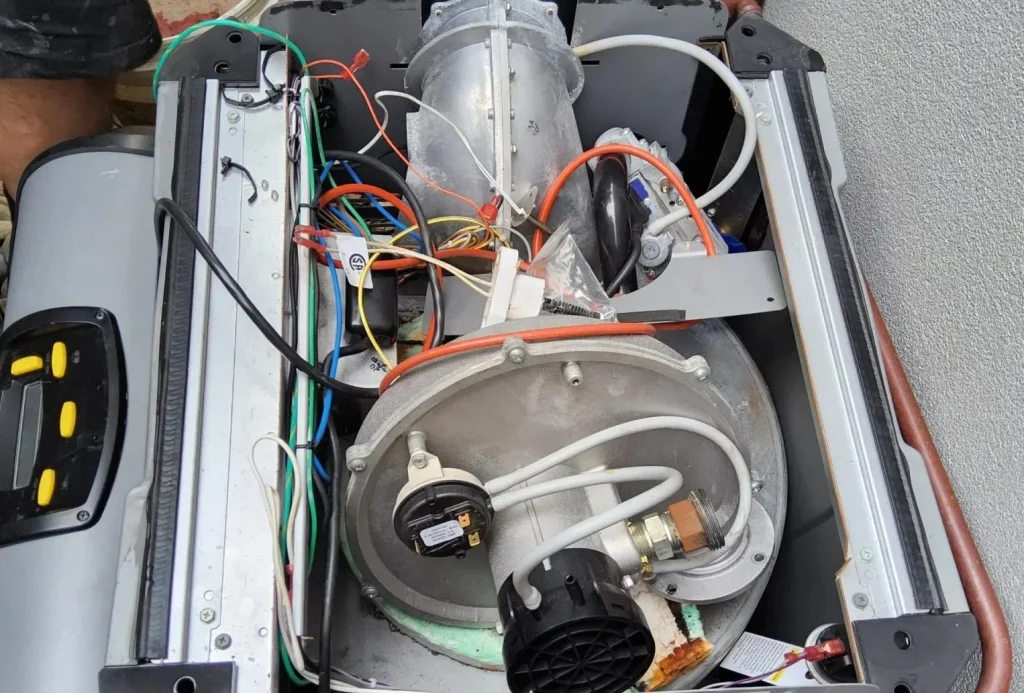
It’s the first warm weekend of spring. The cover’s off, the water’s clear, you’ve flicked the heater on and… nothing. No click, no whoosh, maybe just an error code blinking at you.
If your gas pool heater is not working after winter, don’t panic. Most spring start-up problems come down to a handful of simple things, like low water flow, a closed gas valve or spiders nesting in the burner over the cooler months. Some you can check yourself in five minutes. Others need a licensed gasfitter.
This guide walks you through 8 common causes, in the order worth checking them. It also shows you exactly where the line sits between safe homeowner checks and gas work that, in NSW, only a licensed gasfitter can do. If your heater needs more than a quick check, our gas pool heater repairs team can take it from there.
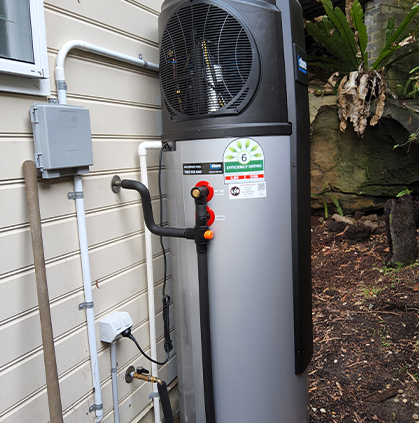
Got a heat pump instead? This post is for gas heaters only. Head to our guide on why a heat pump is not heating.
What Should You Check First?
Before you pick up the phone, run through these quick checks. None of them involve touching gas parts, and they solve a surprising number of “dead heater” call-outs.
- Is the pool pump running? A gas heater won’t fire unless water is moving through it.
- Is the heater switched on and set to heat? Check it’s not on standby, and that the set temperature is higher than the water.
- Is the gas on? Check the isolation valve on the gas line to the heater. If you’re on LPG, check the bottle isn’t empty.
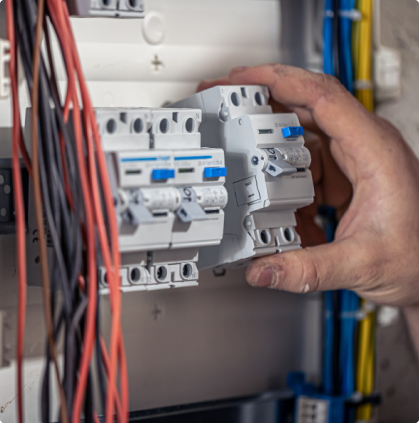
- Has the safety switch tripped? Most gas heaters still need power for the controls and igniter.
- Are the filter and baskets clean? A clogged filter after winter is one of the most common reasons a heater won’t start.
- Is there an error code? Write it down, along with your heater’s brand and model. It’ll save time if you need help.
Tip: take a photo of the heater’s display and the label with the model number before you call. It helps a technician bring the right parts the first time.
Why Is My Gas Pool Heater Not Working? 8 Common Causes
We’ve listed these from the simplest to the most technical. Start at the top and work down.
1. The Settings or Thermostat Aren’t Calling for Heat
It sounds too simple, but it catches plenty of people out after a few months off. The heater might be on standby, set to spa mode instead of pool, or set to a temperature lower than the water already is. In early spring, Sydney pools often sit around 18 to 20°C, so a set point of 20°C may not trigger anything.
If your heater is run by a pool controller, timer or app, check that too. Sometimes the heater is fine and the controller simply isn’t asking it to turn on.
What you can do: check the mode, raise the set temperature a few degrees above the water and wait a few minutes. If the display stays blank or won’t respond, it may be a controller or sensor fault, which is a job for a technician.
2. No Power to the Heater
Yes, it’s a gas heater, but most modern units still need power to run the display, controls and electronic igniter. If the display is blank, the problem is often electrical, not gas.
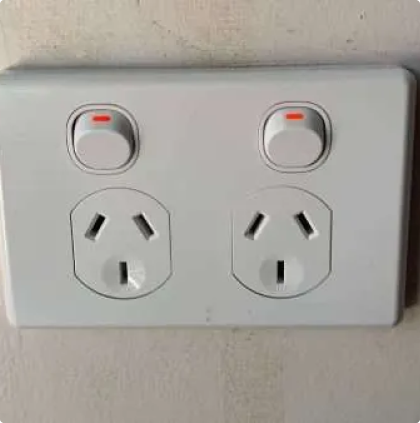
Common culprits are a tripped safety switch, a plug that’s been knocked out of the outdoor power point, or a timer that’s out of sync after a power outage. Storms in early spring can do this.
What you can do: check your switchboard for a tripped safety switch and reset it once. If it trips again straight away, leave it off and call a licensed electrician. Repeated tripping near pool equipment is a sign of a fault, and water and electricity are a risky mix.
3. Low Water Flow Is Tripping the Pressure Switch
This is one of the most common reasons a pool heater is not turning on in spring. Gas heaters have a pressure (or flow) switch that stops the burner from lighting unless enough water is moving through. It’s a safety feature. Without it, the heater could overheat itself.
After a winter shutdown, flow is often down because of:
- A dirty or clogged filter that needs a backwash or clean
- Leaves packed into the skimmer or pump basket
- Valves left half-closed from winter
- A variable-speed pump set too low to give the heater enough flow
- A low pool water level, so the pump is sucking air
What you can do: clean the baskets, backwash or clean the filter, check the valves are open and top up the water. If you have a variable-speed pump, try a higher speed when heating. If the heater fires after that, you’ve found your problem.
4. The Gas Supply Isn’t Getting Through
No gas, no heat. How you check depends on whether you’re on natural gas or LPG.
Natural gas:
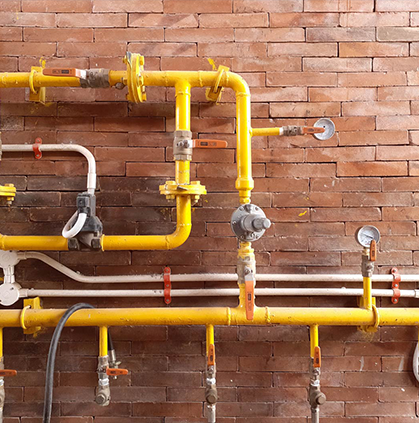
- Check the isolation valve on the gas line to the heater is open (the handle usually runs in line with the pipe when it’s on).
- Check your other gas appliances, like the cooktop or hot water. If they’re also not working, the problem may be at the meter or with your supply, so contact your gas retailer or distributor.
LPG (bottled gas):
- Check the bottle isn’t empty. Pool heaters use a lot of gas, so bottles can run out faster than you expect.
- If you have two bottles with a changeover valve, check the indicator and that the cylinder valves are open.
- If you recently swapped bottles and the heater still won’t light, air may have got into the line, or the regulator may be faulty. That’s one for a gasfitter.
One more thing: a heater set up for natural gas can’t run on LPG, and vice versa. Converting a heater between gas types is licensed gasfitting work.
5. Spiders or Debris in the Burner
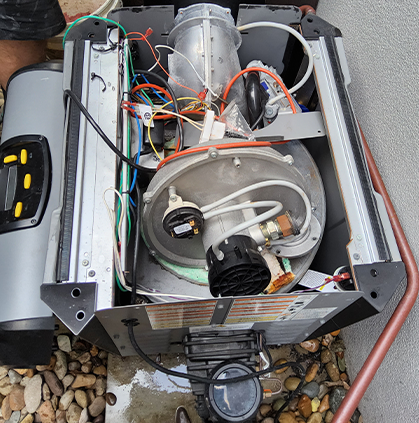
This one surprises a lot of people. Over winter, while the heater sits idle, spiders, insects and even small critters love to move into the burner tubes, pilot assembly and air vents. Their webs and nests can block the gas or air the heater needs to light properly.
Signs this might be the issue:
- The heater clicks but won’t light, or lights late with a loud “whoomp”
- The flame looks lazy, yellow or orange instead of mostly blue
- You notice soot or a burning smell when it does run
- There are webs, nests or leaves around the heater vents
What you can do: clear leaves, webs and plants from around the outside of the heater and its vents, and keep the area clear. Don’t remove the burner tray or poke anything into the burners. Cleaning the burners and pilot is gas work, so book a service if you suspect a blockage. A delayed ignition is a safety issue, so stop using the heater until it’s checked.
6. The Pilot Won’t Light or Won’t Stay Lit
Older gas heaters often use a standing pilot, a small flame that stays on and lights the main burner. If it’s gone out over winter, the heater won’t fire.
If your heater has relighting instructions on its label, you can follow them carefully. But if the pilot lights and then goes out as soon as you let go of the knob, the thermocouple (the safety sensor that confirms the pilot is lit) is likely worn or faulty. Wind, a blocked pilot tube or low gas pressure can also stop it staying lit.
What you can do: relight it once, by the book. If it won’t stay lit, or you smell gas while trying, stop. Replacing a thermocouple or cleaning a pilot is a job for a gasfitter.
7. A Faulty Igniter or Flame Sensor
Most newer heaters don’t have a standing pilot. They use electronic ignition, either a spark igniter or a hot surface igniter, plus a flame sensor that checks the burner has actually lit. This is the usual cause when your gas pool heater is not igniting, even though everything else checks out.
What you hear (or don’t hear) gives you a clue:
- No clicking or glow at all: often a power, control board or igniter fault
- Clicking, but no flame: gas may not be reaching the burner, or the igniter is weak
- It lights, then cuts out after a few seconds: often a dirty or faulty flame sensor, or a gas pressure problem
Most heaters try a few times and then lock out with an ignition error code.
What you can do: note the code and the pattern, then turn the heater off. Don’t keep resetting it over and over, as unburnt gas can build up. Testing and replacing igniters, sensors and gas valves needs a licensed technician.
8. The High-Limit Switch or a Sensor Has Tripped
Gas heaters have a high-limit switch that shuts the burner down if the water or heater gets too hot. Once it trips, the heater may refuse to start until it’s reset, or it may keep shutting down mid-heat.
The high limit usually trips because of a deeper problem, not because it’s faulty itself. Low flow (cause 3) is the most common trigger. A faulty temperature sensor, scaling inside the heat exchanger or a bypass valve set incorrectly can also be to blame.
What you can do: fix any flow problems first. If the heater keeps tripping on high limit, stop using it and get it inspected, as repeated overheating can damage the heat exchanger.
What Do Gas Pool Heater Error Codes Mean?
Every brand uses its own codes, so the same fault might show as a short letter code on one heater and a number on another. Your owner’s manual, or the inside of the heater’s front panel, should have the full list. Most codes fall into a few groups:
| What the code is about | What it usually means | Linked cause above |
| Pressure or flow switch | Not enough water moving through the heater | Cause 3 |
| Ignition failure or lockout | The burner tried to light a few times and failed | Causes 4, 5, 6 and 7 |
| Flame loss | The burner lit, then the flame sensor lost it | Causes 4, 5 and 7 |
| High limit | The heater got too hot and shut down | Causes 3 and 8 |
| Sensor fault | A temperature sensor is reading wrong or has failed | Causes 1 and 8 |
| Power or control fault | A problem with the control board or power supply | Cause 2 |
If a flow code clears after you clean the filter, great. If an ignition, flame or high-limit code keeps coming back, that’s your cue to stop resetting and book a technician.
Safe Homeowner Checks vs Licensed Gasfitter Work in NSW
In NSW, only a licensed gasfitter can carry out repairs involving gas. That includes relocating or replacing a gas appliance, and it applies to both natural gas and LPG. After the job, the gasfitter must give you a certificate of compliance (for natural gas) or a certificate of inspection (for bottled LPG). You can read more on the NSW Government’s gasfitter page.
Here’s where the line usually sits:
| You can safely do this | Leave this to a licensed professional |
| Check the heater’s settings, mode and set temperature | Cleaning or removing burners and the pilot assembly |
| Check the pump is running, and clean the baskets and filter | Replacing igniters, flame sensors, thermocouples or gas valves |
| Open or close the gas isolation valve to the heater | Testing or adjusting gas pressure and regulators |
| Check and swap LPG bottles as your supplier directs | Converting a heater between natural gas and LPG |
| Reset a tripped safety switch once | Repeated safety switch trips or any wiring work (licensed electrician) |
| Relight a standing pilot, following the label instructions | Anything involving a gas smell, soot or delayed ignition |
| Clear leaves, webs and plants from around the outside of the heater | Opening the cabinet to work on internal parts |
It’s not just about the law. Unlicensed gas work can cause fires and carbon monoxide poisoning, and your insurer may not cover damage caused by it. If in doubt, stop and call someone.
Smell Gas? Stop Here
If you smell gas around your pool heater (that rotten egg smell), skip the troubleshooting.
- Turn the heater off, and turn off the gas at the isolation valve or meter if it’s safe to do so.
- Don’t use switches, phones or anything that could spark near the smell.
- Move away from the area, and keep kids and pets back.
- Call your gas distributor’s emergency line. For most natural gas homes in Sydney, that’s Jemena on 131 909. The number is also on your gas bill. If you’re on LPG, call your bottle supplier.
- If the smell is strong or you think there’s a fire risk, call 000.
Once the area is safe, our team can help with gas leak repairs and get your heater checked before it’s used again.
Is It Worth Repairing, or Is It Time for a New Heater?
Most of the faults above, like a worn igniter, a dirty flame sensor or a blocked burner, are fixable. A repair is usually the sensible first step, especially if your heater is only a few years old.
It’s a different story if the heater is getting on in age, keeps breaking down, or has rust and corrosion on the heat exchanger. Our guide to the signs it’s time to replace your pool heater can help you weigh it up. And if you’ve spotted water pooling under the unit, read why your pool heater is leaking water first.
How to Avoid Spring Start-Up Problems Next Year
A little prep before winter saves a lot of hassle in September.
- Turn the heater off properly at the controls when you stop using it, rather than just letting the pool go cold.
- Keep the area around the heater clear of leaves, plants and stored items, so pests have fewer places to settle.
- Book a service before the season starts. A technician can clean the burners, check the ignition and test the safety controls before your first swim.
- Clean the filter before you fire it up in spring, so the heater gets the flow it needs from day one.
Gas Pool Heater Not Working FAQs
Why Is My Pool Heater Not Turning On?
The most common reasons are that the pool pump isn’t running, the filter is clogged, the heater is on standby or set below the water temperature, or the safety switch has tripped. Check those first. If the display is on but the burner won’t fire, the problem is more likely ignition or gas supply.
Why Is My Gas Pool Heater Not Igniting?
If you hear clicking but get no flame, gas may not be reaching the burner, the igniter may be weak, or spiders and debris may be blocking the burner. If it lights then cuts out, the flame sensor is a common culprit. Once the basic checks are done, these need a licensed technician.
Can I Fix My Gas Pool Heater Myself?
You can check the settings, power, filter, pump, valves and LPG bottle. You can also relight a standing pilot by following the label. Anything involving gas parts, like burners, igniters, valves or regulators, must be done by a licensed gasfitter in NSW.
Why Does My Gas Pool Heater Keep Turning Off?
Usually because a safety control is shutting it down. Low water flow and a tripped high-limit switch are the usual suspects, followed by a dirty flame sensor. Clean the filter and baskets first. If it keeps happening, stop using it and get it checked.
Is It Normal for a Gas Pool Heater to Smell When It First Starts?
A faint burning smell for a few minutes on the first run of the season can be dust burning off. A gas smell (rotten eggs) is not normal. Turn the heater off, follow the steps in the safety section above, and don’t use it until it’s been checked.
Get Your Gas Pool Heater Back Up and Running
When a gas pool heater is not working in spring, it’s often something simple, like a dirty filter, a closed valve or a heater still on standby. If you’ve run through the safe checks and it still won’t fire, the fix is likely inside the heater, and that’s where a licensed professional comes in.
Lightning Bult’s licensed team handles pool gas heater repairs across the Northern Beaches and North Shore. Because our plumbers, gasfitters and electricians work on the same team, one visit can cover the gas side and the electrical side, without you having to chase two different trades.
Get in touch to book gas pool heater repairs, or explore our full range of pool heating services in Sydney.