






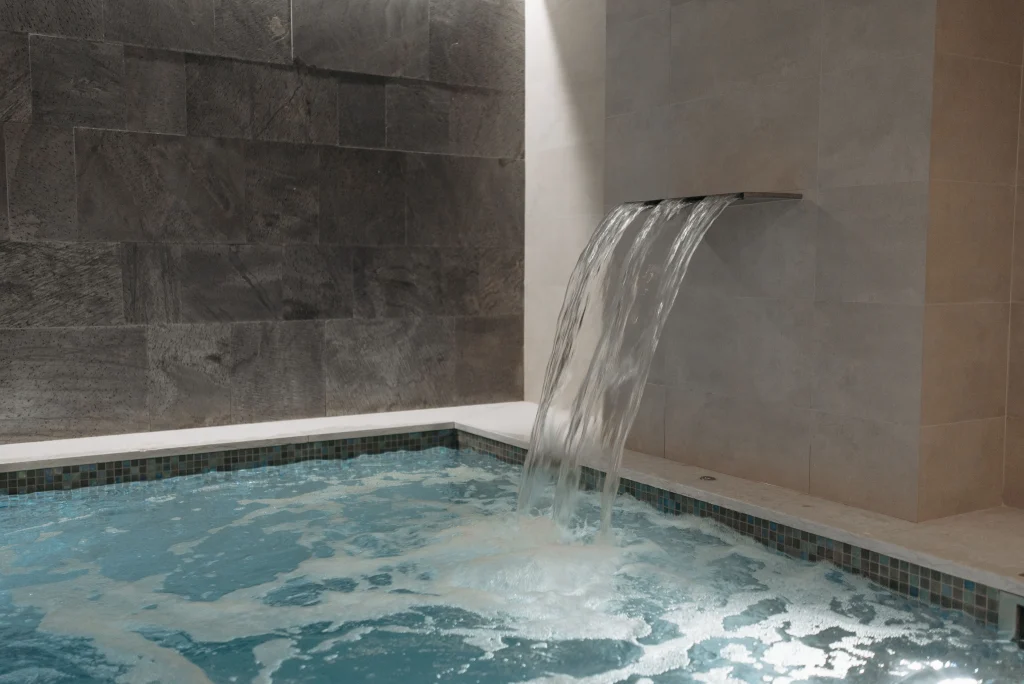
Yes, you can heat a plunge pool, and it’s much cheaper than heating a full-size pool. Most plunge pools hold around 10,000 to 20,000 litres, so there’s far less water to warm up.
You have three main options: a heat pump, a gas heater or an electric element heater. For most Sydney homes, a heat pump is the best all-rounder. Gas suits people who want fast heat now and then. An electric element only makes sense for occasional top-ups.
Below, we compare the three, show what size you need and what each costs to run.
A quick note on prices: the figures here are general ranges as of November 2026, not a quote. Your cost depends on your pool, your heater, your power or gas setup and how warm you like it. For a price based on your pool, get in touch with our team!
Why Plunge Pools Are Easy to Heat
A standard 8 x 4 m backyard pool holds about 48,000 litres. A 15,000 litre plunge pool holds less than a third of that. Less water means a smaller heater, faster heat-ups and lower bills.
Many people also want their plunge pool warmer than a big pool, sometimes 30°C or more. That takes more energy, so it’s worth planning your heater around how you’ll actually use it.
Your Three Heating Options
Heat Pump
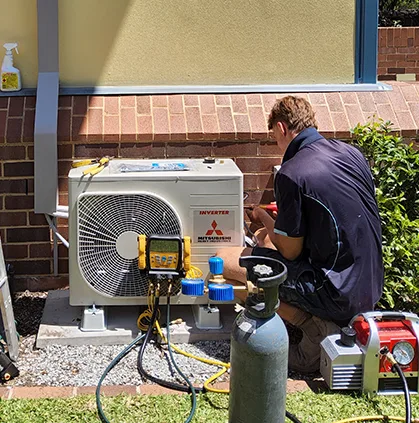
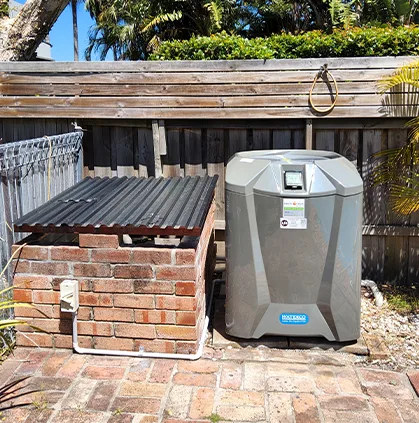
A heat pump moves heat from the air into the water. It doesn’t make heat, so it uses far less power than a heater that does. It’s slower than gas, but it’s the cheapest to run by a long way. It suits people who swim often and want the water warm most of the year.
Gas Heater
A gas heater burns natural gas or LPG to heat the water quickly. A small one can warm a plunge pool in a few hours. It costs more to run than a heat pump, so it suits weekend use or quick warm-ups for guests.
Electric Element Heater
This works like a kettle element fitted in the pool’s plumbing. It’s simple and usually the cheapest to buy. But it’s very slow on a plunge pool and the most expensive to run. It’s best for small spa-style pools or keeping water topped up, not heating from cold.
| Heat pump | Gas | Electric element | |
|---|---|---|---|
| Cost to buy | Medium | Medium | Low |
| Cost to run | Lowest | High | Highest |
| Heating speed | Slow to medium | Fast | Very slow |
| Best for | Regular swimming | Occasional, fast heat | Small top-ups |
What Size Heater Does a Plunge Pool Need?
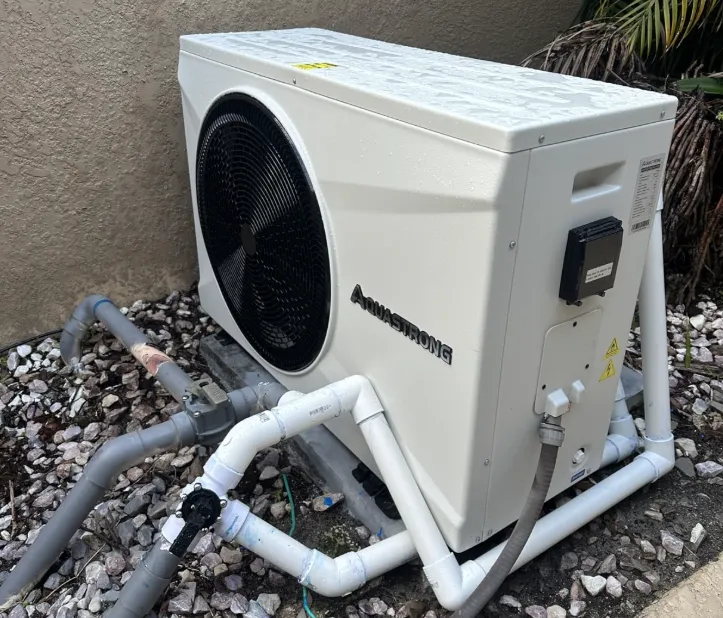
Heat Pumps (kW)
For a Sydney pool kept at 28°C from October to April, one Australian sizing chart suggests:
| Pool size | With a cover | Without a cover |
|---|---|---|
| 10,000 L | About 3 kW | About 5 kW |
| 20,000 L | About 5 kW | About 10 kW |
If you want warmer water or year-round swimming, you’ll need a bigger unit. Wind, shade and a cover all make a difference too. Our guide on how to size a pool heat pump explains it step by step.
Gas Heaters (MJ)
Gas heaters are rated in megajoules per hour (MJ/h). A plunge pool usually only needs a small heater, often around 100 to 200 MJ/h. A 125 MJ/h heater can warm a 15,000 litre pool by 5°C in about 3 hours.
Electric Elements (kW)
Elements for pools and spas are often around 3 kW. On a 15,000 litre plunge pool, that warms the water by only about 0.17°C an hour. A 5°C rise would take more than a day, before any heat loss.
What Does It Cost to Run? A 15,000 L Example
Here’s what it costs to warm a covered 15,000 litre plunge pool by 5°C with each heater:
| Heater | Cost per 5°C heat-up | Time to heat |
|---|---|---|
| Heat pump (5 to 9 kW) | About $5 to $7 | About 10 to 17 hours |
| Gas, natural gas (125 MJ/h) | About $14 to $22 | About 3 hours |
| Gas, LPG (125 MJ/h) | About $21 to $30 | About 3 hours |
| Electric element (3 kW) | About $29 | About 29 hours |
How we worked it out: electricity at 33c per kWh, a heat pump giving 4 to 6 units of heat per unit of power, gas heaters about 80% efficient, natural gas at 3.5c to 5.5c per MJ and LPG at 5.4c to 7.7c per MJ. These figures assume no heat loss, so real costs will be a bit higher, especially without a cover.
In short, a heat pump costs about $1 to $1.50 for each degree of warmth. An electric element costs nearly $6.
Gas Line and Electrical Work on a Small Sydney Block
Plunge pools are popular on tight blocks, from Inner West terraces to Northern Beaches courtyards. Small spaces make heater placement trickier, so plan for it early.
Heat Pump
- Power: small plunge pool units may run off an outdoor power point, but many need their own circuit. A licensed electrician can check your switchboard.
- Airflow: it needs clear space around it to pull in air. A cramped side passage can reduce how well it works.
- Noise: heat pumps hum while running. Think about your neighbours’ bedroom windows.
Gas Heater
- Gas line: the heater may need a new or bigger gas line from the meter. LPG homes need room for bottles.
- Clearances: in NSW, a flue that points towards a boundary must be more than 450 mm from it (NSW Government). There are also rules for distance from windows and doors, so the spot you have in mind may not work.
- Licensed work: only a licensed gasfitter can install it.
Electric Element
- A 3 kW element draws about 12.5 amps, so it usually needs its own circuit. All wiring near a pool must be done by a licensed electrician.
At Lightning Bult, our electricians, gasfitters and plumbers work on the same team. That means one visit can cover the power, gas and plumbing for your plunge pool heater.
How Warm Should a Plunge Pool Be?
Many people enjoy 28 to 30°C for relaxing. Warmer water feels great in winter, but every extra degree adds to your bill. For a deeper look at temperatures, see our guide to spa temperature.
Heated Plunge Pool FAQs
What Is the Best Way to Heat a Plunge Pool?
For most Sydney homes, a heat pump. It’s the cheapest to run and keeps the water warm for longer seasons. Gas is better if you want fast heat only now and then.
How Much Does a Plunge Pool Heater Cost?
A small pool heat pump is often around $3,100 to $5,700 supplied and installed, as covered in our pool heat pump installation cost guide. Gas costs depend heavily on your gas line. Electric elements are cheaper to buy but cost far more to run.
Can I Use a Pool Cover on a Plunge Pool?
Yes, and you should. A cover stops heat escaping overnight, so you need a smaller heater and pay less to run it.
Get Help Choosing a Plunge Pool Heater
The right heater depends on your pool, your space and how you’ll use it. A quick site visit is the best way to find out what will work.
Lightning Bult installs pool heat pumps and gas pool heaters across the Northern Beaches, North Shore, Eastern Suburbs and Inner West. We’ll check your pool, power and gas, then give you a clear quote.
Get in touch to book a visit!