



You may ask: How many solar panels to heat a pool? Does more always mean better? Those are the questions pool owners ask most. And the answer depends on more than pool size. Plus, you shouldn’t rely on guesswork.
In this article, we cut through the noise to size your solar pool heating the right way, matching your setup to your budget and needs. Let’s dive in.
Quick Answer: How Many Solar Panels Do You Need to Heat a Pool?
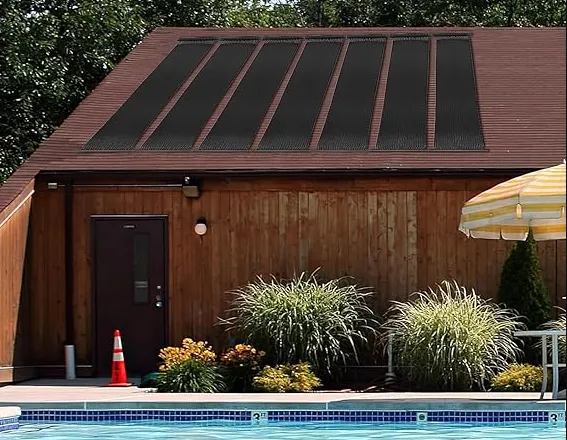
Image by Amazon
For most Sydney pools, plan for solar collectors to cover 80%–100% of the pool’s surface. So, a 40 m² pool needs about 32 m² of collectors, or around 7–8 standard panels, depending on the brand.
Australian bodies like SPASA support this, though the Standard AS 3634 allows as low as 60% collector area in ideal conditions.
Why the difference? It depends on how long you want to swim. Lower coverage of solar panels means you can swim through summer, while higher coverage lets you swim from September to May.
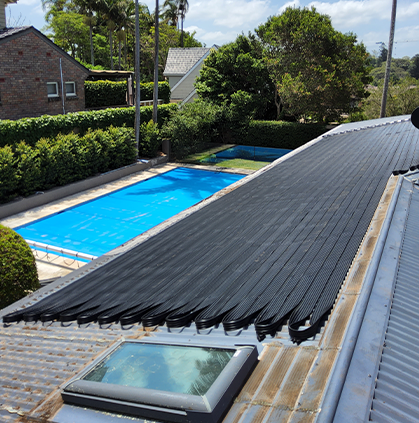
And when people say “solar panels for pool heating,” they mean solar thermal collectors. Black roof panels that circulate pool water to absorb sun heat.
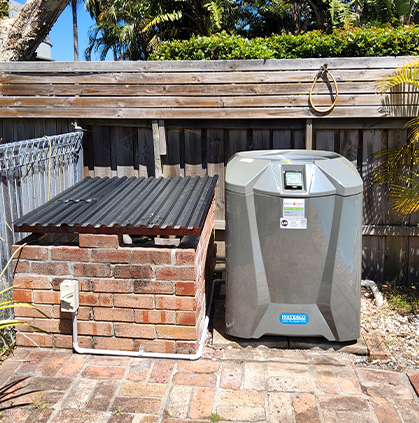
These panels differ from solar PV panels, which generate electricity to run a heat pump that warms the pool.
Sure, both approaches can heat a swimming pool, but they work through entirely different mechanisms, and the sizing logic for each is completely separate.
Solar thermal collectors are sized by the pool’s surface area. Solar PV-powered heat pumps are sized by the unit’s kilowatt output.
How to Calculate How Many Solar Panels to Heat a Pool
The math is not that deep once you know your pool’s surface area. That one number sets the base for everything else.
1. Measure Your Pool’s Surface Area
To find surface area, multiply length by width. For an 8-metre by 4-metre rectangular pool, the area is 32 square metres (8 × 4 = 32).
For round pools, use a different method. Find the diameter, divide it by 2 to get the radius, then calculate radius × radius × 3.14. For a 5-metre round pool, the radius is 2.5 metres, so 2.5 × 2.5 × 3.14 = about 19.6 m².
If the pool is kidney-shaped or free-form, split it into rectangles and circles, find the area of each piece, then add them together.
2. Choose Your Coverage Ratio
This is where your heating goals come in. They shape the whole system.
At 50% coverage, size for summer top‑up heat to keep water comfortable from November to February. It’s a solid start, but you’ll feel less warmth in September or April.
At 80% coverage, you target a longer season. Most homeowners with a north-facing roof can swim from September to April at this level. That’s up to five more months a year than an unheated pool.
At 100% coverage, you get max performance. The pool heats faster after cool nights, recovers quickly from cold snaps, and relies less on backup heating. This level often pushes the season into May.
3. Convert Coverage Area into a Panel Count
Once you know your target collector area, divide that by the space one panel covers.
Most modern rigid solar collector panels run about 2.5–3.6 m² each. Sizes vary by brand and model, so treat this as a rough estimate until you get a formal quote.
Your installer will verify the exact panel count after reviewing your roof layout and orientation.
For example, an 8 × 4 m pool with 80% coverage:
- Pool surface: 32 m²
- Target area at 80%: 25.6 m²
- Panels needed (using 2 m² panels for this example): about 13 panels
4. Add Adjustments for Your Situation
Some pools need extra coverage. Add 20% to your calculated area if the pool sits in shade most of the day, is indoors, or has a roof that faces east or west rather than north.
The same 32 m² pool with a west-facing roof would need 26 m² × 1.20 = 31 m² of collectors. If you have both shade and a poor roof orientation, you may need collectors equal to 100% of your pool surface area.
Examples of Estimated Solar Panel Numbers (Based on Pool Size)
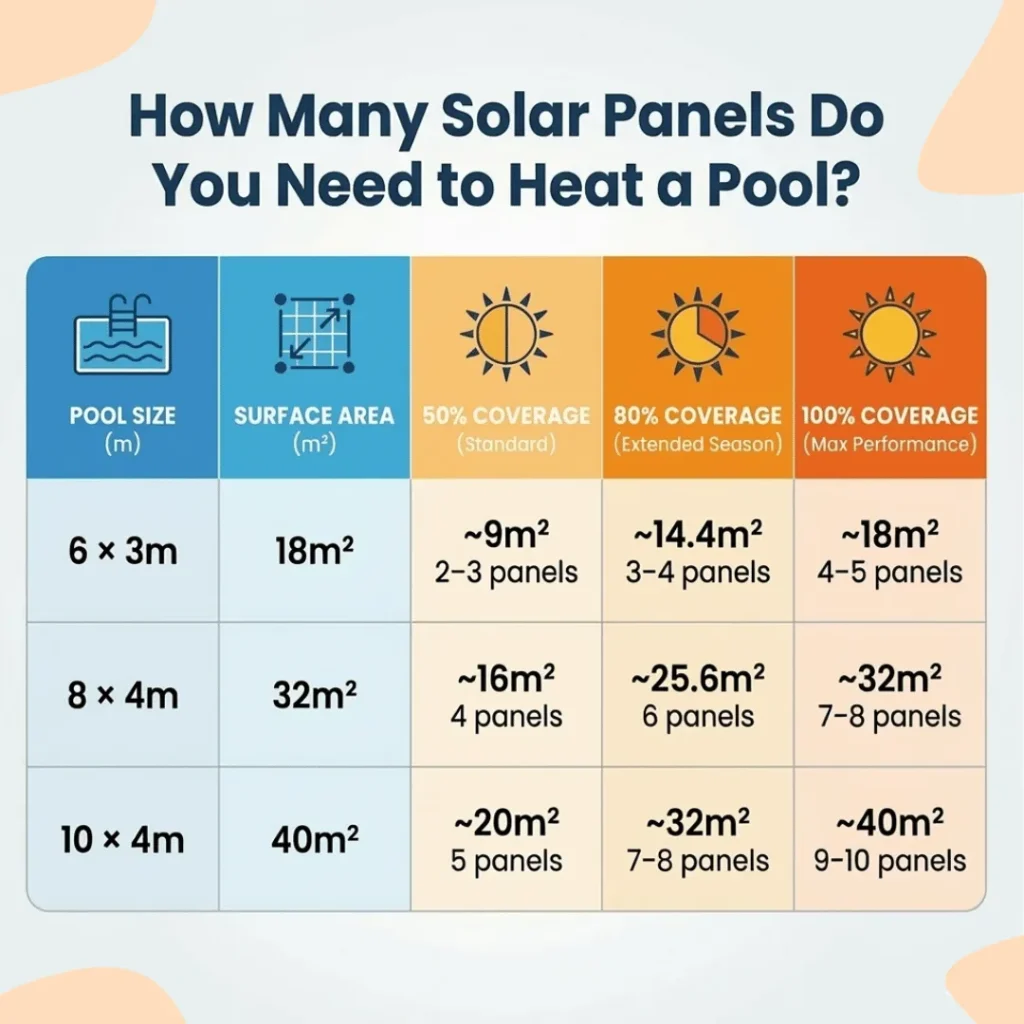
The table below provides rough numbers for how many solar panels are required to heat a pool. These are guides only, not final installation specifications.
| Pool Size | Surface Area | 50% Coverage | 80% Coverage | 100% Coverage |
|---|---|---|---|---|
| 6 × 3m | 18m² | ~9m² / 2–3 panels | ~14.4m² / 3–4 panels | ~18m² / 4–5 panels |
| 8 × 4m | 32m² | ~16m² / 4 panels | ~25.6m² / 6 panels | ~32m² / 7–8 panels |
| 10 × 4m | 40m² | ~20m² / 5 panels | ~32m² / 7–8 panels | ~40m² / 9–10 panels |
Panel counts assume standard solar collectors (~4.4 m² each) and a north-facing, unshaded roof. An installer assessment will confirm your actual requirements.
What Affects the Number of Solar Panels You Need?
prostooleh on Freepik
Your pool’s surface area is the starting point, but many other factors can make the number of panels go up or down.
1. Roof Orientation
North-facing roofs in Sydney collect the most sun for solar thermal collectors. East or west faces can work, but typically need 10–20% more collector area for the same heating.
Limited roof space is a common constraint. Partial shading from a tree branch, a gable, a skylight, or a nearby roof can noticeably reduce daily heat output.
So, before sizing a system, perform a morning-to-afternoon shade check to spot trouble spots.
2. Climate and Location
Sydney’s mild climate lets you swim longer than most Australian cities. But unheated pools drop to 14–16°C in winter. So, heating is needed.
To swim through June and July, solar alone isn’t enough due to shorter days and weaker winter sun. You need to pair solar with a heat pump for warmth on cloudy days and in cold spells.
Also you need to understand solar heating for swimming pools cost, including backup system running costs, to plan the total investment.
3. Desired Water Temperature
Solar panels heat water daily. In Sydney, a typical 4.4 m² panel delivers about 15–17 kWh of heat on a clear spring or autumn day.
For a 40 m² pool to be 27°C in mid-October, you’ll need about 32 m² of panels (7–8 panels). To reach 28–29°C in late March or early April, expect about 40 m² of panels (around 9 panels).
If unsure how to size a pool heat pump to match your solar setup, experienced pool heating services can map it out using your pool volume and seasonal goals.
4. Solar Collector Colour
Black collectors soak up about 95% of sunlight. Coloured roof-matching ones take in 75–85%. You’ll need around 20% more area to keep the same output.
For a 30 m² pool heated to 28°C, black collectors need about 24 m², while coloured ones need about 29 m². Black is the most efficient choice unless aesthetics matter more.
5. Pool Cover Usage
A pool cover is your most powerful efficiency tool. Pools lose up to 70% of their heat through evaporation, and a solar blanket can cut that loss by 70–90%.
If used consistently, you can reduce your required collector area by 20–30% and still meet temperature goals. A pool with a cover and 60% collector coverage often stays warmer than an uncovered pool with 100% coverage.
FAQ About How Many Solar Panels to Heat a Pool
These are some of the most asked questions about solar panels for pool heating:
Can solar panels heat a pool in winter?
Solar thermal collectors work well from late spring to early autumn. But solar alone won’t keep pool temperatures comfortable through winter. For year-round 28°C swimming, you’ll need a heat pump backup during colder months.
What is the 20% rule for solar panels?
The 20% rule suggests adding 20% more collector area if your roof isn’t north-facing, your pool is shaded, or it’s indoors. This extra area compensates for lower efficiency. Without it, your system may fail to reach your target temperature.
Is a heat pump better than solar pool heating?
Different systems fit different needs. Solar costs $4,800–$5,200 upfront but is nearly free to run, lasting 10–25 years. Heat pumps cost $2,500–$8,500 to install with $50–$230 monthly costs, lasting 5–7 years.
In Sydney, solar works best from September to May. Heat pumps are better for steady 28°C water year-round. For more on fuel types, read this gas vs electric pool heater comparison alongside your solar research.
Conclusion
How many solar panels heat a pool? It depends on the collector size. With standard 4.4m² rigid panels, you would need 4–8 to reach about 80% coverage. Smaller modular collectors will need more.
But, if you’re still not sure, it’s best to consult a pool heating expert at Lightning Bult. Our team assesses your pool, roof, and goals to recommend the perfect solar pool heating setup for your home.