




Your pool looks great in the backyard. But from April to October, it’s too cold to swim unless you know how to heat a pool in Sydney.
And matching the right system to your pool size, budget, and swimming frequency is key.
Yes, whether for holidays or year-round 28°C dips, the right setup of pool heating in Sydney can change everything. Curious? Read on!
Key Takeaways
- Solar heating is a common, low-maintenance pool setup. Once installed, pump costs are minimal, warming the pool from September to April.
- Gas heaters heat fastest but cost 1,500–4,000 per season to run.They’re good for occasional use but not ideal for year-round heating.
- For Sydney, electric heat pumps are a solid all-round choice with moderate running costs (300–800/year), reliable daily use, and better performance in cooler months.
- If you’re not ready for a full pool heating system yet, adding a pool cover or windbreak is a low-cost, effective way to heat a pool in Sydney
6 Ways to Heat a Pool in Sydney
There are more options than most pool owners realise. Here are the seven worth knowing about:
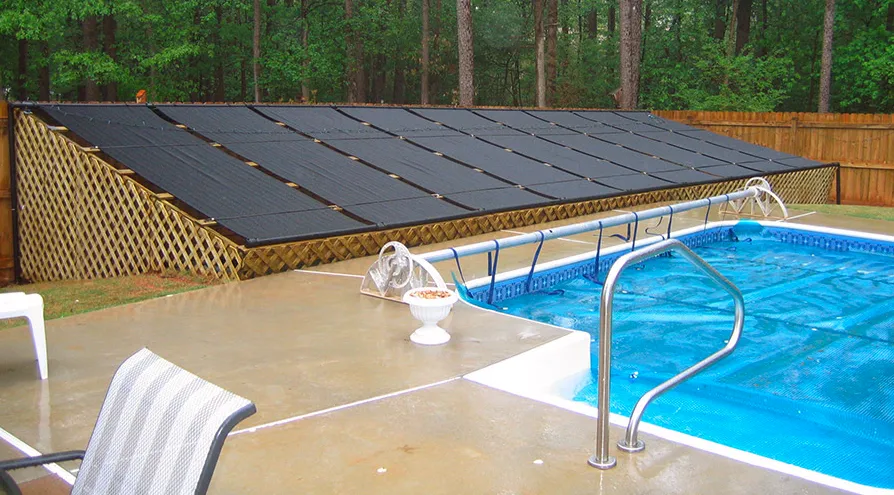
1. Use Solar Pool Heating
- Best for: Homeowners focused on sustainability and low operating costs
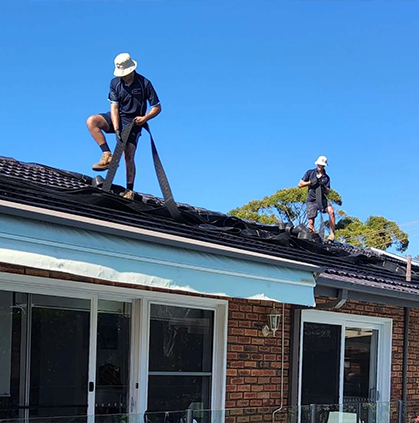
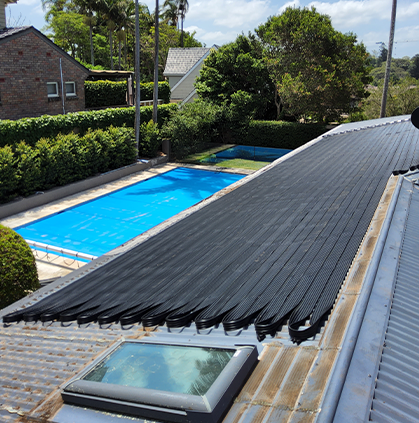
Solar pool heating is a top pick for Sydney homeowners. The system moves pool water up to roof collectors, where the sun warms it before it comes back a few degrees hotter.
And to install this pool heating system, you’ll need roof space about 80% to 100% of your pool size. With it, you’ll see a 5°C to 10°C heat boost instead of no heat.
What to do to use this pool water heater? Professionals are suggested for this method:
- Unroll solar collectors on a suitable roof.
- Connect mats with provided couplers and clamps.
- Cut the pool’s return pipe to install a bypass valve.
- Run PVC piping from the valve to the roof and back to the pool.
- Turn on the pump and check all new connections for leaks.
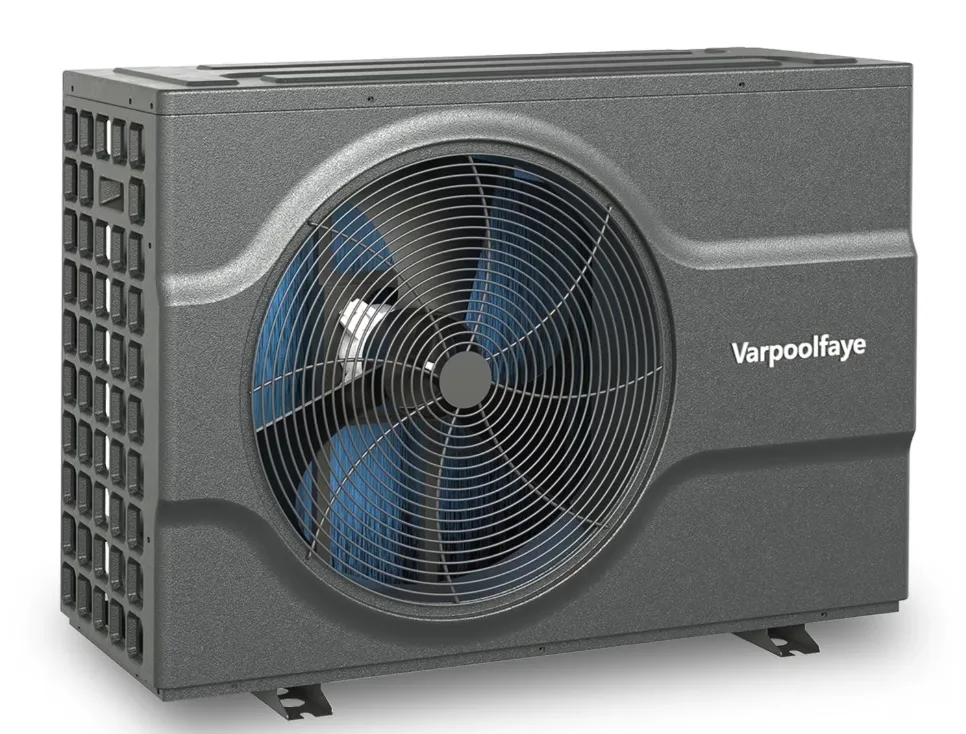
2. Install Electric Inverter Heat Pump
walmart.com
- Best for: Homeowners seeking year-round swimming with low maintenance
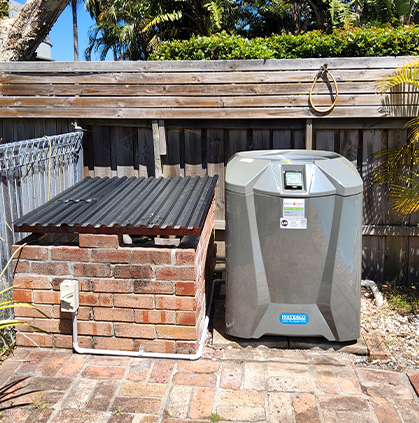
These pool heating systems are the modern standard. They don’t make heat. They pull heat from the air and move it to your pool water. Basically, that’s how a heat pump works.
But, unlike regular heat pumps that just turn on or off, inverter technology works like cruise control. It heats the water, then adjusts output to maintain temperature.
For installation, professionals are required due to the system’s high-voltage electricity:
- Place a solid base near pool equipment.
- Ensure 500mm side/rear clearance and up to 2500mm front clearance for airflow.
- Install a bypass manifold on the PVC return line for flow control.
- Have a licensed electrician to install a dedicated 15–40 amp circuit.
3. Use Gas Heating (Natural Gas or LPG)
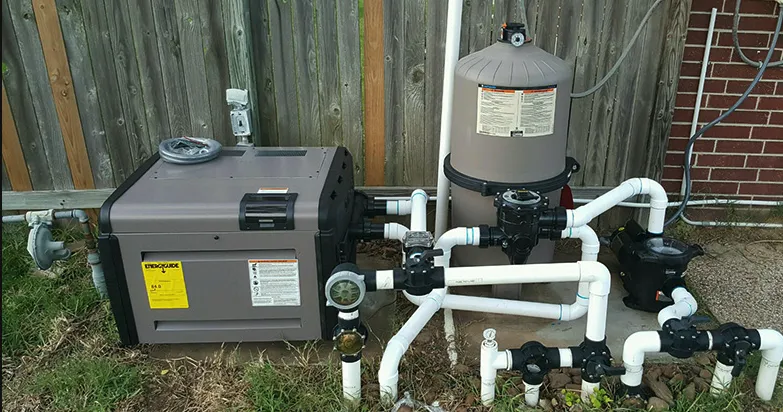
Image by zealux.com
- Best for: Homeowners who prioritise quick heat and occasional use
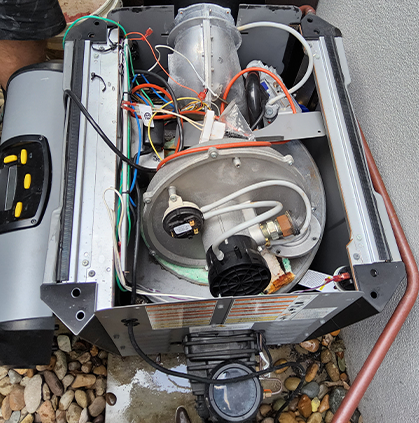
A gas burner heats copper coils, and pool water runs through them and comes out warm. It uses natural gas or LPG. No sun needed, no cold-weather cutoff. It just works any hour, any season.
Gas heaters make their own heat. They’re the fastest and most reliable way to heat a pool in Sydney. But that speed costs about $1,500 to $4,000 per swimming season that makes people compare gas vs electric pool heaters.
How to heat a pool this way? Contact a gas fitter to do the tasks:
- Size gas pipe and calculate MJ rating.
- Pour a fire-rated base near the pool filter.
- Run a high-pressure gas line from the meter to the heater.
- Connect pool plumbing with high-temp PVC or copper.
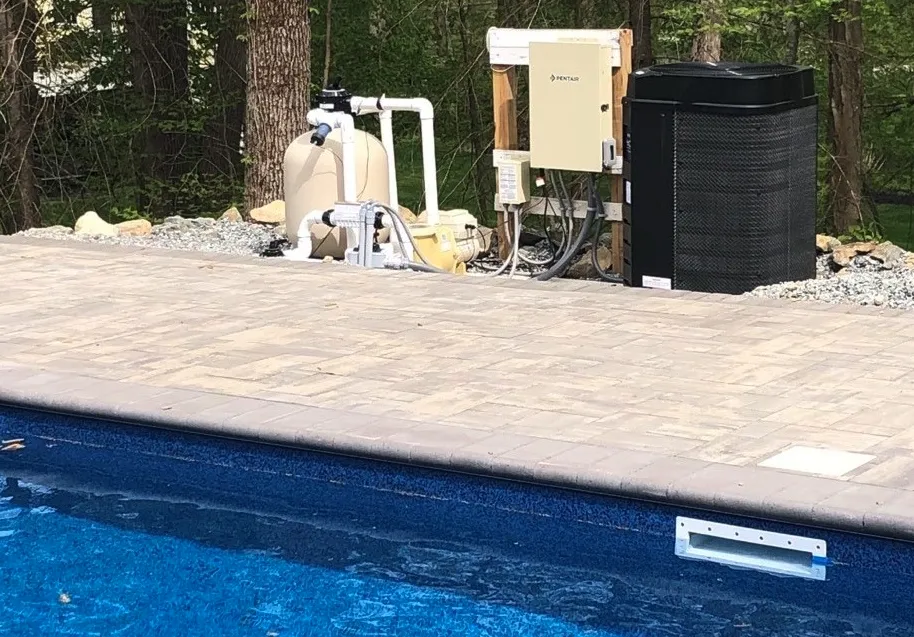
4. Use Electric Resistance Heater
energy.gov
- Best for: Homeowners with smaller pools looking for affordable upfront costs
An electric resistance heater is basically a big kettle element. It converts electricity to heat with no energy loss, but is far less efficient than a heat pump.
They work by sending pool water straight over a hot heating element (a resistor). And since it doesn’t rely on air or sun, it gives you 100% consistent heat no matter rain or clouds.
To install this heating method, you’ll need a technician to help:
- Mount the pool heating system vertically or horizontally on the equipment wall.
- Install flow switch to prevent element burnout if pump stops.
- Wire unit to high-amperage dedicated electrical sub-board.
- Connect 40mm or 50mm PVC pipes to inlet and outlet.
5. Use Solar Pool Blanket
Amazon.com
- Best for: Homeowners looking for an immediate, low-cost heat retention solution
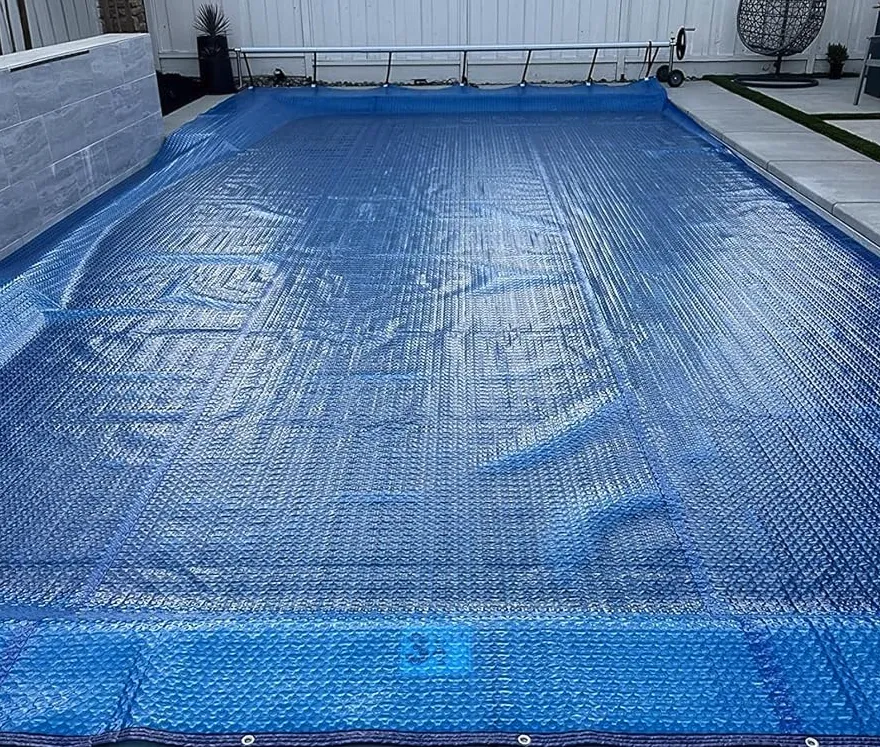
This is more than a cover. It’s a physics-based tool to keep your pool warm. A solar blanket uses translucent bubbles to let sun rays in while trapping heat, so it doesn’t escape into the night air.
Did you know that evaporation makes up to 70% of pool heat loss? A blanket nearly stops that. And if you already have a heater, the blanket eases its job and cuts your running costs right away.
- Order a blanket slightly larger than your pool’s dimensions.
- Let it settle in the water for 24 hours to remove wrinkles.
- Trim the edges to upturn 5-10cm against the pool wall.
- Attach to a roller system for easy removal.
6. Apply Wind Protection
- Best for: Homeowners in breezy coastal areas or exposed locations
In Sydney, a “Southerly Buster” can drop a pool’s temp by several degrees in one afternoon just from wind chill. Put up wind protection to keep that heat in the water instead of blowing into your neighbour’s yard.
Here’s what you need to do to install it:
- Install a 1.2m high semi-frameless or frameless glass fence to block breezes.
- Plant dense, salt-tolerant hedging as a natural windbreak.
- Make sure gates have no large gaps allowing wind to tunnel.
How to Choose the Best Pool Heating Option for Your Home
The right choice comes down to five factors: swimming frequency, pool size, upfront budget, and seasonal spending.
1. Your Swimming Frequency
Sydney homeowners’ real gripe isn’t cold water, but an unused $100,000 backyard investment sitting idle for eight months. So, ask yourself, are you a routine-seeker or a spontaneous entertainer?
For Northern Beaches families wanting daily pool access from September to May, the inverter heat pump is the modern choice. If pool use is limited to occasional BBQs, gas is your only option. It heats on demand.
2. Pool Size
Small or shaded backyards limit solar setup size. Large pools need significant power, especially those over 50,000L.
Without roof space for solar, opt for a high-capacity heat pump suited to your pool’s volume to avoid high energy bills. You need to know how to size a pool heat pump for the best efficiency.
3. Upfront Budget
Many homeowners choose gas or electric resistance because they’re cheapest to buy and install (1,200–3,000). But they can be expensive to run.
If you’re tight now but want daily swimming, delay the heater a season until you can afford an inverter heat pump for 6,000–10,000, especially if you want a heated pool in winter.
4. Seasonal Spending
For near-zero running costs, solar pool heating is the only option, costing about $1 a day to run the booster pump.
Heat pumps present unpredictable bills, but pairing them with home Solar PV panels and running the heater midday lets you use free Sydney sun to heat your water.
Do You Need to Call a Professional for Pool Heating Installation?
The line between DIY and licensed work is clear. You can tackle these yourself: solar blanket installation, windbreaks, garden screening for wind protection.
However, a licensed technician is legally required for:
- Gas pool heaters — Gas work runs on carbon monoxide risk. No licence, no legal install.
- Electric heat pumps — High-voltage connections and circuit loads need a licensed electrician.
- Solar pool heating — Roof work at height with leak risk if you don’t seal connections right.
A proper pool heat pump installation by a licensed professional protects your warranty, keeps your home insurance valid, and keeps your family safe. It’s not a corner worth cutting.
bojoshophouse on Freepik
FAQ How to Heat a Pool Sydney
Here are some questions people ask about pool heating in Sydney:
What is the cheapest way to heat a pool?
A solar pool blanket is the cheapest option at 200–600 upfront with no ongoing costs. It blocks nearly 99% of evaporation, keeping water warmer overnight. If you have a heater, a blanket reduces weekly energy use.
What is the best way to heat a pool in Australia?
For most Australian homes, an electric inverter heat pump is the best all-round pool heater. It runs reliably above 10°C, costs 60–80% less than gas, and can maintain 28°C year-round in Sydney.
Do I still need a pool cover if I have a heater?
Yes. Evaporation is responsible for up to 70% of your pool’s total heat loss, regardless of system. And a cover acts as a thermal barrier. This not only cuts your energy costs but also helps your equipment last longer.
Conclusion
Pool heating isn’t one-size-fits-all. Solar mats, electric heat pumps, gas heaters, blankets, or windbreaks? Each fit a different swimming frequency, budget, and pool size.
Not sure what to choose? Contact Lightning Bult. Our licensed team will recommend the most cost-efficient solution, by outlining pros and cons, estimating costs, and providing a phased upgrade plan.