





“It was always rushing and bubbling, before it suddenly wasn’t.” Sound familiar? One day your pool pump is working fine. The next, water trickles and noise grows. That’s exactly when Sydney homeowners start searching for how to increase pool pump pressure.
This guide will show you how to find and fix the problem. Also, when to call our licensed plumber in Sydney before a cheap fix gets expensive. Keep reading!
What Pool Pump Pressure Actually Means
Pool pump pressure is the force pushing water through your skimmer, pipes, filter, and heater. Your filter gauge shows the resistance the water hits.
But, it doesn’t measure flow speed. You might have low pressure with poor flow from an air leak, or high pressure with poor flow if your filter is clogged.
Your gauge should read 8–20 PSI (55–138 kPa). Below 8–10 PSI, you’ll see weak jets and cloudy water. Above 20–25 PSI, a blockage is making your pump work too hard.
Never let it go over 30 PSI, or you risk damaging your filter tank or blowing a hose.
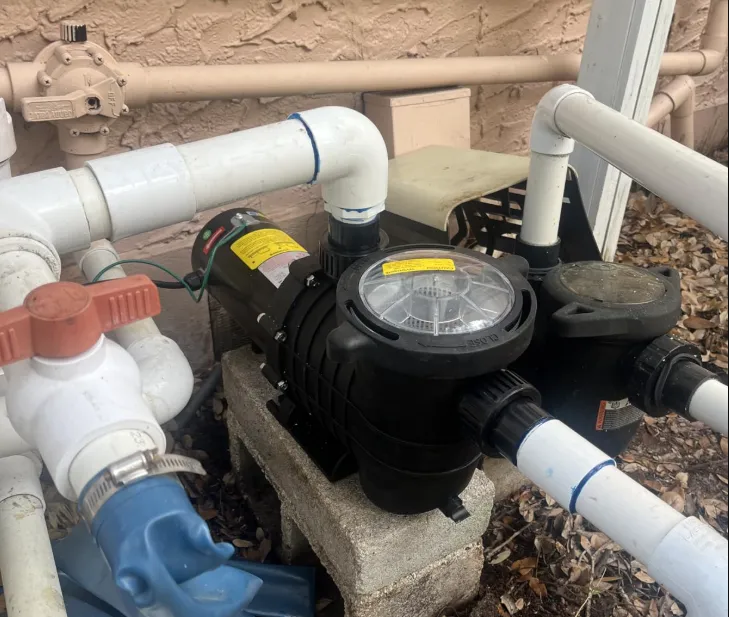
Image: amazon.com @Joanna
Keep in mind, your pressure reading won’t stay the same forever. It changes based on how dirty your filter is, when you last backwashed, and even shifts with water temperature.
That’s why your baseline pressure is your most important number. Think of it as your “normal” mark. To find it:
- Clean your filter.
- Empty your pump and skimmer baskets.
- Run the pump for five minutes.
- Check the gauge and write that number and the date on your pump lid.
Why Pool Pump Pressure Drops
Your pool system has two sides. The suction side pulls water from the skimmer, lines, and pump basket before the pump. The pressure side pushes water through the filter, heater, chlorinator, and return lines after the pump.
Low pressure usually means a suction-side issue. If your pump is starving for water or pulling in air, it can’t build pressure. This causes your PSI to drop if you have low water, blocked baskets, cracked O-rings, or air leaks.
On the pressure side, blockages work differently. A blockage after the pump creates resistance, making the pump work harder and your gauge reading go up.
That’s common if you haven’t backwashed for 3–4 weeks and your filter is clogged with dust and pollen.
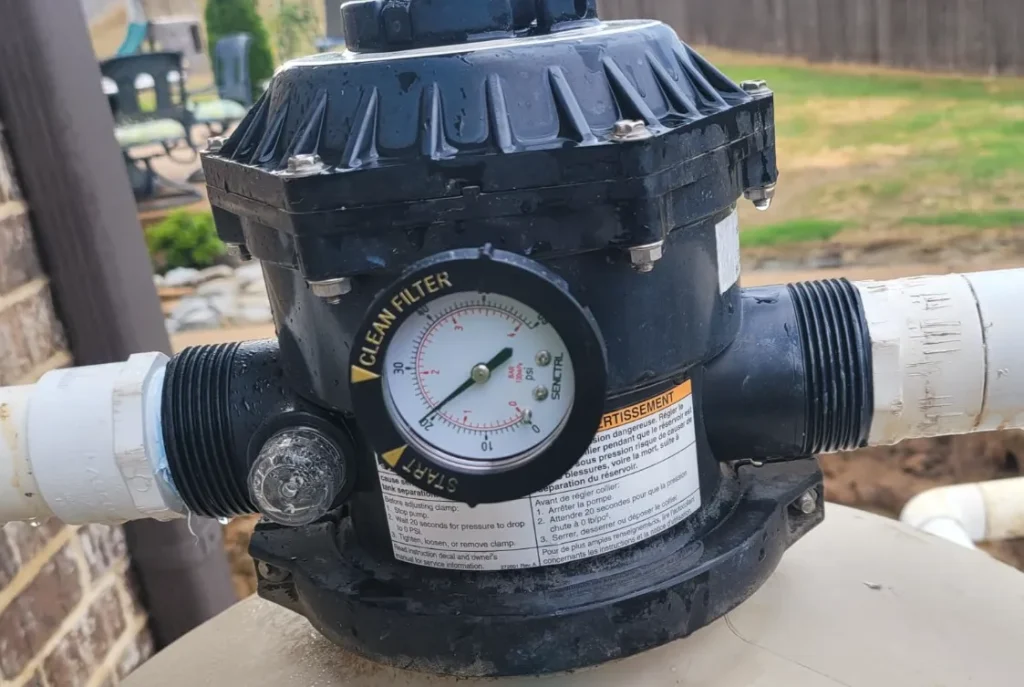
Image: amazon.com @AP86
There is one exception. If water escapes after the pump through a filter clamp, heater union, or return pipe, the system loses water and pressure drops.
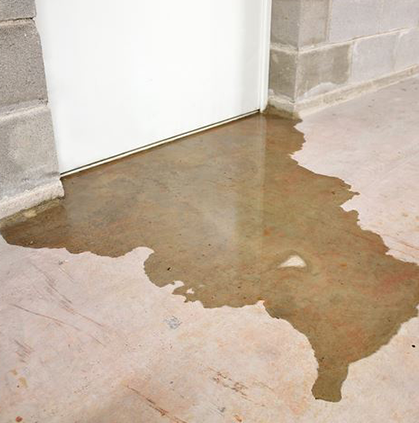
You’ll often see a puddle or spray near your equipment, especially on older Northern Beaches systems where salt air wears down fittings.
The rule is simple: low PSI means a suction problem or a leak, high PSI means a pressure-side blockage. If your PSI is low but the flow is normal, your gauge might be broken.
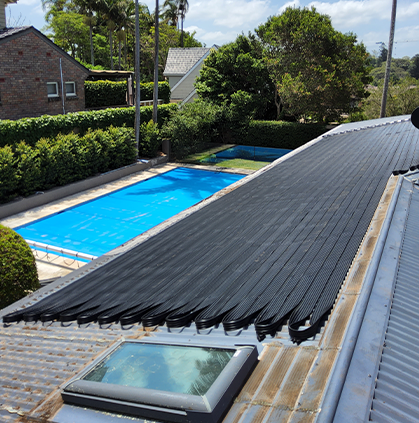
You need to know this if you want to heat your pool with a solar heater. That’s because you need enough pump pressure to make it work.
How to Increase Pool Pump Pressure
Before you replace any equipment, try these steps in order to increase pool pump pressure:
Step 1: Check the Water Level
It sounds basic, but low water is the main reason your pools lose pressure. If water drops below the middle of your skimmer, it sucks in air. This causes your pressure gauge to drop. If you don’t fix this, you’ll damage the pump seal.
What to do:
- Turn off the pump and let the water settle.
- Fill the pool until the water hits the middle of the skimmer (15 cm below the deck). Don’t overfill, or the skimmer won’t clear surface debris.
- After 5–10 minutes, check the gauge. It should read 70–100 kPa (10–15 PSI).
Step 2: Clean the Skimmer and Pump Strainer Baskets
You have two baskets between your pool and the pump. They catch leaves, pollen, and hair before that debris damages your impeller. Even a half-full basket slows your water flow and drops your pool pump pressure.
How to fix it:
- Turn off the pump and wait for the pressure to drop. Open the filter’s air valve if you have one.
- Remove the pump lid, pull out the basket, and rinse it with a hose.
- Do the same for your skimmer basket.
- Check both for cracks. Replace them if they’re damaged.
- Put the baskets back, secure the lid, and turn the system on.
Step 3: Clean Your Filter
After setting your water level and baskets, check your filter. A dirty filter makes the gauge climb because the pump struggles to push water through clogged sand, cartridges, or DE grids.
Just focus on getting back to your normal baseline. Pentair and Hayward recommend cleaning or backwashing once pressure rises 8–10 PSI above your starting point.
How to do it:
- Clean when the gauge hits 8–10 PSI above your baseline.
- Open the air relief valve to release pressure before opening the filter.
- Sand: Backwash until the sight glass is clear, then rinse before switching to filter mode.
- Cartridge: Remove cartridges and hose down the pleats from top to bottom.
- DE: Backwash, then add the exact amount of DE powder listed in your manual.
- Replace any torn or worn parts.
Step 4: Check for Air Leaks on the Suction Side
Air leaks are a little sneaky problem. Even a tiny gap on the suction side ruin your pool pump pressure and performance. This leads to slow flow, weak jets, and a jumpy gauge.
What to do:
- Check the lid: swirling water, a half-empty basket, or bubbles from return jets mean you have a leak.
- Turn off the pump, clean the lid seal, and grease the O-ring with pool-safe silicone.
- Check drain plugs, unions, and valves.
- Run a garden hose over suspected fittings.
If the leak is in a threaded fitting or underground, call a licensed plumber. Digging up pipes or fixing stubborn fittings is a job for the pros.
Step 5: Check and Clean the Impeller
If your pressure is still low, the problem is likely inside the pump housing. The impeller is the spinning disc that creates water flow, and even a tiny bit of debris can block it and drop your pressure.
How to fix it:
- Turn off the pump and wait a minute for the pressure to drop.
- Remove the bolts holding the motor to the housing and pull the motor back.
- Use a thin wire or pipe cleaner to clear any clogs from the impeller.
- Slide the motor back, ensure the large O-ring is seated, and tighten the bolts.
- Fill the strainer basket with water, lock the lid, turn the power on.
You can reach the impeller on your AstralPool Viron or Davey PowerMaster models by separating the motor from the housing. Remember, always turn off the power at the board first.
Step 6: Check Your Valves
If you just had your system serviced, start here to fix your pressure in two minutes. Before you worry, check every valve. A partially closed suction valve is a common mistake after a service visit.
What to do:
- Walk the pipe run from the skimmer to the pump and back to the pool.
- Check every valve on the suction and return sides.
- Turn gate valves all the way left to open.
- Make sure ball valve levers line up with the pipe.
- Turn each valve to make sure they aren’t stuck.
What If the Pump Itself Is the Problem?
If you’ve worked through all six steps and pressure is still off, the issue isn’t maintenance, it’s the pump.
Worn or Failing Motor
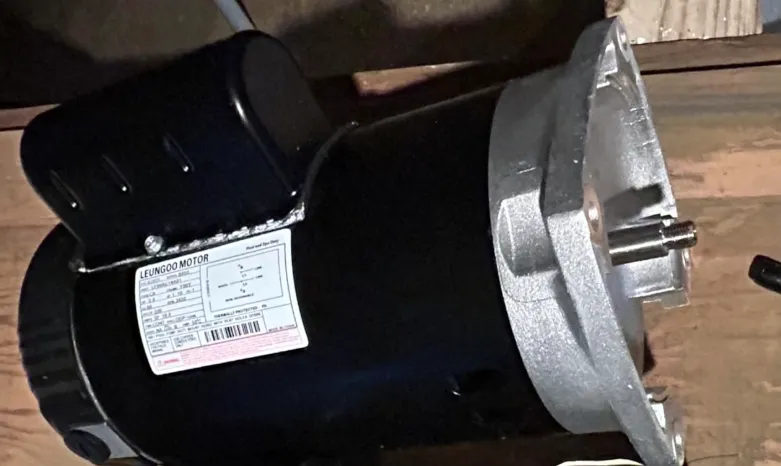
Image: amazon.com @Paul
Most pool pump motors wear out slowly, lasting 7 to 10 years with care. After that, performance drops.So, a motor once pushing 20 PSI may drop to 14 PSI. You likely won’t notice until the water flow slows down.
Watch for these signs:
- Squealing, rattling, or grinding
- Overheating housing
- Frequent shutdowns on hot days
- Repeated circuit breaker trips
You don’t always need a new pump. Replacing just the motor costs $400–$800, while replacing the entire unit costs $1,200–$2,500. If a technician confirms that your impeller, basket, and volute are in good shape, you only need to replace the motor.
Undersized Pump
Sometimes your pump isn’t broken. It’s just not big enough for your current needs. If you’ve added a spa, water feature, pool heater, or extra piping, your pump may lack the power to keep up.
What slows your pump down other than those factors:
- Running multiple systems, like filtration and heating, at once.
- Upgrading to larger jets or extra returns.
A licensed plumber can find the right size in about an hour by checking your pipes, filter, and system. You could get a bigger single-speed pump, or better yet, switch to a variable speed pump.
Upgrade to a Variable Speed Pump
If your single-speed pump is failing, upgrade to a variable speed pump (VSP). It’s one of the smartest energy moves you can make. Here are the reasons:
- You can cut your power bill for a single-speed pool pump by over 80% with a VSP.
- You get better control, using low speeds for daily cleaning and high speeds for vacuuming.
- They run quieter and last longer.
Need to pair a VSP with your heater? Talk to a licensed technician first. At Lightning Bult, we specialize in matching pump upgrades with pool heating systems and heat pump installation for maximum efficiency.
Plumbing Issues That Quietly Reduce Pool Pump Pressure
Your pump and filter might be fine, but plumbing clogs often ruin your pool’s pressure. Here is why:
Undersized pipes. Many older pools use 40 mm suction lines. They can’t handle the flow needed for modern spas, extra jets, or water features. If your pipes are long or your pump is too far away, you’ll lose pressure.
Underground blockages. Tree roots from gums often grow into pipes. Scale, collapsed sections, or a jammed gum nut can block your flow. A plumber can use a camera to find the problem without you needing to dig up your yard.
Flow-sharing. Your pump has a fixed rate, like 60 litres per minute. If you run your returns, spa, and waterfall at once, you’re splitting that flow too thin. This causes pressure to drop. So, try running these features one at a time.
When Should You Call a Licensed Plumber?
You can fix most pool pump pressure issues yourself, but sometimes you need an expert. So, call a licensed plumber if:
- You spot a leak underground or inside the pump housing
- You need to replace the pump motor
- You’re working with gas or electrical connections
- You think your pipes are too small or need upsizing
In NSW, you must hire a licensed tradesperson for any major plumbing work or pool heating services for specific heating system issues related to your pool. It’s almost always cheaper to get it done right the first time than to fix a DIY mistake.
FAQ about Pool Pump Pressure
Here are the questions we get most from Sydney pool owners about pump pressure.
What PSI should my pool pump be running at?
Most residential pool systems run between 10 and 25 PSI. But the exact number depends on your setup. Check your PSI right after you clean the filter. Any reading consistently 8-10 PSI above that means a problem.
Why does my pool pump have good pressure but weak return jets?
This usually means there’s a blockage between your filter and the return jets. Check that your valves are fully open, then look for debris in the return eyeballs.
Can a dirty pool filter cause low pump pressure?
Yes, a dirty filter makes your PSI gauge go up. It’s because your pump has to work harder to push water through. If your PSI is low and your filter is dirty, the problem is likely on the suction side, not the filter.
How do I know if my pool pump has an air leak?
Air bubbles in the pump strainer lid or pool jets indicate a leak. If your pump loses prime and requires frequent restarts, that’s another sign. To find the leak, run the pump and spray soapy water around the suction fittings.
Will a variable speed pump improve my pool’s water pressure?
While a variable speed pump won’t fix leaks or clogs, it optimises system performance by adjusting to the ideal speed. Upgrading from a single-speed pump improves flow control while significantly reducing energy costs.
Conclusion
You can often fix pool pump pressure issues by checking the water level, baskets, filter, and valves. But if the pressure is still off, then the problem is probably the pump or plumbing.
For problems like leaks, motor failure, or an undersized system, you’ll need an expert. The team at Lightning Bult can help. We handle everything from quick repairs to full upgrades. Reach out to us today!