


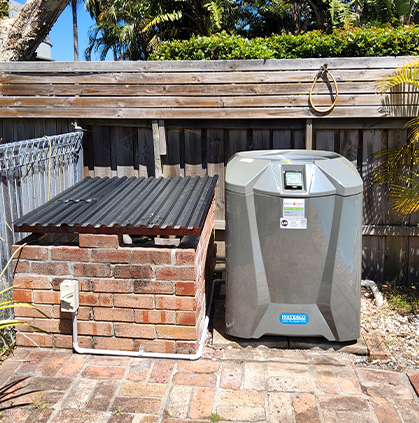

Gas heats fast but costs a fortune to run. That’s why solar can seem best until you pin down solar pool heating costs, which can vary by thousands.
You’ve seen numbers from $3,500 to $8,500. But what price does your home actually come to?
This article cuts through the confusion, compares total installed costs, and exposes hidden fees, so you walk into conversations with pool heating services knowing exactly what to ask.
How Much Does Solar Pool Heating Cost?
Solar pool heating costs between $3,500 and $8,500 fully installed. And that includes solar collectors, mounting hardware, the controller, plumbing connections, and professional labour.
The range exists because every property is different. Two homes on the same street can receive quotes $2,000 apart for factors you can’t see from the sidewalk.
Jason Boyd on Pexels
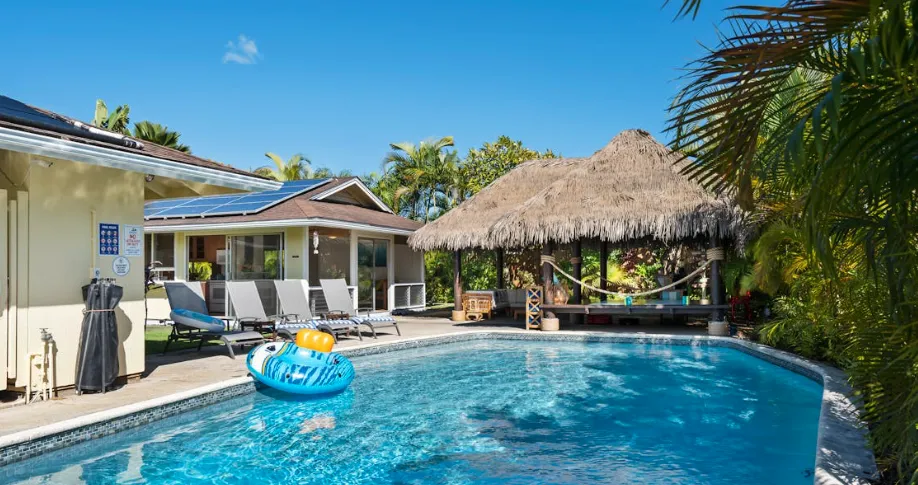
Your pool size mainly drives this. An 8m x 4m pool (32m²) typically needs 26–32m² of collectors for reliable performance. A smaller spa pool needs less, a larger lap pool needs more. More collectors means higher cost.
AS3634 recommends at least 60% coverage, while SPASA suggests 80–100% for Sydney residential pools. For a 40m² pool, target roughly 32–40m² of roof panels. Here’s how pool size typically maps to installed cost:
| Pool Size | Collector Area | Installed Cost |
| Small (up to 20m²) | 10–20m² | $3,500 – $5,000 |
| Medium (20–40m²) | 20–40m² | $4,500 – $6,500 |
| Large (40m²+) | 40m²+ | $6,000 – $8,500+ |
But pool size is just your starting point. The roof orientation is the first hidden factor. South-facing roofs get less direct sun, so you need 20–30% more collector area to reach the same water temperature.
Take a small 16m² pool. With a north-facing roof, you need about 10m² of collectors ($3,500). But with a south-facing one, you need 13m² ($5,000). So, the pool stays the same, but the roof direction adds $1,500
On top of that, shade is also an invisible factor. The south-facing small pool with heavy shade now needs 14–15 m² of collectors, pushing the price past $5,000. Same pool, same roof direction, shade adds another $500.
You can start by measuring your pool to estimate possible solar heating costs, but for a detailed view, think about differences in components and hidden factors like roof construction and pipe run distance.
Solar Pool Heating Cost Breakdown
You know the typical pool solar heating cost for installation. But to get a real price, you’ll need the details:
1. Solar Collectors / Panels
KindleMedia on Pexels
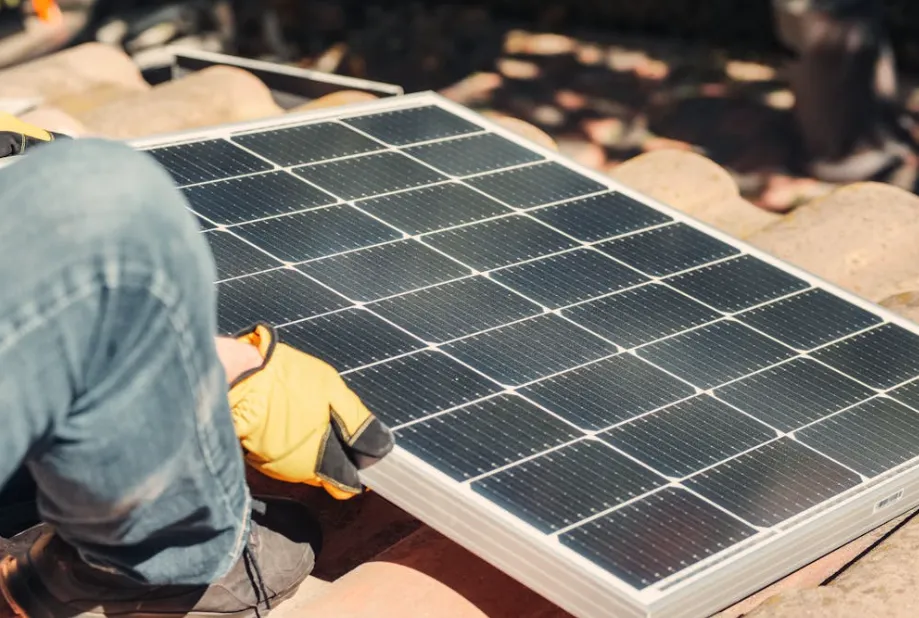
You’ll spend most of your materials budget on the solar collectors or panels. In Sydney, two types dominate residential installs:
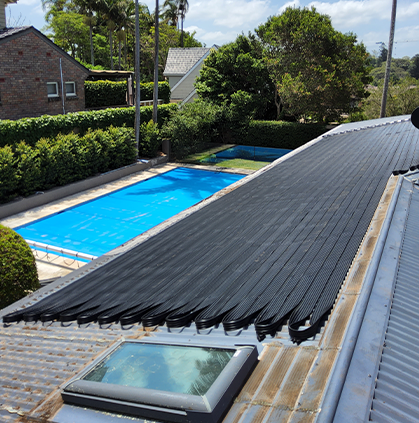
- Flexible rubber/EPDM strip collectors like Naked Solar, Sunbather cost about 80–120 per m². They’re UV-stabilised and salt-air resistant, which matters on the Northern Beaches and in the Eastern Suburbs.
- Rigid polypropylene panels like Heliocol and Sunstar cost about 120–180 per m². They deliver higher thermal gain per m², sit more reliably on steep roofs, and are more resistant to local wildlife.
If you’re sizing a medium pool with 30 m² of collector, you’re looking at $3,600–$5,400 in collector costs alone, before any tradespeople set foot on your roof.
2. Roof Mounting Hardware
solarpoolsupply.com
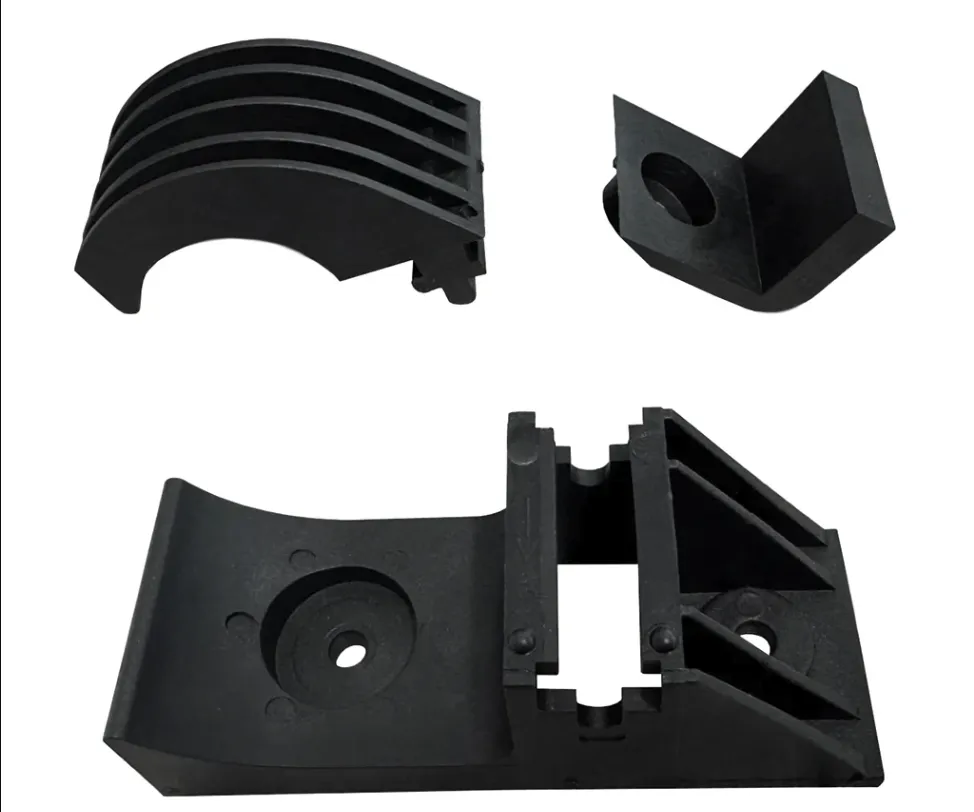
Roof mounting hardware is what attaches your solar collectors to the roof. It includes aluminium or stainless steel brackets, mounting rails, rail clamps, and all the fasteners to secure the system.
The hardware has to match your roof type because each needs a different way to attach. Here’s the cost breakdown:
- Standard mounting brackets and rail kits: $150–$400 for 8–12 panels
- Stainless steel brackets: $250–$500 for beach areas
- Tile roof adapters: $200–$500 extra for ceramic/terracotta tiles
- Roof penetration seals: $80–$200 per bolt-hole flashing
- Rail clamps and end caps: $50–$150 to secure and finish rails
- Fastener packs: $30–$80 depending on panel count
Beyond hardware, licensed plumbers and solar installers are needed. Standard labour costs range from $600–$1,600.
For a two-storey home with a tile roof and restricted access, expect additional charges:
- tile roof premium ($200–$400)
- two-storey/steep-pitch surcharge ($400–$800)
- crane hire ($800–$1,500)
3. Digital Solar Controller
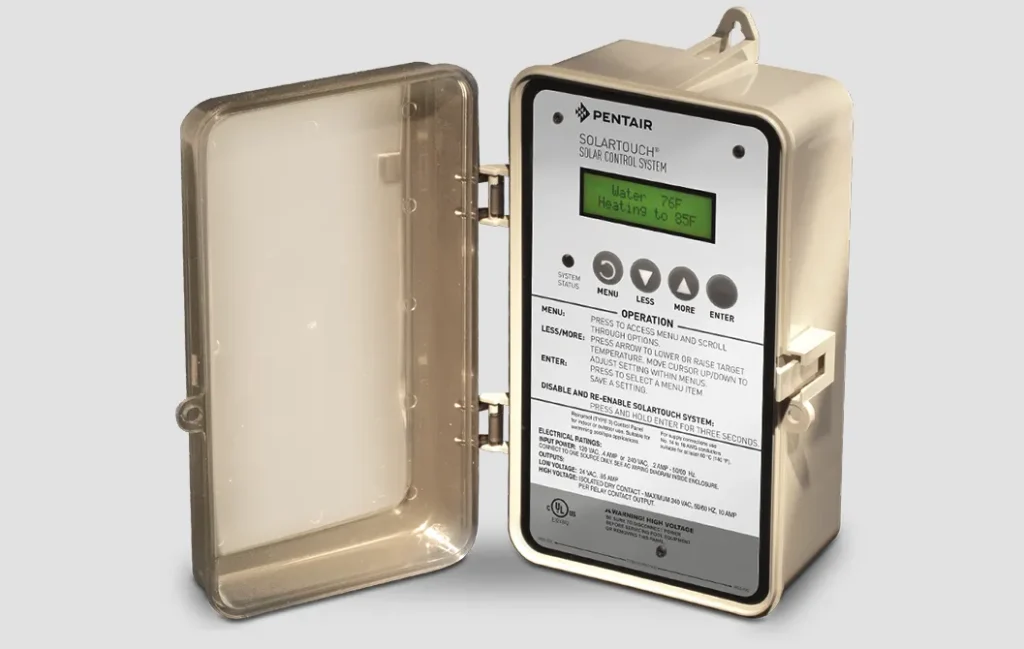
pentair.com
A basic on/off controller costs $150–$250. A better differential controller runs $280–$600. This one reads the roof temperature vs pool temperature and only diverts water when the roof is actually hotter.
4. Valves, Manifolds & PVC Plumbing
These components rarely appear on ballpark quotes, but they’re on every job:
- 3-way diverter valve: $80–$180
- Vacuum relief valve: $60–$120
- PVC inlet/outlet manifolds: $100–$300
- Check valve: $50–$100
- Long pipe run surcharge: $150–$300 per additional 5 metres
Western Suburbs homes often have equipment rooms far from the roof, so 20–30 m pipe runs are common. That adds $400–$800 in materials that you won’t see in a generic estimate.
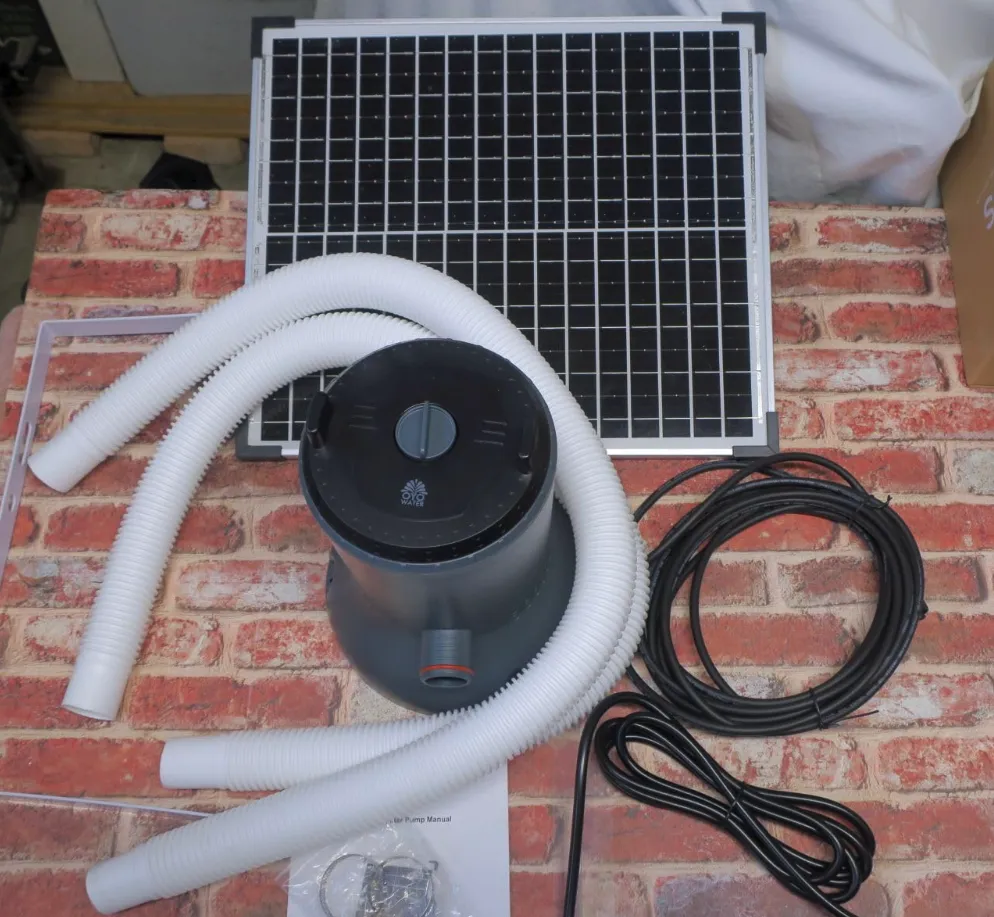
5. Dedicated Solar Pump
amazon.com
Most systems run fine with the current filter pump. But, if your pool is on a split level or your pipe run exceeds 20 metres, the pump might lack enough head pressure to push water up to the roof and back.
If needed, you need to calculate a dedicated 1.0–1.5 HP solar pump adds:
- Equipment: $400–$900
- Installation: $200–$400
Extra Costs Sydney Homeowners Forget to Budget For
Some people think solar pool heaters are all about install costs, assuming no ongoing expenses since they don’t use electricity. But that’s not true. Here’s the breakdown:
1. Running Costs
You heard that right. You still need to budget for running your solar pool heater. While the sun is free, the pump needs electricity. It runs for hours daily during swimming season.
A standard single-speed pump uses 0.75–1.1 kW. Running it 6–8 hours daily for six months adds up. In Sydney, at $0.30–$0.40 per kWh, that’s $1.80–$3.50 daily, $55–$105 monthly, and $330–$630 per season.
But your solar pump costs you around $330 a season. Pool heat pumps? That’s way more, $2,500 a year. And a gas heater? That’s $5 to $10 an hour, which can easily hit $2,000 to $3,000 a year if you swim a lot.
You can check gas vs electric pool heater comparison to understand this more.
2. Annual Maintenance
People think solar pool heaters don’t need maintenance. That’s not true. In Sydney, dust, birds, hard water, and UV wear slow them down.
So why not skip it? In year two you’ll drop 10–15%, run the pump longer, and you’ll pay $50–$100 more on bills. In year three heat transfer slows. In year five seals crack, brackets loosen, fixes run $500–$1,000.
All because you avoided about $150 a year? You don’t want those risks. So, make sure you budget for:
- Annual inspection (leaks, valve function, controller calibration): $120–$250
- Collector flush and descale (important in hard-water Western Suburbs): $150–$300 every 2–3 years
- Controller or sensor replacement: $80–$200, typically every 5–8 years
3. Pool Cover
You don’t have to use a pool cover. But, an uncovered pool loses 4–6°C overnight from evaporation. Your solar system then runs 6–8 hours a day just to bring that heat back.
A cover cuts heat loss by 50–70%. It acts like insulation, so the solar pump only needs about 3–4 hours, and you save $150–$300 a year on electricity to enjoy a heated pool in winter.
And if you want a good cover, expect to spend 500–1,200 depending on pool size and type:
- Bubble/Solar Covers: $500–$800 (heats and keeps heat in).
- Thermal Blankets: $800–$1,200 (better insulation and longevity).
- Automatic/Slatted Covers: $10,000+ (top for convenience and safety).
Is Solar Pool Heating Worth the Cost?
Image by Pixabay
Yes. It’s the cheapest way to heat a pool per degree. A good system pays back in 3–5 years on current Sydney electricity rates. Then, you can enjoy nearly free heating for another 10–25 years.
Now, think about an inverter heat pump. It costs about the same upfront and offers year-round heat, but you need $500–$1,500 a year just to run them. Also, it needs more maintenance than solar.
But solar heating can fall short on a south-facing, shaded, or unsuitable roof. So, a site assessment fixes this before you spend money on installation.
And if you already have gear and aren’t sure if a heat pump not heating is a system issue or size-related, that visit helps, too.
You can contact Lightning Bult for consultation and installation. Our team will measure your pipe run, check roof orientation, and give you a real number.
FAQ About Solar Pool Heating Cost
These are some of the most common questions people ask about solar pool heating costs:
How many solar panels do I need to heat a pool?
Australian Standard AS3634 suggests a minimum collector area of 60% of your pool’s surface area, while SPASA recommends 80%.
For example, a 32 m² pool needs at least 26 m² of collector, roughly 10–12 rigid panels. More coverage means faster heating and better performance on cloudy days.
How much warmer will a solar pool heater make my pool?
In Sydney’s off-peak seasons, a properly sized system adds 4–8°C. Mid-winter performance depends on roof orientation and overnight pool blanket use. Without a cover, gains are small (2–4°C in June–July).
What’s the cheapest way to heat a swimming pool?
Solar pool heating has the lowest long-term cost, with monthly running costs of $16–$45 for the booster pump and collectors lasting 10–25 years.
A solar blanket is cheapest upfront ($400–$900) but only retains heat, not actively heating.
Can I install solar pool heating myself?
DIY solar pool heating is possible for small above-ground pools with basic kits ($1,500–$2,500). But, licensed plumbers must handle all roof penetrations and pressurised plumbing per AS/NZS 3500.4 (Heated Water Services).
So, How Much Does Solar Pool Heating Cost?
It starts around $3,500 for simple, single-storey homes with good sun. And it can go up to $8,500 for complex roofs, long pipe runs, or custom controller setups.
Basically, solar pool heating cost includes panels, controllers, installation labour, and site-specific plumbing.
Sydney sunshine makes solar a smart investment. The only unknown is your roof’s layout. So, contact Lightning Bult for a site-specific solar pool heating quote.