










Everyone is installing mini split ACs because “neighbours are doing it”. But blindly following trends could cost you thousands if a ducted system actually better suits your home.
So, what is a mini-split AC, and should you get one? This article explains it so you can understand before you call in the air conditioning services for a consultation about what your home really needs. Let’s get started.
What is a Mini Split Air Conditioner?
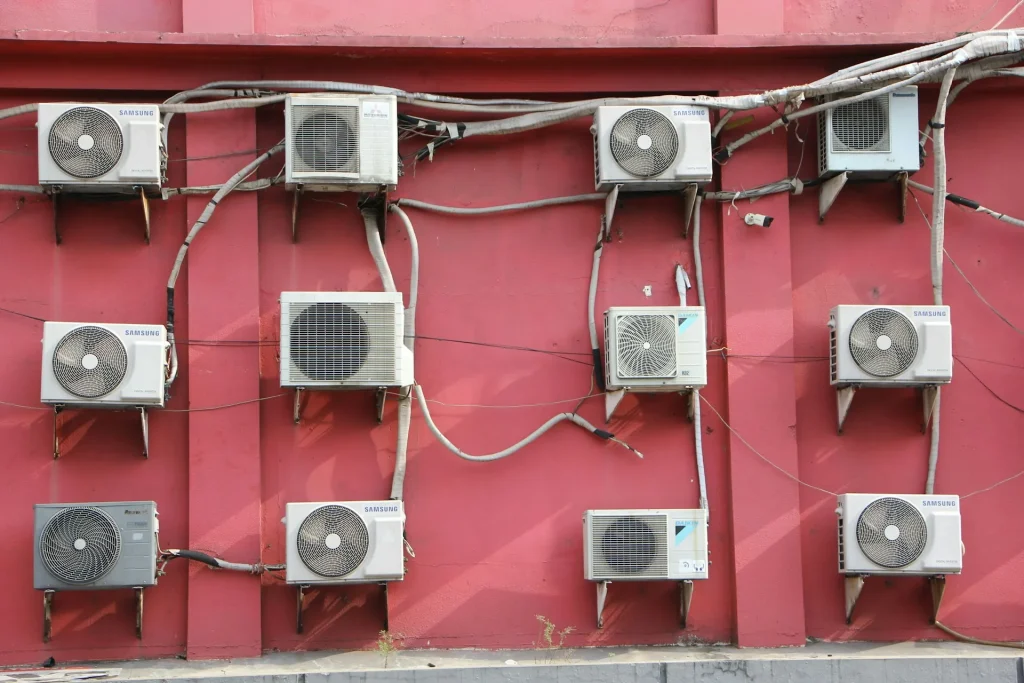
A mini-split air conditioner is a ductless cooling and heating system with two main components: an indoor unit that mounts on your wall and an outdoor compressor unit sitting outside your home.
That’s why in Australia, we simply call it a split system. It literally splits into two separate parts.
And it’s ductless. This means this HVAC system sends climate control straight from the wall unit to your room. No ductwork required.
The indoor and outdoor units connect with a small conduit that runs through your wall, carrying the refrigerant lines, power cable, and drainage tube.
People often ask what a mini split is because they think it’s just about size. It’s true. But actually, mini splits come in different sizes.
You can have 2.5kW units for small bedrooms and over 7kW for big living rooms. Residential mini-splits typically range up to around 18–25kW for larger spaces.
So, the ‘mini’ isn’t about the capacity or cooling power at all. It refers to the compact split design, compared to the ducted system.
Also, a split AC doesn’t mean it has equal AC unit parts for outdoor and indoor units.
You can have a single indoor unit with one outdoor compressor, but also a multi-split system with one outdoor unit and multiple indoor units.
How Does a Mini Split Air Conditioner Work?
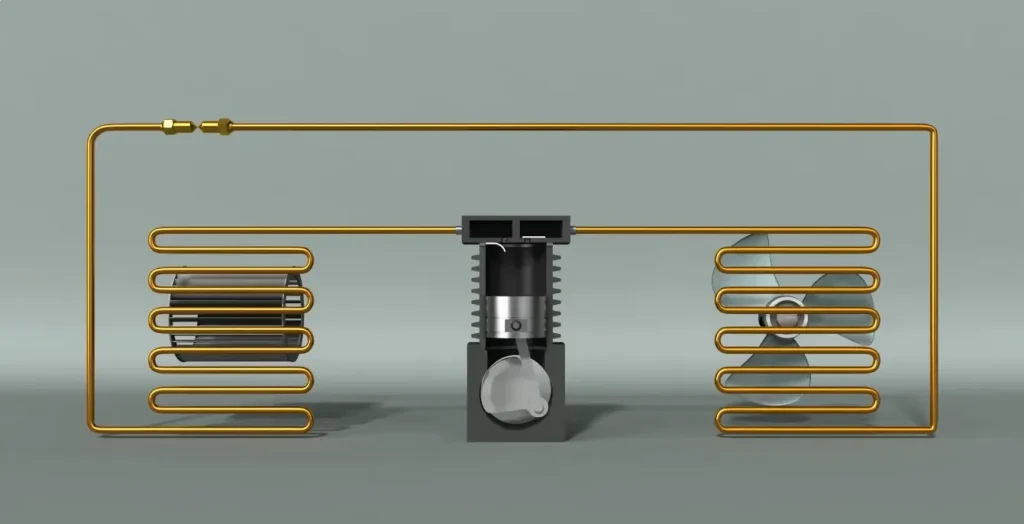
A mini-split air conditioner works by splitting the process between two units: an outdoor compressor handles refrigerant compression and an indoor wall unit blows air into your room, connected by refrigerant lines.
Here’s what happens at each step:
- Indoor Unit Captures Heat — The indoor unit’s evaporator coil contains cold refrigerant. The fan draws warm room air across the coil, where the refrigerant absorbs heat and becomes a warm gas.
- Warm Gas Travels to Outdoor Unit — The warm refrigerant gas, having absorbed heat, exits the indoor unit. The outdoor compressor creates suction, pulling the warm gas through insulated copper lines passing through the small wall opening, usually about 7–8cm wide.
- Compressor Pressurises the Warm Gas — In the outdoor unit, the compressor mechanically squeezes the warm refrigerant gas, greatly increasing its pressure and temperature. It then pushes the super-heated, high-pressure gas into the condenser coils.
- Heat Released Outside — This super-heated, high-pressure gas flows through condenser coils with extensive surface area. The outdoor fan blows air across the coils, removing heat from the refrigerant and releasing it into the atmosphere. As the refrigerant cools, it condenses back into a liquid.
- Expansion Valve Prepares Refrigerant — The high-pressure liquid refrigerant from the outdoor unit is forced through an expansion valve, which restricts flow and causes the liquid to expand, dropping in pressure and temperature to become a cold, low-pressure liquid.
- Cold Refrigerant Returns and Cools Your Room — The cold refrigerant flows back through copper lines to the indoor coil. When the fan blows warm air over the coil, the air cools down before going back into the room. The refrigerant, now warm and a gas, absorbs this heat, and the cycle starts again.
Pros and Cons of a Mini Split

Before you install a new mini split AC, let’s go over the advantages and disadvantages:
Pros
Here’s why most Australian homeowners choose a mini split AC:
- Quick & Easy Installation — Skip weeks of construction chaos. A professional can install a single-zone mini split in half a day, with just one small hole in your external wall and mounting brackets. No need to tear up walls or ceilings for ductwork.
- Lower Installation Costs — Split systems installation costs less because they don’t require extensive ductwork. This avoids the need to cut, seal, and install vents in roofs, ceilings, and walls, which can cost thousands for materials and labour.
- Flexible Installation Options — Mini-split systems have various indoor air handlers: wall-mounted, floor-standing, or ceiling cassettes. You can fit them anywhere and choose single- or multi-zone setups.
- Quiet Operation — Mini split indoor units are quiet, usually between 19–32 decibels. So you barely notice them when they’re on. Outdoor units are around 40–60 decibels, which is way quieter than regular AC condensers.
- Better Air Quality — Mini splits feature multi-stage filters that trap dust, allergens, pollen, and bacteria. Many have washable filters, and some high-end models include HEPA filters or ionisers. If you have allergies or asthma, these can really help.
- Year-Round Comfort — Most mini splits are reverse-cycle systems. Cool in summer, warm in winter—one system handles both. No need for separate heating, which saves on equipment costs and installation hassle.
- Better Scalability — You can start with one zone and add rooms later. Its design allows easy expansion, saving upfront costs and avoiding more expensive ducted air conditioning repair
Cons
Here are some disadvantages of installing a mini split AC system:
- Professional Installation Needed — You need a licensed HVAC technician to install a ductless mini-split system, as handling refrigerant requires certification. Also, DIY installation can void your warranty, unlike portable systems.
- Visible Indoor Units — Aesthetic concerns? Yes. Unlike ducted systems with hidden vents, the indoor unit is visible. These units typically range from 70–100 cm wide depending on capacity, and are mounted high on the wall, which can look unattractive or clash with your décor.
- Improper Sizing Risks — You need to make sure you get the right mini split size for your system. If it’s undersized or oversized, it’ll keep turning on and off, which can break parts faster, cost more to fix, and void your warranty.
- Limited Performance — Standard systems may experience reduced cooling efficiency in extreme heat above 35–38°C. That’s exactly when Australian homeowners need air conditioning most. The compressor works harder, uses more electricity, and cools less indoors. So, you might need more units for your home.
- Regular Maintenance Is a Must — Mini split AC needs cleaning every few months to stay efficient because dusty filters block airflow. Also, getting a professional service once a year is important to check the refrigerant and clean the inside parts.
Should You Get a Mini Split?

You understand how the AC system works in a split system, along with its pros and cons. Now, it’s time to decide: do you need a mini split, or is there a better AC system for your home?
Yes, if:
- Your home lacks existing ductwork. Older homes without ducts should choose a mini split AC. Installing traditional ducted systems would require costly renovations and structural changes.
- You want to cool specific rooms. Mini splits are great for cooling specific areas, like bedrooms at night, your home office during the day, or a hot north-facing living room, without using energy on empty spaces.
- You’re adding a new room. If you get a new room, it’s often hard to connect it to your existing system. A mini split gives you its own way to control the temperature without changing your main system.
- Your energy bills are way too high. If your current system uses a lot of electricity, a mini split could lower those costs by 30%, especially if your old system isn’t very efficient.
- You live in a moderate climate. They work well in Sydney, Melbourne, Brisbane, Perth, and Adelaide. The mild to warm weather helps these systems work their best.
- You want it quiet. If you’re a light sleeper, this is for you. Mini splits are much quieter than window units or old central systems. If you want peaceful nights, they provide that.
No, if:
- You already have efficient ducted cooling. If your ducted system works well, upgrading may not be cost-effective. Keep it unless you need zoned control or have problem areas.
- Your budget is extremely tight. If you need quick cooling and can’t spend 3,000 to 5,000, a good window unit or portable AC can help for now.
- Aesthetics matter most. If visible indoor units clash with your design, ducted systems with hidden vents may be better. Still, modern mini splits look good and are often accepted once installed.
- You live in an extreme climate. In severe hot or areas, standard mini splits may struggle and end up with AC not blowing cold air. But, for most Australian locations, this isn’t an issue.
FAQ about Mini Split Air Conditioning Systems
These are some common questions Australia homeowners ask about mini split AC systems:
Does a mini split use a lot of electricity?
No, compared to the central AC system, mini split AC are more energy efficient. A 3.5kW unit typically uses 870-1,500 watts when cooling. Running it for eight hours daily costs about 2.00 to 2.80, depending on size.
Do mini splits have to be on an outside wall?
No, but outside wall installations are simpler and cheaper, requiring only a small hole for the compressor. Inside setups need lines through ceilings or walls, adding an extra 200–400 for that.
Can a mini-split cool a whole house?
Yes, it can. Single split systems cool 60-80 square metres, ideal for apartments or 2-bedroom homes. But, for 80-150 square metres, a multi-split system with 2-4 indoor units and one outdoor compressor is needed.
So, What is a Mini Split?
A mini split air conditioner is a ductless, efficient system that provides targeted cooling without extensive ductwork. It’s easy to install and quiet, but may not look seamless and might struggle in very hot weather.
We hope this helps you decide if a mini-split AC fits your home. If still unsure, contact Lightning Bult for a consultation. Our technicians can assess, recommend the right size, and handle professional installation.