




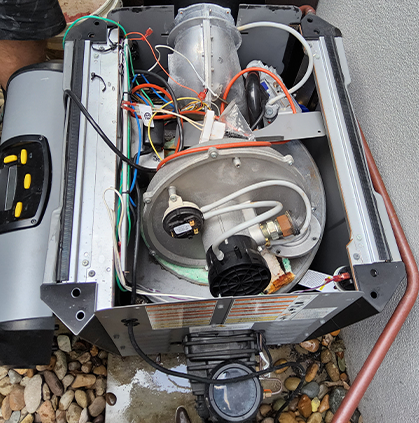
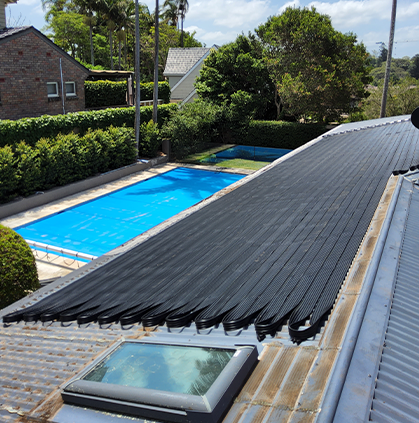
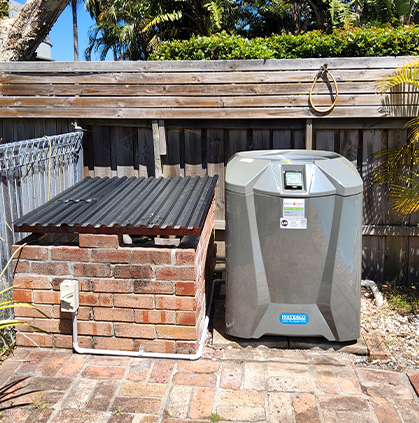

Did you know a typical heat pump turns 1 kW of power into 4 kW of heat, while an inverter pool heat pump turns that 1 kW into 15 kW? It’s a figure most retailers might not walk you through unless you ask.
This article does that upfront. So, before you call your pool heat pump services for installation, let’s look at how an inverter heat pump works so you can decide if it’s right for your pool. Keep reading!
What Is an Inverter Pool Heat Pump?
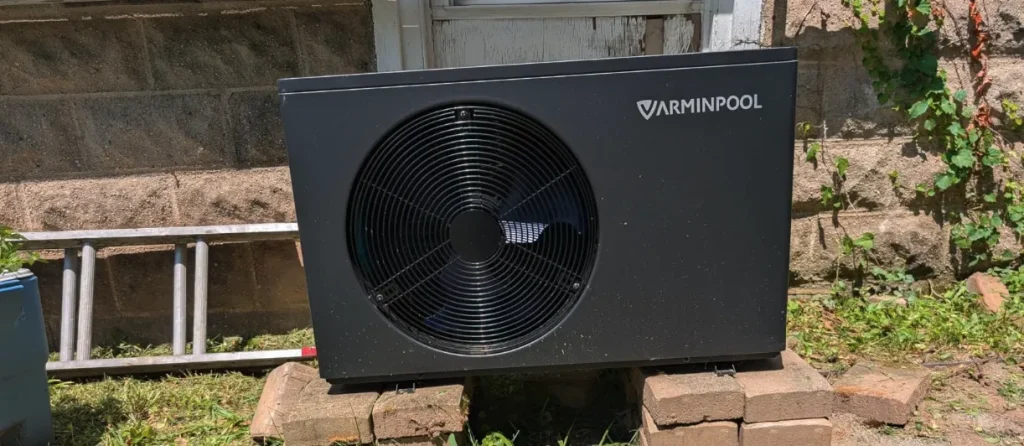
Image by Amazon
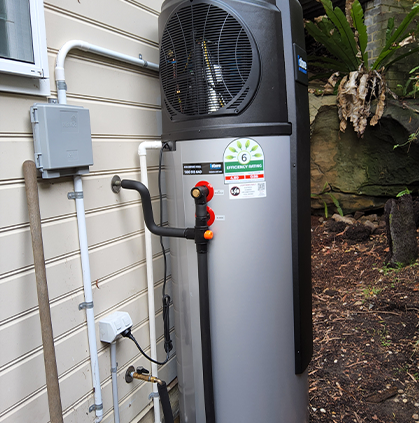
An inverter pool heat pump is a heating unit that uses a variable-speed compressor to heat your pool. It adjusts its output in real-time to match how much heat your swimming pool is losing.
It is called an “inverter” because it changes your power supply. It converts standard 50 Hz AC power into DC, then back to AC at a variable frequency. This gives the motor the ability to run at different speeds.
This solves two main problems with standard pumps: wasted energy and the “jump-start” that happens when they turn on. Inverters use a “soft-start” that begins slowly, protecting your equipment from wear and tear.
Using an inverter can cut your energy costs by 30% to 50% and makes the unit much more efficient. So, you get a steady water temperature and a system that lasts longer. We’ll talk about that later.
How Does an Inverter Pool Heat Pump Work?
The heating process of an inverter pool heat pump works differently from standard models:
1. Temperature Sensing
Before each cycle, fans move air over coils while sensors monitor water temperature. The inverter uses this data and outside conditions to decide the required output.
The system then chooses the optimal motor speed, matching electrical output to heat loss and preventing power spikes from full-capacity operation.
2. Variable-Speed Compression
This is where inverter technology changes everything. If your pool needs minimal warmth, the compressor runs at 30-40% capacity. On cold mornings, it hits 100% for fast heating.
This speed also controls refrigerant flow. High flow at 100% heats quickly, while lower flow at 30% keeps temperature while using much less power.
3. Heat Extraction and Transfer
In this step, high-pressure gas heats the pool water as it flows through the titanium coil’s walls. As the water absorbs this heat, the refrigerant condenses into a liquid.
It then passes through an expansion valve to drop in pressure, ready to return to the evaporator and repeat the cycle.
4. Continuous Cycle Adjustment
Once the water warms up, sensors track the temperature. When it hits the target, the inverter slows the compressor. This keeps heat steady, allowing the system to react instantly without restarting.
By adjusting motor RPM, the system stays within 0.2°C, to keep the heat pump efficiency.
Differences Between an Inverter Pool Heat Pump and a Standard Pool Heat Pump
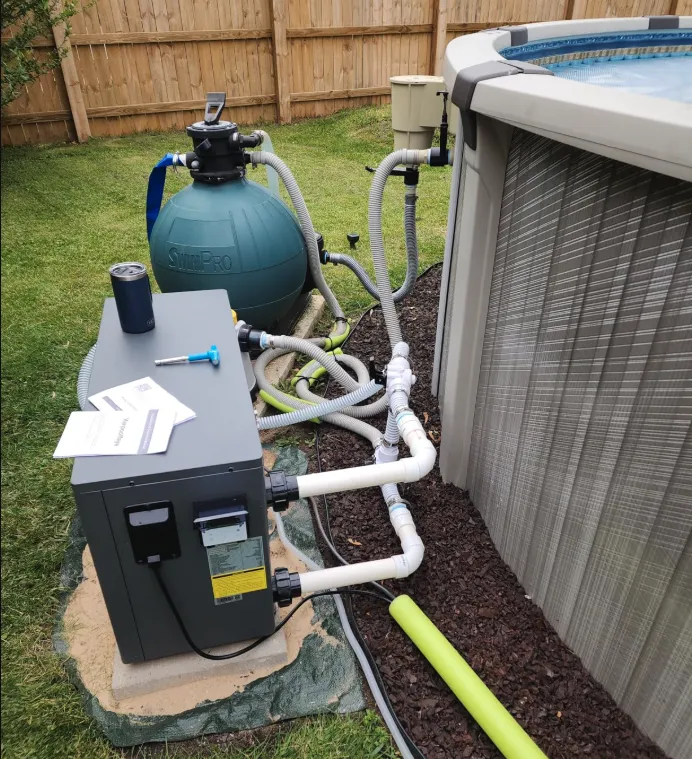
Image by Amazon
The difference between these technologies explains why inverter pool heat pumps now dominate the market:
1. Installation Cost
Standard heat pumps cost $2,500–$5,500 plus $500–$2,200 to install, while inverter models range from $4,000–$9,500 plus $300–$1,800.
Despite the 30% higher base price, inverter technology avoids costly electrical upgrades. Standard pumps often need an additional $300–$1,000 for cabling and breakers to meet AS/NZS 3000 standards.
2. Compressor Operation
Standard pool heat pumps use fixed-speed motors that turn on and off to keep the water warm. Inverter units use variable-speed motors that stay on at lower speeds to match the heat needed.
While inverters run steadily, standard units cycle every 10–30 minutes, running at full power only 10–20% of the time.
3. Energy Consumption
Compressor efficiency impacts energy use. Standard pool heat pumps consume 2–5 kW at full speed, costing 3,000–6,000 kWh annually. Inverter models adjust between 0.5–4 kW, cutting energy use by 30–60%.
By lowering power when full strength isn’t needed, pool heater inverters eliminate the 20–50% energy waste typical of standard models.
4. Running Cost
Standard pool heaters are cheaper to buy but cost more to run. For a 30–50 m³ pool, you’ll pay $800–$2,000 yearly at 30¢/kWh.
Inverter models offer 40–60% savings on energy bills. By adjusting speed to demand, they can cost as little as $60–$90 over six months, compared to $144 for standard units.
5. Temperature Stability
The main difference between standard and inverter pool heat pumps is temperature control.
Standard pumps fluctuate by 1–2°C due to constant on/off cycling, while inverters maintain steady temperatures within 0.5–1°C.
The motor adjusts speed from 20% to 100% to match your pool’s heat loss. Ideal for Australia’s variable weather, inverters maintain temperature automatically, unlike standard units that rely on frequent, full-power restarts.
6. Noise Level
You’ll notice this as soon as you start your heater. Standard heat pumps are louder, hitting 50–62 dB at full power, while inverter heat pumps are much quieter at 38–48 dB.
Because of this, standard units can disturb your backyard or playtime with annoying noise, while inverters stay quiet and stress-free.
7. Component Lifespan
Standard pool heat pumps aren’t as durable. Their fixed-speed parts cycle up to 200,000 times. Most fail within 5 to 10 years because of problems with the compressor, heat exchanger, or seals.
In contrast, inverter pool heat pumps are tougher. By using variable speeds, they cycle 80–90% less, significantly reducing wear and extending their lifespan to 10–20 years.
What Are the Benefits of an Inverter Pool Heat Pump?
Here are some benefits of using an inverter pool heat pump:
1. Lower Running Costs
Tired of paying over $100 monthly to heat your pool? Switching to an inverter heat pump can cut costs by 50%–80%, reducing your bill to $30–$80.
While gas heaters cost $10–$15 daily, an inverter’s smart technology uses minimal electricity, costing just $1.50–$3.00 per day.
2. Comfortable Temperature
An inverter pool heat pump uses sensors to adjust its power in tiny 1% steps. By keeping your pool within 0.1°C of your set temperature, it prevents any noticeable fluctuations.
The machine constantly tweaks its power to match the heat lost from the surface, so the water is always perfect when you jump in.
3. Quieter Operation
Install an inverter pool heat pump to quiet your backyard. Once the pool reaches the target temperature, smart technology slows the fan and motor, dropping noise to 40 dB.
As quiet as a library, you can place furniture right next to the unit without needing to move away to hold a conversation.
4. Longer Lifespan
Would you rather have a pool heater that cycles on and off 30 times a day, or one that runs steadily? An inverter pool heat pump does the latter.
An inverter slows down to run at 20% to 30% power. This drops the motor speed from 3000 RPM to 800 RPM. This slower pace helps your system last 12 to 15 years, rather than burning out after seven.
5. Extended Swimming Season
Traditional heaters are expensive to run in October or April because they must work at full power. This often discourages swimming during those months.
An inverter pool heat pump changes that, extending your season. These units reach a COP of 10 to 12. That means every 1 kW of electricity, you get up to 12 kW of heat which slashes your daily costs.
Because you pay a fraction of the price for the same warmth, you can keep your pool open for 6 to 8 months a year.

Image by kroshka__nastya on Freepik
6. Reduced Electrical Requirements
Inverter pool heat pumps use less electricity than standard models because “soft starts” prevent power surges.
Fixed-speed pumps often spike to 3–5 times their normal power at startup, triggering heavy-duty breakers and flickering lights. In contrast, inverters start slowly, keeping power peaks near the running current.
In Australia, where most homes have a 63–80 A supply, this efficiency is vital. It allows you to run your pool heater alongside appliances like ovens or EV chargers without requiring expensive electrical upgrades.
Is an Inverter Pool Heat Pump a Good Choice for Sydney Homes?
If you want to keep your pool warm from October to May, an inverter heat pump is the most affordable choice.
Why inverter heat pumps suit Sydney:
- Quiet operation: Ideal for narrow properties where noise matters to neighbours.
- Electric-only: Perfect for homes without gas connections.
- Consistent warmth: Best for owners who prefer steady temperatures over rapid heating.
When to consider alternatives:
- Upfront cost: The initial price is higher, which may be a hurdle for tight budgets.
- Speed: If you only heat your pool occasionally and need it warm quickly, gas heaters are faster, though more expensive to run. Our gas vs electric pool heater guide covers the trade-offs in detail.
How to Choose the Right Inverter Pool Heat Pump
Here are a few things to consider when deciding which inverter heat pump is right for your Sydney pool:
1. Calculate Pool Volume
Calculate your pool’s volume in litres: length (m) × width (m) × average depth (m) × 1000. Surface area dictates heat loss more than volume, as larger surfaces lose more heat via evaporation and radiation.
You can use this guide for heat pump sizing:
- Under 40,000 L: 9–13 kW
- 40,000–60,000 L: 13–18 kW
- 60,000–80,000 L: 18–23 kW
- Over 80,000 L: 23+ kW
2. Think about Coastal Exposure
If you install an inverter pool heat pump near the coast, like near Sydney Harbour, it needs to be extra durable.
Choose units with titanium heat exchangers and rust-resistant bodies. While these models cost more, they are a smart investment, as standard units often rust within years.
3. Factor in Your Pool Cover
A cover acts as a thermal blanket, reducing heat loss by up to 70 percent, which influences your choice of inverter heat pump.
If you use a cover every day, you need less heating power. For example, a 40,000-litre pool that usually needs a 12kW unit might only need a 9kW or 10kW model.
4. Check the COP Rating
The Coefficient of Performance (COP) measures your unit’s efficiency, which directly affects your power bills.
Two 10kW heat pumps can differ drastically in cost. A unit with a COP of 5 is far cheaper to run than one with a COP of 3. So, always check the COP rating on the product sheet.
For the Australian climate, choose a unit with a COP of 6 or higher. Many modern inverters reach a COP of 13 to 16, the most effective way to keep your costs low.
5. Plan Your Swimming Season
Many pool owners choose heat pump sizes based on mild weather, only to find them inadequate when temperatures drop. Think about pool heating in Sydney across all four seasons when you’re choosing.
To swim year-round, size your inverter heat pump for your coldest month. As night temperatures plummet, your unit must work hard to maintain 25°C or 26°C against rapid heat loss.
6. Check the Noise Level
Inverter pool heat pumps produce noise from the compressor, fan, and refrigerant flow. The question isn’t whether they are silent, but whether the sound level is acceptable to you.
Decibel ratings change based on speed. A typical unit ranges from 45 decibels at low speed, like a quiet office, to 52 decibels at high speed, which is like a normal conversation.
FAQ About Inverter Pool Heat Pumps
Some common questions Sydney homeowners ask before making the switch:
Is an inverter pool heat pump better than a standard heat pump?
For regular pool use, yes. Inverter heat pumps keep temperatures steady, save energy, and last longer. Although they cost more upfront, most homeowners recoup that investment through energy savings within 2-3 years.
Do inverter pool heat pumps work in winter?
Yes. Quality inverter models work effectively in temperatures as low as 7°C, covering most Sydney winter nights. While efficiency drops in the cold, they remain the most cost-effective way to heat a pool year-round compared to gas or electric resistance heaters.
Are inverter pool heat pumps expensive to run?
No. Inverter models typically use 30% to 50% less electricity than standard fixed-speed pool heaters. But, your actual savings depend on your pool’s size, the local air temperature, and whether you use a pool cover to trap the heat.
How long does it take to heat a pool with an inverter heat pump?
Heating time depends on pool volume, starting temperature, and unit capacity. For example, a 21kW inverter typically takes 32 hours to heat a 45,000L pool from 15°C to 28°C. For best results, start the unit 24 to 48 hours before you plan to swim.
Conclusion
An inverter pool heat pump changes its output to fit your pool’s needs. The benefits of this heat pump are steadier temperatures, lower electricity bills, and a longer life than fixed-speed models.
If you want to swim longer without spending a lot, an inverter heat pump pool is the most practical long-term investment.
When comparing options, you can talk to a specialist to make sure you choose the right one. Lightning Bult pool heating team can help you to assess your pool, suggest the right size, and handle installation.