








Do you need a 3-phase EV charger? Will it charge your car three times faster? Most Sydney homeowners ask these exact questions.
The real answer depends less on the box on your wall and more on your car’s onboard charger and your home’s electrical supply.
Before booking an EV charger installation in Sydney, this guide will cover how to check your switchboard, network connection costs, and whether single-phase is already enough.
What Is a 3 Phase EV Charger?
Three-phase describes the electricity supply feeding the charger. It is not a charger brand, plug type or guarantee of 22kW charging.
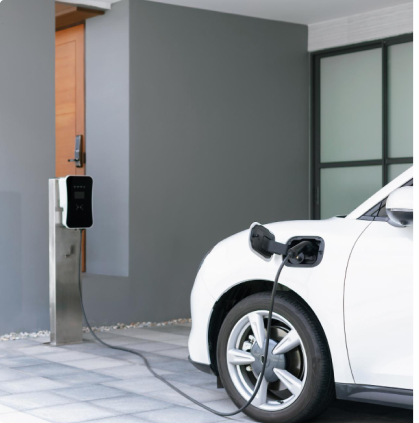
Many home EV chargers come in single-phase and three-phase versions. A three-phase wallbox draws power across three active conductors, while a single-phase wallbox draws from one.
In common home charging terms, a single-phase charger delivers about 7.4kW at 32 amps. Three-phase models support 11kW or up to 22kW, depending on the model, circuit, and vehicle.
The charger might handle more power than the car accepts, so the wall unit alone doesn’t set the final speed. The vehicle’s onboard charger sets its maximum AC charging rate.
Most Australian homes run on single-phase power, meaning a 7.4kW single-phase charger easily recharges the average electric vehicle overnight.
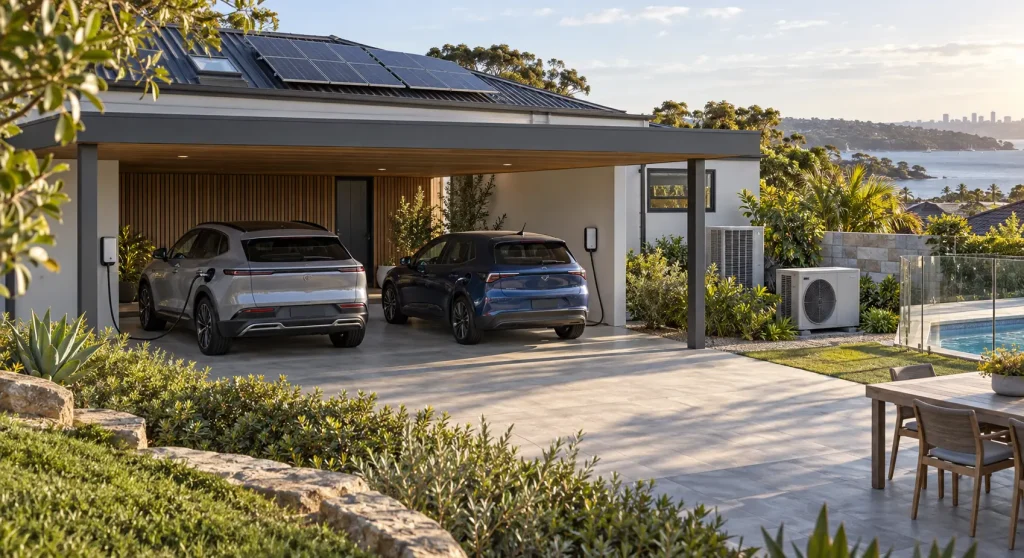
Three-phase power is more useful if your home already has that supply, you drive long daily distances, or you own multiple EVs.
Lightning Bult’s EVNEX E2 charger review shows a model available in both versions. Match the charger to your home’s supply and your car’s AC limit rather than grabbing the bigger label.
How 3-Phase Charging Actually Works
Think of a supermarket opening three checkout lanes instead of forcing everyone through one register. That’s the basic idea behind three-phase charging.
A single-phase charger uses just one lane. A 3-phase EV charger uses three active conductors to carry offset alternating current. This spreads the charging load across the phases instead of leaning on one.
That supports higher charging power, but three-phase isn’t unlimited.
The EV’s onboard AC limit, property supply, switchboard, protection, cable route and network connection must still support the load. That means you’ll need a dedicated circuit.
3-Phase vs Single-Phase Charging Speed
The simplest comparison is a 60kWh battery charged from near empty.
On paper, a 7.4kW charge takes about eight hours, and a 22kW charge takes three. Real times vary based on your starting charge, losses, temperature, charger settings, and the car’s onboard gear.
The car is the limiting link that buyers often miss. If your onboard AC charger maxes out at 11kW, plugging into a 22kW wallbox won’t speed things up.
Some cars take less than 11kW, others use the full three-phase rate. Check the exact model and year specs before you pay to upgrade your home power supply.
Does Your Sydney Home Already Have 3-Phase Power?
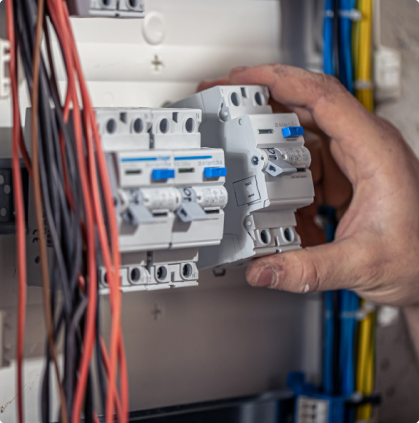
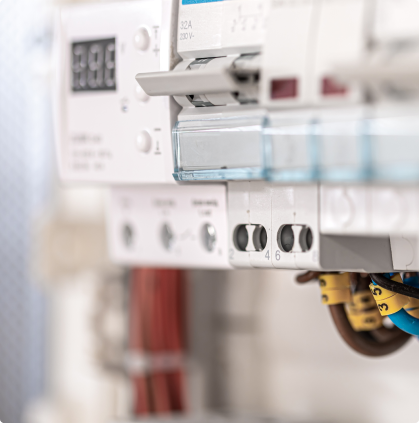
From a safe distance, look for a three-pole main switch or three linked circuit breakers instead of a single-pole toggle. Never remove a switchboard panel or touch live equipment.
Your recent electricity bill or smart meter display can also show if you’re on a single-phase or three-phase tariff.
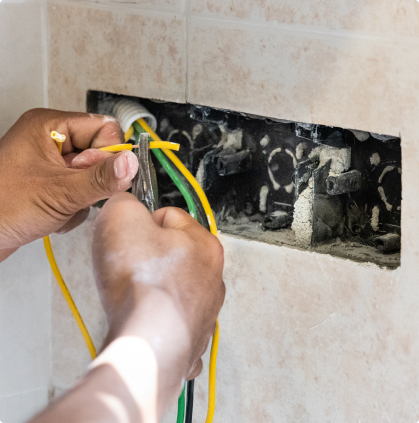
While these clues point you forward, a licensed electrician provides certainty during an onsite load assessment before installing a 3 phase EV charger.
Sydney Homes More Likely to Already Have It
Larger or newer Sydney homes often include three-phase power from day one.
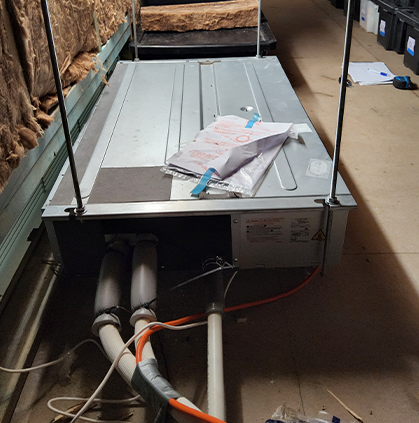
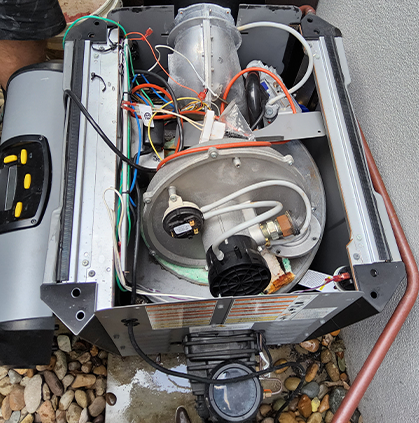
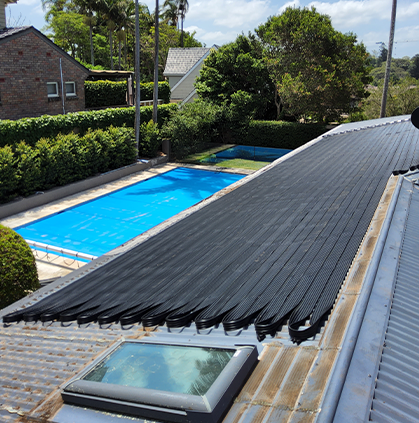
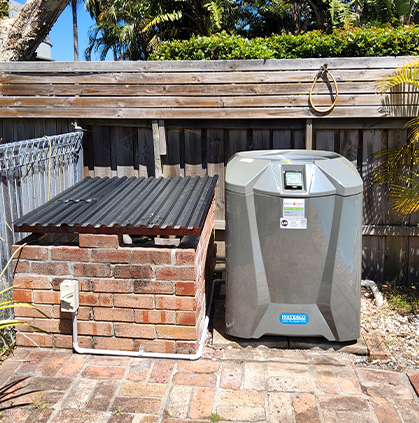
Properties running whole-house ducted reverse-cycle air conditioning, pool heat pumps, large solar arrays, or outdoor spas need three phases to balance heavy electrical loads.
Older suburban homes on large blocks can also keep legacy three-phase connections originally wired for backyard workshops or heavy machinery.
So, what’s connected to your meter box today sets your starting point, not the home’s age.
If You Don’t Have It Yet
No worries. Most Sydney homes with single-phase power can upgrade to support high-capacity charging.
The next section covers switchboard checks, network rules, and costs before Ausgrid or Endeavour Energy approve the work.
How to Upgrade to 3-Phase Power
Sydney properties are supplied by electricity distribution networks including Ausgrid and Endeavour Energy.
Both distributors have an application process for upgrading your electrical capacity. Navigating this network process is important for a home EV charger installation to prevent unexpected delays.
Why You Need a Level 2 Authorised Service Provider (ASP)
Standard electricians handle your home’s wiring, but they can’t legally touch the incoming service lines connecting you to the street network. That takes a Level 2 ASP.
If installing a 3-phase EV charger means upgrading your supply, you’ll need a Level 2 Authorised Service Provider (ASP) to cut the power and upgrade your service lines or attachment points.
The metering provider and the ASP will handle your meter exchange together. Without Level 2 credentials, you’ll have to juggle two contractors.
What the Upgrade Involves
A residential capacity upgrade generally involves several steps:
- Maximum Demand Calculation: Your electrician checks your total home power load to see how much room is left on the incoming supply.
- Network Connection Application: A formal application goes through the Ausgrid or Endeavour Energy portal to get connection approval.
- Consumer Mains & Point of Attachment: The right ASP installs or changes the service connection between the network and your property’s meter box.
- Switchboard Modernisation: The switchboard might need a three-pole main switch, dedicated 3-phase EV circuit breakers, and individual safety switches (RCBOs).
- Metering and Compliance: Your electricity retailer arranges the required metering work, and the electrical contractor completes and submits a Certificate of Compliance for Electrical Work (CCEW).
How Long It Takes
The physical upgrade takes just one day. It needs a 4-to-6-hour power outage to swap the switchboard and service lines.
The timeline depends on distributor and retailer admin. Ausgrid and Endeavour Energy review basic applications in 5 to 10 business days, though complex assessments take longer.
Factor in retailer scheduling for the smart meter exchange, and you’ll want to plan for a 2-to-4-week turnaround.
Does Your EV Actually Support 3-Phase Charging
Every modern EV in Australia uses the standard Type 2 Mennekes port for AC charging. This causes common confusion.
Seeing seven pins makes drivers assume it’ll automatically draw full power from a 3-phase charger.
The fact is your wall unit just supplies AC power. Your car’s onboard charger must convert that AC to DC, acting as a bottleneck that dictates max charging speed.
Most of Australia’s top EVs, like the Tesla Model 3, feature 11kW onboard converters. But, many entry-level and older models limit AC intake to 3.6kW–7kW.
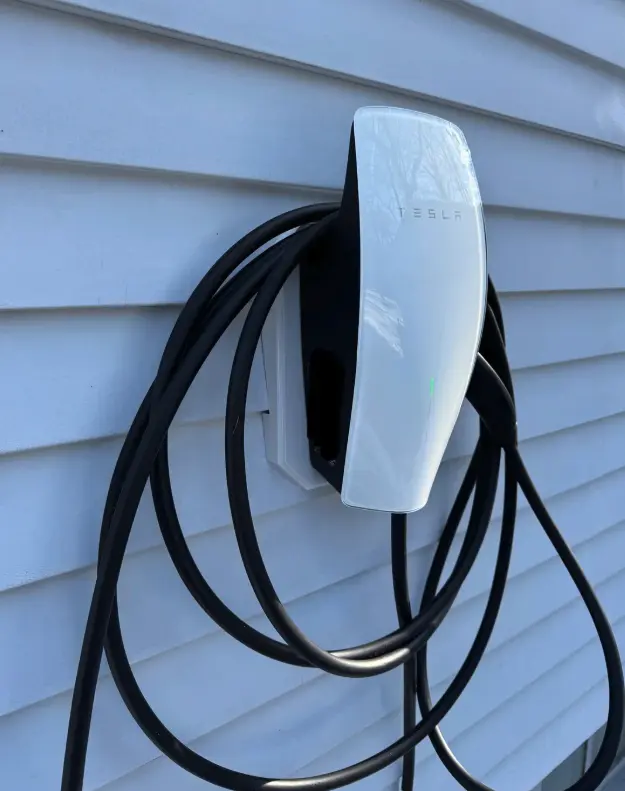
Image: willdogs on Reddit
Only select European vehicles, like the Audi e-tron, can draw a full 22kW. So, plugging an 11kW car into a 22kW wallbox will only provide 11kW. The extra capacity remains idle.
3-Phase EV Charger Cost in Sydney
Accurate quoting means keeping hardware separate from network applications. A like-for-like single-phase installation stays simple, but a three-phase upgrade brings major distributor fees.
| Cost component | Estimated cost | What it covers |
|---|---|---|
| Charger hardware | $800–$2,500 | Wallbox, cable and selected features |
| Consumer-side installation | $800–$2,500 | Circuit, protection, mounting, switchboard work and cabling |
| Three-phase supply upgrade | $2,500–$6,000 | ASP service work, application, metering or supply changes |
Single-phase is usually cheaper since it avoids supply-upgrade and network connection costs. If three-phase power isn’t there, those fixes can turn into the biggest part of the project.
When factoring costs, note the NSW Government offers no statewide residential rebate for private EV chargers.
Is a 3 Phase EV Charger Worth It for Your Home?
Your choice comes down to your current electrical setup and your driving habits:
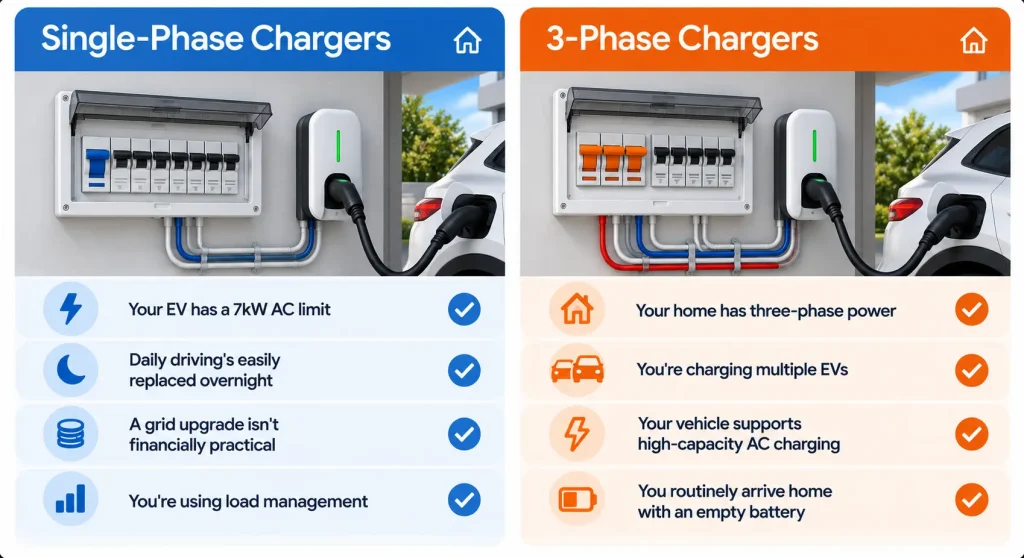
When to Choose a Single-Phase Charger
- Your vehicle has a 7kW AC charging limit: Most cars can’t accept faster AC charging, meaning a larger electrical upgrade provides zero speed benefit.
- Your daily driving is easily replaced overnight: A standard 7.4kW single-phase charger effortlessly replenishes a typical daily commute while you sleep.
- A network upgrade is financially impractical: Don’t spend thousands on a distributor and switchboard upgrade purely for a charger if your current connection meets your actual demand.
- You use load management: A suitable single-phase charger equipped with smart load management can safely handle the home’s energy needs without extra capacity.
When to Choose a 3-Phase Charger
- Your home already has three-phase power: Installation is simple and cost-effective, saving you from major electrical work.
- You charge multiple EVs: It’s ideal for households juggling more than one electric vehicle that need simultaneous rapid charging overnight.
- Your vehicle supports high-capacity AC charging: Your car physically accepts 11kW or 22kW AC speeds.
- You routinely arrive home with an empty battery: The faster turnaround guarantees a full charge before your morning commute, removing range anxiety.
FAQs About 3 Phase EV Chargers in Sydney
Here are common Sydney questions about three-phase EV charging:
Can I Install a 3-Phase EV Charger Myself?
No. A fixed charger and its circuit require licensed electrical work. If it changes your network connection, an ASP must handle it. Don’t open the switchboard or connect it yourself.
What’s the Difference Between a Level 2 EV Charger and a 3-Phase EV Charger?
Level 2 is typically a dedicated AC wall charger in the 7–22kW range. Single-phase or three-phase describes the power supply feeding it. A Level 2 charger can be either; the terms just answer different questions.
Do I Need Council Approval to Install a 3-Phase EV Charger?
For standard homes, you’ll need electrical and distributor approval rather than a council application. Strata, heritage, or common property work adds rules, so check those first.
Can I Add Solar and a 3-Phase EV Charger at the Same Time?
You will plan them together, but they’re separate network decisions. Let your electrician know about proposed solar or battery work before they size the charger, so the projects don’t compete for switchboard capacity.
So Is A 3 Phase EV Charger Worth It?
Don’t assume a 3 phase EV charger is the default. A standard single-phase setup can handle overnight charging without a supply upgrade, especially if your car caps AC intake.
A property assessment reveals what your home and EV need. Contact Lightning Bult for EV charger installation in the Northern Beaches to check your supply, switchboard, and location. We also provide professional assistance and services across Brookvale, Dee Why, Manly, and other surrounding areas.