




No gas, no flame, no combustion, and yet your pool stays warm? How does a pool heat pump work without any of that?
Maybe a neighbour mentioned how it’s better than a gas heater, and now you’re curious how it actually works.
We’ll look at the refrigerant cycle and what affects performance in Sydney’s climate—everything you need to know before you book pool heat pump services for installation. So, let’s dive in.
What Is a Pool Heat Pump?
A pool heat pump is an energy-efficient heater that uses a small amount of electricity to take heat from the air and move it into your pool water.
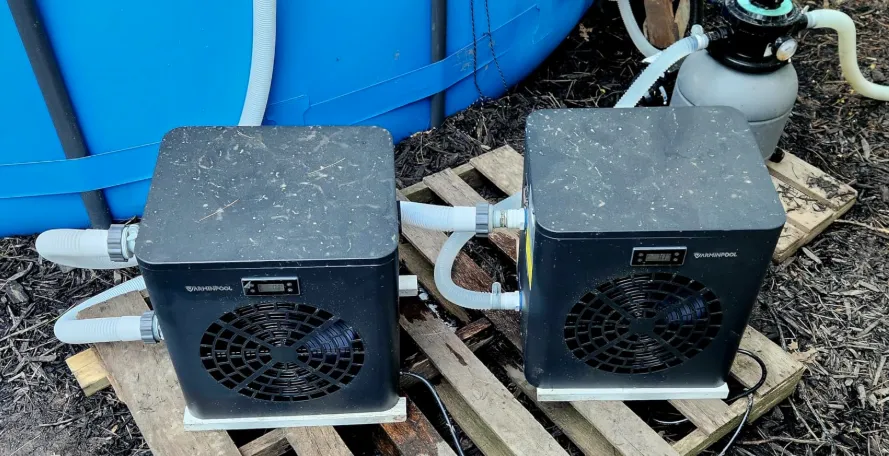
Image: Amazon
It doesn’t work like a standard electric heater that creates heat. Instead, the electricity powers a fan and a compressor to “pump” free heat into your pool using a reverse air conditioning principle.
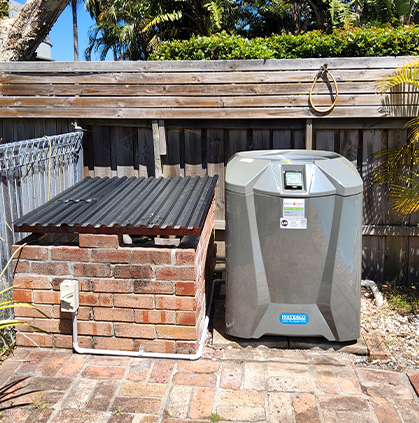
And this air-to-water heat pump is built specifically for pools. It’s kept in a strong, weather-resistant cabinet made of high-grade UV-stabilised plastic to handle the harsh sun.
Inside, the main parts include a large evaporator coil, a powerful fan, and a titanium heat exchanger. The unit looks like a large outdoor AC condenser, complete with a fan grille and a digital control panel.
You’ll install the unit directly into your filtration loop, placing it after the filter and before the water returns to the pool to keep the heat exchanger clean.
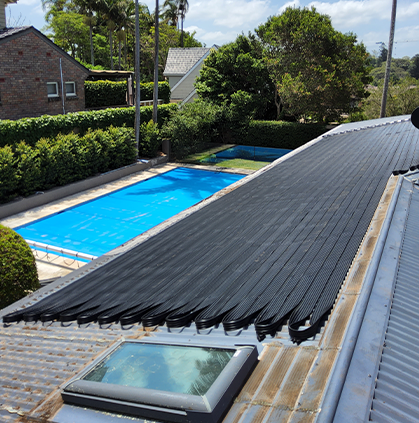
Unlike solar thermal strips that cover your roof or gas heaters that need a gas line, this compact unit sits on a concrete slab on the ground near your pool equipment.
How Does a Pool Heat Pump Work?
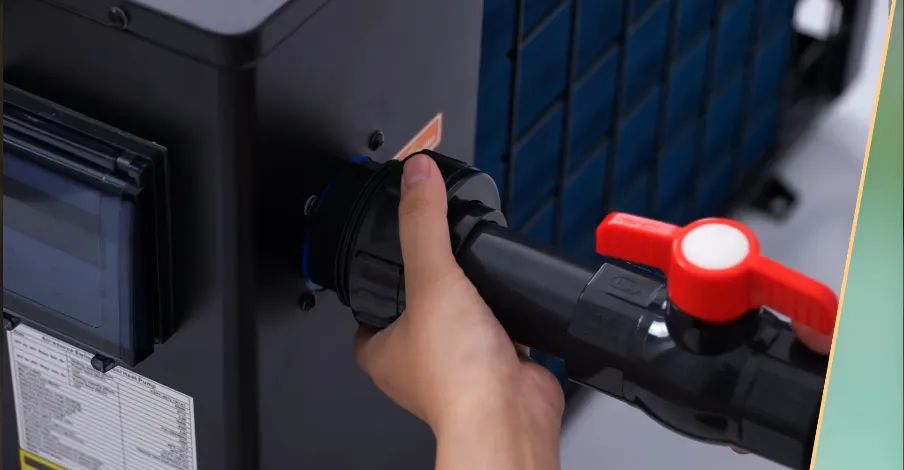
Image: Amazon
A pool heat pump works by running a continuous, closed-loop refrigerant cycle where each step leads right into the next:
1. Pool Water Enters the Heat Pump
Your filter pump pushes water into the heat pump, which needs a steady flow to work. Smaller 9 kW units usually need 70–90 litres per minute, while 20 kW units need 100–130 litres per minute.
If the flow drops too low, safety sensors turn the unit off to prevent damage, and you’ll see an error message on the controller.
2. The Fan Pulls Air Over the Coil
A fan pulls warm air from your yard across the evaporator coil. As the air passes over the cold coil, the heat is absorbed and the cooled air is blown out.
It pulls free energy from the air, even on mild 15–20°C days, to start warming your pool to the ideal pool temperature.
3. Refrigerant Absorbs Heat and Turns Into a Gas
Inside the coil, low-pressure refrigerant flows around. Most units in Australia use eco-friendly options like R-32 or R-290.
As warm air blows over the coil, the refrigerant absorbs the heat and turns from a cold liquid into a low-pressure gas.
You can tell your unit is working if the air coming out feels 10–12°C cooler than the air going in. That temperature drop shows the heat is being removed.
4. The Compressor Pressurises the Gas
The low‑pressure gas moves to the compressor, which squeezes it to raise the pressure and temperature. This concentrates the heat, turning the refrigerant into a hot, high‑pressure gas.
High‑efficiency units use scroll compressors, which are quieter and last longer than the reciprocating compressors in standard models.
5. The Heat Exchanger Warms Your Pool Water
The hot gas passes through a titanium heat exchanger, which won’t corrode from pool chemicals. Pool water flows around the outside of this tube.
Heat moves from the hot titanium into the cooler pool water. The warmed water then flows back to your pool through the return line.
6. The Expansion Valve Resets the Cycle
The expansion valve lowers the refrigerant pressure, cooling it down quickly. The refrigerant turns back into a cold liquid and flows to the evaporator coil to start at Step 2 again.
No refrigerant escapes, and no extra heat source is used. As long as your pool pump is running and the air is warm enough, this loop keeps going.
To keep this cycle running, you need to size your pool heat pump correctly. But what else affects how well it works?
What Affects How Well a Pool Heat Pump Works?

Image: alekxxxis on Freepik
Each factor below links to steps in the refrigerant cycle and affects how well your pool heat pump works in the Sydney climate.
1. Air Temperature
Higher air temperature helps the refrigerant absorb more heat and boosts the COP. When it’s 27°C outside, the COP can hit 6–7. At 15°C it drops noticeably, and below 7°C standard units stop heating well.
In coastal and metro Sydney, winter rarely goes below 8–10°C, so a properly sized pool heat pump stays effective year-round.
2. Humidity
Relative humidity helps performance. It releases latent heat when water vapour condenses on cold coils, which can lift COP by about 10–15%. Coastal Sydney suburbs like Bondi see this boost regularly.
When humidity is high (around 80%), a good pool heat pump runs at full power. At 63% humidity, heating capacity drops about 6% because there’s less latent heat.
3. Pool Heat Pump Sizing
Size matters for heating a swimming pool fast. Undersized units run nonstop, straining the compressor and missing target temperatures. While oversized non-inverter units will short-cycle and shorten its lifespan.
For a 40,000-litre Sydney pool, a 13kW–16kW heater works with a cover. In windy areas like the Northern Beaches, you’ll need a 19kW–21kW model to fight wind-driven heat loss.
4. Water Flow Rate
Water must move at the right speed (typically 80–150 L/min) for efficient heating. At ideal flow, water temperature rises ~1–2°C per pass.
Restricted flow prevents heat transfer from the refrigerant and can trigger a High Pressure (HP) fault.
5. Pool Cover Use
An uncovered pool can lose heat at the surface through evaporation.
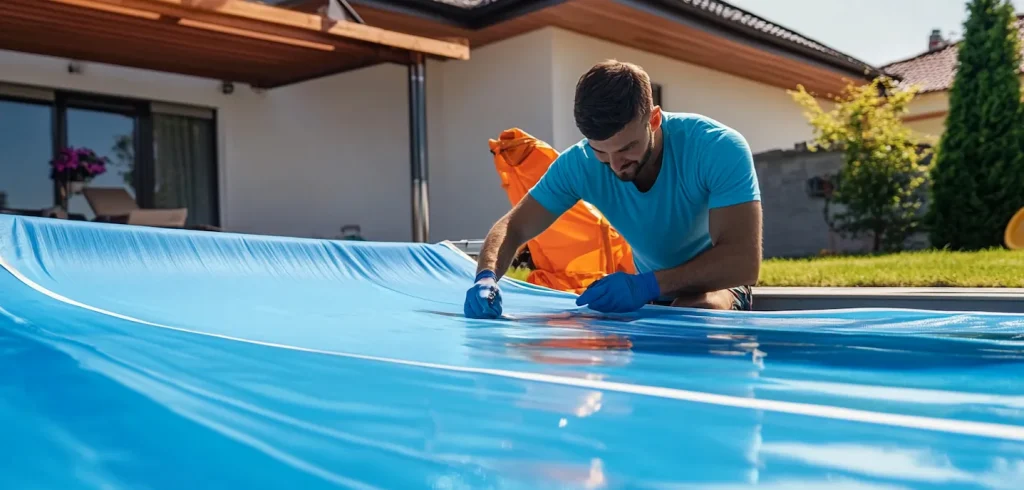
Image: Savchenko Ruslan on Freepik
A pool cover is the cheapest upgrade to go with a heat pump. It lowers the needed unit size, cuts running costs by up to 50%, and stretches your swimming season. So, are pool covers worth it? Every time.
6. Wind Exposure
Windy days waste heat from your pool heat pump. In plain terms, wind speeds up evaporation, so you use about 3–4 kWh per day instead of 1.2 kWh for an uncovered pool.
Wind over 15 km/h causes forced convection, dropping COP by 8–12% even though the pressure stays the same.
7. Evaporator Coil Cleanliness
Keep your evaporator coil clean so it can absorb heat properly. Even 1mm of dust or salt acts like 50mm of insulation, cutting efficiency by 15–20%.
When airflow is blocked, your compressor has to work harder, hiking the amp draw by 10–25% and lowering your output, much like how a heat pump works.
8. Airflow Clearance
Putting a unit under a deck or next to a fence makes it recirculate its own cold exhaust. That heat goes back through the evaporator coil, so it has to process pre-cooled air. This really drops the COP.
Bad installation permanently limits performance, no matter what brand or inverter rating you have. That’s why you need a pro to install it. The pad location and clearances must be decided before work starts.
9. Water Chemistry
Imbalanced pool chemistry can ruin your titanium condensers. If pH is high or calcium hardness goes over 400 ppm, it causes scale. A 0.5 mm layer acts like 30 mm of concrete and cuts efficiency by 30%.
On the flip side, if pH dips below 7.2 or dissolved solids go over 1,500 ppm, it can corrode the heat exchanger. This could be a bit technical but can be the reason for a heat pump not heating for your pool
This might get a bit technical, but this could be why your heat pump isn’t heating your pool.
10. Inverter vs On/Off Technology
Standard units run at full power until they hit the target, then they shut off. Inverter units slow down to a quiet, low-power mode once they reach your target.
Over a Sydney winter, this saves hundreds on electricity, usually paying for the inverter’s higher price within two to three seasons.
FAQ About a Pool Heat Pump
These are the questions pool owners often ask about a pool heat pump.
Does a pool heat pump work in winter in Sydney?
Yes, for most of Sydney. The coastal and metro areas don’t drop below 8–10°C in winter, so standard units stay efficient. Premium inverter models go down to -10°C.
Is a pool heat pump expensive to run?
Compared to a gas heater, no. A pool heat pump with a COP of 5 gives five units of heat for each unit of electricity, while a gas heater gives less than one unit of heat per unit of gas.
With current Australian electricity rates, a mid-sized unit usually costs $3–$5 per day to keep the pool at the right temperature.
Do I need a pool cover with a heat pump?
You don’t need one, but you will save more with one. An uncovered pool can lose most heat to evaporation. A pool cover cuts heat pump costs by up to 50% and speeds up heat-up time.
How Do Pool Heat Pumps Work: A Wrap Up
A pool heat pump uses air to heat water via an evaporator coil and a titanium heat exchanger. The cycle runs without generating heat from electricity. This makes it one of the most cost-effective heating options.
If you want to extend your swim season with a heat pump, our team at Lightning Bult can help, from choosing the unit to full installation. Call our team or book online.