


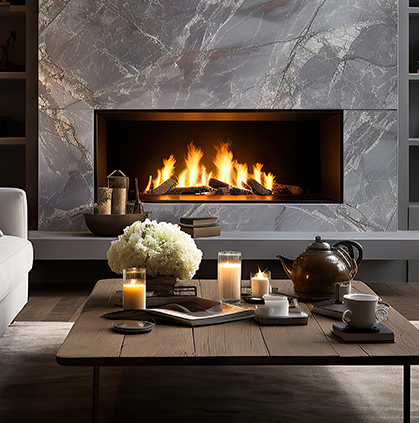

There’s something a panel heater just can’t replicate: the look of real flames and the way heat spreads across a room. An inbuilt gas fireplace offers that experience without the hassle of wood.
Even better, they slide into a framed wall cavity, so no chimney is needed.
Wondering if it’s right for your home? This guide covers the benefits, pre-buy checks, and what gas fireplace installation in Sydney involves.
What Is an Inbuilt Gas Fireplace?
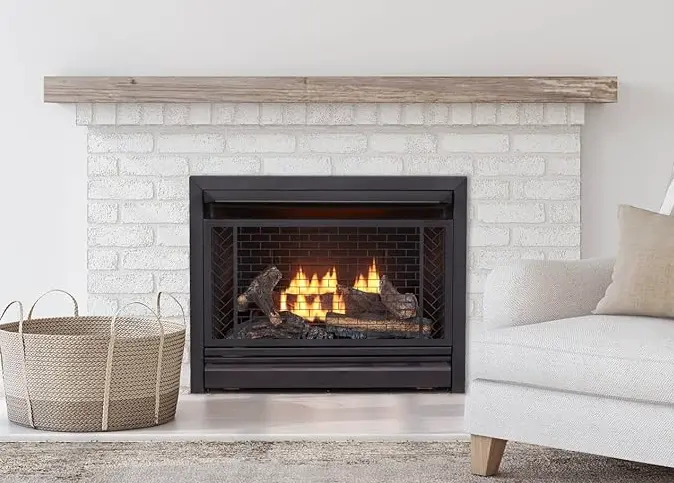
Image: amazon.com
An inbuilt gas fireplace is a heating appliance installed inside a framed wall, built cavity, or custom surround. It contains a firebox, burner, heat exchanger, and control system behind a clear glass front.
And you don’t need an existing masonry fireplace. Some units can fit inside an existing opening.
Once installed, the fireplace sits flush or nearly flush with the wall. It connects to the household gas supply and, in flued models, vents combustion gases outside through an approved flue system.
Many modern models use direct-vent or balanced-flue technology, with separate paths for pulling combustion air from outside and pushing exhaust outdoors.
Some have both paths inside a concentric flue, keeping combustion separate from the living area. This differs from unflued gas appliances, which release combustion products and water vapour directly into the room.
Keep in mind that “inbuilt” and “insert” are used differently by manufacturers. So product specs and approved installation type matter more than the name alone:
- Built-in gas fireplace — installed inside a newly framed cavity, mock chimney, or purpose-built surround. It is often chosen for new homes and major renovations where no fireplace opening already exists.
- Gas fireplace insert — designed mainly to fit inside an existing masonry fireplace, often as a replacement for an older wood-burning fireplace.
- Freestanding gas fireplace — installed as a standalone appliance rather than enclosed in a wall. It usually needs less structural work but does not give the same flush, integrated look.
Key Benefits of an Inbuilt Gas Fireplace
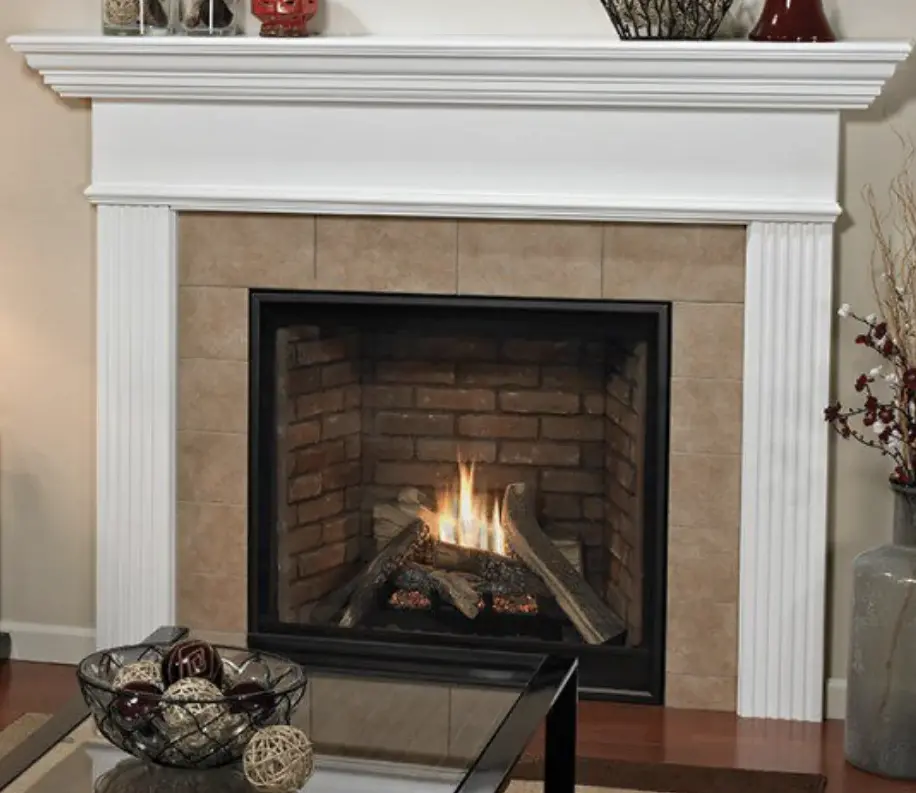
Image: Reddit
Inbuilt gas fireplaces are a popular heating upgrade in Sydney for these practical reasons:
1. Instant, Convenient Heat
An inbuilt gas fireplace reaches full heat output within minutes of ignition. Flip a switch or set a timer before you get home, and the room is warm when you arrive. No loading, no waiting 45 minutes for a wood fire to heat up.
Basic remotes and timers come standard on most units, with smart phone and Wi-Fi controls available in mid-to-premium tiers.
For a Northern Beaches home using the fireplace only on winter evenings, this on-demand setup is perfect. Fire it up at 5:30pm, it’s cozy by 5:40pm, and the thermostat maintains the temperature while you cook dinner.
2. Genuine Heating Efficiency
A direct vent gas fireplace runs at 70–85% thermal efficiency. An open wood fireplace, by contrast, loses more than half its heat up the flue.
The smarter cost argument, though, is zoned heating. Instead of running ducted heating through every room just to warm the living area, a well-chosen inbuilt unit can handle an open-plan space on its own.
And if you live in Northern Beaches homes with larger layouts, the ducted system stays off longer in the evening. That’s a big difference during Sydney winters when nights drop below 10°C.
And data from Sustainability Victoria shows a 4.5-star gas heater costs about $579 per year for a 30m² room, while an electric panel heater runs $860.
3. A Stylish, Permanent Feature
An inbuilt gas fireplace sits flush with the wall. No box on the floor, no trailing cord, no radiator to arrange furniture around.
You can choose log-set flames for an older Manly home or a long linear burner for a modern renovation. Either way, it’s a fixed feature that becomes part of the house.
Real estate agents on the Northern Beaches say a living room fireplace still looks great in photos, draws comments at inspections, and is seen as desirable by buyers.
4. Cleaner and Lower-Maintenance Than Wood
A sealed gas fireplace removes most of the daily work of a wood fire. There is no firewood to split or store, no ash pan to empty, and no indoor smoke from opening a wood-fire door.
The sealed glass front means combustion products stay on the other side of the glass. And that’s why the routine upkeep is simple: wipe the glass if it films over, keep the air inlets clear, and book an annual professional service.
That service covers checking seals, inspecting the burner, testing the safety ignition shut-off, and clearing the vents. It’s done in a single visit.
Compare that to the endless time, effort, and mess of maintaining a wood fireplace over a decade.
What to Check Before Buying an Inbuilt Gas Fireplace
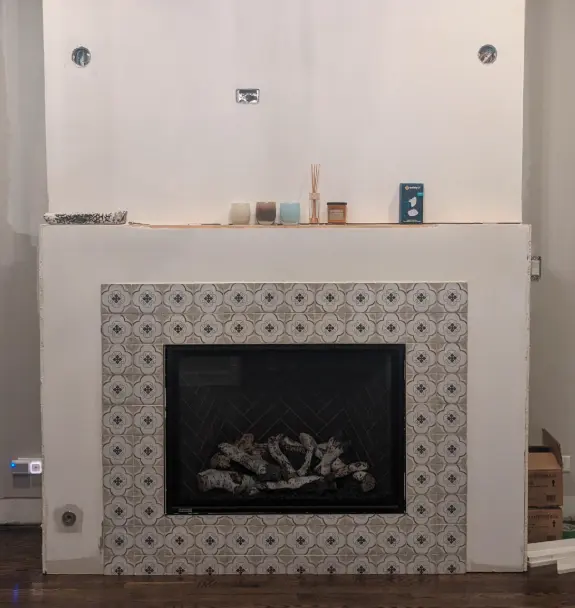
Image: Reddit.com
Once committed, these practical questions decide which unit and installation will work in your home.
1. Room Size and Heat Output
Heat output is measured in kilowatts (kW). Don’t confuse this with the Megajoule (MJ/h) rating—that’s for the gas usage.
The kW rating indicates the actual heat entering the room. And the correct rating depends on the room’s heat loss rate. A broad starting guide is:
| Room type | Approximate area | General heat-output range |
|---|---|---|
| Small room | Under 30m² | 2–5 kW |
| Medium room | 30–50m² | 5–8 kW |
| Large or open-plan room | Over 50m² | 8–15 kW |
These numbers help with early comparison, but they don’t replace a heat-load assessment. Two rooms with the same floor area can need different appliances. Why? Because heat demand rises with:
- High ceilings
- Large windows or glazed doors
- Poor insulation
- Draughts and air leakage
- Several external walls
- Shaded or south-facing positions
- Frequent door opening
- Coastal wind exposure
In short, you need to size it right. An oversized fireplace can overheat your room, while an undersized unit may run constantly without reaching a comfortable temperature.
2. Fuel Type: Natural Gas vs LPG
It doesn’t stop with just the right room size or heat output calculation. Your fuel type also matters. It affects running costs and daily life.
Most Sydney homes connected to mains gas should use natural gas. It’s reliable, cost-effective, and the easiest option to install and use.
LPG is for homes without a mains gas connection, like properties in outer Sydney, acreage blocks, or semi-rural coastal areas. But LPG costs more per unit of heat.
Running a mid-sized space heater on natural gas costs about $579 per year. An equivalent LPG setup, including cylinder rentals, costs roughly $924 per year. Over ten years, that’s a big difference.
LPG also means storing 45 kg gas cylinders on your property and scheduling regular truck deliveries. Luckily, most inbuilt gas fireplaces can be set up for either fuel type before installation.
3. Ventilation and Flue Requirements
A flued gas fireplace needs a safe exhaust path. The flue can go straight up through the roof or, if the appliance and Australian Standards (AS/NZS 5601.1) allow, run horizontally through an external wall.
A direct-vent system uses a sealed coaxial flue. One pipe pulls outdoor air to the burner, the other sends exhaust outside. This room-sealed design keeps indoor air safe and offers more layout flexibility than a traditional chimney.
The flue path affects the whole project. The installer must think about the maximum flue length, distances from windows, terminal position, nearby property lines, and future service access.
Generally, a short, straight flue route is simpler to install than a long one with offsets. A horizontal wall vent reduces complex roof work, but the terminal must still follow strict safety clearances.
4. Your Gas Supply
A new inbuilt gas fireplace uses far more gas than standard appliances. A cooktop burner runs at about 10 MJ/h, while a large fireplace can demand 25 to 40 MJ/h.
Many older homes still have narrow copper pipework under the floorboards. If your pipe or meter regulator can’t handle the extra load, other gas appliances like the hot water system will lose pressure when the fire is lit.
A licensed gas fitter should check your home’s existing gas lines early in the planning process. They can confirm capacity and advise if a pipe or meter upgrade is needed.
And this affects your timeline and budget. So, to know where your home stands, book a professional site inspection for a gas fireplace installation in Sydney. That way, your infrastructure is cleared before you buy.
5. Compliance and Licensing in NSW
Under the Gas and Electricity (Consumer Safety) Act 2017, all gasfitting must be done by a licensed professional.
The technical standards are AS/NZS 5601.1 for gas installations and AS/NZS 5263 for gas heating appliances. Every appliance sold and fitted must be tested, certified, and labelled.
And from March 2026, licensed gas fitters must submit all documentation through the digital Building Commission NSW (BCNSW) eCert portal within five business days. Paper forms and PDF emails are no longer accepted.
After installation, get your official copy: a Certificate of Compliance or a Certificate of Inspection. This portal-lodged document proves the installation meets safety codes and protects your home insurance.
Inbuilt vs. Insert vs. Freestanding: Which Is Right for Your Home?
Before you start browsing specific models, it’s worth confirming which category fits your situation.
| Inbuilt | Insert | Freestanding | |
|---|---|---|---|
| Best for | New builds, renovations, homes with no existing fireplace | Converting an existing wood-burning masonry fireplace to gas | Homeowners wanting flexible placement and minimal structural work |
| Installation | Requires framed wall cavity, flue run, full gas connection | Fits into existing masonry opening; still requires gas connection and flue lining | Typically requires gas connection; flue depends on model |
| Look and finish | Flush with the wall; clean, permanent feature | Integrated into existing surround; modernises an old fireplace | Standalone unit; sits openly on the floor |
| Structural work | Moderate — cavity framing, flue routing | Light to moderate — uses existing opening | Minimal |
So how to choose your style?
For an unused 1970s brick fireplace, an insert is the most cost-effective option. In renovations or new builds, an inbuilt gas fireplace offers the cleanest finish.
To avoid custom wall construction, a freestanding unit provides powerful heating with a classic look.
In Sydney strata apartments, direct-vent flues require breaching common property walls. So, formal owners corporation approval is needed before finalising.
Installation and Ongoing Maintenance
Gas fireplace installation requires a licensed gas fitter for gas line connection, wall framing, flue routing, compliance testing, and certificate lodgement.
On installation day, the fitter confirms placement, frames the surround, routes and seals the flue, connects gas, pressure-tests, and checks safety devices. The compliance certificate arrives within five business days.
Remember, annual servicing is brief but important. A technician cleans the burner, checks seals, clears flue or air inlet build-up, tests safety devices, and checks glass seals. A well-serviced unit lasts longer and runs cleaner.
Between services, wipe fogged glass, keep air inlets clear, and install a carbon monoxide detector if needed.
FAQ about Inbuilt Gas Fireplaces
Here are the most common questions homeowners ask about inbuilt gas fireplaces:
Is an inbuilt gas fireplace cheaper to run than electric heating?
Against standard electric panels, yes. But recent energy shifts favour reverse-cycle systems. After the mid-2025 gas tariff spike in Australia, standard electric heaters cost $860/year for a 30m² space versus gas at $579.
Can I install an inbuilt gas fireplace without an existing chimney?
Yes. This is a key advantage of an inbuilt over a wood fireplace. It’s designed for a new framed cavity, with the gas fitter creating the flue path through the wall or roof. No masonry, demolition, or existing chimney needed.
How long do inbuilt gas fireplaces last?
A well-maintained unit that gets serviced every year lasts 15 to 25 years. The burner, seals, and gas valve wear out most over time. And annual servicing catches problems early, keeping it working well.
Do I need council approval to install a gas fireplace in Sydney?
In most cases, no. But strata homeowners are the exception. Any flue installation through an external wall needs owners corporation approval. Check your by-laws and submit a written request to your strata committee early.
Conclusion
The right inbuilt gas fireplace gives quick heat, realistic flames, and a stylish look. But you need the right setup for your space.
Room heating output, gas line capacity, and certified NSW installation matter just as much as choosing a finish or flame style.
So, if this is your chosen heating solution and you need a compliant setup. Our licensed gas service team at Lightning Bult handles everything from site assessment to sign-off. Contact us today.