



Many homeowners find it hard to know the real gas fireplace installation cost. They see the unit’s price but forget that things like gas line upgrades and venting can double the final bill.
Watching your renovation budget grow because of unexpected installation extras is frustrating, especially when every quote seems to include something different.
This guide breaks down realistic Sydney installation costs and explains when it’s worth consulting gas fireplace specialists for a fixed-price quote, so you can budget confidently before work begins.
How Much Does Gas Fireplace Installation Cost in Sydney?
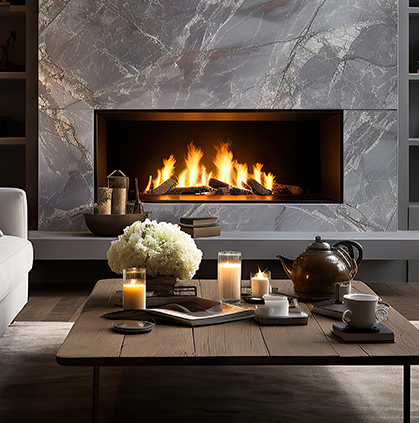
Plan on spending $2,000 to $7,500 for a full gas fireplace installation in Sydney. This covers the heating unit, the licensed gas fitter’s labour, venting and the gas connection.
It’s a realistic starting point for your budget and matches current Australian pricing for standard gas fireplace jobs. But remember, this baseline range assumes an existing natural gas connection at the meter.
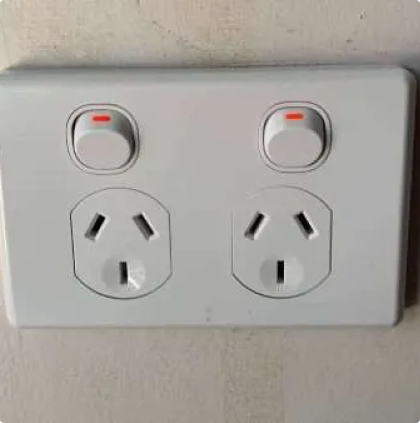
And if you need to bring in a new gas line, or if an electrician has to run new power lines to feed the fireplace fans and ignition, those costs aren’t included in this estimate.

Image: freepik
Also, this doesn’t include premium stone surrounds, custom timber mantels or other decorative finishes. Those are usually quoted separately and can raise the total cost.
The quick-reference guide below breaks down typical installation costs by fireplace type. Use it to compare the most common options before you ask for quotes.
What Affects Your Gas Fireplace Installation Cost
At least five factors drive the cost. Each adds or removes hundreds to thousands of dollars. Review them to understand your quote better.
1. Type of Gas Fireplace
The type of gas fireplace you choose has the biggest impact on cost because each needs a different amount of work.
- Gas Inserts ($2,500 to $3,500 installed) — An insert fits into an existing fireplace opening. If you have a working chimney and flue, this is your cheapest option. You reuse existing parts, so there is less carpentry, less vent work, and fewer labour hours.
- Built-In / Zero-Clearance Units ($3,500 to $7,500-plus installed) — This option needs a new setup for homes without a chimney. The installer must build a new wall space from scratch, create a new twin-skin vent run, and handle the plastering. Costs tend to be higher if room access is restricted or high ceilings require longer flue runs.
- Freestanding Gas Log Sets — Putting a gas log burner into an existing masonry fireplace is the cheapest option. While it requires the least work, it provides poor heating efficiency. Most heat goes up the open chimney flue. This choice is best for looks rather than heating a large room.
2. Venting System
The way your fireplace vents exhaust gases affects your setup costs and gas bills. You have three options, and they work in different ways.
- Direct Vent — This is the standard choice for new installs. It has a sealed glass front and two pipes. One pipe pulls fresh air from outside, and the other pushes exhaust out through a wall or roof. Since it doesn’t pull air from your room, it’s the safest and most efficient setup for Sydney homes.
- Natural Vent (B-Vent) — This system uses an existing brick chimney or metal pipe to pull exhaust out using heat. It’s often a cheaper install if your chimney passes an inspection. But, because the flue stays open, much of the heat escapes up the chimney instead of warming your room.
- Flueless (Ventless) — Flueless units have the lowest install costs and can go almost anywhere because they don’t need a chimney or pipe. Even so, they have strict Australian rules about room size and air vents. Don’t assume a flueless unit is legal for your space. You must have a licensed gas fitter check your room.
Remember, your choice of vent affects your installation bill and your costs for years. A sealed, direct-vent unit wastes less heat, which leads to lower gas bills over the life of the fireplace.
3. Gas Line Connection
Do you have a gas line near your fireplace? Connection labour costs $200 to $400. It’s usually a quick job with minimal disruption. The installer only needs to connect the fireplace to the existing gas supply.
No gas line yet? Expect $500 to $2,000 for the gas fireplace installation cost. The price depends on the distance from your gas meter and the work needed to reach through walls, floors, or ceilings.
Please note that digging under concrete or running new copper pipe through many walls makes the cost rise. And you need licensed gas fitting services to run a new line.
Most established Sydney suburbs, including the Northern Beaches, North Shore, Eastern Suburbs, and Inner West, use the Jemena mains natural gas network, which is cheaper than installing an LPG bottle system.
Remember, premium gas fireplaces consume significant energy. Before installation, a licensed fitter must verify your home’s total gas load.
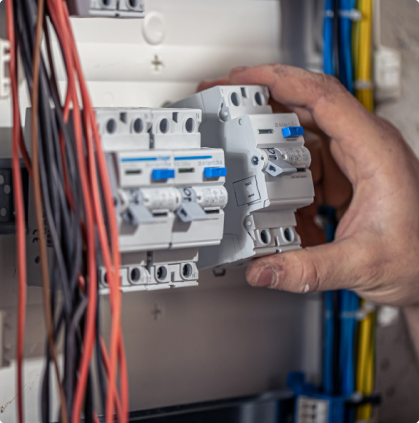
If your Jemena meter can’t support your hot water, cooking, and fireplace simultaneously, you’ll need a regulator or meter upgrade. Budget an extra $300–$800 for pipe modifications to prevent pressure drops.
4. Labour and Licensed Gasfitter Rates
Licensed gasfitters in Australia charge $70–$110 per hour. Prices in Sydney and NSW often fall at the lower end, but it also depends on installation complexity.
A standard fireplace installation takes 4 to 8 hours. A simple gas insert connected to an existing gas line finishes quickly. Built-in fireplaces, new gas lines, or long vent runs push labour towards the upper end of the range.
One thing worth knowing: many homeowners don’t realise that fireplace installers charge a fixed price rather than an hourly rate. This quote covers all labour, materials, and necessary work.
And this is not DIY work. Gas work is high-risk. By law, a licensed gasfitter must carry out this installation and provide an official compliance certificate.
Before the job ends, the installer must pressure-test the gas line, start the fireplace, and provide compliance documentation to confirm the installation meets Australian safety requirements.
5. Surround and Finishing Materials
Tile, stone, brick, metal cladding, or a custom timber mantel are not part of the core installation cost.
Depending on the materials and design you pick, finishing work can add a few hundred dollars to several thousand dollars to the total project price.
Remember, the finish is not just about looks. Different fireplace models have specific clearance rules for combustible materials. Your choice of surround or mantel changes how the fireplace is built.
Stone, brick, and tile offer more freedom near the firebox, while timber mantels and cabinets often need more space or extra heat protection. Decide on your surroundings before you order the fireplace.
Many Sydney homeowners plan to mount TVs above fireplaces during renovations. If you want this, plan it before building the surround. Managing heat clearances, cable paths, and TV height is much easier while the wall is open.
Gas Fireplace Costs at a Glance
| Scenario | Typical Installed Cost |
|---|---|
| Gas insert into an existing fireplace (existing gas line) | $2,500–$3,500 |
| Built-in / zero-clearance fireplace (new gas line required) | $4,000–$7,500+ |
| Wood-to-gas conversion (existing flue reused) | $1,500–$5,000 |
Use these figures as a budget guide, not as fixed quotes. Even two Sydney homes that install the same fireplace can get different prices based on the venting system, gas line work, labour, and finishing materials.
Not sure which scenario matches your home? Gas fireplace specialists at Lightning Bult can thoroughly assess your home and lock in an accurate, fixed-price quote before any work starts.
And make sure your quote includes the mandatory BCNSW gas compliance certificate. Because from March 2026, NSW gasfitters must use the eCert system.
Natural Gas vs LPG: Does It Change the Installation Cost?
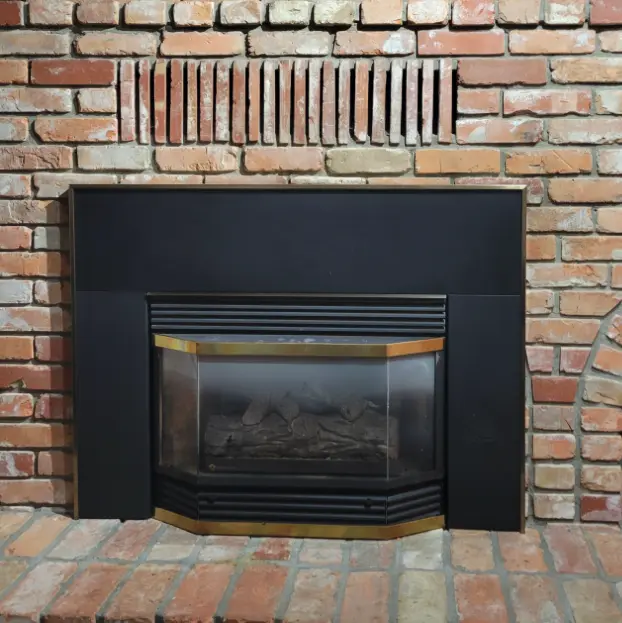
Image: Infinite-Attempts on Reddit
Yes, it can change your installation cost, but only if your property lacks an existing gas connection.
Most homes in the Northern Beaches, North Shore, Eastern Suburbs, and Inner West connect directly to the mains natural gas network. This keeps your upfront connection costs low.
LPG matters for homes without mains access, like in outer suburbs. So, you must add cylinder regulator kits and gas bottle slab installation costs to the fireplace quote, while factoring ongoing refill deliveries into your budget.
The good news is fireplace heating sizing works the same for both fuel types. A standard 25 MJ unit heats the same room volume on natural gas or bottled LPG. The two differ only in ongoing running costs, not in sizing math.
What You’ll Pay to Run It After Installation
NSW natural gas rates for home fireplaces range from 3.5 to 4.5 cents per MJ. A standard gas log fire consumes 25 to 35 MJ per hour.
Expect to pay $1 to $1.60 per hour to run a unit on the local gas network. Factor this cost into your budget alongside the installation price.
Choosing a high-efficiency, well-vented unit saves money over time. A cheap, inefficient unit that burns extra gas will cost you more over five Sydney winters.
Also, note that the local Jemena network uses “declining block tariffs.” Retailers charge a higher rate for the first blocks used, and a cheaper rate for gas used after that.
This pushes your home into those cheaper price blocks. This makes your actual hourly cost lower than the base rate suggests.
How to Keep Your Gas Fireplace Installation Cost Down
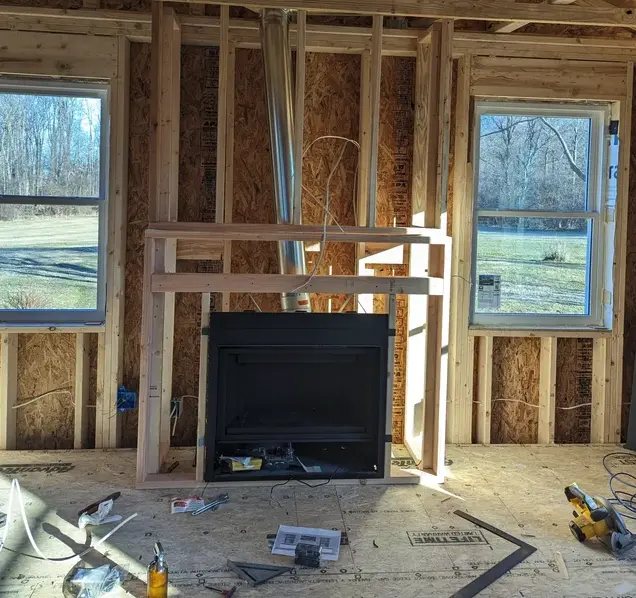
Image: akprobegt on Reddit
You can save real money with just four smart structural moves, and you won’t have to cut corners on safety, licensing, or legal compliance:
- Choose a specialised insert unit — Choosing an insert model that uses your existing brick fireplace opening and reuses the structural chimney space saves thousands of dollars in wall framing, plastering, and masonry work.
- Keep line runs practical — Place your new fireplace as close as possible to an active, existing gas line layout. Every extra linear metre of copper pipe running through floors or wall cavities adds rapid materials and labour costs to your final trade invoice.
- Avoid over-specifying the unit size — Never oversize the appliance capacity for your space. Buying a high-megajoule heater that is too large for your living zone adds extra upfront machine costs without extra comfort. This results in a very hot room and a higher trade bill.
- Get clear fixed project quotes — Request full upfront quotes from licensed professionals. Trade pricing varies across Sydney for identical jobs. A locked-in project quote helps you avoid open-ended hourly fees.
Why Hiring a Licensed Gas Fitter Is Non-Negotiable
In NSW, all gas fireplace installations must follow AS/NZS 5601:2022, which is enforced under the Gas and Electricity (Consumer Safety) Regulation 2018.
This isn’t just best practice — it’s the law. Whether you’re installing a new gas fireplace or converting an existing one, you must meet the required standard.
And don’t even think about doing unlicensed gas work. You risk gas leaks, failed inspections, rejected insurance claims, and warranty problems. Saving a few dollars now isn’t worth the cost of the problems later.
Hire a licensed gas fitter to do the entire job. They don’t just connect the fireplace. They pressure-test the gas line, check for leaks, fire it up, make sure it runs safely, and fill out the gas compliance paperwork.
Since March 2026, NSW gasfitters must submit this paperwork through the Building Commission NSW (BCNSW) eCert system within five business days of finishing network gas work, then give a copy to the homeowner.
Keep that paperwork. You’ll need it when you sell your home, make an insurance claim, or prove the installation complies with NSW gas safety requirements.
FAQ about Gas Fireplace Installation Cost
Here are the common questions Sydney homeowners ask when budgeting for a gas fireplace:
How much does it cost to run a gas line to a fireplace?
Connecting to an existing line nearby will cost you about $200 to $400 in labour. If you need a brand-new line, expect to pay $500 to $2,000, depending on how far it is from the meter and how much access work is needed.
Is converting an existing wood fireplace to gas cheaper than installing new?
Yes. If you reuse your existing chimney and flue, you skip the biggest cost of a built-in installation. A conversion usually runs $1,500 to $5,000, compared to $4,000 to $7,500-plus for a built-in unit with no chimney to work with.
Can I install a gas fireplace myself?
No, you need a licensed gasfitter to do any gas fitting work. It’s required under AS/NZS 5601. That keeps you safe and protects any insurance or warranty cover on the unit itself.
How long does a gas fireplace installation take?
With an existing gas line already in place, four to eight hours is standard. Need a new gas line or structural framing for a built-in unit? Budget one to two full days.
Conclusion
Gas fireplace installation costs depend on things like the fireplace, venting, and existing gas connections. That’s why the same fireplace can cost more to install in a terrace than in a new build.
Get two or three quotes from licensed gas fitters to find your actual cost. And compare what’s included, not just the final price, to avoid hidden fees.
Still unsure of the cost? Lightning Bult’s licensed fitters can assess your home, recommend the right fireplace, and provide a fixed-price quote for a safe, compliant installation.