




Nothing ruins a cold night like a heater on the blink. If your gas fireplace turns off and on by itself, it’s either cycling while it runs or locking out because it won’t light.
Sometimes it’s a fault, but other times, it’s just a safety feature doing its job.
This guide helps you spot the problem, shows what you can check, and tells you when to call for gas fireplace repairs to keep your Sydney home safe.
Two Different Problems That Look the Same
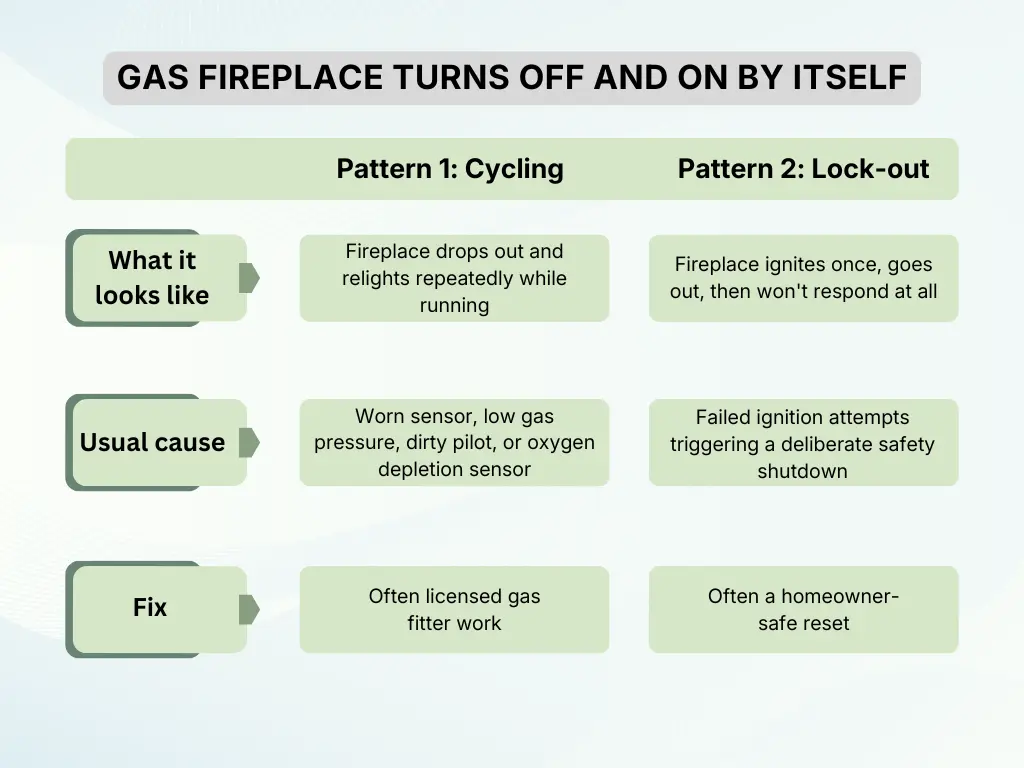
When a gas fireplace turns off and on by itself, it is hard to know if it’s developing an issue, or keeping your home safe. So, you need to check which of these two patterns matches what you’re seeing:
Pattern 1: Repeated Cycling During Operation
Your fireplace starts fine, but the burner cuts out after a few minutes. Then, it relights on its own. It keeps doing this as long as the heater is on.
- What’s happening: The control system is losing its flame signal or overheating during combustion.
- Typical triggers: Dirty or worn thermocouple/thermopile sensors, fluctuating gas pressure, soot buildup around the pilot assembly, or poor ventilation.
Pattern 2: Ignition Failure and Safety Lock-Out
Your fireplace tries to light, ignites briefly (or fails to establish a steady pilot), then shuts down. Once off, it won’t respond to the remote or wall switch until you do a manual reset.
- What’s happening: The control board didn’t verify a stable flame within the safety window, triggering a hard shutdown to prevent unburnt gas accumulation.
- Typical triggers: Ignition spark failure, blocked gas lines, or a tripped safety module.
See which behaviour fits your fireplace. The mid-run dropouts and the ignition lock-outs come from different parts, so you troubleshoot them in different ways.
Why Your Gas Fireplace Keeps Cycling On and Off While Running
If your fireplace is lit and then repeatedly drops out and relights, these are the usual causes:
A Dirty or Failing Thermocouple or Thermopile
Older standing-pilot fireplaces use a thermocouple or thermopile to confirm the pilot flame’s there and monitor its heat. It sends a tiny electrical signal to the gas valve.
If these parts are dirty, misaligned, or worn, the electrical signal becomes unreliable. If that signal drops, the valve shuts, even if you’re looking at the flame burning right in front of you.
This is one of the most common causes of repeated cycling, and replacing a worn thermocouple or thermopile is a fix for a licensed technician.
The Oxygen Depletion Sensor (ODS) Shutting Things Down
Many gas fireplaces feature an oxygen depletion sensor (ODS) that cuts off the gas supply if oxygen levels in the room drop too low as a safety measure.
Poor room ventilation, closed doors, or running the fireplace in a small, sealed space can trigger this.
Don’t assume the sensor’s broken. That’s the safety system working as intended. Check your room’s ventilation first before jumping to replacement parts.
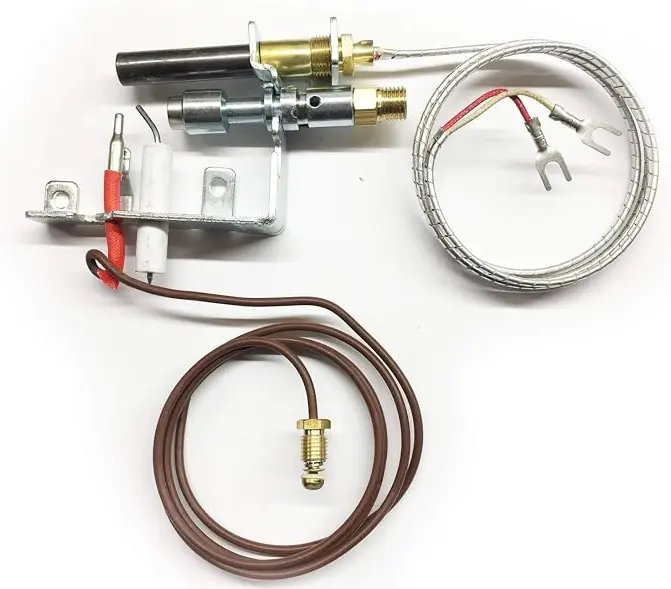
Image: Monessen on Amazon
Please note that not all fireplaces have an ODS. Room-sealed and balanced-flue gas fireplaces pull air from outside. They use different controls and rarely trip an ODS.
Low or Fluctuating Gas Pressure
Your fireplace needs proper gas pressure to keep the flame steady. If pressure drops, the flame may become unstable. This makes your gas fireplace shut off and cycle repeatedly.
This often worsens when using other gas appliances, which could point to supply issues, regulator faults, or undersized pipes, though it doesn’t confirm the cause.
Keep in mind, testing and adjusting pressure isn’t a DIY job. Diagnosing and correcting gas pressure is licensed gas fitter work under NSW law.
A Blocked or Dirty Burner and Pilot Assembly
In Sydney’s warmer months, dust, lint, pet hair, and cobwebs build up around your fireplace pilot and burner while it sits idle.
That debris can weaken the pilot flame, block burner ports, or keep the flame from touching the sensor. Your fireplace might light fine, run a bit, then shut down when the safety circuit loses the flame signal.
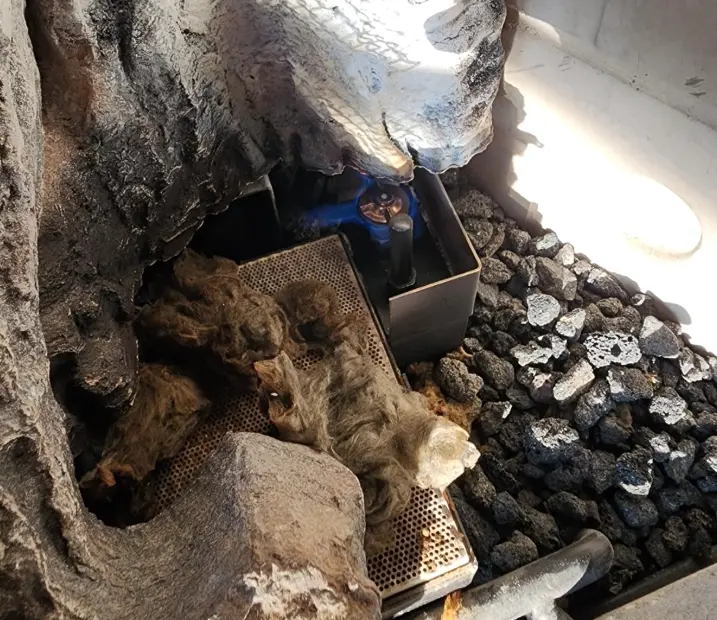
Image: Hitesh Patel on Amazon
That’s why your gas fireplace keeps cycling on and off when you turn it on at the start of winter.
Why Your Gas Fireplace Won’t Restart After It Shuts Off (Lock-Out Mode)
If your fireplace lit, went out, and won’t turn on with the switch or remote, it’s in lock-out mode.
What Lock-Out Mode Actually Is
After repeated failed ignition attempts, your fireplace’s control board shuts the gas valve to keep unburnt gas out of the firebox or flue. It’s a built-in safety feature.
The board tracks failed starts, then cuts the power and waits for you to reset it.
Cold-Start Lock-Out on Chilly Sydney Mornings
Cold, heavy air sits in the flue and smothers the pilot flame before a draft starts. This makes the board try to ignite a few times before it catches, or it fails and locks out.
You’ll notice this on cold Sydney winter mornings. And it’s worse if your fireplace terminal sits in a breezy spot, where coastal wind disrupts the flue draft.
Image: Clay Banks on Unsplash
How to Safely Reset a Locked-Out Gas Fireplace
Turn your wall or isolation switch off for one to three minutes, then back on. Listen for a beep, then try your remote.
Steps change based on the brand and model, so check your manual or the plate on your fireplace if this doesn’t work.
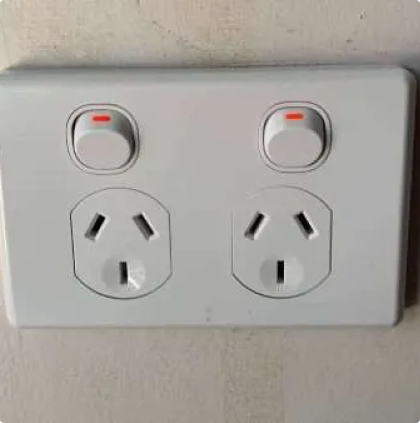
It’s safe to flip the isolation switch. You’re just cycling the 240V power to the control board. This isn’t gas work because you aren’t touching any gas lines.
If you reset it once and it locks out again straight away, stop. Repeated attempts won’t fix a weak pilot, gas-pressure issue, bad sensor, or faulty valve. They just restart the same failed sequence.
Safe DIY Checks vs. When You Need a Licensed Gas Fitter
When your gas fireplace turns on and off by itself, you can do these steps:
What You Can Safely Check Yourself
Make sure you’re troubleshooting without opening the firebox or touching gas fittings.
- Reset: Turn off the isolation switch for 1 to 3 minutes, then back on.
- Batteries: Put fresh batteries in your remote and the wall receiver.
- Clearance: Check nothing is blocking room ventilation like vents, doors, or furniture near the fireplace.
- Flame colour: Watch for real warning signs like black soot, flame rollout, delayed ignition, or a burning smell.
- Fault codes: Write down any flashing lights, beeps, or timing of shutdown. Your technician needs this to diagnose fast.
What NSW Law Requires a Licensed Gas Fitter For
Under NSW Fair Trading rules, you must hire a licensed gas fitter to repair, change, or adjust your gas fittings, valves, or appliance connections. This includes replacing thermocouples and thermopiles, and adjusting pressure.
A licensed gas fitter gives you a compliance certificate for the work and submits it to Building Commission NSW. It shows the gas leak repair is safe and meets code.
Warning Signs That Mean Stop Using the Fireplace Immediately
A cycling gas fireplace is not usually harmless. But some symptoms move past “needs a service” and into “stop now.”
If you notice a persistent gas smell, soot or black marks around the fireplace, a hissing sound, or headaches and dizziness, stop using it immediately. These aren’t normal cycling issues. They’re real danger signs.
In that situation, what to do?
- Turn off the gas supply at the meter (not just the wall switch).
- Open doors and windows to ventilate the room.
- Don’t flip light switches, don’t light matches, and don’t wait for morning.
- Call a licensed gas fitter straight away.
If gas is actively leaking, treat it as an emergency. Get everyone out of the property, then call 000 before anyone re-enters.
FAQ about Gas Fireplace Turning Off and On By Itself
Here’s what Sydney homeowners ask us most about this problem.
Is it dangerous if my gas fireplace turns off and on by itself?
Not every shutdown is a problem. Lockout just means a safety system worked. But if you notice weird cycling, check it out.
Stop using the fireplace if it cycles and you smell gas, see slow ignition, soot, or flame rollout, or feel sick.
Can I reset the lock-out myself?
Yes, when the manufacturer’s instructions allow an electrical reset via an accessible isolation or wall switch.
Try a reset once. If it locks out again, book a technician. Don’t keep trying. A second lock-out means the ignition problem is still there.
How much does a gas fireplace repair cost in Sydney?
Repair costs depend on the diagnosis, fireplace model, access, labour, and parts. Replacing a sensor can be simpler than fixing a control module, gas valve, pressure fault, or flue.
Get in touch for a quote once the fault’s diagnosed rather than guessing from a symptom list.
How often should a gas fireplace be serviced?
Follow your appliance’s maintenance schedule. Many manufacturers suggest annual inspections for burners, controls, and seals.
NSW Health advises having indoor gas heaters checked by a registered gasfitter every two years. Fireplaces that are used heavily, left idle, or show faults may need more frequent attention.
Conclusion
A gas fireplace turning off and on is often responding through its controls or built-in safety systems as intended. But if it keeps happening or gets worse, you need to get a professional to check it out.
Can’t get your fireplace to stay on? Lightning Bult‘s licensed gas fireplace technicians can diagnose the problem, do any repairs that need a licensed gas fitter under NSW law, and get it running reliably again.
Reach out for a no-obligation quote across Sydney’s Northern Beaches, North Shore, Eastern Suburbs and Inner West.