





Ever noticed your gas fireplace glass turning black and thought, “I’ll just wipe it clean”? Hold on. Those dark marks might be more than surface dirt. And that’s what most Sydney homeowners miss.
While some haze is normal, heavy soot can signal a combustion issue in your fireplace that needs fixing.
Before grabbing a cloth, learn what causes black glass, what’s safe to DIY, and when you’ll need a licensed gas fireplace specialists. Catching it early will save you money and keep your home safe.
Is Black Glass on a Gas Fireplace Normal?
A light, whitish-grey film after your first few burns is normal and harmless. That film comes from trace minerals in natural gas and LPG. It builds up on your glass just like water drops on a cold window.
While it’s normal, wipe it off often. If you leave it untreated, those minerals will permanently ruin the ceramic glass.
What about real black soot? That’s a different problem. It’s unburned carbon from a bad fire, usually caused when logs block flames, burner holes clog, or the fuel and air mix is wrong.
Besides looking messy, a dirty fire that turns glass black can make dangerous carbon monoxide. And remember, soot builds up fast and keeps coming back after you clean.
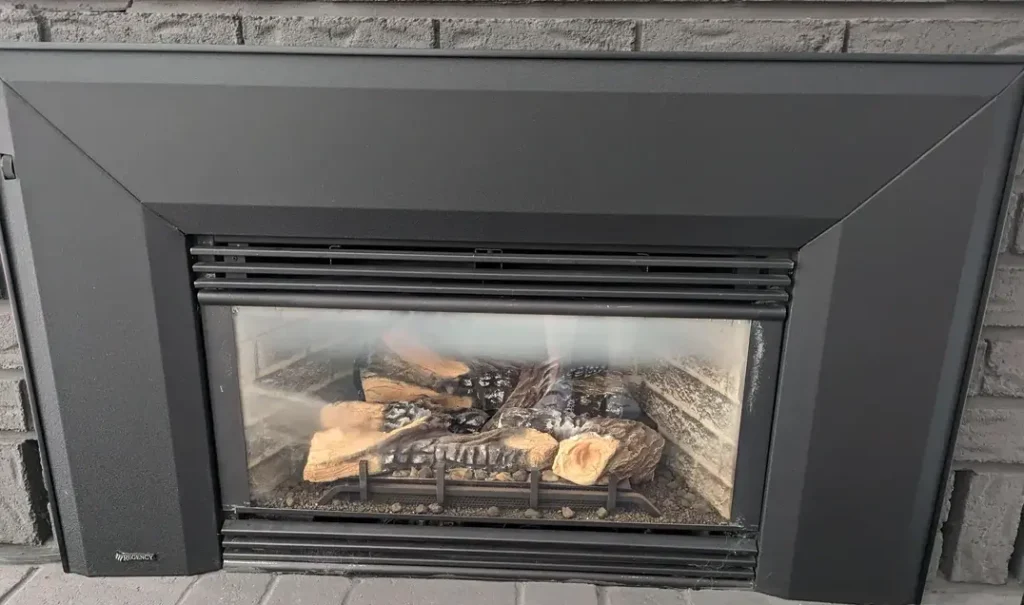
Image: RIGHT-Titan on Reddit
Haze fades slow with the season. Soot hits hard overnight. One shows up once and stays light. The other returns within days, sometimes darker each time.
And if you wipe black film off your glass weekly, that’s not seasonal residue. That’s your fireplace telling you something is wrong with how it burns gas.
What Causes Gas Fireplace Glass to Turn Black?
Black soot means your fireplace isn’t burning gas right. Five specific faults cause this, and each one needs a different fix:
1. Incorrect Air-to-Fuel Ratio
This is a common cause. Gas needs a precise air-to-fuel ratio to burn clean, and that ratio varies. Natural gas needs about 10 parts air to 1, while LPG needs about 25 to 1.
If you get the ratio wrong, or use an uncalibrated injector after a bad LPG conversion, you’ll get a “rich” flame. A clean gas fireplace shows a steady blue flame, while a rich, oxygen-starved flame burns yellow or orange and looks lazy.
Open-front fireplaces have an air shutter on the burner line that chokes on dust or spider webs. Glass-front models usually have adjustable vents underneath. Either way, adjusting the air supply changes the oxygen level.
2. Logs or Ceramic Media Out of Position
Ceramic logs and media aren’t just decorative. They are precisely positioned around burner grids and airflow. If you bump them, clean the glass, or let thermal cycling shift them, trouble starts.
First, burner ports clog, and flames hit the cool ceramic. That makes unburned carbon spray black soot on the glass within hours.
Then, you might try fixing this by moving the logs. But scattering media over active ports or nudging ceramics puts you right back at square one.
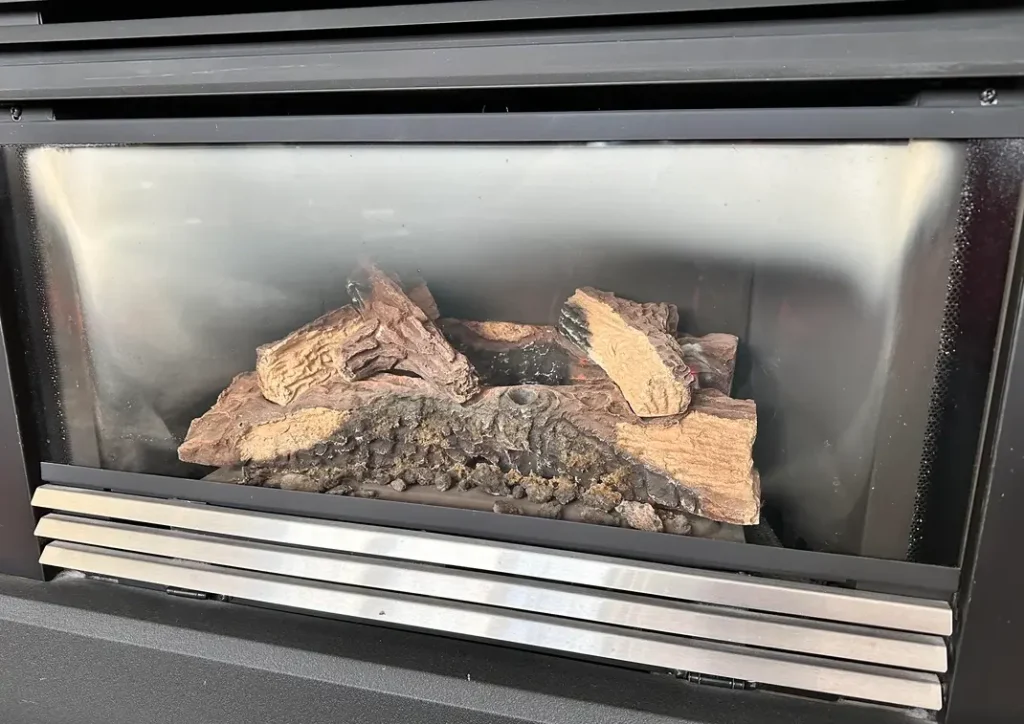
Image: steinauf85 on Reddit
3. Blocked or Dirty Burner Ports
Over months of normal use, dust and debris build up in your burner ports. If you live in coastal Sydney, you deal with this more than most.
Salt air and humidity mean extra airborne particulate settles into your vents and burner assemblies every season. Once those ports get partially blocked, sections of your flame lack air, producing localised soot right where your airflow is worst.
4. Gas Pressure or Fuel Type Issues
Gas pressure that’s too high or too low ruins combustion no matter what else works right. This is a regulator issue, and you shouldn’t touch regulators.
Fuel type matters here too. LPG is a denser fuel than natural gas, and it needs a properly calibrated air mixer to burn cleanly. Sydney homes running on bottled gas are more exposed to this failure mode.
A missing, undersized, or poorly configured fuel mixer causes soot, even when the fireplace appears fine.
5. A Worn or Damaged Door Seal
On glass-front models, the gasket controls your air supply. If you ruin that seal, you change the air without touching a burner.
Coastal salt air speeds this up. So does constant heating and cooling. A clean fireplace can start sooting just because the gasket gave out.
Is Black Soot on Gas Fireplace Glass Dangerous?
Black soot forms when gas doesn’t burn completely. That incomplete burn is the main safety concern because it can make carbon monoxide—an invisible, odorless, and tasteless gas that builds up without notice in homes.
This doesn’t mean every soot mark means an emergency. Gas fireplaces often build up soot from simple, safe issues like a moved ceramic log or a dusty burner.
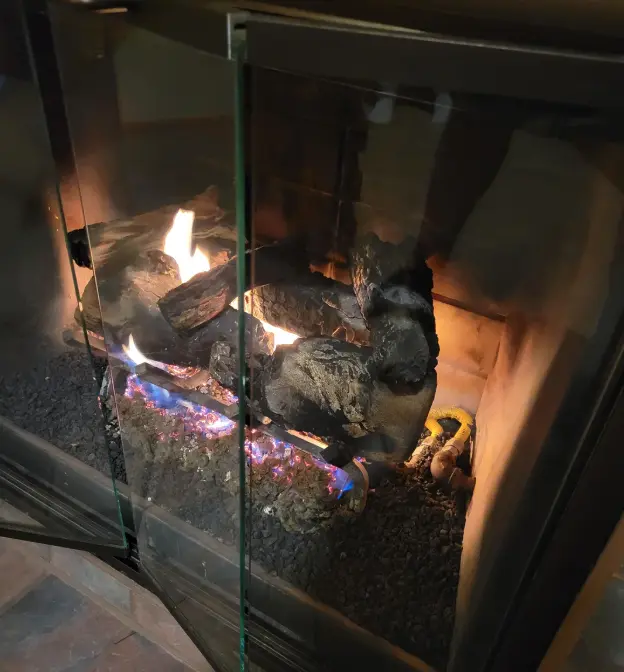
Image: kekepanini on Reddit
Still, since you can’t judge carbon monoxide levels by the color or thickness of the soot, wiping the glass clean and keeping the heater on leaves the real cause alone.
Instead, treat soot as a sign to check for other warnings. If the buildup comes with a gas smell, a lazy yellow flame, soot coming back days after cleaning, or physical signs like headaches and nausea, turn the unit off.
That’s where expert service is a must. And under AS/NZS 5601.1:2022 rules, a licensed gasfitter must test how an appliance burns and vents gas so carbon monoxide is venting safely outdoors.
This matches NSW Health advice, which suggests expert checks every two years along with putting carbon monoxide alarms near bedrooms.
But if you’re unsure if your fireplace glass has harmless dust or a burn problem, an expert gas safety check uses testing tools to confirm right what’s happening behind the glass.
What You Can Safely Clean Yourself
If you only have a little bit of soot and this is a one-time problem, you can safely clean a few outside parts yourself:
- The glass panel (inside and out)
- Light black soot
- Cloudy white mineral haze
- The outer frame and decorative casing
Before you touch anything, turn the fireplace off, let the glass cool, and shut the gas valve. Use a soft microfiber cloth as paper towels scratch soft ceramic glass, which traps carbon and causes faster soot buildup.
Choose your cleaner based on the mess. Use diluted white vinegar or gas glass cleaner for light black soot. Use a non-abrasive cleaner for stubborn white mineral film.
Remember, skip ammonia sprays. They strip coatings and release toxic fumes when heated.
If your manual allows glass removal, lay it flat on a soft surface. Don’t scrub, pull, or soak the fiberglass gasket, as breaking that seal ruins the fire and causes soot.
After you put it back together, run the unit on high for 15 minutes to cure the glass and dry any moisture.
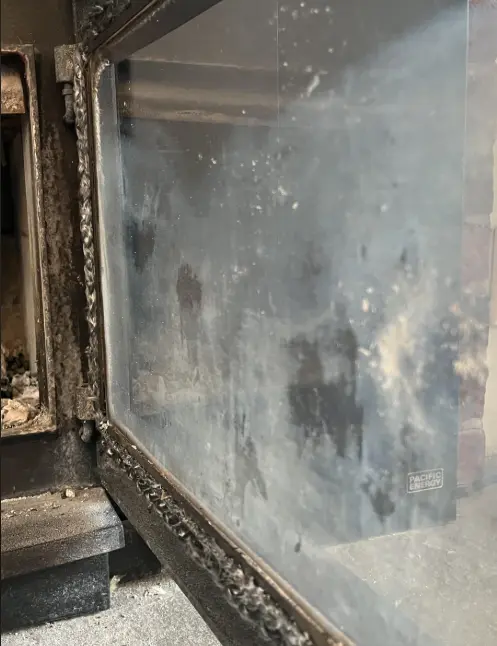
Image: groovyipo on Reddit
Please note, anything inside the firebox past the glass is off-limits. Never clean or adjust:
- Burner ports and nozzles
- Ceramic logs and ember bed
- Pilot assembly and thermocouple
- Gas control valves and regulator
- Flue and exhaust venting
When to Call a Licensed Gasfitter Instead of Cleaning It Yourself
You should call a licensed gasfitter immediately if you smell gas or see a yellow flame. Cleaning just fixes the symptom. It doesn’t fix why the soot forms.
- Immediately (Urgent Hazard): There is any smell of gas, or the flame looks yellow, orange, or “lazy” rather than a steady blue.
- Within Days or Weeks (Combustion Issue): The soot returns within days or weeks of cleaning, rather than building up gradually over a full heating season.
- Every Two Years (Routine Maintenance): The fireplace hasn’t been professionally serviced in the last two years.
Under NSW gas fitting law, you can’t touch an air shutter, gas pressure, or burner parts yourself. A licensed gasfitter must do the work following AS/NZS 5601.1. No exceptions, no shortcuts.
How Often Should a Gas Fireplace Be Serviced?
Every two years is your baseline for an indoor gas fireplace in NSW. If you have kids, use it heavily, or have an older flue, check it every year. But symptoms beat the calendar. Black glass mid-season means calling a licensed gasfitter now.
A proper service covers more than a wipe-down. It’s burner cleaning, log repositioning to spec, seal checks, and a carbon monoxide test.
That’s the exact testing a gasfitter is required to run under the Consumer Safety Regulation during any gasfitting work. And you’ll get a compliance certificate proving it meets NSW standards.
This is the actual fix for constant soot, not just more glass cleaning. If you’ve cleaned that same fireplace three times this season, you’ve missed the step that stops it.
Image: kelli_mcclintock on Unsplash
FAQ About Gas Fireplace Glass Turning Black
These are the questions Sydney homeowners tend to ask once soot appears:
Is it normal for gas fireplace glass to go black?
That white-grey haze is normal mineral and moisture buildup. Black soot, though, is different. Because of trapped air, bad log placement, or clogged burner ports, unburnt carbon coats the glass. Since this shows a fire problem, you need to fix it fast.
Can I use regular glass cleaner on gas fireplace glass?
No. Skip standard ammonia glass cleaners. Heat bakes ammonia right into ceramic glass, permanently etching it with milky stains or weakening it. So, wait until it cools. Then grab a special cream cleaner, or just vinegar and water, and a soft cloth.
Does LPG cause more soot than natural gas?
Yes, if your burner isn’t set up for it. LPG needs a 25:1 air-to-gas ratio, while natural gas only needs about 10:1. Without proper tuning, you’ll starve the burner of oxygen and get heavy soot fast. It’s a common issue in homes running off bottles.
How do I know if my gas fireplace has a carbon monoxide problem?
You need to look for black soot, a moving yellow flame. Plus, headaches, nausea, or fatigue. If you’re dizzy, call 000 immediately. Otherwise, call Poisons Info on 13 11 26, and hire a gasfitter to check for leaks or blockages.
How much does it cost to have a gas fireplace serviced in Sydney?
Standard gas fireplace service and safety inspections can cost $200 to $400. The exact price depends on your unit, its access, and any needed fixes or parts. Contact Lightning Bult with your issue, and we’ll give you a fixed quote first.
Clean the Glass or Fix the Cause?
A light haze may need nothing more than cleaning. But, real black soot, especially if it comes back fast, needs a checkup. Cleaning treats the glass. A licensed gasfitter treats the combustion fault.
Is your glass soot-covered? Lightning Bult’s licensed gas fireplace specialists) can find the cause, service the appliance, and discuss repairs across Sydney’s Northern Beaches, North Shore, Eastern Suburbs, and Inner West.