





Buying a home EV charger isn’t just about checking brands and prices. Your car’s AC charging limit, home power supply and switchboard capacity decide what will work.
For many Sydney homes, a 7 kW Level 2 charger is enough. But your home EV charger installation might need extra electrical work first, and that can change the final cost. Sometimes by more than you would expect.
So where should you start? This guide helps you check your property, compare charger types and speeds, and plan your budget with confidence.
Home EV Charger Types: Level 1, Level 2 and DC Fast
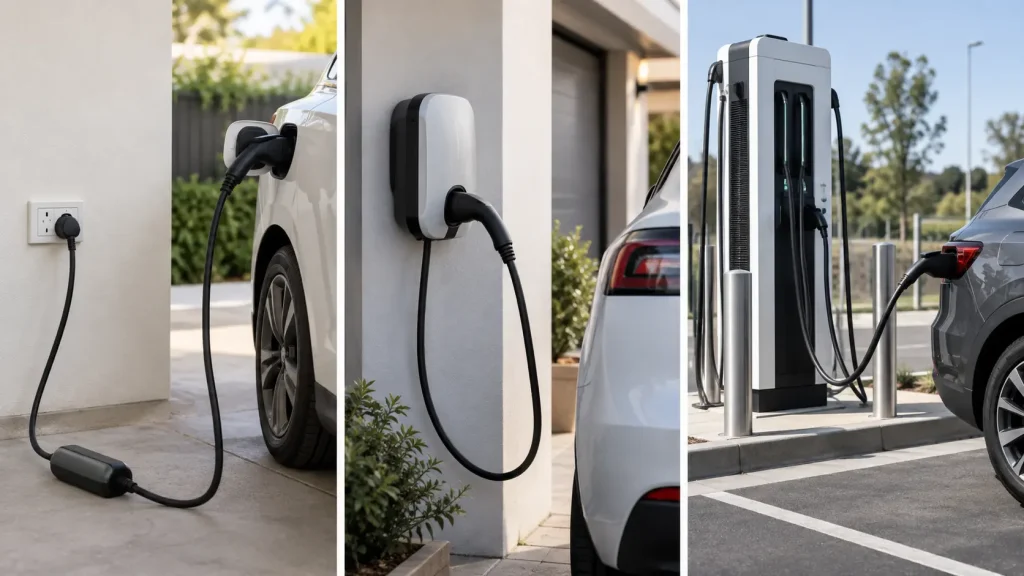
You can’t just plug an EV in overnight and expect a full charge. Charging comes in three levels, sorted by electrical draw and speed:
Level 1: Standard power point
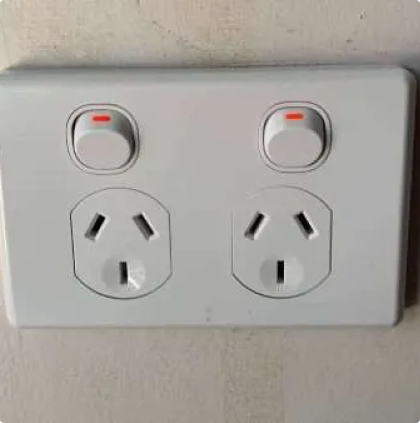
A Level 1 charger is the portable cable included with your car. It plugs into a standard 10-amp power point, delivering about 2.4 kW and 10 to 15 km of range per hour.
A full charge can take more than 30 hours depending on the battery. It’s fine for emergencies or low use, but it isn’t practical for most regular drivers.
Level 2: Dedicated home chargers
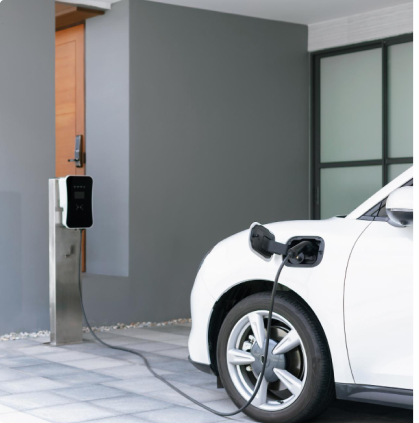
Level 2 is the standard option. These units are hardwired into a dedicated switchboard circuit and deliver anywhere from 7 to 22 kW.
For most homes, 7 kW does the job. Going up to 22 kW? You might need three-phase power, spare switchboard capacity, and a car capable of taking 22 kW AC charging.
Simply put, level 2 adds far more range than a plain power point ever could.
Level 3: DC fast charging
Level 3 chargers feed direct current straight to the battery, delivering 25 to 300 kW. Standard home AC chargers don’t come close.
You’ll usually find them at public sites. Why? They need massive electrical capacity, often demanding major supply upgrades.
Some homes with solar and battery setups can manage a lower-powered DC charger. But it’s not a standard installation.
How to Size a Home EV Charger
Choosing a home EV charger isn’t about getting the top-rated model, it’s about three quick checks:
1. Check Your Power Supply First
Most Sydney homes run on single-phase power. That supports an EV charger at roughly 7 kW.
Three-phase power unlocks faster charging—11 kW or even 22 kW. But it’s not available everywhere, and upgrading costs around $3,500 to $7,500.
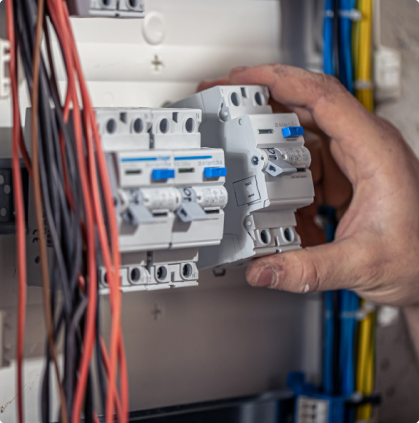
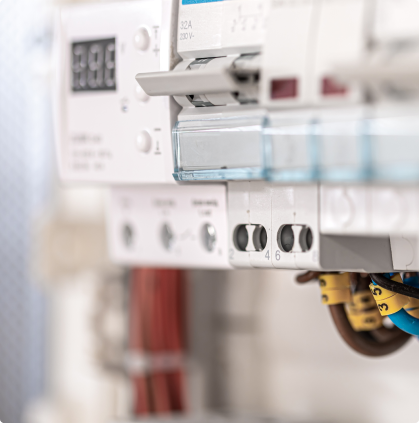
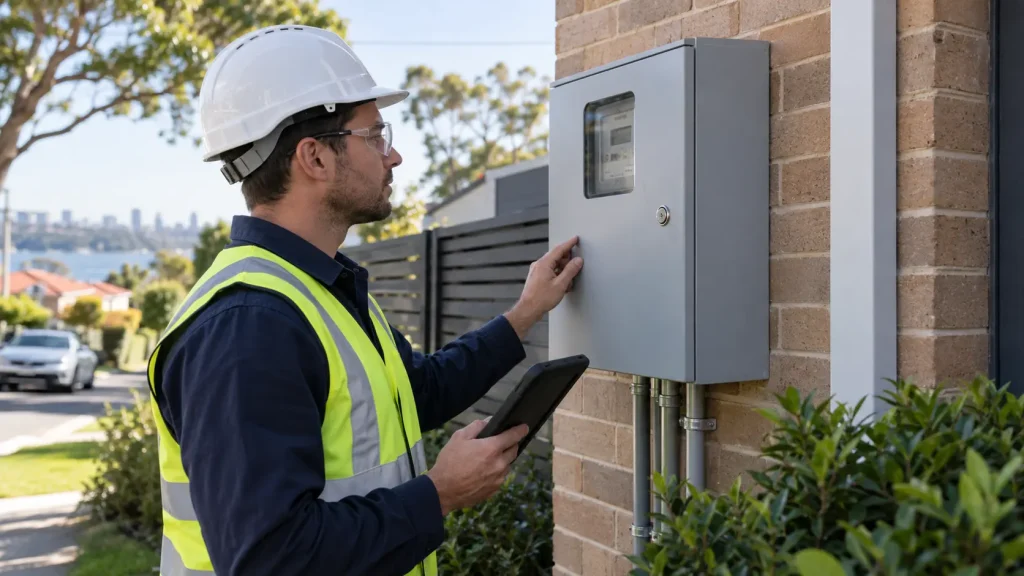
Don’t assume your supply is based on the street, your home’s age, or a neighbour’s setup. Check the meter box instead. Single-phase switches are one pole wide, while three-phase switches are three.
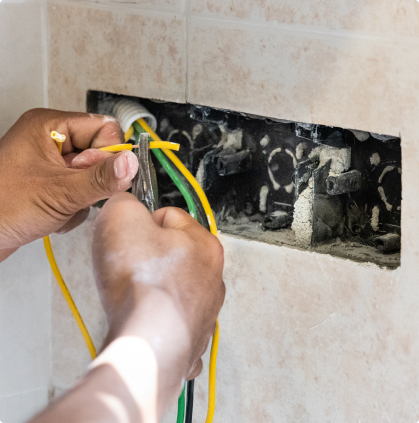
Before buying a charger, have a licensed electrician confirm your supply and inspect the switchboard for a safe installation.
2. Match Charger Speed to How You Actually Drive
A 7 kW charger adds 35 to 40 km of range per hour for most EVs. That’s enough for daily driving overnight.
To estimate time, use this formula:
daily kilometres ÷ range added per hour = charging time
For example, if you’re replacing 60km with a 40km/h charger, you’ll need about 1.5 hours of charging.
A 22 kW charger can add roughly 120 km per hour, though it depends on the vehicle and requires three-phase power plus a compatible onboard AC charger.
Most drivers park at home for 8-plus hours. So, the fastest charger isn’t always the most useful.
3. Check the Switchboard Before Choosing a Charger
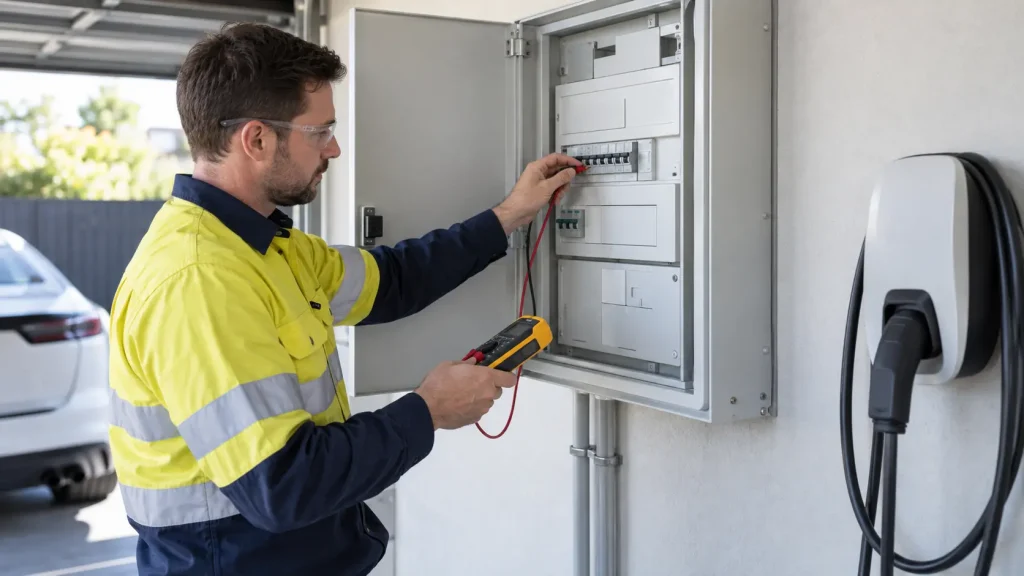
You need to get a switchboard assessment before choosing a charger. The electrician will check available capacity, protective devices, space for the new circuit, cable route and the installation’s condition.
Please note that older ceramic-fuse boards, crowded boards or homes with several large electrical loads may need extra work. This is a common unexpected cost in EV charger installations.
So, getting a professional assessment for electrical fault detection and load capacity is a mandatory first step before you settle on any charger model.
Smart Features Worth Considering
Modern EV chargers can do more than deliver power. Smart features may help manage your home’s electricity use and integrate with solar.
1. Solar-surplus charging
Basic chargers use time-of-day scheduling, starting during a set window regardless of solar output or weather. Solar integration works differently, responding to available generation instead.
Chargers like the Zappi or Smappee monitor surplus solar in real time. They adjust the car’s charging rate to match what your panels are producing. The result? Less grid draw, more sunshine in your battery.
2. Dynamic load management
Dynamic load balancing protects your home’s main fuse from blowing when multiple heavy appliances run at once.
Imagine switching on the induction cooktop, the ducted air con, and the home EV charger all at the same time. That’s when the strain gets detected.
The load balancer instantly dials down power to the car. Total home usage stays safely within the switchboard’s limit.
3. App and tariff scheduling
Brands like Wallbox offer intuitive app control for daily management. You can lock the charger remotely, monitor your energy usage, and set strict charging schedules.
This scheduling lets you block out all evening peak times. The charger only switches on once your ultra-low off-peak or dedicated EV energy tariff starts at midnight.
Installing a dedicated circuit is also the perfect time to upgrade your surge protection to protect both the charger and the car’s onboard computers.
NSW Compliance and Safety Requirements for a Home EV Charger
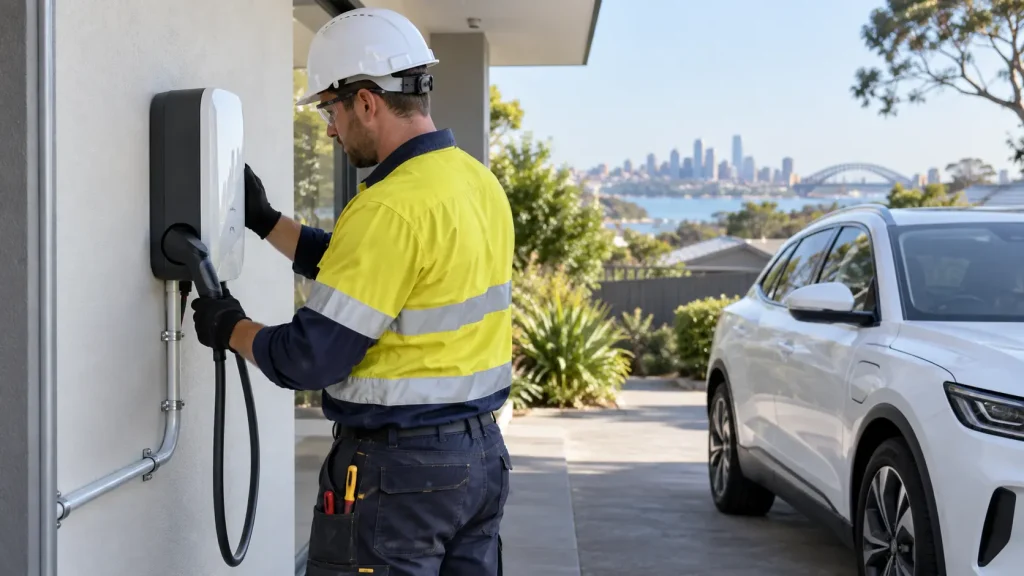
Home EV charger installations involve dangerous, sustained electrical loads. DIY installation is illegal and unsafe. Installation must be done by a licensed electrician.
Not only that, a Certificate of Compliance proving the circuit meets AS/NZS 3000 wiring rules is required for every job.
Also, depending on the charger and property, your electrician may need to notify the electricity distributor.
If the property sits in the Ausgrid network, they can confirm whether notification or a connection application is needed. Supply upgrades, though, always require distributor approval.
The new circuit needs suitable electrical protection. It’s also a sensible moment to check whether the rest of the home needs safety switch installation. Just don’t open or change the switchboard yourself.
What Does a Home EV Charger Cost to Install?
There is no fixed price without the unit and site details. The table below offers a planning range for a standard Sydney installation:
| Installation Type | Estimated Cost Range | What Drives the Price? |
|---|---|---|
| Standard 7kW Install (Single-Phase) | $1,200 – $2,500 | Unit choice, distance from switchboard, wall access and cable route |
| Switchboard Upgrade | $1,000 – $2,500 or more | Existing board, supply capacity, protection, defects and required scope |
| 22kW Install (Three-Phase) | $2,000 – $3,500 or more | Existing three-phase supply, vehicle limit, charger, cable route, network and switchboard work |
Long cable runs through roof cavities, driveway trenching, or structural drilling push costs up. Always get a site-specific quote before proceeding.
DIY vs Licensed Electrician: Why It Isn’t a Choice
In NSW, electrical wiring work must be completed by a licensed electrician. That includes most home EV charger installations. Unlicensed work can create:
- Fire hazards: Overloaded or inadequately protected circuits.
- Insurance complications: Your insurer may question a claim after an electrical fault or fire.
- Compliance problems: You may not receive the required Certificate of Compliance for Electrical Work (CCEW). The electrician must submit it through the BCNSW eCert portal.
- Sale delays: Missing electrical compliance documents can create questions during a property sale.
Check the installer’s credentials on the NSW Fair Trading licence register.
Before accepting a quote, confirm who will assess maximum demand, design the dedicated circuit, manage any distributor application and lodge the CCEW.
Lightning Bult brings more than 30 years of trading experience, 400-plus five-star reviews and a lifetime workmanship guarantee to every EV charger installation.
Is Your Home Ready for an EV Charger?
The fastest way to know is a licensed on-site assessment.
It’s ready if the electrician confirms your switchboard can handle the extra load, your supply suits the charger size and the cable run is straightforward. You’ll walk away with a clear installation plan and quote.
It’s not ready if the board is full, the supply type doesn’t match the charger you need, or the route needs major work. The required electrical upgrades must be done first.
You can check the main switch for a rough indication of single-phase or three-phase power. But only a licensed electrician can confirm capacity, protection and compliance.
Frequently Asked Questions
Quick answers to common questions from Sydney homeowners considering home EV charging:
Do I need three-phase power for a home EV charger?
No. A 7 kW single-phase EV charger fits most homes. An 11 or 22 kW charger needs three-phase power, and your car has to match that AC charging rate.
How long does home EV charger installation take in Sydney?
A standard installation takes about 2 to 4 hours. Switchboard work, long cable routes, conduit or trenching can stretch that to 4 to 8 hours or a full day. A three-phase supply upgrade takes several weeks.
Can I use my existing power point to charge my EV?
Yes, if it’s suitable and in good condition. Level 1 charging works for short drives or backup use. Plug the approved cable into the power point. Remember, never use an extension lead or power board.
Will a home EV charger increase my electricity bill?
Yes. The cost depends on energy use, your tariff and whether you charge with surplus solar. Scheduling may reduce costs during cheaper charging periods.
Is a 22 kW charger worth the extra cost?
Only if your vehicle supports 22 kW AC charging, your property has suitable three-phase power and you need faster charging. An 11 kW car plugged into a 22 kW charger gets 11 kW. For most homes, 7 kW or 11 kW is enough.
Ready to Check Your Home Before Choosing a Charger?
Selecting the right charger depends entirely on your home’s electrical capacity, your vehicle’s requirements, and your daily driving habits.
While this guide serves as a practical overview, an in-person assessment by a professional is necessary to determine the ideal charging solution for your home.
Save yourself the search, because Lightning Bult has exactly what you need. Our licensed electricians at can provide tailored advice and installation quotes throughout the Inner West, Eastern Suburbs, North Shore, and Northern Beaches.
Following installation, our HomeGuard Maintenance Membership can also deliver continuous support and essential services for your home.