








Some homeowners ignore common AC problems until the compressor crashes. It turns a 200 warning into a 3,000 emergency replacement during peak summer when every tradie is booked for weeks.
You can prevent things from getting worse. Let’s learn when you can do some basic maintenance before calling air conditioning services and what are all the signs of air conditioner problems. Read on.
Common Air Conditioner Problems and How to Fix Them
Image by geargodz from Freepik
Let’s check out the air conditioning problems and what you can do about them:
1. Air Conditioner Won’t Turn On
Nothing beats the frustration when the AC won’t turn on. You tap the remote or thermostat and nothing happens.
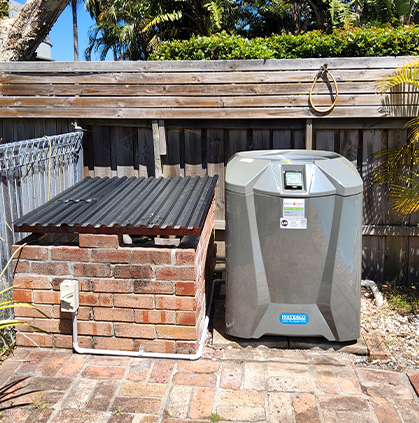
You go outside to check the outdoor condenser unit on the concrete, dead quiet. Well, this is one of the common AC problems homeowners run into.
Often it’s a power issue: a safety switch or circuit breaker tripped to protect the system. Sometimes the remote batteries are dead, or thermostat calibration issues mean no signal gets through to the control interface.
Also, a failed capacitor can prevent the compressor from starting, leaving the unit idle. In the worst case, the motor could seize, causing total failure.
Now, how to fix it:
- Replace the thermostat battery if the display is blank/dim, or schedule calibration if broken.
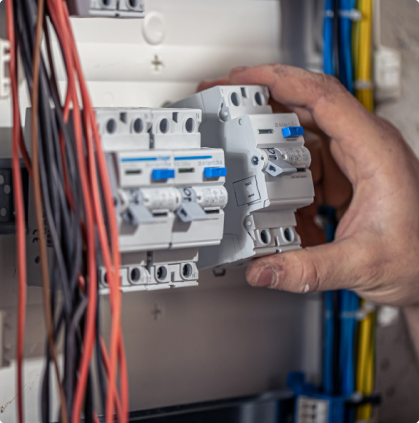
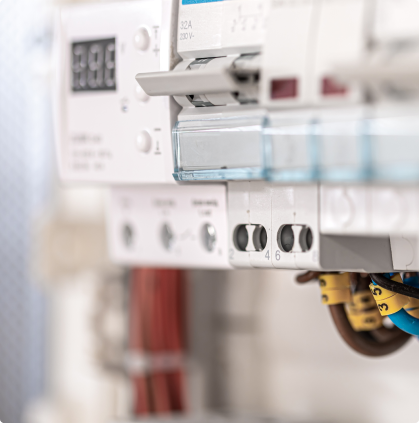
- Check and reset the circuit breaker at the switchboard.
- Ensure the outdoor disconnect switch near the condenser is on.
- Replace a clogged AC filter to clear high-pressure safety locks.
- Wait 5 minutes after a power reset before restarting the system.
2. AC Not Blowing Cold Air
Your system’s running now. But it feels like a warm breeze. The thermostat shows hours of effort to hit 22 degrees, but the living room sits at 28 and climbing. Your AC doesn’t blow cold air
This is an AC problem in peak summer. The system is moving air but not removing heat.
Sometimes it’s a thermostat set to “fan only,” or a clogged air filter blocking airflow causing the evaporator coils to freeze. But, dirty outdoor condenser coils can also prevent proper heat release.
So, what can you do to handle this air conditioner problem?
- Make sure the mode’s set to “Cool.”
- Replace the clogged filter.
- Clear leaves, debris, or obstructions around the condenser.
- Turn the system off to let it defrost.
- Give the unit 10 minutes to bypass its internal safety delay and start cooling.
3. Weak Airflow
Your AC hums and blows cold air, but the breeze from the vents is weak. It’s a common AC problem that comes from ignoring an issue until the whole system stalls.
Weak airflow means the system is cooling, but it can’t push enough air through your home. One room may freeze while others stay warm, or it takes hours to drop a few degrees.
A clogged air filter often causes this. Sydney dust, jacaranda pollen, and pet hair accumulate fast. When the filter packs tight, air can’t pass, like breathing through a pillow.
How to solve the problem dealing with the weak airflow of your AC?
- Make sure all room supply vents are fully open.
- Check the return air grille for heavy dust buildup.
- Check accessible ceiling ductwork for any disconnections
- Make sure the Mode isn’t set to low-power Eco/Quiet by mistake.
- Professional cleaning of the internal fan wheel might be required
4. AC Turning On and Off Frequently
Does your AC turn on, run a few minutes, then shut off before the house actually cools down? That’s short cycling, one of the most common AC problems to watch for.
If the house stays humid even when the cooling system is on, that’s a sign. You might not feel the AC blowing warm air, but it feels sticky and damp inside, which is not comfortable.
Oversized units are often short cycles. For example, your room needs a 2.5 ton AC, but you install a 3 ton unit.
Then how to fix it when short cycling becomes your HVAC problem today?
- Have an HVAC professional assess whether a smaller unit or multi-stage system is needed.
- Keep the thermostat away from direct sun or heat sources that can skew readings.
- Clear debris from the outdoor condenser for proper heat exchange.
- Look for ice on refrigerant lines, signalling airflow or charge problems.
- Replace a dirty or clogged air filter to restore airflow across the evaporator.
- Plan technician schedule if the issue is on the refrigerant or compressor.
5. Water Leaking From Indoor Unit
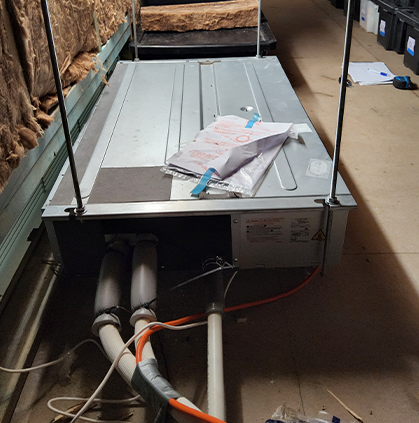
When your air conditioner leaks water, the condensate drainage system has failed. The main issue is a clogged condensate drain line.
Evaporator coils pull moisture daily and drain through a tiny PVC pipe. But algae, dust, or buildup can block it. This causes water to back up into the drain pan and leak into the ceiling or wall.
This is one of the most underrated AC problems. The damage seems minor at first, but the real issue happens later: water drips during operation, pools in ceiling pockets, and feeds unseen mould through the insulation.
How to deal with this common AC problem:
- Turn off your air conditioner right away to avoid electrical hazards.
- Soak up standing water with towels to protect your floors.
- Find the condensate drain line (usually a PVC pipe near the outdoor unit).
- Pour a cup of white vinegar down the drain to clear minor blockages.
- Use a wet-dry vacuum on the drain line end to pull out stubborn clogs.
- Check if your indoor unit is level—it should tilt a bit toward the drain.
- Check the drain pan for cracks or rust.
6. Foul Smells
Do you experience this? You come home, turn on the AC, and smell vinegar or sour gym socks. It’s sharp at first, then fades to a faint musty odour you barely notice. But every time you restart, the smell returns.
That’s mould in your AC unit. Bacteria grow inside and spread with each cooling cycle. The longer it runs, the more growth spreads, affecting sensitive family members more.
Sometimes it’s just a dirty air filter that traps dust feeding mould. When the fan runs, those particles blow into your room. But it could be from a clogged condensate drain, leaving a bacterial swamp. Or a dead pest in your duct.
What to do if a foul smell becomes a problem with your AC system
- Wash the indoor filters in warm, soapy water to remove odour-trapping dust and mould.
- Pour a cup of white vinegar down the condensate drain to kill bacteria and slime.
- Check the AC unit and ductwork for dead pests or nesting materials.
- Run the unit in “Fan” mode for 60 minutes to dry out the internal evaporator coils.
- Call a technician to do a deep clean or check if it is a burning smell.
7. Strange Noises From AC Unit
Your AC should stay quiet in the background. If it starts sounding loud or weird, it’s trying to tell you something’s off. And different noises mean different problems.
Similar to the smell, this is the most common AC problem homeowners overlook. Grinding or squealing sounds usually mean worn motor bearings or a failing blower fan. This needs lubrication or replacement before seizure.
Hissing usually signals refrigerant leaks from damaged lines. And rattling or banging suggests loose parts, debris in your outdoor unit, or a failing compressor.
Then how to deal with this AC problem?
- Find where the noise’s coming from—the indoor unit, outdoor unit, or the ductwork.
- Turn off the system if you hear grinding, squealing, or loud banging.
- Check your outdoor condenser for leaves, sticks, or debris caught in the fan.
- Remove any foreign objects after you switch power off.
- Tighten any loose screws or panels you can safely reach.
- Listen for where the noise is after you restart.
8. High Energy Bills
Homeowners often overlook signs of air conditioner problems until your energy bills rise. The AC seems to run fine, the house cools down, but when the power bill arrives it’s $200 higher than last quarter.
When the compressor cycles longer, the unit fights inefficiencies and wastes electricity. And if the thermostat sits in direct sunlight, it misreads the room and keeps the system running.
It doesn’t end there. A failing capacitor raises resistance, wasting energy as heat instead of useful work. Or maybe you push your cooling system to a temperature that’s too cold, too often?
What should you do to fix this problem?
- Set your thermostat to 24–25°C instead of lower temperatures.
- Seal gaps around windows and doors to prevent cool air from escaping.
- Close curtains during the hottest part of the day.
- Replace the clogged filter that makes the motor work harder and increases power usage.
- Schedule annual professional servicing to maintain efficiency.
Should You Call Professionals or Fix the AC Yourself?
Image by DC Studio on Freepik
When you have AC problems, you might want to fix it right away to get the comfort you want ASAP, but is that the right thing to do?
When You Can Fix Issues Yourself
Homeowners can safely address common AC problems with basic skills. These include:
- Changing the AC filter: No electrical work involved. Slide out the old filter, note its size, and insert a new one with the arrow pointing towards the unit.
- Troubleshooting the thermostat: No settings changes are required. If the screen is dim, replace batteries. Make sure it’s set to COOL below room temperature and wipe dust from sensors.
- Checking airflow: No mechanical work is needed. Unblock vents, clear debris at least 60 cm from the outdoor unit, and rinse outdoor coils with a garden hose.
- Resetting the circuit breaker: Safe if done once. Turn the AC breaker OFF, wait 30 seconds, then ON. If it trips again immediately, stop and call a professional due to a potential electrical fault.
- Clearing the condensate drain: This is a plumbing task. Pour a cup of vinegar down the PVC drain access by the indoor unit to dissolve algae, then flush with water.
When You Should Call Professionals:
Besides those five basic check-ups, you must call a licensed professional to help you with common AC problems:
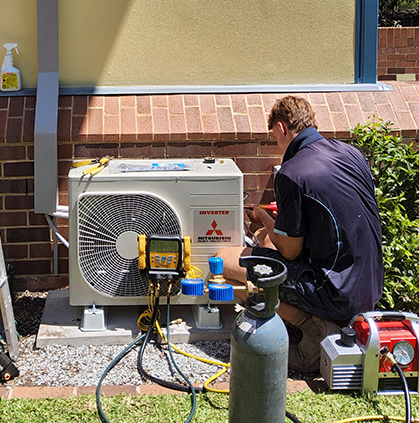
- Refrigerant handling — Leaks and recharges are illegal without ARCTick certification. Pressurised gases need specialised recovery equipment and leak detectors.
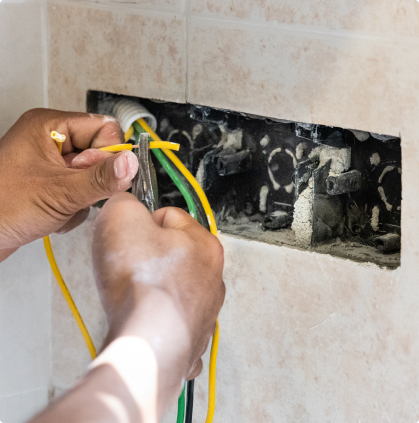
- Electrical work — AC systems use dangerous 240-volt power, and capacitors retain a charge. Faulty wiring or blown fuses are hazardous without training.
- Compressor replacement — This complex job needs specialised tools for cutting, brazing, and moisture removal before recharging. Mistakes with high-voltage capacitors can cause serious injury.
- Ductwork repairs — Professionals seal leaks using pressure tests and appropriate sealants. Standard duct tape fails under HVAC conditions, leading to energy waste.
- Control board diagnostic: — Delicate low-voltage signals can be damaged by miswiring, turning a simple repair into a costly replacement.
- Unusual noises or smells — Grinding, squealing, or burning odours indicate faults that, if undiagnosed, can lead to fires or system failure.
FAQ About Fixing AC Problems
Here are some questions homeowners often ask about common AC problems they face:
Is it worth repairing an old air conditioner?
If your system is under 10 years old and repairs cost less than half a new unit, repairs are usually best. For systems over 15 years, replacement with a more energy-efficient model is often more cost-effective.
How do I tell what’s wrong with my AC?
Check if the AC is running. If not, look at the thermostat, circuit breaker, and batteries. If it runs but doesn’t cool, check the air filter, look for ice on refrigerant lines, and clear debris from the outdoor unit.
Listen for unusual noises. Bangs means loose parts, hissing suggests refrigerant leaks, and buzzing points to electrical problems. Or you can just call a technician to do the detection.
Why is my AC running but not cooling?
These are common AC problems. Dirty air filters, leaks, or a busted compressor can be the causes. Check and swap the filter. If still hot after an hour, you likely need professionals to check the refrigerant and the compressor.
Conclusion
Common AC problems don’t have to ruin your summer. AC blowing warm air, short cycling and power hiccups can be fixed with simple DIY tweaks. But know your limits. If you’re unsure, it’s better to leave it to a professional.
Whether you need same-day repairs, real talk on replacement options, or yearly servicing, Lightning Bult has a team that can help you diagnose the signs of AC problems and provide the fixes to restore your cooling comfort.