


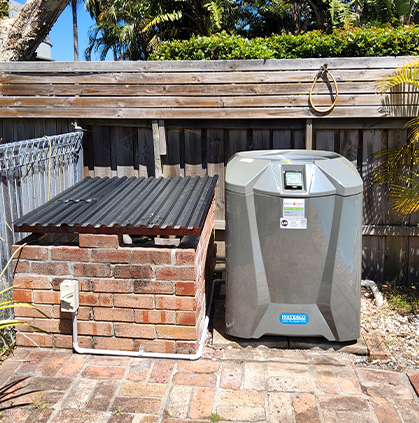

Did you know your pool can lose up to 205 litres a day on 30°C days? You’re basically watching your money and costly chemicals go down the drain. So, are pool covers worth it to solve this?
Let’s figure this out. This article tells you what a pool cover does and the types you can choose. So, before you call your pool heating services for a consultation, you should know the basics. Read on!
Are Pool Covers Worth It? Here’s the Quick Answer
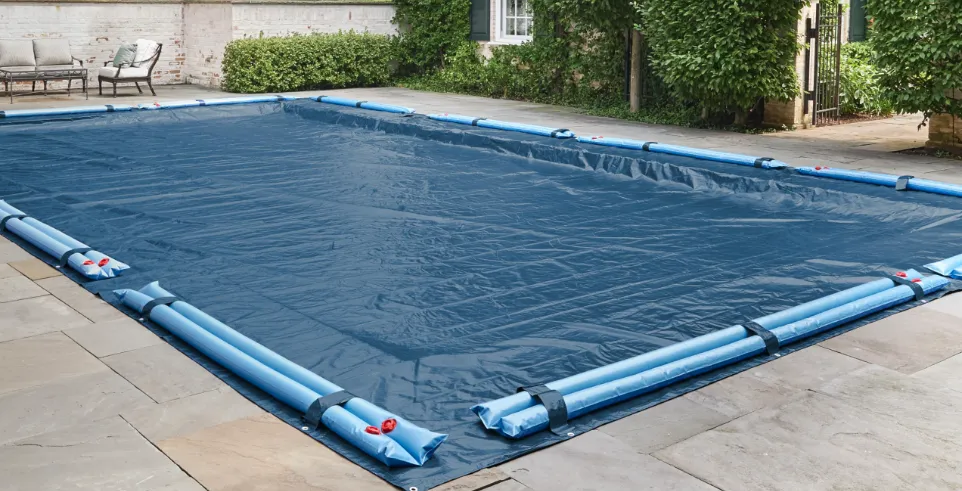
Image by Amazon.com
Yes, pool covers are worth it. They save you about $500–$800 a year on water, chemicals, and energy, and they usually pay for themselves in 18–24 months.
Here’s how the savings happen:
- 97% less evaporation — An uncovered pool can lose up to 10,000 litres of water each month. The pool cover stops evaporation. When the air is dry, it can’t touch the water, so no water vapour escapes.
- 70% less heat loss — Most heat escapes at the surface. A solar cover works like a thermos, keeping your pool 6°C–8°C warmer.
- 35%–60% lower chemical costs — The sun’s UV rays break down chlorine. Shielding the water from sunlight keeps chemicals active longer, reducing the amount needed.
- Less electricity — Keeping heat in and debris out means your heat pump and filter work less. This cuts your pump’s daily run time and your quarterly power bill.
- Money back in under 2 years — You can have total savings from water ($30–$50), chemicals ($150–$250), and heating/power ($300–$500).
What a Pool Cover Actually Does (And What It Doesn’t)
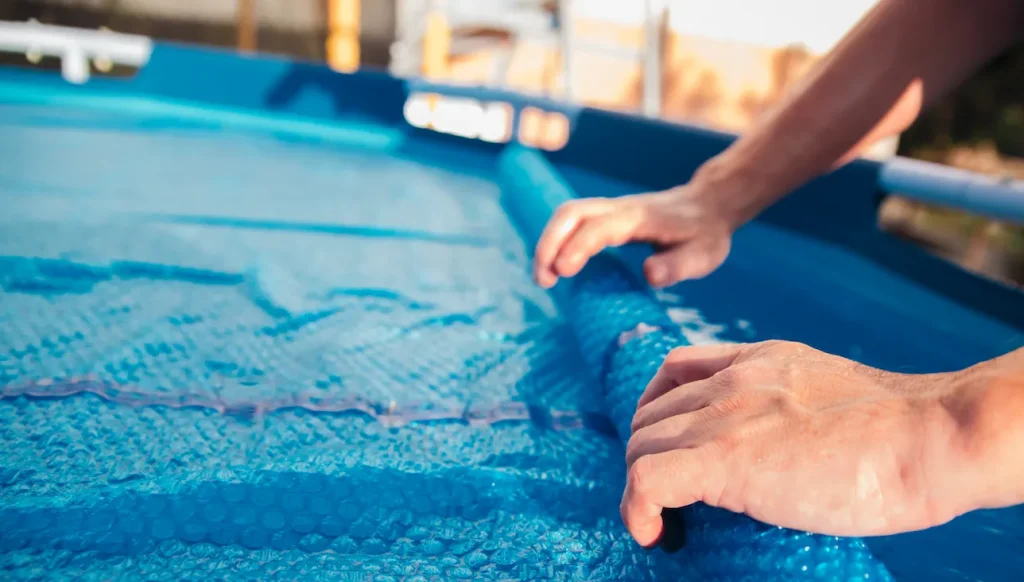
Image by alieee04 on Freepik
A pool cover sits right on the water, keeping your pool separated from air and sun. It acts like a seal that locks in your water and chemicals and keeps out weather and yard debris. But, what does it really do?
- Creates a vapour seal — It covers the water with a real lid. Since dry air can’t touch the surface, water molecules can’t turn into gas and escape. This keeps water levels steady.
- Acts as a UV shield — The sun’s rays normally bleach chlorine from the water. The pool cover acts like sunglasses, blocking the light that destroys your sanitiser so the chlorine stays in the water to kill germs.
- Keeps the surface warm — A pool cover traps air between the water and outside air. This prevents wind from pulling heat away and helps keep the day’s heat in overnight.
- Catches physical debris — It gives a surface for leaves, twigs, and bugs to land on. This stops organic matter from sinking to the bottom where it would rot, turn into food for algae, and clog your skimmer box.
Then, what it doesn’t do:
- Support weight — Standard pool covers can’t bear weight. Step on one, and it sinks, engulfing you. Under AS 1926.1, they’re never a replacement for a proper pool fence.
- Let the pool “breathe” — Constant covering traps chlorine gas. This can damage your pool liner or stainless steel parts. You need to uncover the pool weekly for a few hours.
- Heat the water without sun — A solar cover isn’t a heater. It’s a heat-trapper. If it’s a week of heavy clouds and rain, the cover won’t make the water warmer.
- Clean the floor — A pool cover keeps new dirt out, but you’ll still need your vacuum to clean the bottom.
Pros of Pool Covers
If you install a pool cover, here are the benefits that you’ll get:
1. Water Bills Drop
Evaporation quickly drains pools. In Sydney’s dry, windy, hot summers, an uncovered pool loses 6.4 litres per square meter daily. And dry conditions double this.
Heated pools lose even more, as warmer water evaporates faster, leading to more topping up and higher water bills.
A quality pool cover can block up to 97% of evaporation by sealing the surface and trapping insulating air.
2. Lower Heating Costs
Pool covers save money by trapping heat. Without one, up to 70% of heat escapes as warm water vapour. This means longer heater runs and daily bills rising $2–$5 per 50m³ of pool water.
A covered pool with a heat pump pool heating cuts energy costs by over 50% annually, saving $500 in summer. Shorter heater warm-ups to 28°C allow shoulder season use without big power spikes.
3. Lower Chemical Costs
Sydney summers have strong UV rays that break down chlorine in 37 minutes at noon. You need to add more to keep it at 1–3 ppm.
Uncovered pools lose 50–90% more chlorine to the sun, making them less clean and harder to sanitise.
You can fix this in a few ways, like using stabilised chlorine. But a pool cover is a great option for longer periods.
4. Cleaner Pool
You don’t want to clean your pool daily, especially with nearby trees. Imagine finding a net of leaves in the pool each morning before swimming.
A pool cover blocks over 90% of trash. This means fewer leaves, less vacuuming, less skimming, and fewer times you need to clean the filter.
5. Extended Swimming Season
Sydney pools lose heat fast. Nights around 10–15°C drop 3–5°C from evaporation, so spring and autumn feel cold. June to August, most pools aren’t usable.
A pool cover helps trap sunlight for a free 8–10°C boost. With a solar or heat pump heater, pools stay at 25–28°C year-round, adding 2–4 usable months. Heated pool in winter go from special to normal.
6. Reduces Algae Growth
Algae grows when sunlight hits water and nutrients enter from debris. Uncovered pools from May–September turn swampy green. This needs large doses of algaecide and filter flushes, costing $100–$200 each time.
Solar covers block 99% UV, stopping algae at the source and sealing out debris. Winter pools stay pristine with no treatments needed as blocked light stops spores.
7. Safety Layer
Not every pool cover offers this benefit. But if you use a pool cover that’s safety-rated and automatic, it can hold adult weight and adds real protection beyond pool fencing for families with kids or pets.
Keep in mind, this only applies to covers rated as safety barriers. Standard bubbles or solar covers aren’t safe.
Cons of Pool Covers
A pool cover isn’t a perfect solution for every home. Here’s what to think about before you buy:
1. Inconvenient Without a Roller
The biggest complaint from pool owners often isn’t the cost, it’s the effort. It’s tiring to take off a big cover to swim and put it back on.
A roller helps, but it still takes time. If your family swims often, an automatic cover is worth considering. It saves work, though it costs more upfront.
2. Upfront Cost Can Be a Barrier
Budget solar covers start from about $150–$300, which is accessible for most owners. Quality thermal or automatic covers run from $2,000 to well over $10,000 installed.
You need to include this in your solar pool heating cost if you plan to build the combo system.
The investment almost always pays back, but cheaper covers don’t hold up in Australian UV and often last just 2–3 years before they shred.
3. Budget Covers Fail Fast Under Australian UV
Australia’s UV index is among the highest in the world. Pool covers lasting 5-7 years in Europe can degrade in 2-3 years here without proper UV protection. Always get a cover rated for Australian conditions.
Budget imports often lack strong UV stabilisers. Chlorine and salt accelerate damage, reducing the life of 400-micron covers to 18-24 months. Expect to spend $400-$800 annually on replacements.
4. Needs Poolside Storage Space
Even with a roller, the hardware takes up poolside space. Tight courtyards, stylish entertaining areas, or tricky fence layouts can make placing the roller awkward.
Under-bench or below-ground roller systems fix the look, but they add $1,000–$3,000 to the total and need a professional to install.
5. Custom Pools Need Custom Covers
Ready-made covers fit standard 8×4 m rectangular pools, with quick delivery for basic solar blankets. Unusual shapes need custom CAD templates, laser-cut panels, and reinforced seams, costing 20–50% more.
For 30 m² odd shapes, expect $25–$40 per m² ($1,200–$3,000 total), versus $800 for stock covers.
6. A Standard Cover Is Not a Safety Device
You can use solar and thermal covers. But they aren’t safety covers. They can’t support a child or pet and should never replace a proper pool fence or gate.
If safeguarding kids or pets matters, choose a dedicated anchored safety cover or a certified automatic hard cover. That means a higher cost than your current budget.
6 Types of Pool Covers You Should Know
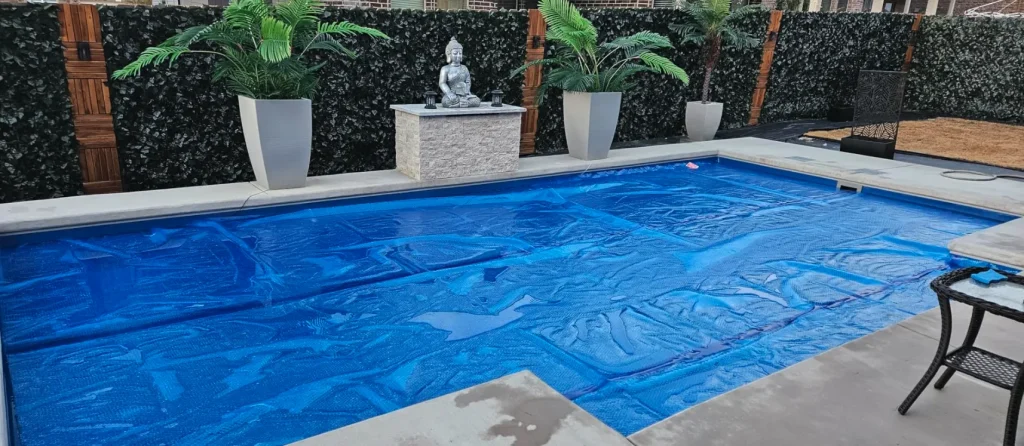
Image by Amazon.com
Not every pool cover is made for the same purpose. Here’s a breakdown of what’s available in 2026:
1. Solar Cover
You can call this a bubble cover or solar blanket. It’s a UV-resistant plastic sheet with air pockets that absorb sunlight and transfer warmth to the water.
It’s the most popular and affordable choice for daily heating and evaporation control, raising the temperature by 8–10°C in full sun.
Standard covers last 2–4 years, while high-quality UV-stabilised ones can last 8–12 years with good care.
2. Thermal Cover
A thermal pool cover is a foam and plastic blanket that traps heat, working well with pool heaters for year-round use.
It cuts overnight heat loss by 80%, saving 70% on energy bills. For a 26°C pool, this saves $50–$100 monthly on heat pump costs, or more with gas heating (you can contact your gas pool heater service for this).
3. Winter Cover
A winter pool cover, made of PVC or mesh, is for long-term non-use. Mesh covers let rain drain while blocking debris and wildlife, while solid covers block everything.
Neither pool cover retains heat. They’re for seasonal protection, not heating. They’re cost-effective for off-season management and prevent the pool from turning green.
4. Automatic Pool Cover
An automatic pool cover is a motorised system that opens and closes with a button along a track. Slat covers use interlocking sections, while roll covers use a continuous blanket on an electric roller.
This is the most convenient option, keeping heat in and offering strong safety ratings on premium models, some supporting 300-500 kg/m² against kids/pets.
Costs range from $10,000 to $22,000 + installed, depending on pool size, cover type, and installation.
5. Safety Cover
An anchored safety cover is a strong pool cover attached to anchor points around the pool’s edge. It’s built to hold weight, not just block debris.
These covers are for homes with young children or pets and meet Australian standards for load-bearing pool barriers. They cost more than standard covers but offer a level of safety a solar blanket cannot.
6. Mesh Cover
A light mesh cover floats above the pool, catching leaves and trash before they fall in. It doesn’t keep the pool warm or stop much evaporation, but it’s easy to remove.
This is great for pools with lots of trees, especially in the fall. It’s often used with a solar cover for leaf protection and warmth.
If You Heat Your Pool, a Cover Matters Even More
If you’ve learned how to heat a swimming pool, you know that running a pool heater without a pool cover is like leaving your front door open while the air conditioning is on.
Up to 70–75% of a heated pool’s energy escapes through surface evaporation. The heater works constantly to replace this lost heat. A quality thermal cover stops most of that loss.
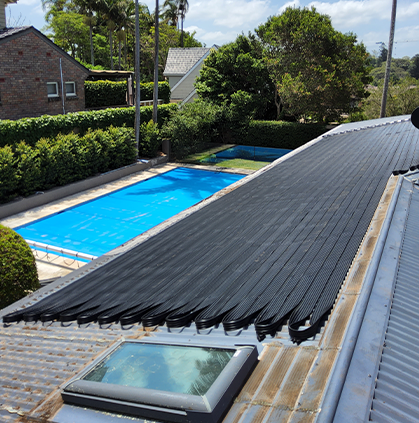
For heat pumps, a cover can reduce electricity use so much that some homeowners buy a smaller unit. For gas heaters, a cover means shorter run cycles, using less gas and lowering bills. Solar heating depends on retaining collected heat, without a cover, it’s gone by morning.
So yes, the cover and heater are a system. If you’re heating your pool in winter without a cover, you’re paying to heat the air above your pool.
And to find the right heating and pool cover combination, contact Lightning Bult for a consultation.
FAQ about Pool Covers
Pool cover’s benefits raise a few common questions. Here are the ones that come up most often:
Do pool covers really save money?
Yes, a pool cover saves water, chemicals, and energy by stopping 97% of evaporation, which saves up to 70,000 litres a year. It also lowers sanitiser costs by slowing chlorine breakdown. You can get your investment money back in one season.
What’s the best pool cover for heat retention?
A foam thermal cover keeps heat the best overnight, reducing heat loss by up to 70% as it has better R-value insulation. If your pool has an active heater, it’s the most efficient choice.
Solar covers come in a close second, giving heat from the sun during the day plus insulation.
Are pool covers safe for children and pets?
Yes. But remember, standard solar covers aren’t safety devices. They can’t hold weight and they can trap a child or pet under the surface due to a suction effect if they fall in.
So, don’t treat a bubble cover as a barrier. For real security, you must have a compliant fence and self-latching gate that meets Australian Standard AS 1926.1.
Conclusion
Up to 200 litres are lost daily, chemicals wasted, and debris in the pool. That’s stress no pool owner wants. So, are pool covers worth it? Yes, especially when you pair them with a pool heater.
Still unsure which type fits your needs? No worries. Lightning Bult can help. Call (02) 9905 8800 today for a free consultation to find the perfect pool cover for your setup.