


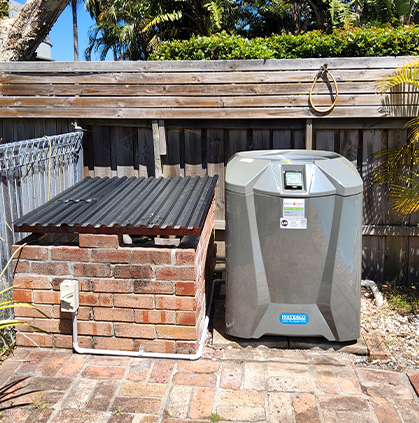

Most Sydney homeowners hunting for the cheapest way to heat a pool don’t realise they’ve made a mistake until the huge electricity bills arrive.
It’s never a one-minute decision. You must weigh the lowest price to buy against the most affordable to run. And confusing the two costs $10,000 over ten years.
So, before booking a pool heating installation, let’s look at the data for all options available, from gas to solar and heat pump. Read on!
Why Pool Heating Costs Vary So Much
Pool heating cost comes down to a simple balance: heat loss and how often your heater replaces it.
Pool volume is the first factor. A 50,000L pool needs about twice the heat energy of a 25,000L pool to raise the temperature the same amount.
Target temperature also matters. Every extra 1°C can add 10% to 30% to the heating cost. The bigger the gap between water and air temperature, the faster heat escapes.
Moving from 26°C to 28°C may sound minor, but the heater still has to hold that temperature through wind, rain, and cool nights. The bigger the gap between water temperature and air temperature, the faster heat escapes.
Your swim habits? That changes the costs, too. A family using the pool most afternoons from September to April needs a system with low running costs.

Image: HaleyePhelps on Unsplash
A weekend-only swimmer may care more about quick heating. A spa owner who wants 38°C ready at any time is dealing with a much different heating demand.
Sydney makes the difference noticeable. Solar exposure drops to 7.6–9.3 MJ/m² in winter, compared to 24–27 MJ/m² in summer. Minimum temperatures sit around 8–10°C, so the heater works against lower air temperature.
That is the real cost split. The upfront cost is what you pay once. The running cost is the part that keeps returning.
The Cheapest Way to Heat a Pool: All Options Ranked
Pool heating options should be ranked by upfront cost, seasonal running cost, and reliability. Not just by brochure price.
| Rank | Heating method | Upfront capital cost | Running cost | Best For |
|---|---|---|---|---|
| 1 | Solar pool cover | $700–$1,500 with roller for a premium 8m x 4m setup | $0 | Cheapest first move, summer and shoulder-season savings |
| 2 | Solar pool heating | $3,500–$7,500 installed | about $1/day, or $150–$300/year in pump electricity | Spring-to-autumn swimmers with sunny roof space |
| 3 | Pool heat pump | $4,000–$9,000 installed | $250–$750 per year | Regular swimmers who want controlled temperature |
| 4 | Gas pool heater | $3,000–$10,000 unit + $1,500–$6,000 installation | $500–$1,500 per year | Fast heat-up, spas, weekend-only use |
The cheapest way to heat your pool isn’t always the biggest heater. It’s the setup that wastes the least heat.
A cover is the clear winner for “cheapest right now” because it cuts heat loss without adding to your energy bill.
For active heating, solar pool heating is usually the lowest-cost option. Only if your roof gets enough sun. NSW BASIX recognises solar pool heating as the most efficient way to heat a pool or spa.
An inverter heat pump? It’s a strong choice if you want a longer swimming season. Gas sits lower on the list because it heats fast but burns through energy.
Solar Pool Cover: Cheapest Upfront, No Running Costs
The cheapest way to heat your pool? A solar pool cover. No electricity, gas, or mechanical heater needed. This option is great for spring and summer swimming. It lets you enjoy your pool longer without paying for a heater.
For a standard 8m x 4m Sydney pool, a good-quality cover costs about $608–$720. After that, the running cost is $0.
And don’t forget the roller. A wet 32m² blanket is awkward to pull on and off by hand. Without one, you’re less likely to use the cover daily, and savings disappear.
A basic manual roller starts at about $299. A nicer under-bench roller usually runs $1,600–$2,800, depending on size and build quality.
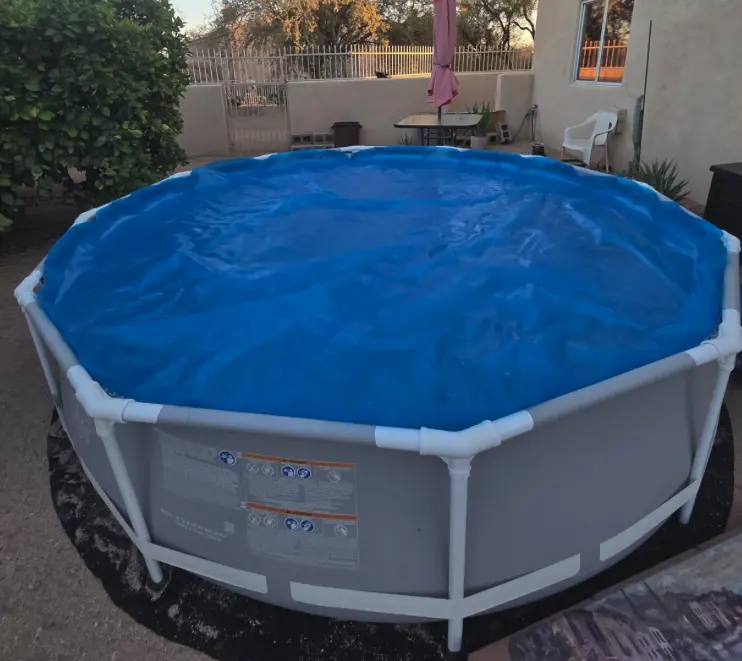
Image: Amazon
One thing to check before you buy: some premium covers are designed to reflect solar heat and keep pools cooler in summer. Those aren’t the right choice if you want to warm the water.
Even with a heater, you still need a cover. It traps heat, cutting your energy bill by almost half.
Solar Pool Heating System: Cheapest to Run Long-Term
A passive cover is the cheapest first step. Your next move is an active solar pool heating in Sydney.
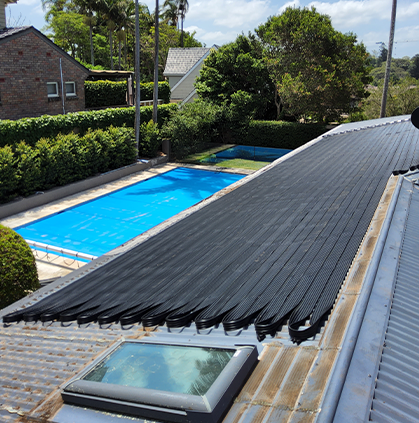
Your pool water gets pumped through solar collectors on your roof. The water soaks up heat from the sun, then comes back to your pool warmer than before. Simple setup, very low running cost.
For a 40,000L Sydney pool, installation usually runs $3,000–$7,000, with many standard systems landing around $6,000. Running cost? It’s around $150–$300 per year for the pump electricity.
A well-installed system lasts 15–25 years and often has the lowest lifetime running cost. Compared to natural gas, you’ll pay it off in 2 to 7 years.
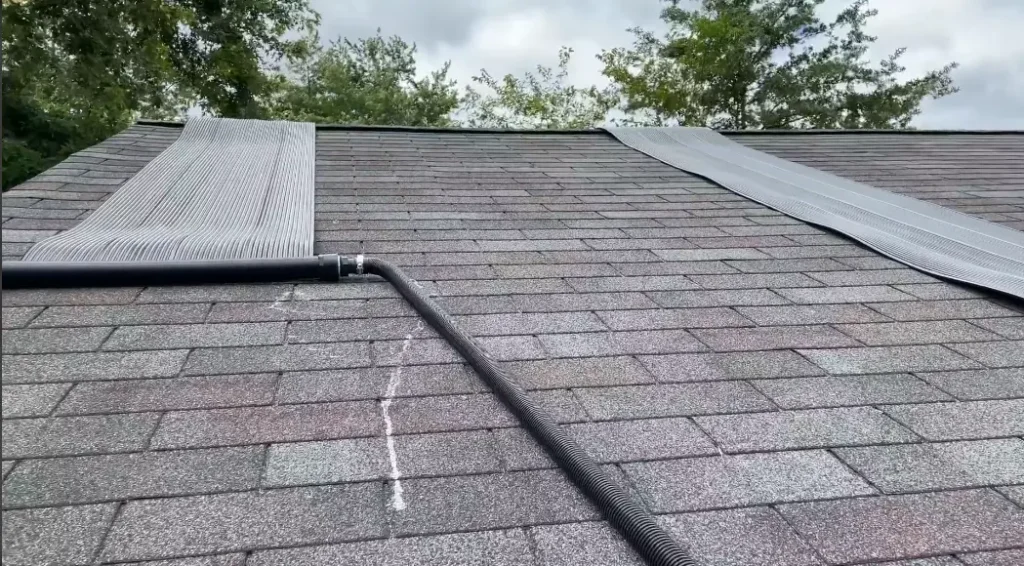
Image: Amazon
So, is this the cost-effective pool heating solution you’re looking for? Hold on. Solar works best from October to April. In June and July, when nights drop below 10°C, solar output drops sharply.
It’s not a good standalone choice if you want reliable winter swimming. For July swimming, a hybrid setup or heat pump makes more sense.
Pool Heat Pump: Best Balance for Year-Round Swimming
Solar roof collectors are hard to beat in the sun. But to swim comfortably through June and July, you need an active compressor system.
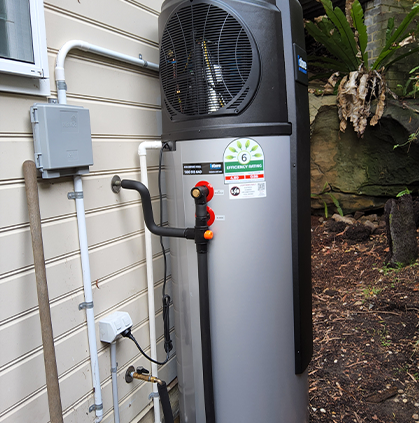
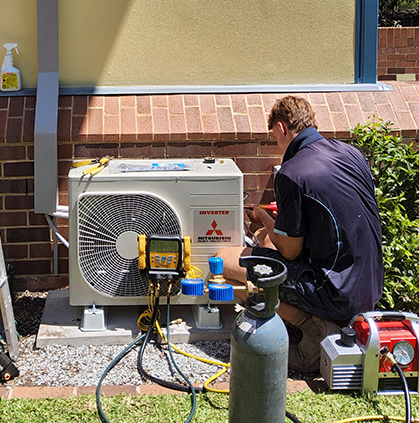
A heat pump pulls thermal energy from the air and transfers it into your pool water, just like a reverse-cycle air conditioner. That’s how it works.
And with modern inverter heat pumps, you can get several units of heat for every unit of electricity the heaters use. That ratio is called COP, or Coefficient of Performance.
A COP of 10 means you put in one unit of electricity and get ten units of heat for your pool. A gas heater is much closer to one-for-one. Yes, the efficiency gap is huge.
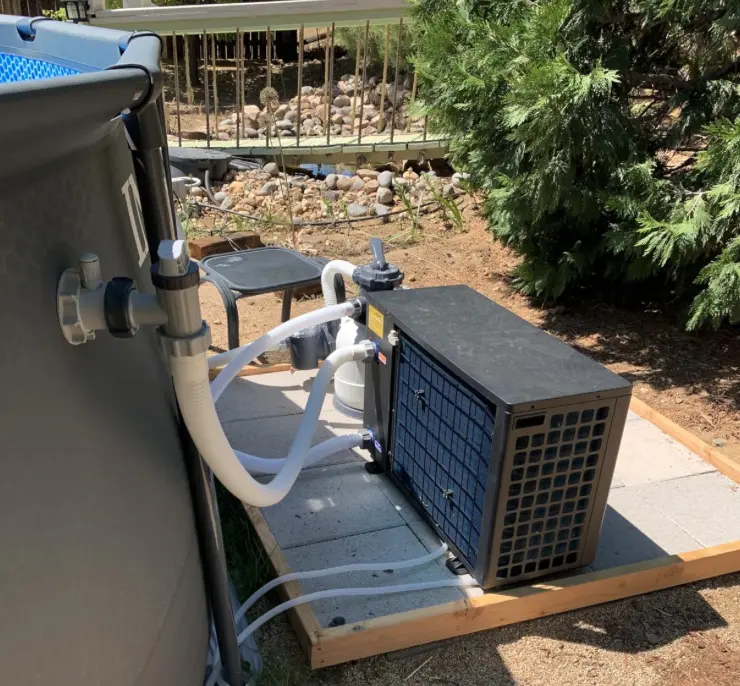
Image: Amazon
Running an inverter heat pump is among the cheapest ways to heat a pool in Sydney due to its variable-speed compressor.
No, it doesn’t run at full power. It adjusts based on demand. Once your pool gets to the right temperature, it slows down to keep it warm.
The unit costs $2,500–$10,500, plus $700–$2,200 for installation. For a typical 30,000–50,000L Sydney pool, expect a total installed cost of $5,000–$10,000.
If you think you can afford this option, but also consider solar, try comparing solar pool heating vs heat pump first.
Gas Pool Heater: Fastest Heat-Up, Highest Running Cost
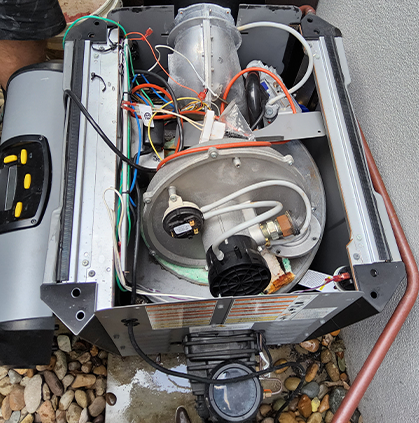
Gas heats fast. With the right size, you can bring a standard Sydney pool to swimming temperature in 4–8 hours. Solar and heat pumps can’t match that.
For a 50,000L pool, a 400 MJ heater does the job in 4–5 hours. A 300 MJ unit takes 6–8 hours.
But the cost adds up. At 4.3c/MJ, a 300 MJ heater costs $12.90/hour, while a 400 MJ unit costs $17.20/hour. At 5.2c/MJ, those rise to $15.60 and $20.80.
That might be okay for short, occasional heating. It’s a different story when the heater runs for several hours at a time.
You’ll also need to budget for installation. A gas heater usually costs about $5,000–$10,500 installed. Premium units cost $4,000–$7,500, and certified gas-fitting work adds another $1,000–$3,000.
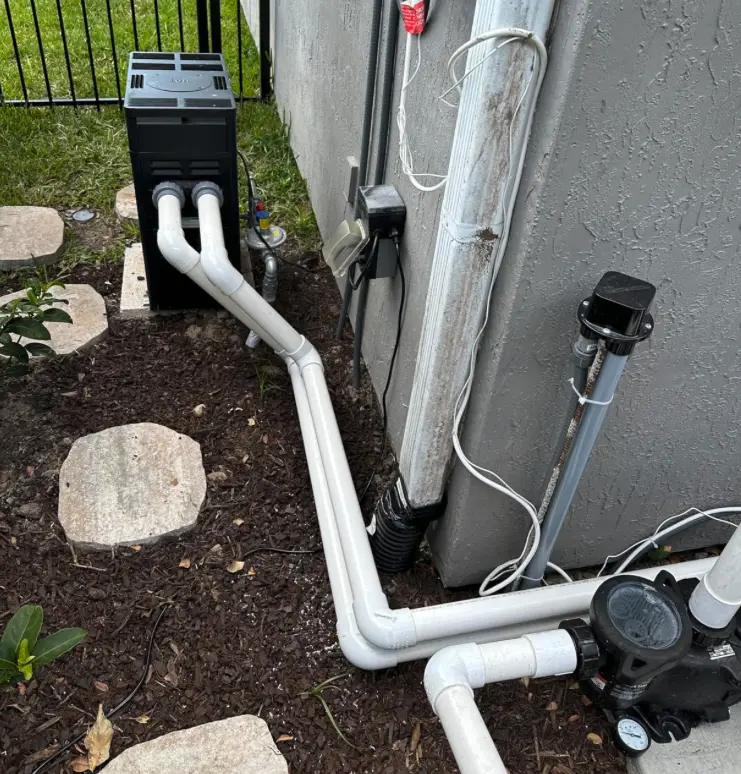
Image: Amazon
So, you think gas heating is not for your budget? Well, it still works in two cases, though. First, spa heating. A 2,000L spa must reach 38°C on demand, often within an hour.
Second, occasional pool use. If you prefer fast heating for weekend swims over steady weekly maintenance, a gas heater is ideal. And speed is often the key factor when comparing gas vs electric pool heaters.
Upfront Cost vs Running Cost: How to Think About It
Cheap to buy and cheap to own are different questions. You can’t keep both upfront costs and monthly bills low. Pay less today often means higher bills for the next ten years.
If Keeping Upfront Costs Low Is Your Main Concern
- Solar Pool Cover — The cheapest way to heat a pool. A good blanket and roller setup usually costs around $700 to $1,500, needs no gas line or electrical upgrade, and has $0 monthly running cost.
- Gas Pool Heater — Often the lowest active-heating option, with full installation usually around $5,000 to $10,500. It heats fast, but regular use is expensive. Natural gas can cost $1,500 to $4,000+ per season.
If Keeping Running Costs Low Is Your Main Concern
- Solar Pool Heating — Usually the cheapest way to heat a pool in Sydney over the long term. Installation often sits around $3,000 to $7,000, while pump electricity is usually only $150 to $300 a year.
- Inverter Heat Pump — A strong balance between control and running cost. Installed cost often sits around $5,000 to $10,000, with seasonal running costs around $500 to $900 when paired with a cover.
The Single Easiest Way to Cut Heating Costs Regardless of Your System
A pool cover cuts heating costs no matter which system you use. Gas runs fewer hours. A heat pump holds temperature with less compressor time. Solar keeps more of the daytime heat gain overnight.
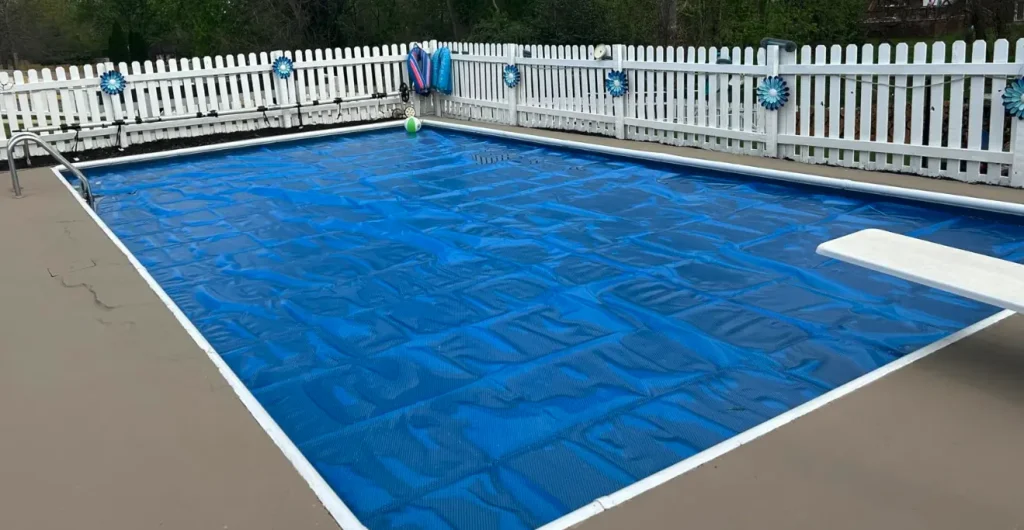
Image: Amazon
The real problem is evaporation. When wind blows over your pool, heat escapes into the air. On a cold night, you lose hours of warmth before you even go for a swim.
And the concern is not just how to heat a swimming pool, but how to do it with the least cost possible.
A typical 50,000L pool with a gas heater costs $1,800 to $2,500 a year without a cover. With a cover, it can drop below $900. For an 8m x 4m pool, the bill goes from about $1,832 down to $855.
While windbreaks like fences or hedges help, a cover is best. Without one, you’re just paying to replace heat that should have stayed in your pool.
FAQ About Pool Heating Costs in Sydney
Here are questions Sydney pool owners often ask about the cheapest way to heat a swimming pool:
Is a heat pump cheaper to run than gas?
Yes. Heat pumps give 3–13 kW of heat per kW of electricity. Gas gives just 0.9 kW. Adding to that, heat pumps cost $500–$900 a season, while gas costs $1,500–$4,000 a season. The key is how to size a pool heat pump right.
What is the cheapest way to heat a pool for occasional use?
Choose a gas heater that fits your pool and use a cover. And only run it when you swim. The cover heats it faster and traps heat between swims. Remember, running gas between swims is where costs add up fast.
How much does it cost to heat a pool in Sydney per month?
For a 50,000L Sydney pool, solar costs $10–$25/month ($150–$300/year). An inverter heat pump runs $60–$150/month ($500–$900/season). Gas hits $200–$500+/month ($1,500–$4,000/season).
Conclusion
So, what’s the cheapest way to heat your pool? It depends on how you use it, how your roof faces, and how long you plan to keep the system.
- If you swim daily and have a north-facing roof: go solar or hybrid.
- If you swim year-round and your roof is shaded: go with an inverter heat pump.
- If you only use it on weekends: get a correctly sized gas heater with a cover.
Keep in mind, no two Sydney homes are the same. Things like roof direction, shade, coastal wind, and pool size change what’s best for you, way more than any cost chart can show.
But don’t worry. Lightning Bult can assess your site, compare your real options, and recommend a pool heating installation that fits how you actually use your pool. Call (02) 9905 8800 or book online for a free quote.