



You can’t just drop a new insert into your wood fireplace. Many Sydney homeowners think they can and rush into installing one after a warning from the council or a complaint from a neighbour.
Converting a wood fireplace to gas may solve those problems. But not every fireplace is suitable. So, can yours be converted, and what will it cost?
This guide covers the basics before you call our gas fireplace specialists to check your setup and handle the conversion.
Is Your Wood Fireplace a Good Candidate for Gas Conversion?
Before you check prices, see if your fireplace works for a conversion:
Masonry Fireplaces with a Working Chimney
A standard brick or stone fireplace with a solid chimney is a possible conversion pathway. The chimney does most of the venting, as long as it’s in good shape and fits your new appliance.
Run through this before you call anyone:
- No visible cracks in the firebox
- No crumbling mortar around the opening
- No heavy damp smell from the chimney
- Chimney swept or checked in the last few years
- Gas already at your home, or a clear path to add a supply
- Easy access to the gas meter, roof, fireplace, and wall space for pipes
This check doesn’t mean the job is ready. It just tells you if it’s worth a look. A licensed gas fitter still needs to measure the firebox, check the chimney and flue, confirm the appliance type, and calculate gas needs.
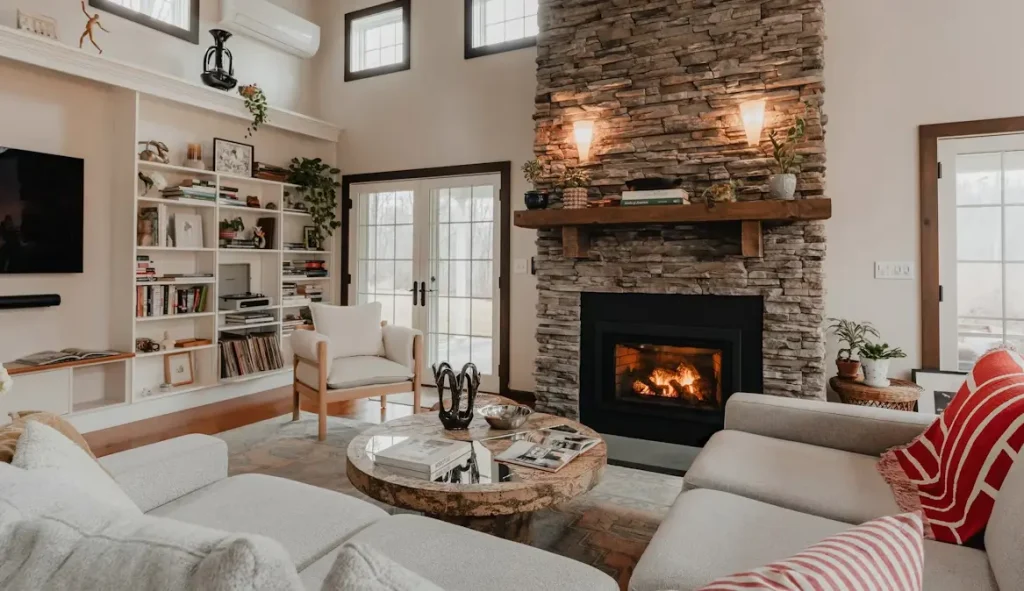
Image: Clay Banks on Unsplash
But remember that older homes complicate this. Older brick chimneys and terraces built before mid-century can carry decades of wear. Also, coastal air can affect mortar breakdown.
When Conversion Isn’t the Right Call
You can’t convert every fireplace. Here is what stops the job before it starts:
- No gas supply — You don’t have natural gas, and LPG may not work for you. Storing cylinders and getting deliveries makes LPG a poor choice for some homes.
- Shared flues — Apartments and some duplexes vent through a shared flue. You need approval from building management before you change anything. Big renovations that affect common areas usually need a sign-off from the owners corporation.
- Chimney damage — A cracked flue or crumbling bricks aren’t a conversion job. They’re a rebuild. That changes the cost and size of the project.
- Asbestos risk — Sydney homes built or renovated before 1990 might have asbestos in the fireplace surround or hearth. NSW rules are clear. You can’t spot asbestos just by looking. Testing should happen before you start any work near the chimney.
Image: Peter Fly on Unsplash
Gas Insert vs Gas Log Set: Which Conversion Option Suits You?
Once you know your fireplace can be converted, the next decision is which type of gas appliance goes in it:
| Feature | Gas Log Set | Gas Insert |
|---|---|---|
| Heat output | Lower — the open flue lets more warmth escape up the chimney. | Higher — controlled combustion and sealed venting keep more heat |
| Flame appearance | Open, traditional flame effect with realistic ceramic logs | Realistic flame contained behind glass |
| Estimated Cost | Lower entry point, often under $2,000 | Higher, roughly $2,750–$7,500+ (appliance & insert setup) |
| Efficiency | Lower — best suited to occasional use and ambience | Higher — designed to provide genuine room heating |
| Maintenance | Burner, ignition system and flue checked and serviced to the manufacturer’s schedule | Burner, venting, glass, seals and any fitted fan checked and serviced to the manufacturer’s schedule |
| Best-fit household | Homes wanting fireplace look without heating reliance | Homes wanting genuine winter heating capacity |
One rule matters more than the table above: your new appliance must have Australian gas safety certification that matches your gas type—natural gas or LPG. An uncertified, imported log set isn’t a legal install in Sydney.
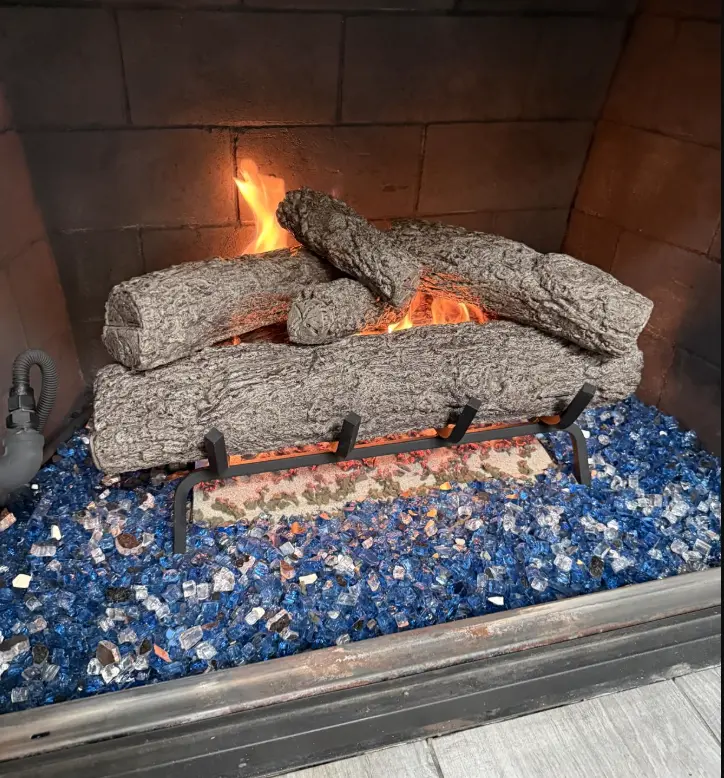
Image: Dave on Amazon
How the Conversion Process Works
Want to know how to convert a wood fireplace to gas in Sydney? Here’s what happens once you book a conversion:
Step 1: Fireplace and Chimney Assessment
A licensed gas fitter checks the firebox, chimney, flue, hearth, mantel, and roof access to make sure your fireplace can safely hold a gas appliance.
They’ll check if the chimney needs a new liner because of damage, poor sizing, moisture, or bad fit. The assessment also confirms clearances, as mantels, surrounds, and cabinets can sit too close to the heat path.
Remember, even if a fireplace looks contained, heat still travels through the surround, cavity, glass, and flue.
Step 2: Gas Line Installation or Extension
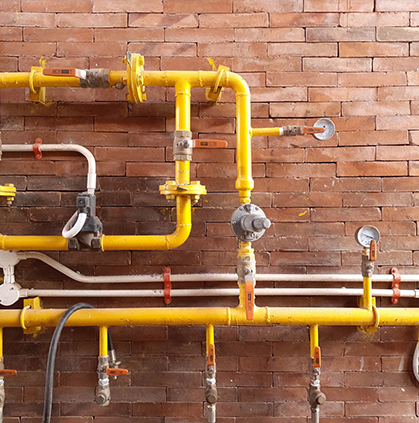
If you don’t have gas at your fireplace, you’ll need a new line from the meter, which requires licensed gas plumbing.
Gas fireplaces typically need 15 to 40+ MJ/h. And since older Sydney homes often have pipes sized for smaller appliances, you might need a pipe or meter upgrade if your current setup can’t handle the load.
Installation complexity depends on the distance from your meter. If your meter’s too small to support everything (fireplace + hot water + cooktop), you’ll need an upgrade before installation day.
Step 3: Insert or Log Set Installation and Venting
Once you’ve confirmed the gas supply, firebox, and flue plan, put the appliance in the opening.
A gas log set mimics a wood fire but still needs correct burner placement, gas connections, clearances, and ventilation. The fitter will start the burner to check flame performance.
A gas insert turns your fireplace into a fitted appliance. It may need a flue liner, sealed connections, trim, and power for fans. The fitter must match the unit’s dimensions and heat output to your room.
You can also ask your fitter if you want to mount a TV above a gas fireplace before the conversion.
Step 4: Compliance Testing and Certificate
The gas fitter tests line pressure, checks for leaks, makes sure appliances work, and checks ventilation and flue performance.
Then, they finish the setup. But the NSW compliance doesn’t end with a working flame. It ends with paperwork. Fitters must submit certificates of compliance or inspection after finishing work.
For network gas, they’ve got to test for defects and submit a certificate to Building Commission NSW within five business days. Starting 1 March 2026, fitters must use BCNSW eCert for all submissions.
Keep your certificate. You’ll need it for insurance, future servicing, property records, or compliance questions.
Image: Vije Vijendranath on Unsplash
NSW Regulations and Licensing You Need to Know
Converting a wood fireplace to gas isn’t a DIY job. A licensed professional must handle all gasfitting work, including appliance connections, line extensions, flue installations, and structural repairs.
AS/NZS 5601.1:2022 and the NSW Gas and Electricity (Consumer Safety) Regulation 2018
AS/NZS 5601.1:2022 is the national technical standard for gas installations. In NSW, it isn’t just a suggestion. It’s the law. The Gas and Electricity (Consumer Safety) Regulation 2018 enforces it.
The enforcement mechanism matters to a Sydney homeowner because it turns a compliance certificate from a “nice-to-have piece of paper” into a legal requirement. Without it, your installation isn’t compliant.
Why It Must Be a Licensed NSW Fair Trading Gas Fitter
Only a technician with a valid NSW Fair Trading gas fitting licence can legally perform and register this conversion.
Unlicensed work isn’t a grey area. It carries severe legal penalties, voids your insurance, and creates unacceptable safety risks.
A licensed gas fitter also manages an invisible safety layer that’s more critical with a sealed gas appliance than an open wood fire:
- Precise gas pressure drop calculations
- Fixed mechanical ventilation area checks
- Flue terminal clearance margins
- Post-installation carbon monoxide risk audits
- Commissioning verification and appliance performance testing
But, safety doesn’t end at installation. Book regular maintenance and routine gas line safety checks to keep your system efficient and leak-free.
What Does It Cost to Convert a Wood Fireplace to Gas in Sydney?
Gas fireplace conversion costs in Sydney depend on your chimney’s condition, gas line routing, access, and finishing. Use these ranges as planning guides, not fixed quotes.
| Item | Sydney Cost Range | What Changes the Price |
|---|---|---|
| Gas log set installation | $2,000 to $5,000+ | Appliance choice, gas line access, flue condition, and basic compliance work. |
| Gas insert installation | $4,500 to $9,500+ | Selected insert model, custom chimney lining, surround structural mods, dedicated electrical points, and commissioning. |
| New gas line or meter work | $500 to $2,000+ | Pipe run length, diameter scale, subfloor or cavity access difficulty, and overall meter flow capacity. |
| Flue liner or chimney work | $800 to $4,000+ | Vertical chimney height, roof access issues, damaged masonry repairs, and relining complexity. |
| Asbestos inspection | Around $400 | Physical property size and the overall scope of material sampling. |
| Compliance certificate & testing | Often included in licensed install | Scope of mandatory pressure leak testing, network filing, and commissioning. |
FAQ about Converting a Wood Fireplace to Gas in Sydney
Here are the questions Sydney homeowners ask us most before converting.
Can any wood fireplace be converted to gas?
Most masonry fireplaces with sound chimneys can be converted. But, prefabricated zero-clearance units need a manufacturer compatibility check first. If you live in an apartment with a shared flue, get approval from your body corporate before you start.
How long does the conversion process take?
If you have a gas connection, converting your wood fireplace to gas takes one to two days. You will need more time if you need a new chimney liner, a gas line installation, or asbestos testing.
Do I need council approval to convert my fireplace?
You might not need a Development Application (DA) for a gas insert as it won’t change your home’s footprint. Exceptions apply if your home’s heritage-listed or in a conservation zone. If you’re changing your chimney or flue’s exterior, check with your local council first.
Is gas cheaper to run than wood in Sydney?
Sydney gas rates run 4.5c to 5.6c per MJ. It means a 30 MJ/h fireplace costs about $1.35 to $1.70 per hour. It’s close to or slightly more than bulk firewood. But the real win is the lifestyle: you skip the time, work, and space needed to source, store, and haul wood. Plus, you don’t have to deal with ash.
Can I use my existing gas line for the new fireplace?
It is fine if the pipe is large enough for the flow without a pressure drop. Just have a licensed gas fitter check the size and pressure. If not, you will need to upgrade your pipework to meet AS/NZS 5601.1 standards.
Conclusion
Most Sydney wood fireplaces can be converted to gas. But you’ll need an on-site assessment to confirm yours qualifies. Chimney condition and gas line capacity are key.
If it’s suitable, compliance is mandatory but simple. A licensed gasfitter must perform the work, test for safety, and lodge a Certificate of Compliance with Building Commission NSW.
Ready to swap wood for the flick of a switch? Lightning Bult’s team handles the chimney check, gas line installation, and conversion. Reach out for a no-obligation quote.