






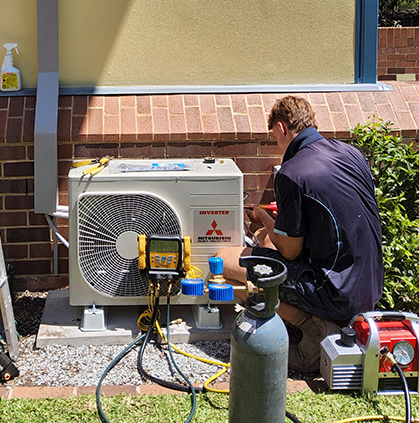
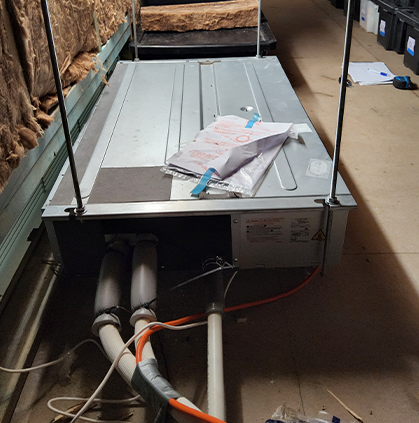
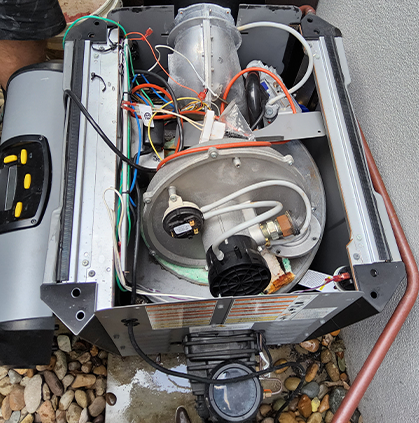
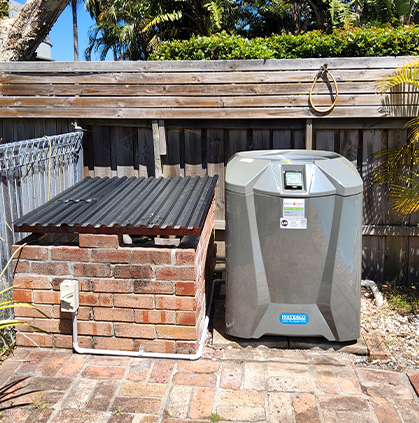

Knowing how to fix an AC can save you money, but not all problems are safe to handle yourself. Mistakes can cause injury, void warranties, or cost more than a service call.
This guide draws a clear line. You’ll know when to fix things yourself and when to call licensed air conditioning services before a minor glitch becomes a system failure. Read on!
Can You Fix an AC Yourself?
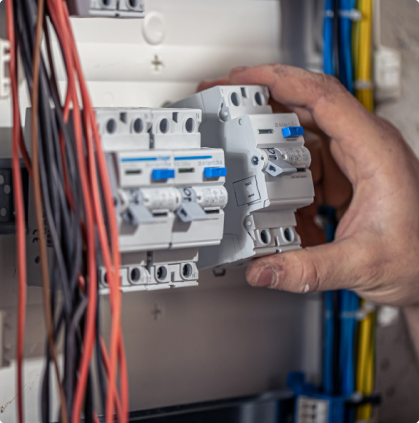
Yes, for a few problems. Dirty filters and a clogged condensate drain are fixes you can handle without a trades licence. Resetting a tripped breaker at your switchboard is also a permitted DIY task.
Think of these as simple maintenance tasks: cleaning, clearing blockages, or resetting power. No special qualifications are needed for basic maintenance. But once you go beyond those, it gets trickier.
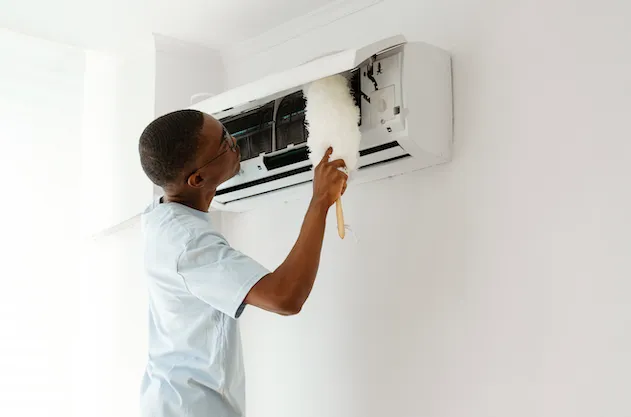
Image: freepik
Problems with cleaning exterior parts are generally safe. But electrical issues that run through wires or control circuits are complicated and could be dangerous. You need to hire a technician for this.
But honestly, the line isn’t always clear. So, when you’re staring down a broken AC unit, ask yourself this:
- Does it involve electricity, AC refrigerant, or something you can’t see?
- Will a wrong move void your warranty?
- Has the same problem come back more than once?
6 Common AC Issues and How to Fix Them
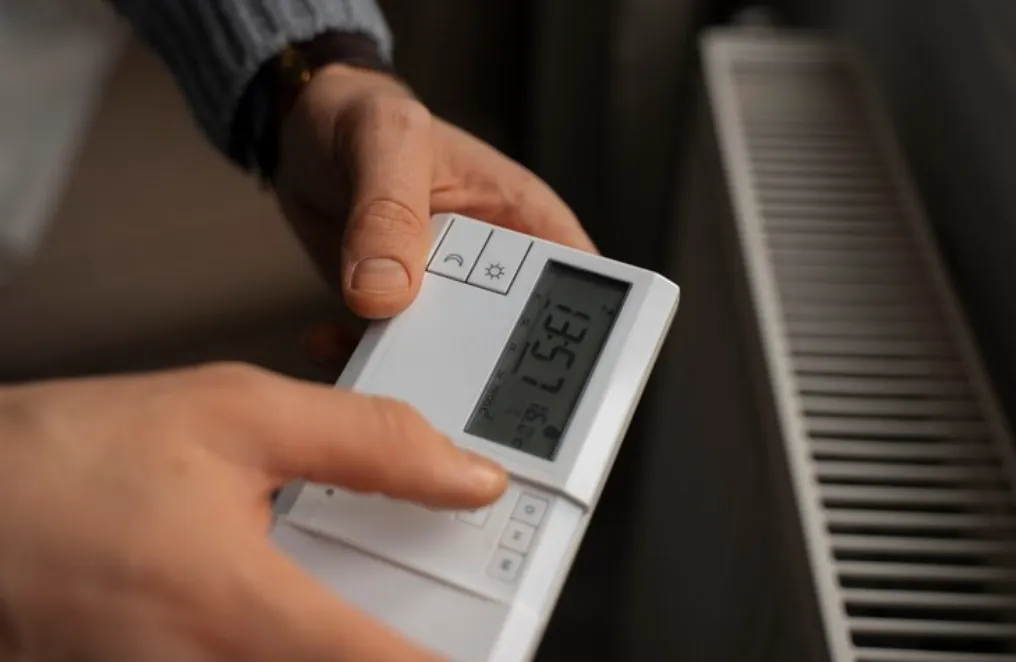
Image: Freepik
Here are the most common reasons your air conditioner breaks down that you can diagnose and fix:
1. Wrong Thermostat Settings
It sounds obvious, but it’s the most common reason a split system seems broken when it isn’t. Someone has switched it to fan-only mode.
In fan mode, the compressor stays off and you’re just moving air. In cool mode, the compressor runs and the refrigerant cools. So a problem like your AC not blowing cold air could be because of this.
How to fix it:
- Check your remote or wall controller and confirm the mode shows Cool (often a snowflake icon).
- Set the target temperature 2–3°C below the current room temperature.
- Replace the remote batteries. Weak batteries can cause missed commands.
- Wait five minutes before turning it on.
2. Dirty Air Filter
Your air filter traps dust and debris to protect your coils and ensure clean air. When clogged, airflow drops, causing your unit to struggle and blow warm air. That’s basically how air conditioners work.
But, did you know that dirty filters account for nearly 35% of AC energy-efficiency issues? Often, your unit isn’t actually broken. It’s just suffocating under dust.
Filters typically clog in four to six weeks, though this varies by location. For example, washable mesh filters clog faster in coastal suburbs than inland.
How to fix it:
- Turn off the AC at the thermostat and isolator.
- Lift the front panel and slide out the filter.
- If reusable, rinse with lukewarm water and air-dry in the shade.
- If disposable, replace it with one matching your frame’s dimensions.
- Reinstall and restore power.
3. Tripped Circuit Breaker
Your air conditioner uses a dedicated circuit protected by a breaker. Voltage spikes or grid overloads can trip this breaker, cutting power to your unit.
If your AC won’t turn on, check your switchboard for a breaker labelled “AC” or “Air Con.”
To reset:
- Locate the tripped breaker (it may sit between “on” and “off”).
- Flip it fully to “off,” then back to “on.”
- Wait 30 seconds before restarting.
One reset is safe, but if it trips again, stop immediately. Repeatedly resetting a recurring fault poses a fire risk.
4. Blocked Outdoor Condenser Unit
Your outdoor unit releases heat from your home and needs clear airflow to function. If leaves, debris, or plants block the fins, heat cannot escape, causing the system to stop cooling.
If internal temperatures rise too high, a thermal overload switch automatically shuts down the compressor to prevent permanent damage.
How to fix it:
- Turn off the system.
- Remove debris by hand or with a soft brush.
- Gently rinse the fins with a hose.
- Trim plants, leaving 1 metre of space in front of the fan and 600 mm on all sides.
- Turn the system on.
5. Frozen Evaporator Coil
Ice on your indoor unit or pipes means your evaporator coil is frozen. It’s usually due to a clogged filter or low refrigerant.
And because the coil can’t absorb heat, moisture freezes. This causes your AC to run constantly, blow weak air, and water might even drip from your indoor unit.
If your AC freezing up, stop running the unit to avoid damaging the compressor. Let it thaw completely first.
How to fix it:
- Switch to “Fan Only” to melt ice.
- Never chip ice; you’ll puncture the coils.
- Let it melt for one to three hours, using a towel for drips.
- Once defrosted, clean the air filter.
- Switch back to “Cool.” If ice returns, turn it off immediately.
6. Blocked Condensate Drain
Air conditioners remove moisture through a PVC drain pipe. Because this pipe stays damp, it often becomes a breeding ground for mould, leading to clogs.
Signs of a blockage include leaking water, musty odours, or the system shutting down via a safety float switch.
How to fix it:
- Turn off the AC at the thermostat and circuit breaker.
- Locate the white PVC condensate drain line near the indoor unit.
- Pour a 50/50 mix of white vinegar and water into the access point to clean the AC drain line
- Use a wet/dry vacuum on the drain outlet for one to two minutes.
- Reconnect and test the system.
If the vacuum fails, or you notice black sludge or persistent backups, you likely have a primary blockage or P-trap issue.
AC Problems You Should Never Fix Yourself
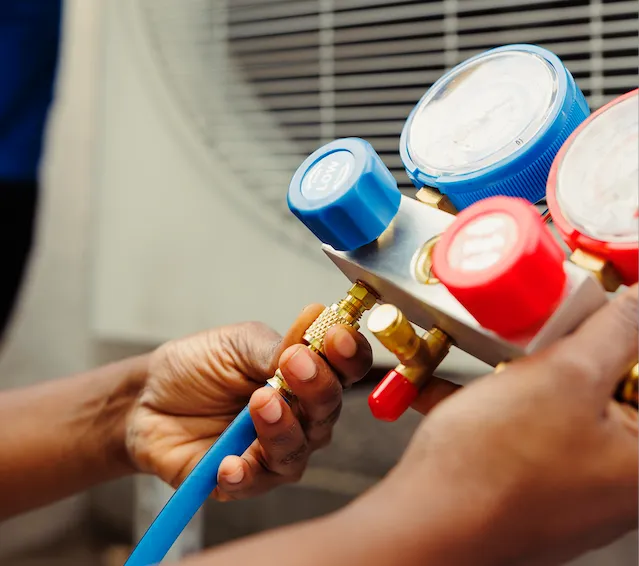
Image: DC Studio on Freepik
Some air‑conditioning repairs are too tricky to handle yourself. You’ll need a licensed professional for these issues:
1. Leak or Low Refrigerant
AC refrigerant is the chemical that keeps your air conditioner running. It moves between your indoor and outdoor units to soak up and release heat.
If it leaks, your system slowly loses its cooling power, your compressor works too hard, and your unit could break down completely.
You need an ARCTik technician to handle this. They will pressure‑test your system to find the leak, fix it, and recharge the refrigerant to the correct level.
2. Electrical Faults
If your air conditioner trips the breaker, smells like burning, or hums before shutting off, you have an electrical fault.
A faulty start or run capacitor, wiring problem, or a blown control board are common causes. These air conditioning unit parts carry high voltage that can injure you, even when the unit is off.
Fixing them requires a licensed professional. Depending on the fault, you may need someone with an electrical licence or an air‑conditioning licence.
They will isolate the power, use a multimeter to verify safety, and inspect for burnt parts, melted insulation, or corrosion. If a motor fails to start, they will test the capacitor for wear.
3. Compressor Failure
The compressor pressurises refrigerant to maintain cooling. Its failure means no cold air. This is caused by poor maintenance, electrical stress, or age.
Listen for loud clunking or grinding from your outdoor unit. Compressors rarely fail without warning; reduced cooling and short‑cycling are common early signs.
If you experience this, have a technician check the unit. They can determine if the compressor has failed or if a cheaper issue, such as a faulty capacitor or low refrigerant, is to blame.
4. Fan Motor Failure
Your air conditioner uses two fan motors: an indoor blower to circulate air and an outdoor condenser fan to release heat.
Failing motors often grind, squeal, or rattle. You might notice weak airflow or hear the outdoor unit hum while the fan remains stationary.
Replacing these motors is dangerous due to high‑voltage components and complex wiring. Only a professional should perform this work to ensure the motor is replaced correctly.
5. Ductwork Leaks
Think of ductwork like pipes for cool air. If there are gaps or loose joints, air leaks out before it gets to where it should go. Signs of leaks include uneven temperatures or weak airflow.
Because ducts are hidden, a technician must use pressure tests with smoke pencils or thermal cameras to locate holes, then seal them with mastic, foil tape, or aerosol.
How to Prevent Future AC Breakdowns

Image: Freepik
The most expensive repair call is the emergency one. These habits keep you ahead of it:
1. Change Filters Every 4–6 Weeks
In Sydney, your filters clog quickly from December to February, especially if you have pets or live near bushfire-prone areas. Don’t wait for your unit to struggle. Set a calendar reminder to change your AC filter on time.
2. Keep the Outdoor Unit Clear
Check your outdoor condenser each season. Clear leaves, trim nearby plants, and inspect fins for damage. Spending $50 on seasonal maintenance is far better than a $2,000–$4,000 compressor replacement.
3. Set Your System to 24–26°C
This might surprise you. Setting your AC to 20°C doesn’t cool the room twice as fast as 25°C. Cooling speed depends on your system’s capacity, not the temperature setting.
So you aren’t speeding up the process. You’re just forcing the compressor to work harder and longer. And since compressors have a limited lifespan, using extreme settings constantly will wear yours out faster.
4. Run Fan-Only Mode
After each cooling session, run your unit in “Fan Only” mode for 15 to 20 minutes before powering off. This dries the evaporator coil and drain pan, which keeps bacteria and mould from growing inside.
This is important in humid regions like the Northern Beaches, where moisture often causes musty odours.
5. Check the Condensate Drain Regularly
Every three months, flush your condensate drain with a vinegar–water solution. Your system’s warm, damp environment is perfect for mould, which can hurt your air quality.
6. Book an Annual Professional Service
You can book an AC repair in September or October before the summer heat hits and technicians get booked up.
A professional service includes cleaning coils, flushing drain lines, testing refrigerant pressures, and checking electrical terminals for safety.
FAQ About Fixing an Air Conditioner
Here are some questions you might ask about air conditioner fixing:
Why is my AC running but not cooling?
Common causes include dirty filters, incorrect thermostat settings, blocked outdoor units, or low refrigerant. Check your filter and thermostat first. If the air remains warm, you likely need a professional inspection.
Can I fix the low refrigerant myself?
No. Handling refrigerants requires an ARCtick licence. It’s illegal and dangerous to do it yourself. So, if you think your refrigerant is low, turn off the unit and call a licensed technician.
How often should I clean my AC filter?
Change filters every four to six weeks in summer, or every two to three months otherwise. If you have pets or live in a dusty area, change them more often.
When do I need a professional?
Call a technician if the breaker trips repeatedly, the unit blows warm air after cleaning, or you hear clunking, hissing, or grinding. Also, seek help if ice forms on the unit or water leaks persist after flushing the drain line.
Conclusion
Most air-conditioner faults start small. Blocked filters, tripped breakers, or debris-choked condensers are often fixable in under 30 minutes. You can try these DIY checks before calling for help.
But if you’ve checked everything and the problem is still there, book an AC repair with Lightning Bult. We’ll diagnose it properly and fix it in one visit so your home gets comfortable again.