









Burning plastic. Sharp vinegar. Or something you can’t quite name. No matter what you’re smelling, it comes down to one question: why does my air conditioner smell like that?
Not every AC smell signals danger, but some do. So before you ignore it, run it anyway, or call for air conditioning services, let’s figure out what you’re smelling and what it means. Read on.
Why Does Your AC Smell Bad?
Your air conditioner moves air and controls moisture. When air, condensation, and organic particles collect in a dark, enclosed space, it creates the perfect environment for smells to grow.
Mould in the AC unit, bacteria, dust, and drainage issues are common causes of bad odours.
Your AC coils stay cold, creating constant condensation. When dust, skin cells, or pet dander land on those wet coils, they encourage microbial growth.
If you smell burning, chemicals, or rotten eggs, turn the unit off at the wall immediately and keep it off. These smells are warnings of electrical faults, refrigerant leaks, or blockages that could cause a fire or harm your health.
Think of the odour as a clue. Because your AC uses high voltage and moisture, the smell helps you decide if you just need a quick clean or if you have a serious problem that requires a professional.
8 Common AC Smells and What They Mean

Image: cookie_studio on Freepik
You might notice these common smells coming from your AC:
1. Musty Smell
“Why does my air conditioner smell musty?” That’s the most common complaint from Sydney homeowners.
When your AC cools, it creates condensation. Normally, this drains away, but clogged AC filters trap moisture, creating a breeding ground for mould. Sydney’s high summer humidity accelerates this.
Usually, filters are just full of dust and moisture. But, if the smell stays after cleaning, you likely have mould deeper inside the blower wheel or insulation.
2. Dirty Sock Smell
Does your AC smell like a gym bag left in a hot car? HVAC technicians call it “dirty sock syndrome.” It’s not a dirty filter; it’s bacteria growing on your evaporator coils.
When warm air hits those cold, wet coils, bacteria multiply and release that odour. Specifically, Methylobacterium on your aluminium fins feeds on trapped dust and skin cells to keep the stench going.
3. Vinegar Smell
Does your AC smell like sharp white vinegar? It’s having a chemical or biological reaction, not just a musty odour.
You’re likely experiencing a VOC pulse release. So, when your AC switches modes or you raise the temperature, it releases VOCs trapped in the water on your cooling coils.
The cause is acetic acid, which is often produced by Acetobacter bacteria. These bacteria grow in the damp, low-oxygen environment of a clogged drain pan and create acid as they grow.
4. Rotten Egg Smell
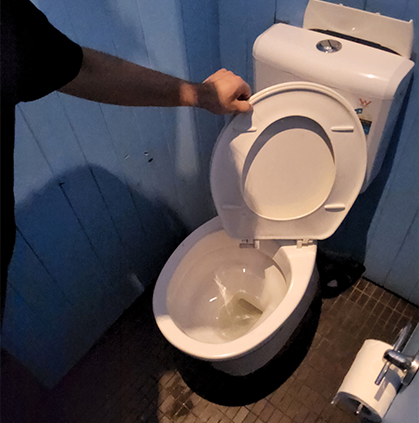
This smell might not be your AC. It could be a gas leak. Companies add a rotten egg scent to gas so you can spot leaks quickly.
If you smell it near your AC, check for nearby gas appliances. Odours from shared wall or ceiling spaces can easily drift over.
A dead animal in your ducts can also smell like sulfur, but it’s usually much stronger. If you’re sure it’s a pest and not a leak, call a professional.
5. Chemical Smell
Do you smell something sweet, like chloroform or nail polish remover? That’s a clear sign of a refrigerant leak.
In newer Australian systems, this is usually R-410A. It turns into a gas and travels through your ducts. You’ll smell it strongest near the floor.
Beyond reduced cooling power, where your AC is not blowing cold air, refrigerant leaks pose health risks.
Breathing the vapour in a closed room can cause dizziness, headaches, nausea, or breathing trouble. At high levels, it can even displace the oxygen you need.
6. Sewage or Stale Smell
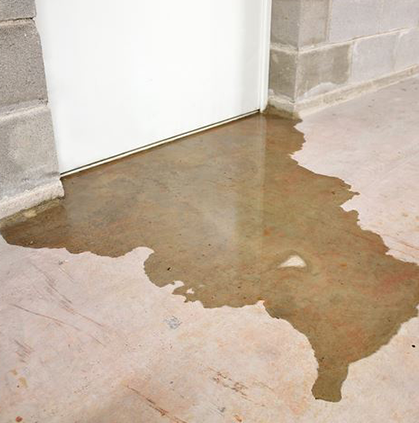
If your AC smells like a bathroom, it’s likely a clogged condensate drain. Algae, mould, and bacteria build up in the line, causing water to pool in the pan. Your fan then blows that stagnant smell into your room.
A blocked drain can overflow quickly, as a standard split system produces 2–3 litres of water every hour in hot weather.
7. Burning Smell
When you first turn on your AC this summer, you might notice a brief dusty or burnt smell. That’s normal and should clear up in a minute or two.
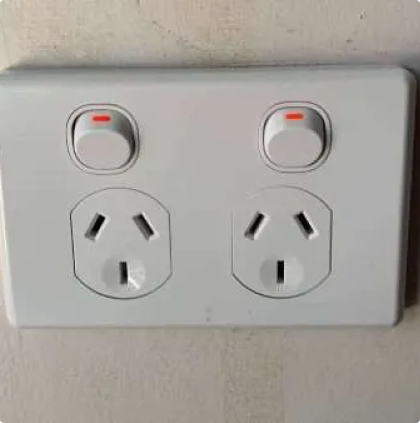
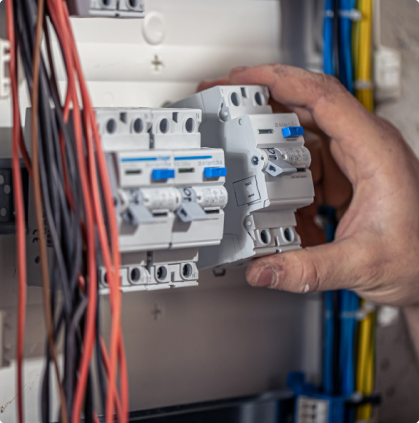
If the smell stays or gets worse, flip the breaker off immediately. That scent indicates sparking electrical connections, which can melt plastic or start a fire.
While musty odours are just a cleaning issue, an electrical smell is a fire hazard. Keep the unit off until a professional checks it.
8. Gunpowder Smell
Does your AC smell like gunpowder? It’s a sharp, metallic scent, similar to fireworks. And it isn’t burning plastic.
You’ll usually notice this after a summer storm or power surge, which means a high-voltage part has failed. Think of your AC like a computer; a surge can short the control board, burning parts and releasing that smell.
A capacitor can also leak fluid. When that hits hot metal, it smells like smoky gunpowder. Your AC will likely stop working or show an error code.
How to Get Rid of Bad AC Smells
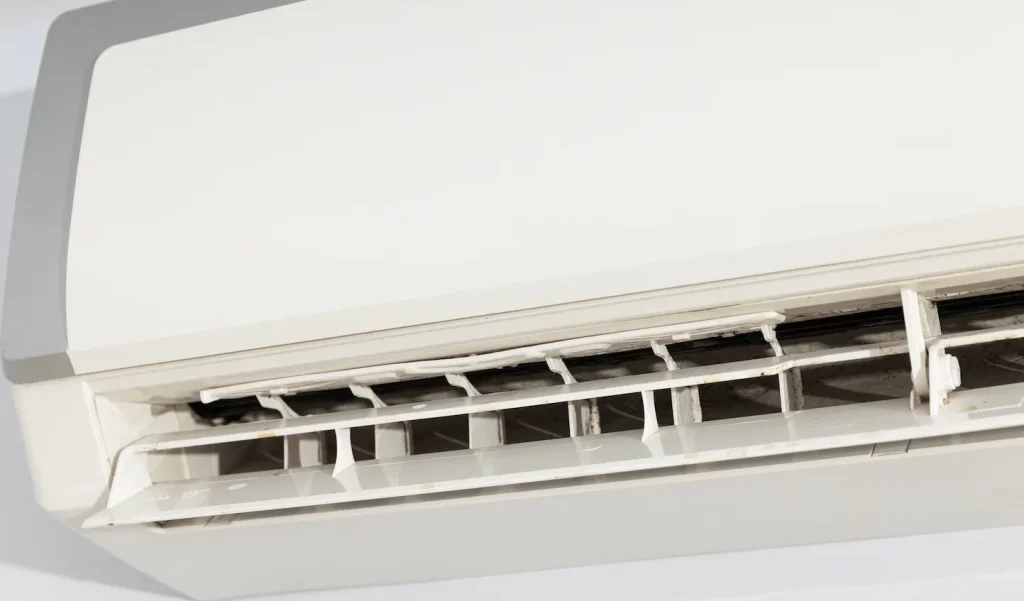
Image: atlascompany on Freepik
If your AC smells weird, you’ll want to fix it fast. Here is a simple guide to help you out:
1. Clean or Replace the Air Filter
Your AC filters act like traps for dust, spores, and bacteria. Over time, moisture turns trapped debris into a breeding ground for mould. And that’s what pushes musty air into your room.
- Open the front panel and slide out the filters.
- Scrub washable mesh in warm, soapy water or a 1:1 white vinegar solution.
- Rinse thoroughly, air-dry completely, and reinstall only when fully dry.
- If filters are disposable or heavily degraded, replace them entirely.
2. Scrub the Internal Metal Fins and Fan
Your AC’s metal evaporator coils and blower wheel handle the heat exchange. Because it’s damp inside, moisture and spores often build up on these parts, creating biofilms. That’s what causes “Dirty Sock Syndrome.”
- Apply a no-rinse, HVAC-safe coil cleaner spray to visible fins.
- Wipe accessible blower blades with a degreasing sanitiser.
- If deeper access is needed, book a licensed technician to avoid warranty and safety issues.
Note: Removing the full casing to access coils goes beyond safe DIY on most Australian split systems and may void your warranty.
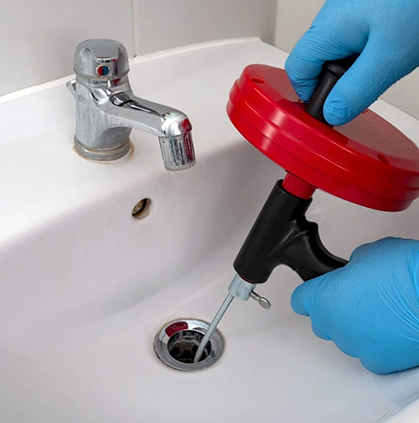
3. Flush the Condensate Drain Line
If your AC smells like sewage, you can fix it by cleaning the AC drain line. Moisture mixes with dust to create rotting sludge that causes that vinegary smell. Here is how to clear it:
- Remove the casing to reach the drain tray.
- Scrub the tray with an antimicrobial cleaner and clear any blockages.
- Use a wet/dry vacuum outside, or flush the line from inside with a water bottle.
- Add a biological sanitising tablet, pour a litre of water to test the flow, and reassemble the unit.
4. Refill the Plumbing Traps
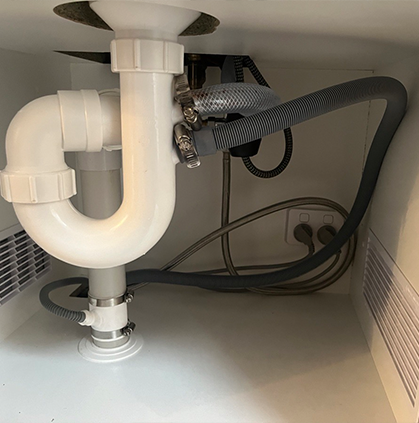
P-traps connect your AC to the sewer, holding water to block bad smells. In Sydney’s heat, that water dries up fast. Once the seal breaks, your AC pulls sewer gases straight into your room. Fix it like this:
- Find your AC traps and floor drains.
- Use a torch to check if they’re dry.
- Pour 1–2 litres of lukewarm water into each, then add 15 ml of mineral oil to stop evaporation.
- Run your AC on high for five minutes to clear the air.
5. Replace Burnt Components
If your motor or circuit board overheats, burning resins, FR-4 fibreglass, and PVC insulation release VOCs, creating a sharp, gunpowder-like smell.
Cleaning won’t help; the odour stays until you replace the charred parts. Don’t fix this yourself. Call a licensed HVAC technician to:
- Find the failure point.
- Remove the damaged component.
- Clean soot with a non-conductive cleaner.
- Install an RCM-compliant replacement.
- Load-test the system to ensure it’s safe.
6. Remove Pests and Debris
Clear out blockages like wet leaves, bird nests, and animal remains from your air conditioner. Leaving this waste can cause short circuits and a burnt smell, while also growing mould and bacteria.
- Wear thick gloves and a P2 mask; use a flashlight to check the base pan and drainage tray.
- Carefully vacuum up all debris.
- Call a licensed HVAC technician if you find nests in the electrical box or on circuit boards.
- Spray non-electrical surfaces with hospital-grade disinfectant.
7. Seal Refrigerant Leaks
You can’t see refrigerant leaks, but you might smell a sweet or chemical scent from leaking oil. If you don’t fix them, you’ll lose oil, causing your compressor to overheat and break.
Hire an ARC-licensed technician to:
- Recover the remaining refrigerant.
- Find and braze the leak.
- Perform a triple evacuation to remove moisture and prevent acid.
- Refill the system to manufacturer levels.
- Run a final leak test before you use the unit again.
How to Prevent Your AC from Smelling Bad Again
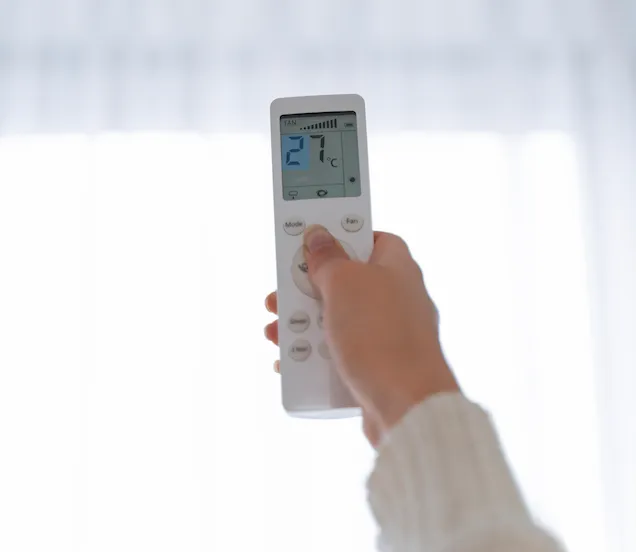
Image: Freepik
Now that you’ve cleared the smell from your AC, here is how you keep it from coming back:
1. Clean the Filter Every 2–4 Weeks
Don’t wait for your AC to smell. That odour means mould and bacteria are already on the coils. Clean your filters every 2 to 4 weeks during the hot season to stop this. Make it a habit to keep those “dirty sock” smells away.
2. Run Fan-Only Mode After Each Cooling Session
Ever wonder why your AC smells weird? After it cools, run the fan for 15 to 20 minutes. This dries the evaporator coil so bacteria can’t grow. It’s a huge help in humid coastal suburbs where coils stay damp.
3. Keep Clearance Around Your Unit
Keep your unit clear for airflow. Debris traps moisture and causes mould. Check your manual for the right clearance, as it varies by model.
Also, use dirt or gravel around the unit to keep spiders, lizards, and ants from crawling inside.
4. Keep Indoor Humidity Below 60%
If your home’s humidity hits 70–80%, your AC can’t dry out properly. Keep it between 40–55% to prevent mould on your vents and coils. That’s how air conditioners work properly.
Use a cheap digital hygrometer to track levels. If it’s over 60%, run your AC in “Dry Mode” for an hour. It pulls out moisture without freezing the room, keeping your home fresh.
5. Install a UV Light Sanitiser
A UV-C light in your AC acts as a silent cleaner, killing germs on your evaporator coils to keep your air fresh.
It’s a smart way to stay healthy, especially in humid climates. Just have a licensed technician install it, and you’re all set.
6. Upgrade to a Pleated Filter
Upgrading to a pleated filter outperforms standard plastic mesh. While basic screens only catch large dust, pleated filters use dense material to trap microscopic pollen, bacteria, and soot. Choose a MERV rating between 4 and 8.
7. Book an Annual Service Before Summer
To keep your AC running smoothly, book a professional AC tune-up annually before the heat arrives.
A full service includes checking filters, cleaning coils, flushing drains, testing electrics, and verifying refrigerant levels. Schedule your appointment in September or October while your system is under less strain.
FAQ About Air Conditioner Smells
Some common questions about the smell in an air conditioning system are:
Why does my AC smell musty when I first turn it on?
When your AC is off, mould or bacteria can grow on the evaporator coil. The first burst of air then pushes this smell into your room. Run the AC for 10-15 minutes; if the smell stays, call a professional to clean the coil.
Can I run my AC if it smells bad?
It depends on the smell. A light musty smell is okay to use with the windows open until you get it fixed. But, if you smell burning, chemicals, or rotten eggs, turn it off right away. Don’t use it until a professional says it’s safe.
Will changing the filter get rid of the smell?
Sometimes a dirty, clogged filter makes things smell musty. If the problem is deeper inside your AC system, like the evaporator coil, drain line, or ductwork, a new filter won’t fix it.
Try changing the filter first. If the smell comes back in a few days, the problem is somewhere else in the system.
How do I get rid of dirty sock syndrome in my AC?
You need an expert to thoroughly clean and disinfect your evaporator coil to get rid of bacteria. After that, use your fan-only setting after each time you cool your home to stop the bacteria from coming back.
Why Does My Air Conditioner Smell: A Wrap Up
If your AC smells bad, pay attention. A musty scent means you need a new filter, but a burning smell means you should cut the power immediately. Addressing these signs early keeps your home safe.
Many issues, like dirty filters or blocked drains, are simple fixes. But if a quick clean doesn’t resolve it, call Lightning Bult. We’ll diagnose the smell, replace parts, and clean your system for year-round comfort.