





A 38°C December day with a broken AC is a nightmare. Emergency calls spike in cost and wait times, leaving your family sweltering. You wish you’d kept up with HVAC maintenance.
You can avoid this. Know which DIY maintenance you can do and when to call air conditioning services in Sydney for pro tune-ups that prevent breakdowns before they happen.
Key Takeaways
- Dirty air filters drive poor AC performance — Clogged filters restrict airflow, force the system to work harder, raise energy use by ~15%, and release mould spores and dust indoors.
- A poorly maintained HVAC costs more to run — Dust on coils and clogged drains make the compressor and blower work overtime. You’ll see that hit your electricity bill.
- Regular maintenance avoids costly replacements — A single tune-up can prevent compressor failures costing up to $4,500. This is especially vital if you’re using reverse-cycle heat pumps year-round.
- Some tasks need a licensed technician — Refrigerant handling, electrical work, deep coil cleaning, and duct inspections aren’t DIY. Doing so can void warranties and bring fines up to $22,000.
- Service varies by system — Split systems need annual service, while year-round units need tune-ups before summer and winter, and ducted systems need professional service every 12–24 months.
Why HVAC Maintenance Matters
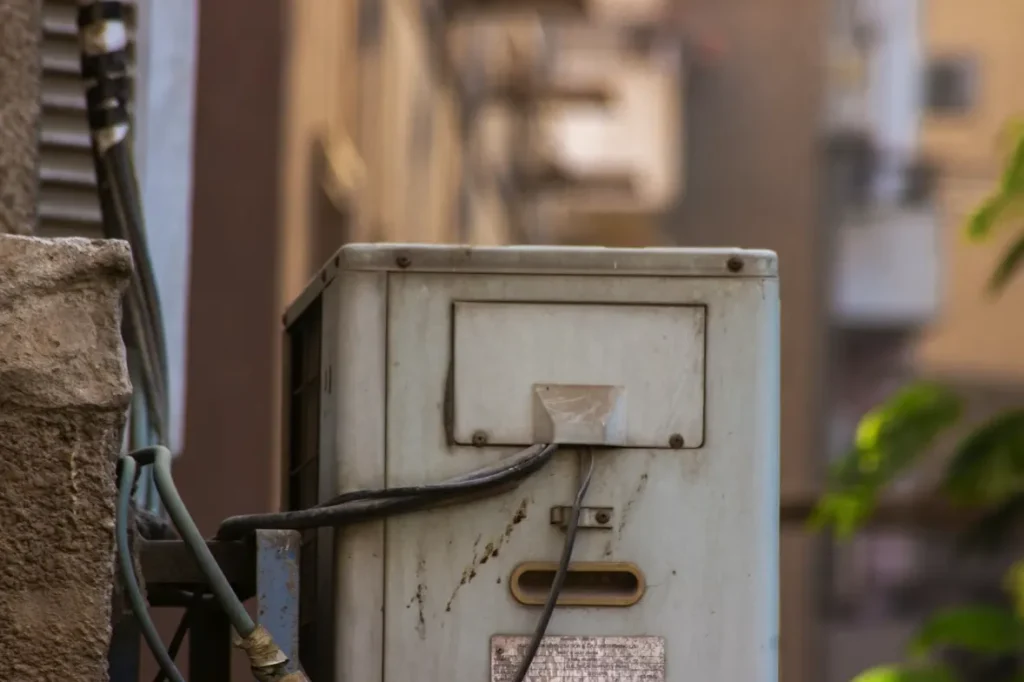
engyingaround on Unsplash
Regular HVAC maintenance is vital because AC issues are often subtle and missed until a complete breakdown happens:
- Stops small problems from growing — A blocked condensate drain or low refrigerant pressure can escalate into costly repairs. Catching issues early matters to avoid major service calls.
- Extends system life by 5+ years — How long air conditioners last? With regular maintenance, it can reach 15–20 years. Skipping it may require a replacement before 10 years, with installation costs 1,500–4,000.
- Cuts running costs by 10–25% — If you know how to clean AC coils and filters, you can cut its running costs. On the flip side, ignoring it can raise quarterly costs.
- Prevents breakdowns — A dirty system costs more, and a system that fails on hot 35°C Saturdays is a nightmare when technicians are booked. Emergency after-hours calls? They cost a lot more.
- Improve indoor air quality — Mould grows in poorly maintained units, especially where humidity is high. Dirty systems spread mould and dust, worsening asthma and allergies.
- Keeps warranty valid — Regular maintenance is often required for coverage; skipping it can void warranties and leave compressor failures unaddressed.
- Boosts your system performance — Clean coils transfer heat up to 30% better. Without HVAC maintenance, efficiency can drop about 5% annually. That means paying more for less cooling.
HVAC Maintenance Checklist
Month-by-month tasks keep your system running. Some you handle yourself, others need licensed technicians:
1. Check Thermostat and Remote Batteries
- Type: DIY
This is one of the HVAC maintenance tips that any homeowner can do every month. It isn’t about fixing the hardware. It’s about making sure the commands actually reach your split system or ducted air-conditioning unit.
Your thermostat or remote signals when to start and stop cooling. And dead batteries mean no response. The same thing goes for incorrect settings that force the compressor to overwork.
So what are the steps for this simple air-conditioning maintenance:
- Replace batteries when the low-battery icon appears
- Test all functions: fan speeds, temperature, timer
- Wipe the face and buttons, place the thermostat in a suitable location
- Reset the unit if controls act strangely, such as after a power outage
2. Check and Clean AC Filters
- Type: DIY
AC filter trap dust, pollen, bushfire smoke residue, and pet hair before air enters indoors.
On a split system, a slim mesh panel sits behind the indoor unit. In a ducted system, a flat panel sits in the main return grille or near the air handler.
Coastal Sydney summers bring fast clogging from dust, making bushfire season worse. Blocked filters reduce airflow, forcing the HVAC to work 5–15% harder to reach the target temp.
If you use reusable filters for your split system:
- Turn off the power at the circuit breaker
- Gently lift the front panel, remove the mesh air filter
- Rinse with lukewarm water and mild detergent
- Air-dry completely in the shade, then reinstall the filter
If you use replaceable filters for your split system:
- Check your air filter frame size (e.g., 20x25x1)
- Buy three to four spares before November
- Swap every 30–60 days in peak cooling season, and every 90 days off-peak
If you have ducted air cond:
- Remove the grille and take out the filter
- Vacuum or wash depending on the filter type
3. Clean Your AC Condenser
- Type: DIY
Your outdoor unit uses aluminium fins to vent heat. If you live near the coast, salt can corrode the fins fast. When this happens, heat can’t get out, and the compressor has to work harder.
This strain can cause total compressor failure. Without regular condenser cleaning, your HVAC system’s life shortens by five to ten years compared to a well-maintained unit.
HVAC maintenance steps for your AC condenser:
- Turn off power at the safety switch near the condenser.
- Clear leaves, sticks, and debris from the top grille and base.
- Gently rinse condenser fins with a low-pressure garden hose.
- If fins are bent, straighten with a fin comb (about 30–35).
4. Clear the Condensate Drain
- Type: DIY
The condensate drain links the indoor drip tray to the outside pipe to remove water and prevent moisture inside the unit.
Make sure the indoor water pipe isn’t blocked by algae, mould, or debris. This can cause water to back up and overflow. It’s a small but vital HVAC maintenance.
Now, what you can do about it:
- Find the drain outlet (the small PVC pipe near the outdoor unit).
- Make sure it drips normally when the system runs. If it’s dry on a hot, humid day, it could be blocked.
- If reachable, pour a cup of distilled vinegar down the indoor drain T-junction to kill algae.
5. Wipe Down Vents and Louvres
- Type: DIY
Indoor vents and adjustable louvres channel cooled air from your split or ducted system into rooms. Over time, dust, grime, and mould build up on vent faces and inside ducts, reducing airflow.
This can cause uneven cooling and spread mould spores and dust, worsening asthma and allergies. So, it’s not just about wiping grilles and registers. It’s about protecting your family.
Vital HVAC maintenance steps for this:
- Remove vent covers (clip-on or magnetic) and wash with warm water and mild detergent
- Vacuum inside the duct opening with a brush attachment to remove dust
- Dry covers completely before reinstalling
6. Refrigerant Level Check
- Type: Technician
Not every HVAC task is DIY, and checking refrigerant level isn’t one of them. You need licensed techs to test refrigerant pressure using superheat and subcooling, top up the level if needed, and check for leaks.
And low refrigerant overheats the compressor, costing 1,500–3,600 to replace. This maintenance is often overlooked until the AC stops blowing cold air.
Because you can’t do anything without this refrigerant job, you should check for warning signs like this:
- Warm air blowing from vents despite the thermostat being set to 20°C
- Ice buildup on your indoor unit coils
- Hissing or bubbling sounds indicating refrigerant escaping
- Outdoor unit short‑cycling
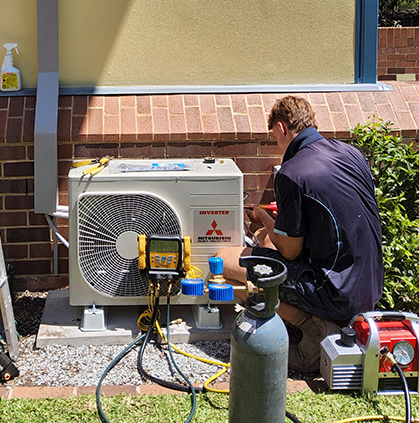
7. Professional Coil Deep-Clean
- Type: Technician
You should never deep-clean the AC coil yourself. The evaporator and condenser coils are sharp and trap grime. Mishandling can bend fins, cause leaks, or create electrical hazards that compromise safety and efficiency.
HVAC professionals have the training, PPE, and specialized tools to safely access, clean, and inspect coils without harming energy efficiency or indoor air quality.
What the technician will do, including these steps:
- Check the coil, airflow, and refrigerant pressures
- Open panels, look for fouling or corrosion, and decide on a cleaner
- Flush the condensate drain and check the blower for dust
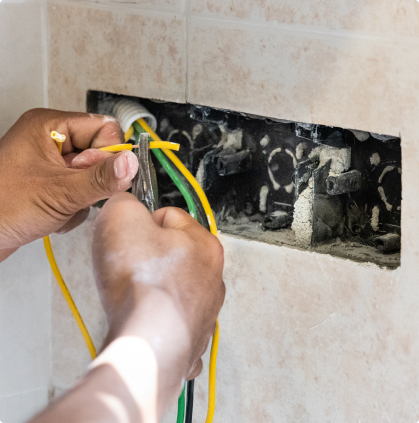
8. Electrical Connection Inspection
- Type: Technician
This is one of the air conditioning unit maintenance tasks you can’t mess up. Electrical connection checks are only for professionals.
And old homes’ wiring or switchboards often can’t safely handle modern air conditioners’ power needs. So mistakes risk more than a broken AC. You could damage the whole house circuit.
Red flags requiring immediate attention:
- Circuit breaker trips every time your air-conditioning unit starts
- Burning smell near your outdoor unit or indoor electrical components
- Flickering lights throughout the house when your compressor kicks in
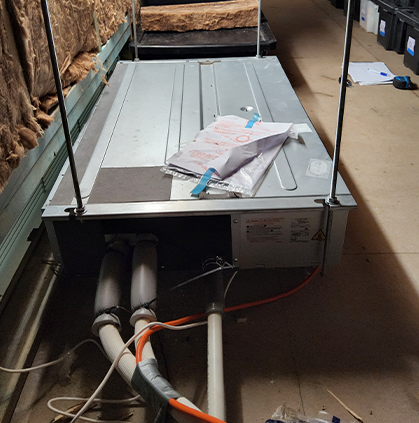
9. Ductwork Inspection
- Type: Technician
Ducts hide in ceiling voids, wall cavities, and under floors. Getting proper access means lifting insulation, removing small panels, or squeezing into tight roof spaces with limited airflow and high heat.
Yes, you can lift faceplates on supply vents and return grilles to view the first 10–30 cm with a torch or phone light. Or, vacuum the front a few inches with a hose to clear obvious dust, hair, or leaves that block airflow.
And that’s all. The rest of the duct inspection should be handled by professionals. This includes:
- Duct sealing quality at joints and connections
- Insulation condition and effectiveness
- Airflow balance across zones
- Mould growth in ducts
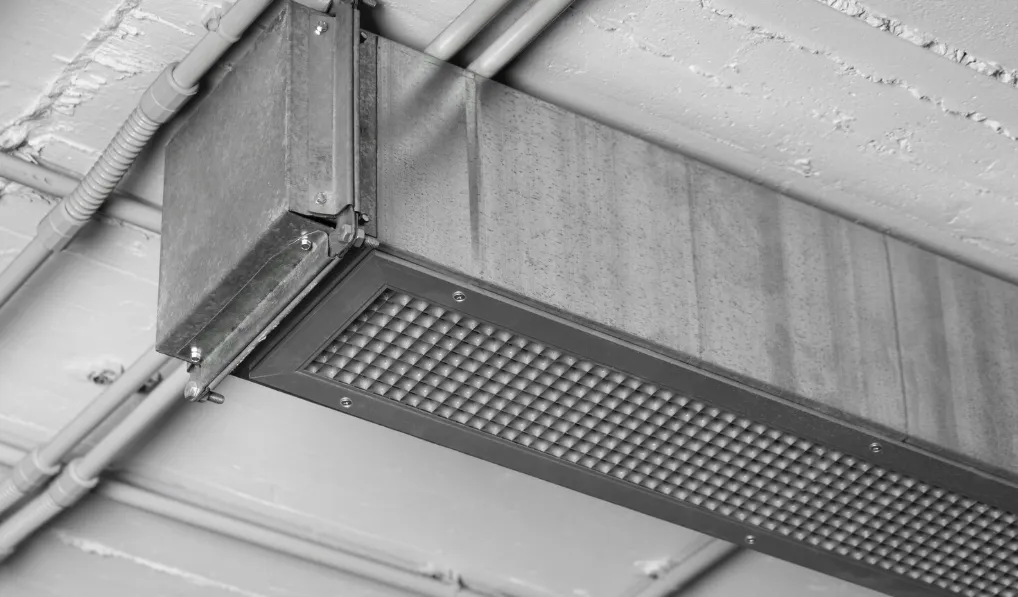
Image by Freepik
How Often Should You Service Your HVAC System?
The honest answer is it depends on your HVAC system situation and usage.
- Monthly — You need to clean the air filter, clear the outdoor unit, and do a quick indoor check in about 10 minutes to boost energy efficiency and keep your system lasting longer.
- 6–12 months — If you’re in a coastal area, use a year‑round unit, have breathing issues, or deal with bushfire smoke, do HVAC maintenance twice a year.
- Annual — You can call HVAC professionals to visit in September/October to reset the system, check refrigerant, clean coils, and test components before the summer cooling peak.
Keep in mind that even a brand-new split system air conditioning service record is required to maintain warranty coverage.
When Should You Call a Licensed Technician for HVAC Maintenance?
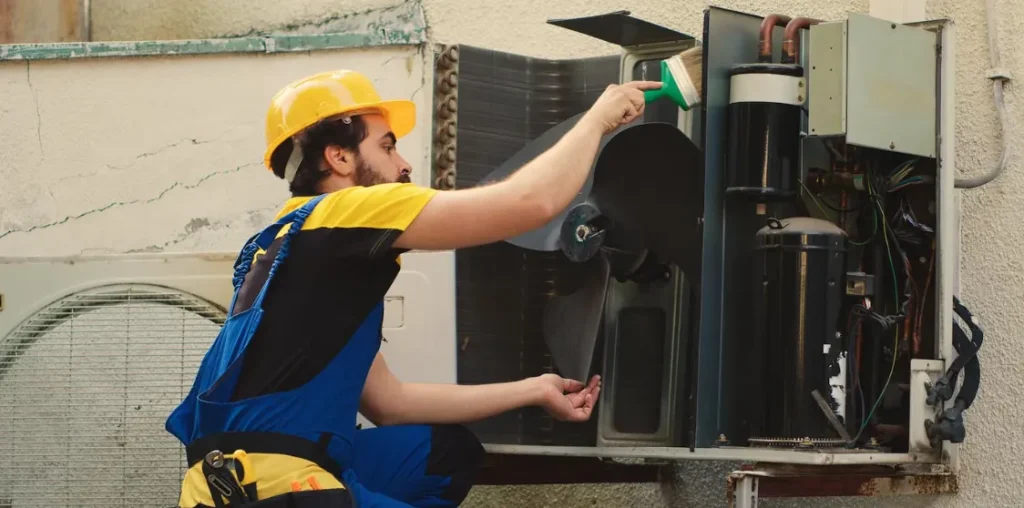
Image by DCStudio on Freepik
You should call a licensed HVAC technician if you can’t handle it or it needs special skills to get it right. This includes:
- Refrigerant issues — If warm air comes out though it runs, the indoor unit gets icy, or you hear hissing or bubbling, that’s a refrigerant leak. Don’t add gas yourself.
- Burning smell or repeated circuit trips — Both mean electrical faults inside the HVAC system. Turn it off at the circuit breaker and don’t use it again until a licensed technician checks it. It’s a high‑priority fire risk.
- Water dripping from the indoor unit — A small drip isn’t urgent, but continuous pooling or ceiling stains mean the condensate system is blocked. A professional must clear it before it causes structural damage.
- Grinding, squealing, or rattling noises — Weird sounds point to a failing fan motor, loose compressor parts, or debris. Running it when the motor is failing can end up with a $2,000 replacement bill for parts and labour.
- Visible mould inside the unit — Surface mould on the louvres is manageable, but mould growth inside the indoor coil housing or ductwork needs professional duct sanitisation to ensure the air is safe to breathe.
- Reduced airflow even after clean filters — If the airflow is still weak, the issue is downstream: iced‑up coils, ductwork obstructions, or a failing blower motor.
- Duct leaks or blockages — A ducted air conditioning system with uneven cooling often has leaks wasting 30% of conditioned air. A pro HVAC service must locate and seal them to restore your system’s efficiency.
Not sure which category your problem falls into? Book an AC tune-up and let the technician diagnose it.
7 Common HVAC Maintenance Mistakes (That Will Cost You More)
Think you’re saving money by skipping maintenance? Think again. These mistakes can drive up repair and replacement costs:
1. Waiting Until Summer to Book Service
You call for a tune-up in December at 38°C. You and everyone in Sydney have the same idea. Wait times reach two to three weeks.
Your system struggles, then dies in the heatwave as you’re stuck behind 500 other homeowners.
2. Skipping Filter Changes “Just This Once”
One skipped month becomes three. A clogged filter chokes airflow until the evaporator coil freezes. When the ice melts, water floods the indoor unit and damages ceilings or walls. That’s how air conditioners work.
3. Ignoring Strange Noises
Grinding, squealing, and clanking mean internal air conditioning unit parts are failing. Hoping it fixes itself makes it worse, fast. Ignoring these signs can cause breakdowns, pricey repairs, and safety risks.
4. Assuming “Cool Air = Healthy System”
Efficient air conditioning isn’t just about whether it cools the room. It’s about how hard it’s working.
Your system might push out cool air at 70% efficiency because coils are dirty, the drain is blocked, or the refrigerant is low. You won’t notice the drop in performance. You’ll just see a higher bill.
5. DIY Refrigerant “Top-Ups”
YouTube videos make refrigerant work look simple. It’s not. Refrigerant handling requires an Australian Refrigerant Handling Licence. And DIY is illegal, voids your warranty instantly, and risks destroying your system.
6. Hosing Down Indoor Unit
Your outdoor unit can handle a gentle rinse because it’s built for weather. Your indoor unit has electrical parts and circuit boards that can short when they get wet.
7. Covering Outdoor Unit in Winter
What is an HVAC maintenance tip? It’s what you need to do to keep your system running well. And covering your outdoor unit is not part of it. It traps moisture, speeds up corrosion, and rodents can move in. That can lead to even costly damage.
FAQ About HVAC Maintenance
Here are some questions Australian homeowners ask about HVAC maintenance:
What are signs my HVAC system needs servicing urgently?
Watch for warm air, grinding noises, water puddles, ice on the unit, or a burning smell. These mean a high risk of failure. Turn off the system and call a technician for emergency HVAC repair to avoid permanent damage.
Is HVAC maintenance different for ducted vs split systems?
Split systems need checks on the air filter, indoor coil, and outdoor condenser. Ducted systems add ductwork, a return air filter, and zone controllers, making them more complex. Both need annual maintenance, but ducted systems are more time-consuming and costly when it comes to HVAC maintenance.
What if I smell something musty when I turn the AC on?
That smell often comes from mould or mildew on the evaporator coil or in ductwork. And vent cleaning won’t solve it. You need a professional inspection and coil clean to stop circulating spores that harm your air quality.
How often should HVAC filters be changed?
Clean reusable filters every 2–4 weeks during the cooling season. And replace disposable filters every 1–3 months, or sooner in dusty areas. This simple HVAC maintenance prevents system strain.
Conclusion
You’ve learned HVAC maintenance tips to keep your AC at its best. So, you know which tasks you can do yourself and which to leave to a pro. And one thing’s for sure, breakdowns never wait for a convenient moment.
So, if it’s been a while since your last maintenance, contact Lightning Bult to book your next service. We’ll help you to make your system perform at its best.