





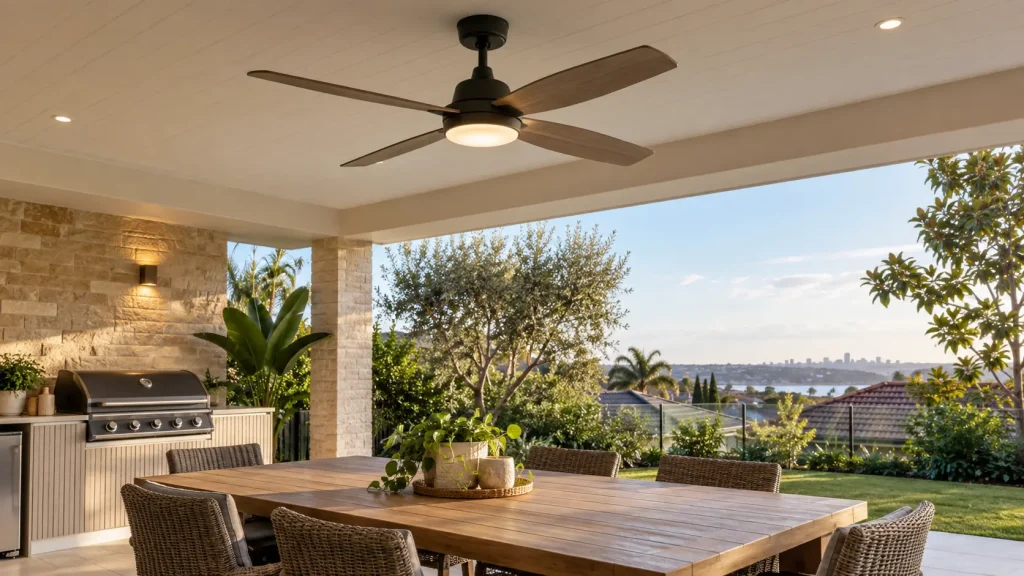
The right outdoor ceiling fan with light starts with its location. A sheltered patio, open deck and coastal pergola have different exposure to rain and salt. Often, you’ll need more than just an “outdoor” label to get it right.
Yes. There’s more to compare than the weather rating. How do blade span, airflow and lighting affect comfort? What could make a fan unsuitable for your space?
This guide will help you narrow down your options and know what to ask before booking a licensed electrician.
Why the Weather Rating Matters More Than the Style
A fan that looks right but can’t handle moisture quickly becomes a repair bill. That’s where most wrong purchases start.
Dry, Damp and Wet Ratings Explained
Check instructions for the exact model, installation location, and accessory limits.
- Dry-rated: Indoor use only. Moisture damages outdoor components.
- Damp-rated: For covered patios, pergolas, or areas protected from direct rain.
- Wet-rated: Designed for direct rain and spray on exposed decks.
IP ratings indicate dust and water resistance but don’t guarantee performance in all outdoor conditions. Rain, pool spray, and salt air vary by location.
So always check the manufacturer guidance for your specific situation.
What the IP Number Means
IP stands for Ingress Protection. It’s a two-digit code under the international standard IEC 60529. Each digit describes protection against a different type of exposure.
- IPX4: protection against splashing water
- IPX5: protection against water jets
- IPX6: protection against powerful water jets
Check the product details for the full rating. For example, IP44 has a different dust-protection rating from IP55 or IP66.
Use ratings to compare products and check manufacturer’s instructions for your installation location.
IP ratings don’t cover all outdoor conditions like salt exposure, and “weatherproof” alone doesn’t confirm complete product suitability.
Coastal Considerations for Northern Beaches and Eastern Suburbs Homes
Salt air speeds up rust, even under a roof. An open deck in Manly, Coogee, or Palm Beach needs a different fan than a protected courtyard on the North Shore or in the Inner West.
For exposed coastal spots, choose molybdenum-enriched marine-grade 316 stainless steel hardware for superior pitting resistance, plus UV-stabilised ABS blades. Standard 304 steel still tea-stains in coastal air.
Keep in mind, these materials don’t replace maintenance or fit every spot. Ask the manufacturer if the fan and light assembly is approved for your location.
How to Determine Ideal Dimensions and Air Circulation for Outdoor Areas
After setting exposure, compare your target area with the fan’s reach, airflow, and mounting limits:
1. Select the Right Blade Span for Your Outdoor Space
Outdoor fan sizes range from 1,200 mm to 1,800 mm and up. Calculate your area size and compare airflow before checking fit and ceiling clearances.
As a guide:
- Small patios (up to 12 m²): 1,200–1,320 mm
- Medium alfresco areas (12–20 m²): 1,320–1,420 mm
- Large outdoor spaces (over 20 m²): 1,420 mm or larger
Check manufacturer sizing for your exact model and confirm mounting position and ceiling support with your installer before purchasing.
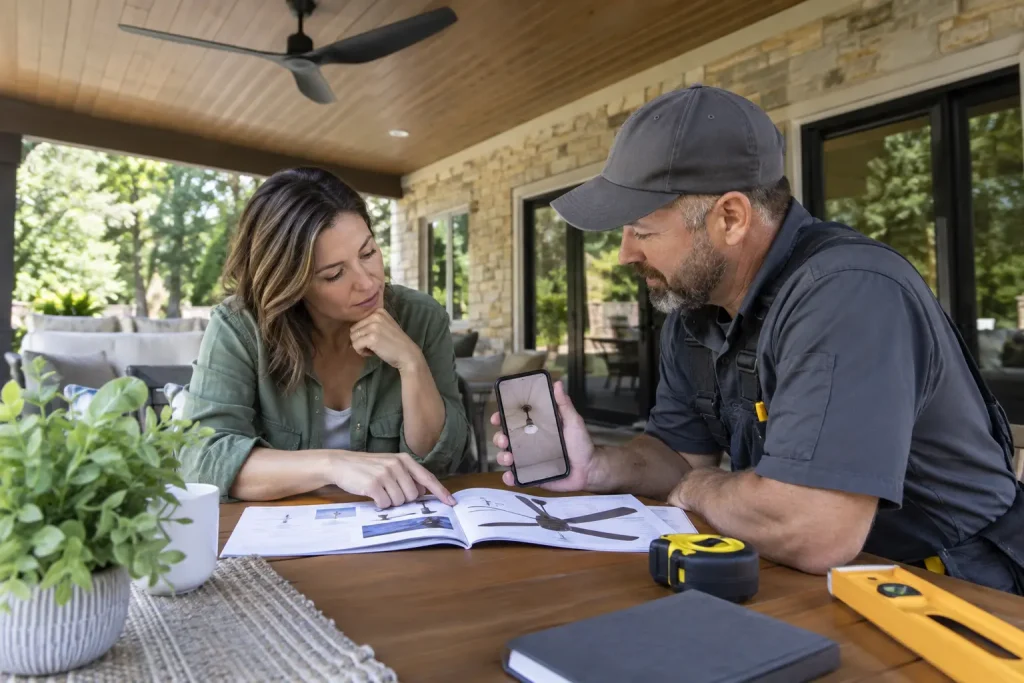
2. Evaluate Air Movement Volume (m³/hr) Alongside Fan Size
Airflow is the volume of air a fan moves, usually measured in cubic metres per hour (m³/hr). Blade span doesn’t control airflow. Two fans with the same 1,320 mm sweep can differ because of motor and blade design.
- Open patios and exposed decks: High airflow usually means 10,000 m³/hr or more.
- Sheltered alfresco areas and nooks: Start by comparing models in the 7,000–9,000 m³/hr range.
Always check which speed setting an airflow figure represents. Retailers usually quote maximum-speed ratings. If you plan to use medium or low for quieter operation, ensure the fan still moves enough air at those settings.
AC vs DC Motors: Which Suits an Outdoor Fan Better?
Motor type affects your upfront cost, energy bill, and how loudly the fan runs when you’re trying to talk at night.
AC Motors
Traditional AC motors are budget-friendly ceiling fan workhorses that cost less upfront and use familiar mechanics. They connect to standard 3-speed wall dials, making them simple to operate and easy to repair.
But think about the efficiency and sound. AC motors draw 50 to 70 watts on high and often produce a low electrical hum that can be surprisingly noticeable during quiet evenings.
DC Motors
DC motors run smoother and quieter while using 30 to 50 percent less electricity. They offer six speed settings and convenient remotes or smart switches.
The trade-offs? A higher upfront cost and the need for solid weather sealing against moisture.
In short, your choice depends on your needs:
- Occasional weekend BBQs: Choose a classic AC fan for dependable, budget-friendly cooling.
- Daily outdoor living: Invest in a DC fan for quiet operation, precise control, and lower running costs in your main living space.
Integrated Lighting, Control Options, and Design Styles
The “with light” search isn’t just about convenience, it reduces what electricians must fit and connect:
Why Choose a Fan With an Integrated Light
A ceiling fan with a built-in light combines breeze and brightness in one fixture, which is perfect for tight spaces.
The installation depends on existing wiring and ceiling support. So, make sure the light is bright enough and check if built-in LEDs are replaceable and suited for outdoor use.
Lacking the right wiring? Ask an electrician what you need. Lightning Bult can help with lighting through their outdoor lighting installation service.
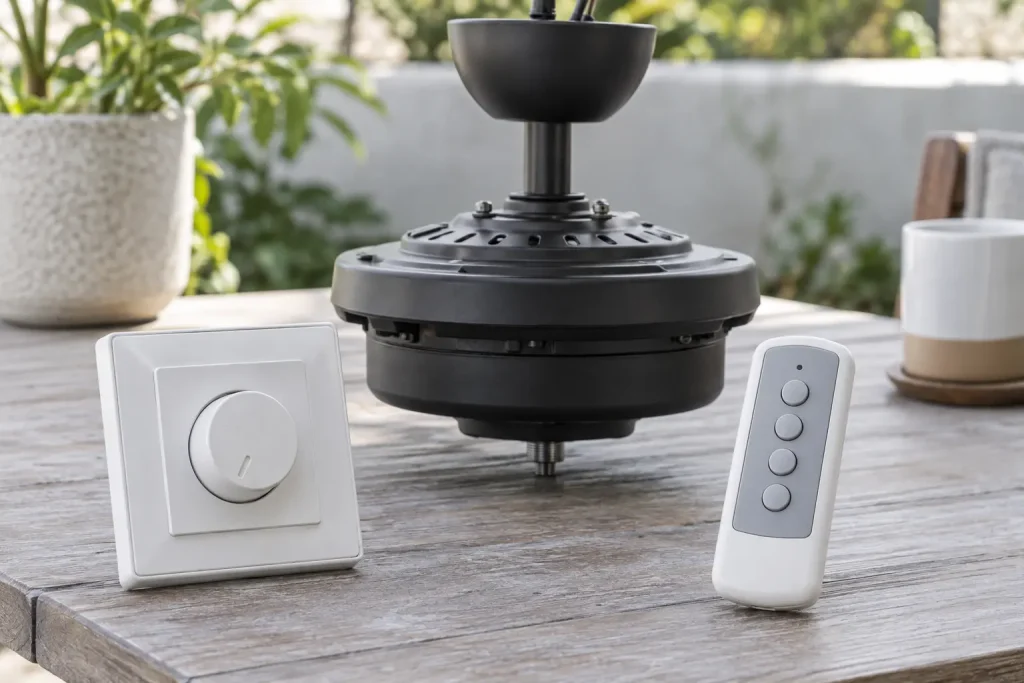
Remote, wall or smart control
Think about how you’ll use your fan before choosing the controls. The setup changes what receiver and wiring you’ll need. So tell your electrician what you want before they install it.
- Remote control: Handy when you’re seated outdoors and want to adjust the fan speed or switch on the light.
- Wall switch: A fixed switch is easy to find and doesn’t rely on batteries or a handset. Use only controls approved for your fan.
- Smart control: Depending on the fan and control system, you may be able to use an app, set schedules or give voice commands.
Decide if you want to operate the fan and light separately, and whether you want to control them at the wall, by remote, or through a smart system.
If you’re unsure, ask the electrician to confirm the wiring and compatible controls before quoting.
Matching Finish to Your Outdoor Style
Matte black or white suits a modern patio, while white or timber-look finishes fit coastal and Hamptons-style spaces.
Even so, treat looks as your last choice, after you have checked the fan’s location approval, airflow, and controls.
While ABS blades are common, no single material suits every setting. Always check the fan’s approved environment, care needs, and warranty regarding salt, sun, and moisture exposure.
Who Can Install an Outdoor Ceiling Fan With Light (and What It Costs)
Buying the right fan is half the job. You still have to install it safely.
Why DIY Installation Isn’t an Option in Australia
In NSW, hardwired outdoor ceiling fans with lights must be installed by a licensed electrician, no matter where you bought them.
Proper installation prevents electrical shocks, fires, and falling fans. And remember, unlicensed electrical work can cost you a $22,000 fine.
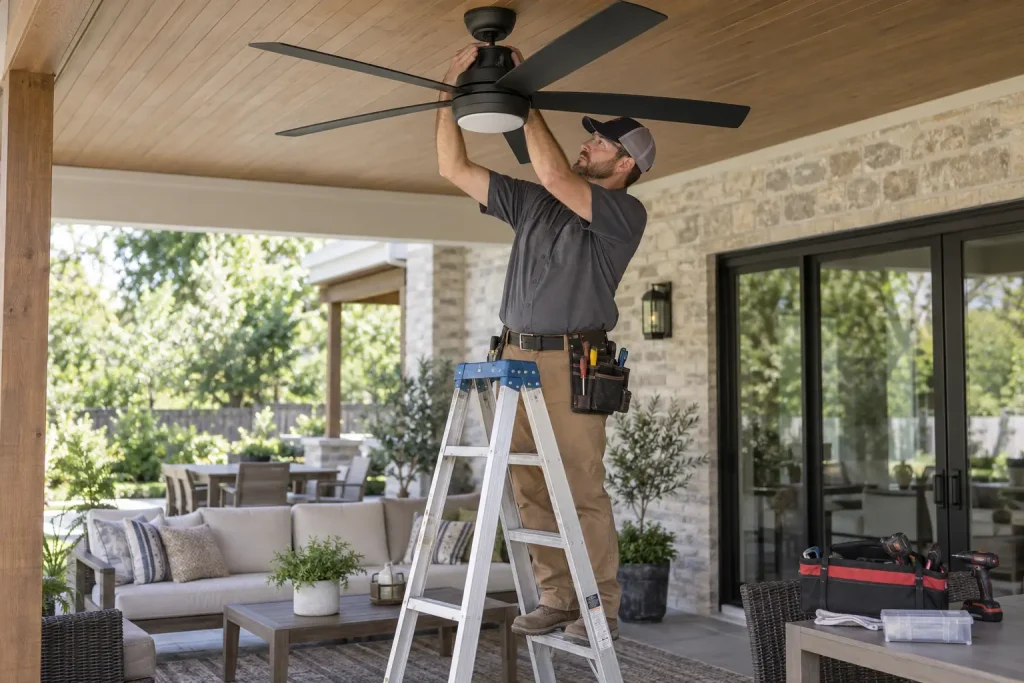
What A Professional Installation Involves
The sequence depends on the site and model. A typical visit includes:
- Checking the mounting point, clearances, and manufacturer’s instructions.
- Shutting off power and removing any old fitting.
- Installing support if needed, then wiring the fan, light, and controls.
- Testing the unit and demonstrating operation.
Just ensure your quote covers the chosen outdoor fan and light from the family owned Sydney electricians.
What Installation Typically Costs
Pricing depends on existing infrastructure. Replacing a fan in an existing location costs less than a fresh installation requiring new wiring or support.
For example:
- Replacing in a similar location: $150–$250
- Basic installation: $150–$300
- Adding new wiring/box: +$100–$200
- New installation (no box/light): $300–$500
Final costs also depend on the fan model, ceiling height, access, and outdoor exposure. Confirm your quote with Lightning Bult before booking.
FAQ about Outdoor Ceiling Fans With Lights
These questions are best answered with the proposed location and exact product instructions in hand.
Can I use an indoor ceiling fan outside if it’s under cover?
No. Roofs expose fans to humidity and rain, and indoor models aren’t approved for that space. Always check manufacturer guidelines and warranty terms. Choose an approved model for the actual exposure.
What’s the difference between damp-rated and wet-rated?
“Damp” means indirect moisture; “wet” means direct water. But these labels don’t replace an IP code or manual. For exposed spots, make sure the manufacturer explicitly approves the lights and accessories for that use.
Do I need a separate switch for the fan and the light?
Most combinations run from the same wall control. A separate switch for each can be wired in on request. Confirm this with your electrician before installation day, since it affects the wiring.
Ready for Your Outdoor Ceiling Fan With Light?
The right outdoor ceiling fan turns a stifling Sydney deck into a comfortable, year-round living space. Just match the weather rating, size the airflow, and choose your controls right.
When it’s time to mount and wire your fitting, skip the DIY risks. Let Lightning Bult’s licensed electricians make sure your installation complies fully with NSW wiring rules.
Book a quote for expert installation across the Northern Beaches, North Shore, Eastern Suburbs, and Inner West.