




“Heat pumps don’t work below 10°C.”, “Gas heaters are faster, but heat pumps are cheaper.” You’ve heard these claims about pool heating. But are they facts, or just pool heating myths?
You need the truth to avoid choosing a system that underperforms or costs more than expected.
This article covers myths about running costs, sizing, solar performance, and heat pumps—everything you need for confident pool heating installation conversation. Read on.
Why Pool Heating Myths Are So Common in Australia

Image: yanalya on Freepik
Before we debunk each myth, it helps to understand why misinformation spreads so easily:
1. Technology “Lag”
Many Sydney pool owners still judge today’s heating using 15-year-old standards, creating a “perception lag.”
Smart, efficient options exist now, but people compare them to noisy, inefficient memories. That’s why pool heating myths about performance and reliability continue.
2. Social Media Misinformation
Facebook groups and Reddit threads are often treated as universal truth. Some information is relevant. Most isn’t.
One owner shares a story, hundreds repeat it as if it applies everywhere. Personal stories often feel more credible than official specs or installer advice.
3. Marketing “Noise”
In sales, the loudest claim can win, even when it’s wrong. Brochures may promise “free energy” while skipping the technical details homeowners actually need.
Brands push gas, solar, or heat pumps while downplaying drawbacks. The result is a flood of conflicting claims.
4. Price Change
What looked cost-effective five or ten years ago may be a costly choice now. Homeowners often rely on outdated benchmarks without realizing what’s changed.
Old stories about “ruinous bills” or “great value” still circulate, even though today’s tariffs and incentives are different.
5. Perceived Complexity
Visual simplicity isn’t technical ease. Homeowners often see a gas heater as a simple “box” and assume it’s low-tech.
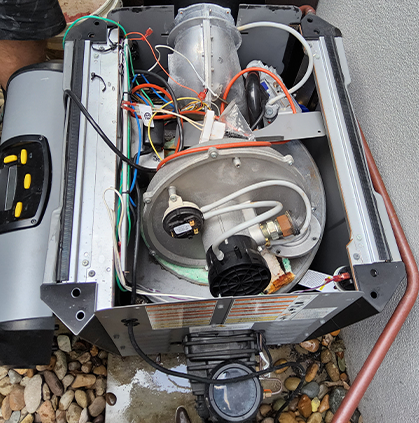
In fact, modern gas heaters are high-performance thermal engines that need precise gas fitting and venting to reach peak efficiency. This turns the “complexity” myth into a pitch for heat pumps or solar as “set and forget.”
Pool Heating Myths About Running Costs
Running costs are the most misunderstood part of pool heating — and the most dangerous myth to believe before you buy.
Myth: Pool Heating Is Too Expensive to Run
Most homeowners delay buying pool heating because they think it’s too expensive. That idea comes from old gas heaters people used back in 2010. The myth comes from the worst-case scenario being treated as the norm.
Today, a heat pump costs $600–$1,560 annually, while solar pool heating is nearly free to run. Even gas heating, when used with a cover on weekends, costs just $300–$700.
Myth: All Pool Heaters Cost About the Same to Run
Think of it like this: not all cars use the same amount of petrol, right? The same goes for pool heating. Your monthly costs can range from $50 to $500, depending on the system you pick.
- Solar heating is cost-effective, with only $10–20 monthly for pump electricity, and free heat.
- Inverter heat pumps are ideal for Sydney homes, costing $600–1,560 annually.
- Gas heaters provide instant warmth, but daily use can be expensive, at $250–600 monthly.
You can compare gas vs electric pool heaters to understand more about running costs and efficiency.
Myth: Running the Heater Continuously Is Always More Expensive
“The more it runs, the more I pay.” Well, many Sydney owners believe turning the heater off when they’re not swimming saves money. But with modern systems, it’s often the opposite.
Every time you let your pool cool down overnight or during the week, you lose heat to evaporation and radiation. Then when you turn the heater back on to warm it up again, you’re fighting against all that lost energy.
Pool Heating Myths About Heater Size
Sizing is where most people waste money. Even if you’ve done your research, these pool heating myths are easy to fall for:
Myth: Bigger Is Always Better
Do you think buying the highest kW rating means your pool will heat up faster? That’s a common mistake. An oversized heater is a waste of money.
Once your pool reaches the target temperature, a larger unit simply shuts off, leaving you with an expensive machine that sits idle.
For a 40,000-litre Sydney pool, you only need 8–12kW of gas heating or a 5–8kW heat pump. Buying double that size costs $2,000–$3,000 extra for a system that runs at half capacity, or wears out faster from short-cycling.
Myth: A Small Heater Will Eventually Heat My Pool, It Just Takes Longer
Think you’re saving money by buying a smaller pool heater? You might think waiting an extra day for the water to warm up is a fair trade. But that’s not how it works.
Because it runs 24/7 trying to reach an unattainable temperature, you lose more water to evaporation while you wait. You’re paying to heat water that disappears faster than the heater can keep up.
For example, an 80 MJ/h gas heater might warm a 60,000-litre Sydney pool by 4°C, but without a cover, you’ll lose 3–4°C overnight. Your net gain is nearly zero, yet your energy bill remains 100% real.
Pool Heating Myths About Pool Covers

Image: Amazon
The most underrated tool in pool heating isn’t a heater at all, it’s a pool cover. And most Sydney owners underestimate it:
Myth: Pool Covers Don’t Make Much Difference to Temperature
Ever wonder why your coffee stays hot in a thermos but gets cold in a mug? Your pool works the same way.
Most heat escapes through evaporation. Without a cover, your pool can drop 3–7°C overnight, which forces your heater to work way too hard the next day.
A quality cover acts like a blanket. It stops up to 95% of evaporation and cuts heat loss by 50–70%. With one, you can easily keep your pool at 28–30°C while using your heater much less.
Myth: A Solar Cover Heats My Pool on Its Own
Many Australians think a solar bubble cover acts like a heater. It doesn’t. A solar cover is an insulator. It keeps heat in, but it doesn’t create it.
On a hot summer day, the cover might raise your water temperature by 2–3°C by letting sunlight through the bubbles, but that’s it. You won’t reach 28°C in winter or autumn with just a cover.
Pool Heating Myths About Solar Pool Heating
Solar heating has more myths around it than any other system:
Myth: Solar Pool Heating Doesn’t Work on Cloudy Days
That’s partly true, which makes it more dangerous than a total myth. And it’s enough to make you give up on solar heating entirely. The truth is, solar heating still works on cloudy days, just not at full power.
While efficiency can drop by 80% or more on a grey Sydney day, “cloudy” doesn’t mean “zero heating.” Even in June, your system will gently warm the pool by a degree or two, which adds up to real warmth over a week.
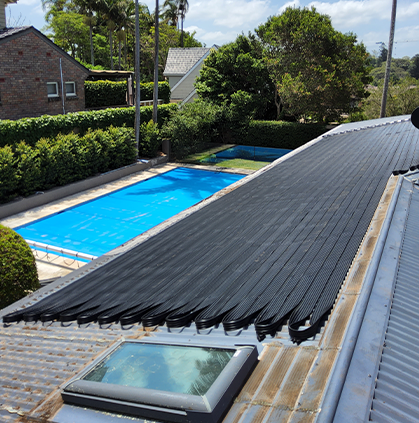
Myth: Solar Heating Only Needs 60% Roof Coverage to Work
While 60% roof coverage is often cited as the minimum for solar pool heating, it’s rarely enough. In regions like Sydney, experts recommend 80–100% coverage for reliable performance.
Settling for 60% often results in slow heating and failure to reach ideal pool temperature during spring and autumn. Saving money now often leads to frustration and the future expense of a backup heater.
Pool Heating Myths About Gas Heaters
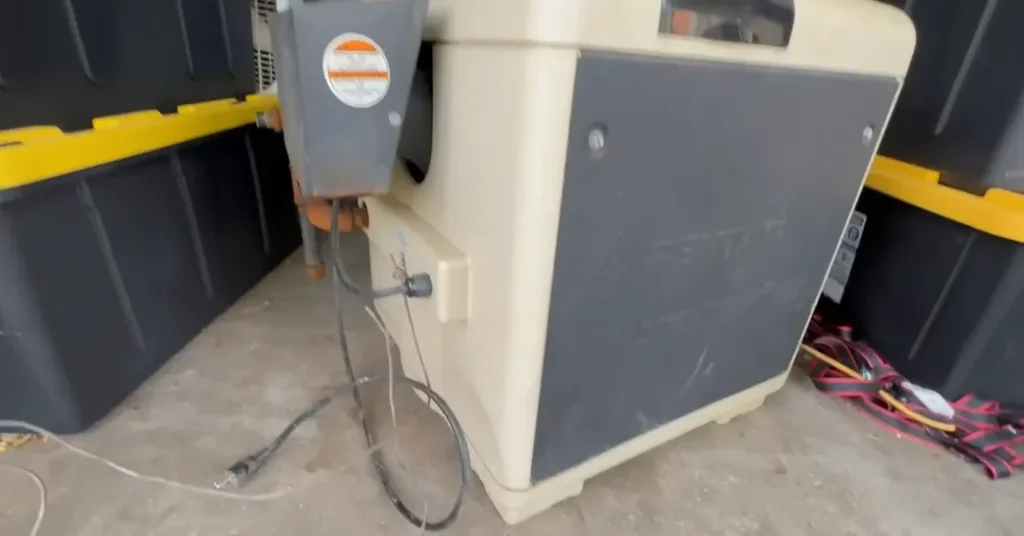
Image: Amazon
Gas heaters get a bad rap, usually because people don’t use them the right way. Here is the truth:
Myth: Gas Heaters Are Too Expensive to Run
They’re only expensive if you use them wrong. And you will need gas pool heater service often for this. But, if you use them correctly, they’re actually one of the most affordable options.
Gas heaters aren’t meant to run every day. They’re built to heat your pool quickly for a weekend swim, then let a cover keep the warmth in until Monday.
If you use a cover and only heat on weekends, you’ll spend about $300–$700 a year (based on NSW natural gas rates of 2.72c/MJ).
Myth: You Need Mains Gas for a Gas Pool Heater
Think you can’t have a gas heater without a mains connection? Think again. Modern heaters from brands like Zodiac and Pentair run on both natural gas and LPG. If you lack a gas line, simply use LPG cylinders or a tank.
Sure, LPG costs more than mains gas, but if you only heat on weekends or evenings and keep the pool covered, it’s a great way to get fast, reliable heat.
Myth: Gas Heaters Are Bad for the Environment
Feeling guilty every time your gas burner clicks on? While gas is often labeled an “environmental villain,” that ignores the reality of energy use in a Sydney backyard.
Heat pumps are called “green,” but they often draw power from the grid when renewables aren’t available. Conversely, modern gas heaters offer surgical efficiency, heating fast so you only burn fuel while you swim.
Pool Heating Myths About Heat Pumps
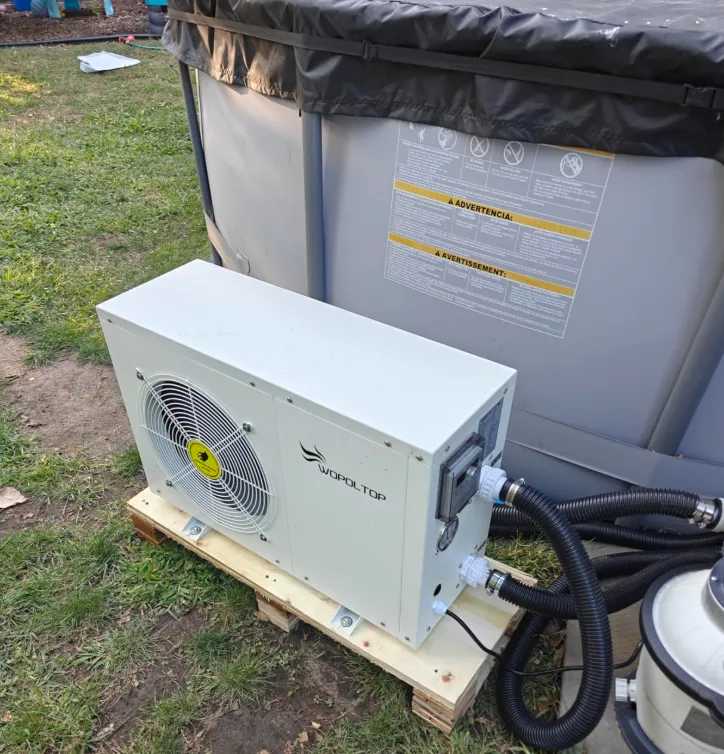
Image: Amazon
Heat pumps are Australia’s fastest-growing pool heating category, and myths about them are multiplying just as fast.
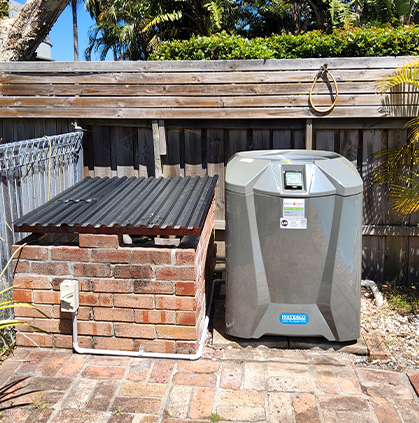
Myth: Heat Pumps Don’t Work Well in Sydney Winter
Many Sydney pool owners still believe they “stop working” once winter hits. That’s not true for modern units.
Sydney winters are mild, with daytime temperatures averaging 17°C and nights rarely dipping below 8–9°C. Today’s full-inverter heat pumps using R32 or R290 refrigerants run efficiently even at -7°C or -10°C.
If you use a good pool cover, you can easily keep your heated pool in winter, at a comfortable 26–30°C.
Myth: Heat Pumps Are Too Noisy
That was a fair concern back in 2015, but it’s outdated by 2026. A modern heat pump runs at about 50–60 decibels. That’s just the sound of a humming air conditioner.
For comparison, your neighbor’s leaf blower hits 70–80 decibels, and an old single-speed pool pump is around 60–65 decibels.
Myth: Heat Pumps Need Little to No Maintenance
Heat pumps are reliable, but you can’t just ignore them. Many people in Sydney think they’re maintenance-free, but that myth cuts their lifespan in half.
Service your heat pump every year to keep it running smoothly. Also, make sure you know how to size your pool heat pump correctly before you install it.
With regular care, a good unit lasts 10–20 years. Skipping it could cost you $5,000–$8,000 to replace the unit early. And if you neglect it, it might only last 5–8 years.
Pool Heating Myths vs Facts: Quick Reference
Here’s a quick cheat sheet for every myth in this article, along with the facts and the right context you need:
| Myth | Reality | Best Heater Type |
|---|---|---|
| Pool heating is too expensive to run | Modern heat pumps usually cost $600-$1,560/year in Sydney | Heat pump / solar |
| All heaters cost the same to run | Running costs vary 5x+ between system types | Compare per use case |
| Bigger heater = better efficiency | Correct sizing = best efficiency and lifespan | All types |
| Pool covers don’t make much difference | Covers reduce heat loss by up to 75%, cutting running costs by up to 50% | All types |
| Solar heating is free to run | Heat is free; pump electricity cost is minimal but not zero | Solar |
| Gas heaters are too expensive to run | Weekend-only use with a cover costs around $300-$700/year | Gas |
| You need mains gas for a gas heater | LPG is a standard alternative for homes without mains gas | Gas |
| Heat pumps are too noisy | Modern inverter units operate at 40-55 dB — equivalent to quiet TV | Heat pump |
These figures are general guidelines for Sydney conditions. Actual performance depends on pool volume, usage patterns, cover use, and installation quality.
FAQ About Pool Heating Myths
Here are some common questions you might have about pool heating myths:
Is It Cheaper to Run a Pool Heater Continuously or Only When Swimming?
Running a heat pump is cheaper than repeated cold starts. Conversely, using gas heaters on demand for weekend swims is more cost-effective. So, the best approach depends on your system and frequency.
Can You Heat a Pool Without Any Heating System?
You can, but only with natural solar radiation and a solar cover, and it won’t stay comfortable through Sydney’s autumn and winter. For year-round heating, you need a real system: solar, heat pump, gas, or a mix.
Does Pool Heating Damage Water Chemistry?
No. A properly installed and maintained heater doesn’t affect water chemistry, aside from slightly faster chemical off-gassing at higher temperatures. Keep your pH and sanitizer as usual, and you’ll have no issues.
How Do I Know Which Pool Heating System Is Right for My Sydney Pool?
The right system depends on pool volume, usage frequency, roof orientation, and budget. Lightning Bult’s pool heating specialists assess all of these on-site and recommend the system that fits your specific pool.
Conclusion
Pool heating myths are expensive to believe. They lead to the wrong system, the wrong size, and the wrong expectations. And every pool is different. A professional assessment takes the guesswork out of it.
Still not sure which pool heating system is right for you? Lightning Bult‘s pool heating experts can assess your pool, recommend the right system, and install it professionally. Get in touch today!!