






Thinking about getting a ductless mini-split so you can control each room’s temperature? If so, the first thing you need to know is, “What size mini-split do I need?”
In short, it all depends on factors like the room size and heat load. And in this article, we’ll show you how to size a mini-split before you call your air conditioning services for installation. Let’s get into it.
How to Calculate the Right Mini Split System Size
There are three approaches to mini split sizing: manual calculation, using an online calculator, or using a manufacturer app:
1. Manual Calculation
Here’s how to do a quick load calculation and figure out what size mini-split you’ll need for your home:
- Measure your room — Grab a tape measure and find the Length and Width of the room in metres. Then, multiply them to get the Area in square metres. For example, 4m x 5m = 20 m².
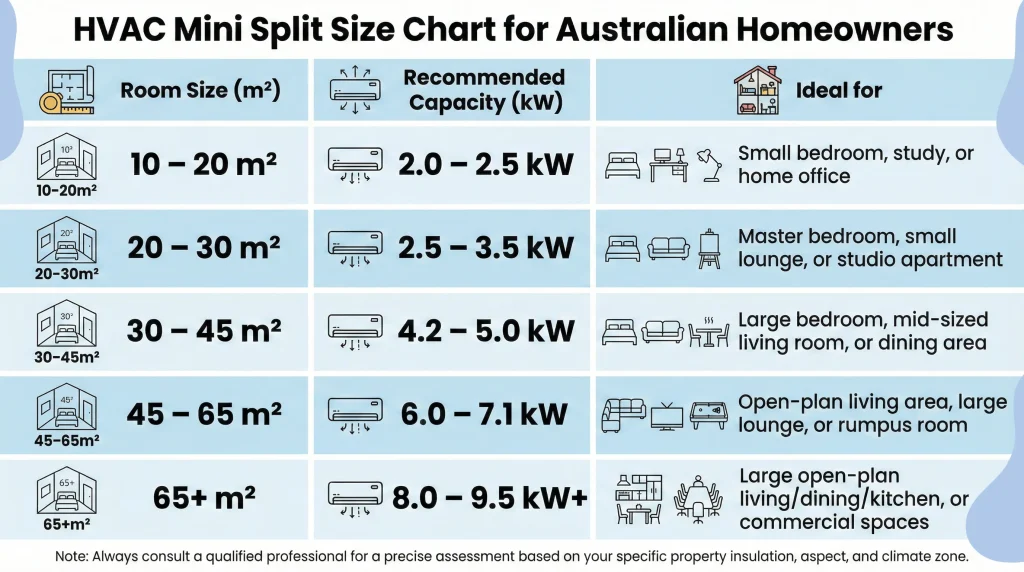
- Multiply by the cooling factor — Multiply room area (m²) by 0.15 kW for average insulation and 2.4m ceilings. For a 20 m² room, this is 3.0 kW (20 m² × 0.15 kW). Increase this factor for rooms with higher heat loss.
- Account for heat factors: Increase cooling capacity for rooms with significant sunlight, high ceilings over 2.7 metres, or kitchens with major heat-generating appliances. Consult an HVAC professional for precise adjustments.
- Choose the standard size. Take your required capacity (in kW) and round it up to the nearest standard machine size. If you calculated 3.0 kW, you need a 3.5 kW unit. This prevents an undersized unit, which struggles to maintain the set temperature.
2. Use Any Cooling Load Online Calculator
How to size a mini split without manual calculations? Use an online tool like FairAir. It’s simple and accurate:
- Get the basic data — You still need to measure your room size, ceiling, and any factors that relate to the heat load before calculating.
- Find the tool — Search for “Cooling Load Calculator” on Google. You can choose FairAir or BTU metre and get ready to input your data.
- Input detailed data — Each online tool has its own approach. BTU meters require all data at once, while Fairer uses a step-by-step approach based on region, transmission, solar, and ventilation loads.
- Get the recommended size — FairAir estimates total cooling load in kWh. BTU Meters provide Watts or BTU as the recommended AC size for your room.
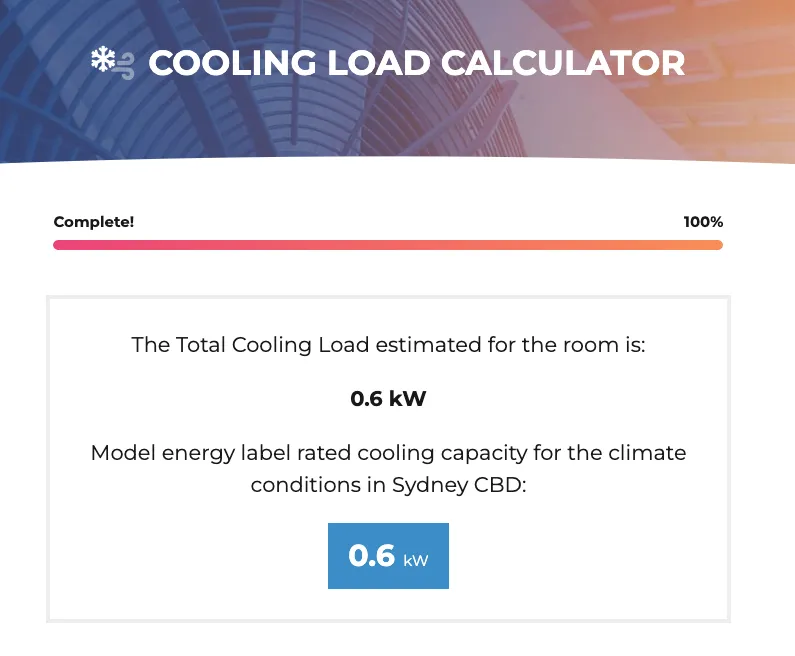
Taken from FairAir
3. Use Manufacturer Sizing Wizards
This method uses tools from brands like Daikin to match you directly to a model:
- Use Manufacturer Calculators — Visit their official website and if you find “Help Me Choose,” click on it to start providing the data.
- Enter Room Info — Provide room dimensions, layout, or occupancy details as required by the tool.
- Get a Model Recommendation — This method displays specific product models, making it the easiest option if you have a preferred brand.
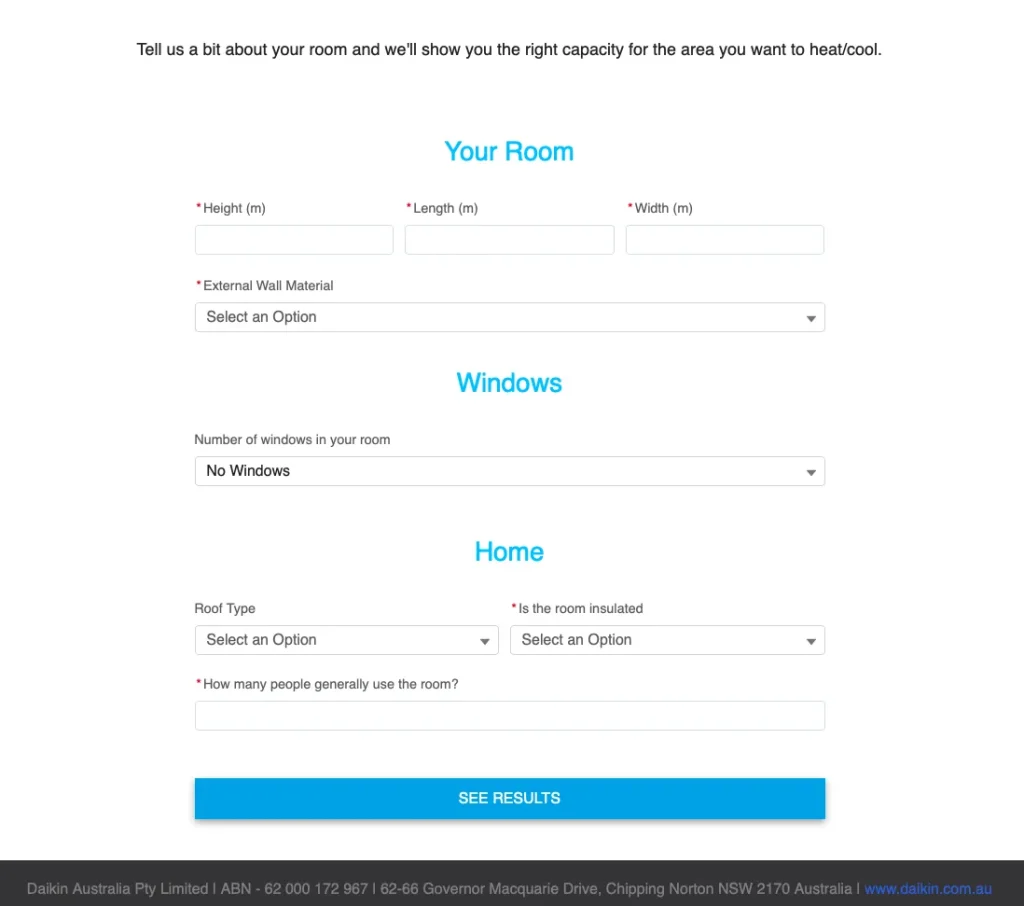
Taken from Daikin.com.au
Factors That Influence Mini Split System Size
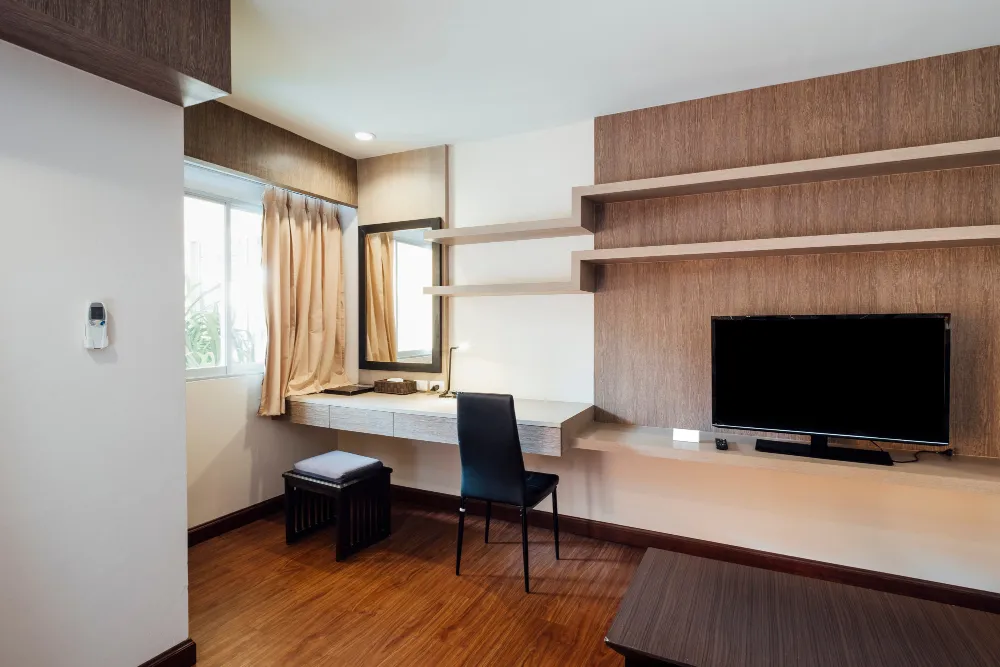
You know how to do a basic load calculation for a mini-split, but many heat loss and gain factors can change the final kW needed. Do you know what they are?
1. Climate Zone
Most online load calculators ask, “What’s your postcode?” Your location shows your climate zone, which mainly affects your heating and cooling needs, especially with split systems installation.
Australia has eight climate zones for energy ratings (NatHERS). These zones affect how equipment works. A 20 m² room in Zone 1 (Darwin) feels very different from one in Zone 7 (Hobart).
Mini split sizing makes a difference. In Zone 5 (Sydney) or Zone 6 (Perth), 140–150 watts per square metre is enough. In Zones 1 and 2, you need 180–200 watts to handle the heat, so a bigger kW unit is needed.
2. Room Dimensions & Layout
Room dimensions matter, but volume and layout also impact heat loss and gain.
Australian ceilings are usually 2.4 metres, with 2.7 and 3.0 metres becoming common. Raising the ceiling by 0.3 metres increases cooling needs by 5 to 10 percent, requiring a higher kW capacity.
And the layout affects airflow and heat loss.
- Sealed, rectangular rooms retain conditioned air better, helping maintain the thermal envelope.
- Open layouts with archways or hallways leading to unconditioned areas strain your system. Add 20–30% more capacity (kW).
- L-shaped rooms usually need more kW or a few indoor units to eliminate hot and cold spots and keep things comfortable.
3. Window Type & Orientation
Your windows, especially west-facing ones, are a major heat spot. They catch the hot afternoon sun, and a big unshaded window can let in as much heat as a small heater, making your AC work harder.
Old single-pane windows are the worst. Upgrading to double glazing cuts heat transfer by nearly half.
If you have big west-facing windows, get a bigger AC if you don’t want to end up with AC not blowing cold air. Add 30% to your calculations so your system can handle this solar spike in hot summer afternoons.
If you have big west-facing windows, get a bigger AC if you don’t want to end up with an AC that isn’t blowing cold air. Add 30% to your calculations so your system can handle this solar spike in hot summer afternoons.
4. Insulation Quality
Insulation quality is a factor that affects a room’s thermal retention and a mini-split’s workload. While windows cause quick heat spikes, insulation in ceilings, walls, and floors maintains steady temperatures.
In uninsulated homes, heat enters the roof cavity and radiates inside, warming the space. The air conditioner then works 50% harder than in well-insulated homes.
Poor insulation requires a higher wattage per square metre, 160–180W/m², compared to 120–130W/m² for a 6-star home.
5. Occupancy & Internal Heat Gains
Internal heat gains are heat sources inside the room that make your AC work harder. While the room size stays the same, heat gains vary with who and what’s inside.
The human body is the most reliable heat source. At rest, it gives off about 100–120 watts. In a 25m² room with five people, that adds up to roughly 600 watts of heat the system must manage first.
Appliances are the second biggest factor. A kitchen with an oven, cooktop, and fridge can generate 2,000 to 3,000 watts of heat.
6. Dehumidification Needs
This factor often gets overlooked but is important in coastal and subtropical Australia. When humidity hits over 60%, you feel sticky, and mould can become a problem.
This workload must be included in the mini-split sizing. Dehumidification uses a large part of the unit’s cooling capacity in kW.
If you ignore this latent load and just size for dry air, the unit will be too small for real-world conditions. It’ll run all the time but won’t get rid of the humidity, so the room stays muggy and clammy at 24°C.
Why Should You Pick the Right Mini Split System Size?
Here are the main reasons why choosing the right size for your AC split system matters:
1. Comfort Consistency
Imagine setting your AC to 23°C and having every part of the room feel comfortable. That’s what you get with a properly sized mini-split.
This right sizing prevents hot and cold spots by running steady cycles that move air throughout the space, not just under the unit.
When the capacity matches the room, inverter technology keeps it running smoothly at low speed, making small adjustments to stay within 1°C.
2. Lower Electricity Bills
Your electricity bill also depends on how your AC runs, not just how long. That’s how the AC system works. A properly sized mini split hits the efficiency sweet spot, using the least power to keep the temperature.
An oversized unit keeps cycling on and off, causing costly power spikes. And an undersized one runs nonstop in “turbo mode,” which is the most expensive way to run your cooling system.
3. Quieter Operation
Modern AC units are built to be quiet, but only if they’re the right size. A properly sized mini split can cool your room using its quietest fan speed, sometimes as quiet as a whisper (19 dB).
If it’s the wrong size, that silence goes away. An undersized unit has to run its fan at “Turbo” speed all the time to keep up, making loud, rushing wind noises.
4. Healthier Home
If someone in your home has allergies or asthma, choosing the right size mini split ductless system becomes even more important. The key reason is dehumidification.
When properly sized, it runs with a cold coil for 20–30 minutes or more. This allows it to remove moisture from the air and drain it away.
As a result, indoor humidity stays between 40–60%, preventing that sticky feeling and reducing mould risk.
5. Reduced Maintenance Issues
Most homeowners only realise the importance of mini-split sizing when they face frequent maintenance issues.
Short cycling in an oversized unit damages the hardware. Constant on/off overheats the compressor windings and stresses the capacitors, causing early failure. These are the most costly AC unit parts to replace.
On the flip side, an undersized unit can burn out from overwork, running at 100% for 12+ hours in summer without cooling down. A proper load calculation prevents this and helps it last longer.
6. Longer Equipment Lifespan
You’re investing in a system designed to last 15 to 20 years. But it all depends on getting the right size.
Regular maintenance like cleaning filters and checking coils helps, but if the unit is the wrong size, it’ll wear out faster no matter what.
The right size keeps the system in its “safe zone,” so maintenance can actually extend its life. That’s the difference between lasting 20 years or burning out after seven.
7. Warranty Consideration
Most homeowners think their warranty covers everything. But that’s not always the case. Manufacturers like Fujitsu want their equipment to be sized right according to their specs.
If your unit breaks down, and the technician finds it was way too small for the room, the manufacturer can skip the warranty. They’ll call it “misapplication” instead of a defect.
FAQ About Mini Split System Size
Here are some common questions homeowners ask about mini split sizing:
Is it better to undersize or oversize a mini-split?
Neither is ideal. Undersizing leads to discomfort and inefficiency. Oversizing wastes money and increases power bills. The right size hits the sweet spot for comfort, efficiency, and cost for your home.
How many square metres will a 7.1 kW (24,000 BTU) mini-split do?
A 7.1 kW unit, ideal for large open-plan areas, typically cools 45–60 m² in standard Australian homes. In hot tropical zones or poorly insulated older homes, this range reduces to 35–45 m².
How many square metres will a 3.5 kW (12,000 BTU) mini-split do?
A 3.5 kW unit is ideal for 20–30 m², suitable for master bedrooms or small lounges. In hot or uninsulated areas, this may reduce to 15–20 m², but it generally covers larger bedrooms in modern homes. For a 12m² bedroom, a 2.5 kW model is recommended.
Conclusion
An undersized unit struggles, while a big one short-cycles, wearing out your compressor. Both lead to discomfort and high bills. That’s why the right mini-split sizing is important.
You’ve learned how to size a mini split, so you can make an informed decision before installation. But if you’re still unsure, give us a call at Lightning Bult. We’ll size your system accurately, ensuring safety, and efficiency.