





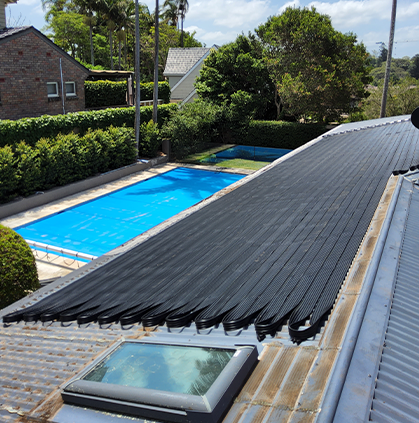
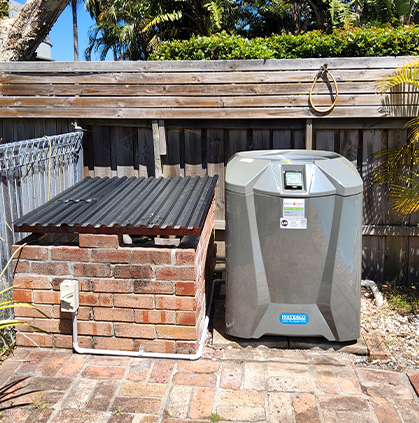

Your solar pool heater sits on your roof year-round, exposed to Sydney’s harsh sun and storm hail. But, most homeowners don’t think about it until they realise the water isn’t as warm as it used to be.
That’s why annual solar pool heating service matters. It catches worn seals or blocked collectors early, making sure your $4,800 heating system lasts its full 20 years.
So, what does an annual solar pool heating service include, and what happens if you skip it? Read on to find out!
Why You Need Annual Solar Pool Heating Service
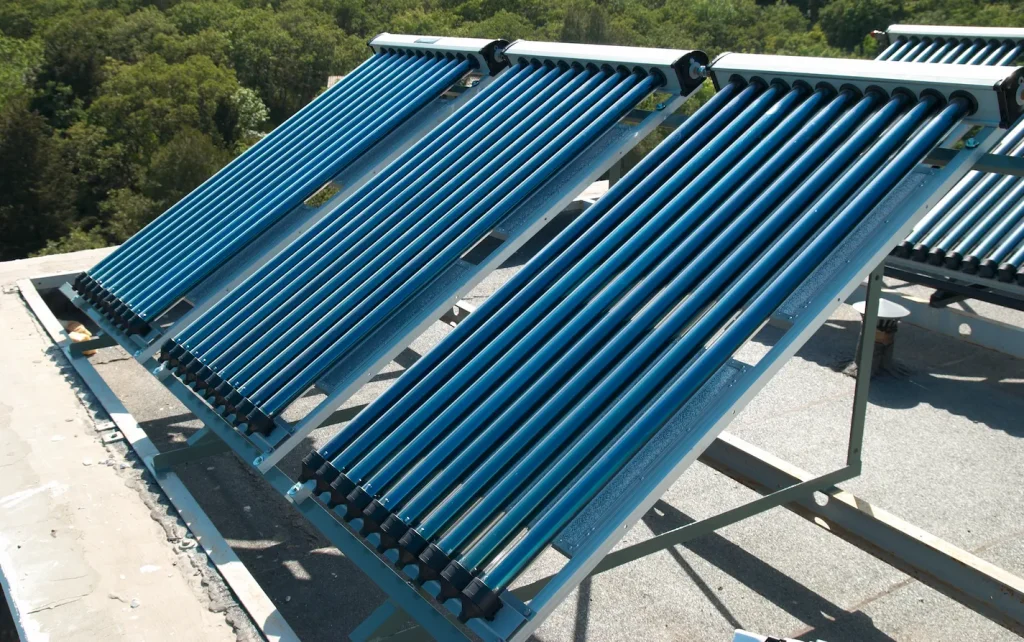
Image: dovapi on Freepik
Skipping your annual service doesn’t save you money, it just costs you more later.
1. Keep Your Pool Warm
Don’t wait until swim season to find out your heater is broken. Sydney’s sun, salty air, and wind wear your system down fast.
Dust and bird droppings can cut your heat output by 25% in just weeks, and salt eats away at your panels.
2. Avoid Expensive Repairs
A tiny leak today is a big headache tomorrow. It’s easy to miss clogged filters or small leaks until your heater quits completely.
Think about the cost. Fixing a worn seal during a yearly checkup costs $50–$200. If you wait six months, that same problem can turn into a $1,200 manifold repair.
Even though the solar pool heating cost is one of the most affordable, it won’t save you money if you’re constantly paying for repairs, right?
3. Make Your System Last
A well-maintained solar pool heater lasts 15–20 years. Some Sydney owners even get 20–30 years out of theirs just by keeping up with maintenance.
It’s simple: solar pool heating annual check stops hidden wear and tear before it causes permanent damage. It’s the secret to turning a standard 10–12 year heater into a long-term asset.
And this is one of the reasons why people keep talking about solar pool heating vs heat pump.
4. Enjoy a Longer Swim Season
After a long Sydney winter, the last thing you want is a warm October weekend ruined by a 22°C pool. That’s too cold for the kids and barely enough for a quick dip.
In Sydney, spring brings 6–8 hours of peak sun every day in September and October. If your collectors are dirty or scaled, they can capture 90% less heat. You need pool heating services for this.
Why You Shouldn’t Skip Your Annual Solar Pool Heating Service
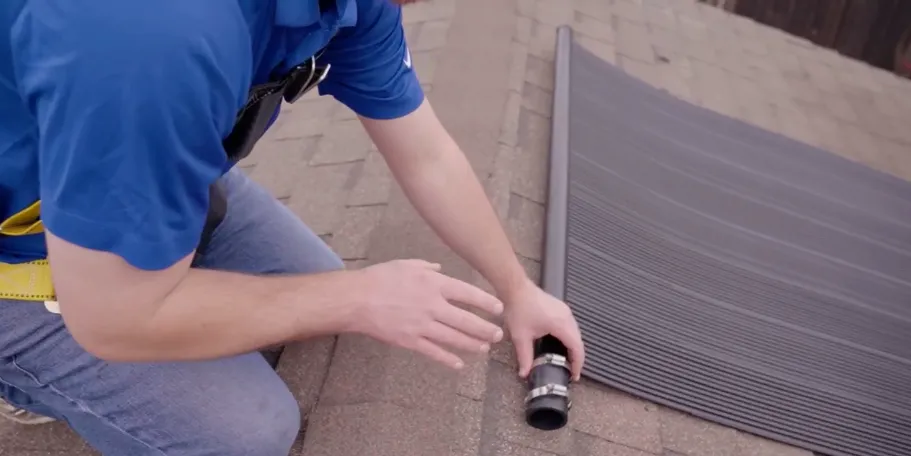
Image: Amazon Solar Pool Supply
Think skipping your yearly check-up is no big deal? Think again. Here is what happens when you miss it:
1. Your System Slows Down
If your pool isn’t heating up like it used to, you’re likely overdue for a service. Dust, leaves, and debris build up on your panels every month. You need to fix solar pool heater when this happens
Even a thin layer cuts your heat transfer by 20%, and heavier buildup can drop efficiency by 40%. You won’t notice it right away, but on sunny days, your pool just won’t get as warm as it should.
2. You Risk Roof and Structural Damage
When you skip annual pool heating maintenance, your solar collectors can develop cracks and loose fittings. Debris and scale block water flow, putting pressure on the joints until they leak.
When it rains in Sydney, that water drips onto your roof tiles and into your home’s structure, soaking into timber and causing rot.
A simple $150–$200 repair today is much better than a $5,000 bill later for roof work, rot, and damaged ceilings.
3. You Could Burn Out Your Solar Pump
Blockages force your motor to work 20–30% harder. That overheats the parts and can cut your pump’s lifespan from 8–10 years down to just 3–5. Bearings wear out and seals crack, leading to total failure.
A $200–$400 service keeps everything running smoothly. If you skip it, you risk a mid-season burnout, which could leave you without heat for 4–6 weeks right when you want to swim.
4. You Could Void Your Warranty
Did you know that about 85% of Australian warranty claims are denied because of missing service records? Brands like Boss and Heliocol require annual maintenance to keep your warranty valid.
If you miss even one year, you could lose coverage for your entire system. Don’t let a small service fee turn into a $3,000–$8,000 loss you have to pay for yourself.
What Does an Annual Solar Pool Heating Service Include?
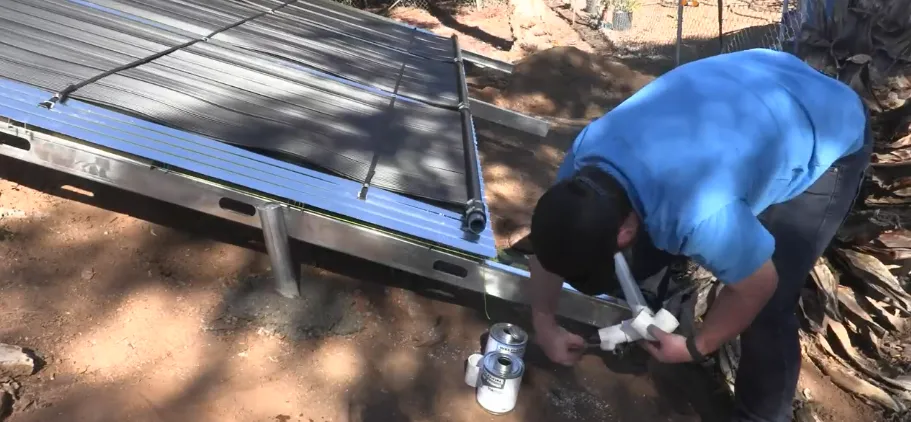
Image: Amazon SolarPoolSupply
A professional annual service goes way beyond a quick look. Here is what a licensed technician checks during your full system inspection:
1. Visual and Structural Inspection
The annual visual and structural inspection is a check of your solar pool heating system’s exterior, plus a look at how it’s mounted and supported.
This process finds wear and weak spots by checking:
- Collectors and panels for cracks, fading, chalking, delamination, or brittleness.
- Pipes and fittings for cracks, hardening, corrosion, or moisture.
- Mounts and brackets for rust, looseness, deformation, or damage.
- Stability for shifting, sagging, or stress that risks leaks or movement.
2. System Flush and Descaling
A system flush and descaling removes mineral scale, debris, and sediment that build up inside the collectors and pipes over time.
Your technician will:
- Pump descaling solution through the collectors and tubes.
- Flush the system with clean water to wash away all the gunk.
- Check the flow rates to make sure the water is circulating properly.
- Inspect the accessible tubes to ensure they’re completely clear.
3. Deep Cleaning of Collectors
Annual solar pool heater service includes deep-cleaning collectors to remove accumulated dirt, algae, and bird droppings, which can stain panels quickly in humid or coastal areas. Technicians will perform the following:
- Scrub panels with non-abrasive brushes.
- Remove stubborn algae using biodegradable, safe cleaners.
- Clear pollen, dust, droppings, and oily residues.
- Rinse and inspect panels to ensure maximum sunlight absorption.
4. Leak Repair
Leak detection is meant to find and fix leaks across your solar pool heating system. This includes collectors, pipes, fittings, valves, and hoses.
Because of that, technicians will try to detect and repair your system by:
- Pressurising the system to standard Sydney levels to check for pressure loss
- Inspecting joints, headers, and hoses during operation
- Using electronic detectors and dye testing to pinpoint leaks
- Replacing damaged O-rings, seals, or fittings, then re-testing for a secure seal
5. Component Optimisation
Annual pool heating maintenance makes sure peak efficiency by testing sensors, O-rings, gaskets, and controllers. To restore performance, technicians will:
- Replace units failing the 1–2 °C accuracy threshold.
- Swap humidity-damaged seals, O-rings, and gaskets.
- Cycle the pump and reset the controller for precise flow.
- Ensure reliable operation, replacing valves as needed.
6. Pump and Filter Service
An annual solar pool heater check includes tuning your pump and filter to make sure strong, steady water flow all season.
A solar pool heater service will include:
- Cleaning or backwashing the filter
- Inspecting the pump impeller for damage
- Replacing worn seals and bearings
- Verifying performance via flow-rate measurements
- Adjusting settings for Sydney’s seasonal changes
Common Problems Annual Servicing Can Catch Early
Most solar pool heating problems show warning signs that a technician can spot in minutes:
1. Leaking Joints and Cracked Manifolds
Leaky joints are the most common issue found during annual checkups. Ignoring them can lead to manifold failure and rooftop water damage.
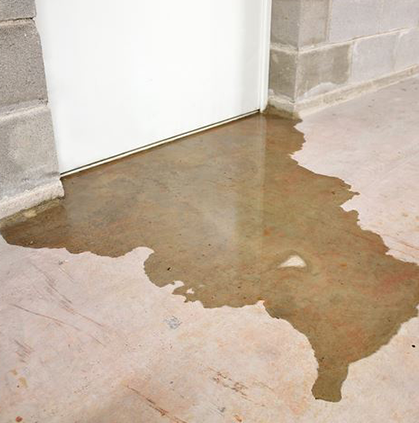
Hydraulic stress and weak glue joints may fail suddenly, flooding eaves or gutters before you notice. Water pooling on the roof or in gutters is often the first sign of trouble.
2. UV-Degraded VRVs and Valve Seals
Sydney’s intense sun hardens VRVs and valve seals, turning them brittle within two years. Technicians can spot the damage by looking for air bubbles in return water, pump-priming difficulties, and mid-cycle pressure drops.
3. Blocked or Damaged Solar Collectors
Blocked or damaged solar collectors are common findings during annual pool heating tune-ups. Scale, debris, and sediment accumulate inside the tubes.
And if the system cycles on and off repeatedly, it is a classic sign that your collectors are blocked. It could mean no heated pool in winter.
4. Controller and Sensor Faults
Annual checks often reveal hidden controller and sensor issues, like unreliable readings or drifting components.
Most homeowners only notice these problems when the system fails to keep the set temperature or can’t reach the set temperature at all.
When Is the Right Time to Book Your Annual Solar Pool Heating Service in Sydney?
You can service your system any time of year, but in Sydney, one window is clearly smarter than the rest.
Winter (June–July) is ideal:
- Fewer pool sessions, so repairs won’t disrupt swimming
- Booking in June–July means it’s tested and ready for September
- Technicians are more available in winter; summer gets busy with emergencies
Pre-spring (August–early September) cuts downtime:
- A pre-spring check confirms the system works before the first warm weekend
- Winter can shrink seals or mess with valves; August helps catch that
- Fixes done in August beat September rush
After major storms:
- Check for hail damage or cracks, which can get worse over time.
- You often need a professional report to file insurance claims.
When Should You Call a Professional Immediately?
Don’t wait until winter for your annual service if you notice these warning signs:
1. Active Rooftop Leaks
If you see water in the gutters, dripping from the roofline, or running down the eaves, that means a leak somewhere in the manifold or collector. You’ll need a licensed plumber.
2. You See Air Bubbles in Return Water
These signals mean you have a VRV issue or a major suction leak. If your pump can’t prime, don’t keep it running or you’ll burn out the motor.
Check your pump basket for debris first. If it’s clear and the problem continues, call a technician.
3. Tripped Safety Switch Near the Controller
A burning smell or a safety switch that keeps tripping near the controller or pump is an electrical emergency—shut off the power right away.
4. System Runs But Pool Stays Cold
This could mean a calibration error, a dead sensor, blocked collectors, or a faulty valve stopping circulation.
Check your pump basket and controller settings first. If that doesn’t fix it, you’ll need a licensed tech to replace sensors, check the valves, or test collector pressure.
FAQ About Annual Solar Pool Heating Service
Still have questions? Here are the ones Sydney homeowners ask most about annual solar pool heating service:
How often should a solar pool heater be serviced?
Service your solar pool heating annually, ideally in winter. This keeps it working well, fixes wear and tear, and protects your warranty. If your system is over 10 years old or survived big storms, get it checked again mid-year.
How long does an annual solar pool heating service usually take?
Annual services typically take two to four hours, depending on system size and findings. Larger or neglected systems may require more time, though on-the-spot repairs are usually completed during the same visit.
Can annual servicing help extend system lifespan?
Yes, significantly. A neglected system may fail well before 15 years, while a well-maintained one can last 20–25. Longevity depends on replacing wear items like VRVs, seals, and joints on schedule rather than reactively.
Conclusion
Annual pool heating maintenance keeps the system running well, prevents expensive repairs, and helps it last longer.
It might seem fine to skip a check-up, but things like sun exposure, storms, and water pressure wear your system down over time. Remember, a $200 service is far cheaper than a $1,500 repair that happens often.
If your system is due for a tune-up, contact Lightning Bult Our technicians will check and improve your solar heating. Call (02) 9905 8800 or book online for service across Sydney’s Northern Beaches, North Shore, and beyond.