





Switching to solar pool heating is a big decision, and it’s hard to commit when you aren’t sure of its performance. So, how long does solar pool heating take to heat a pool?”
Here, you’ll learn exactly how much the temperature rises each day, and what factors make it heat up faster. Let’s dive in!
How Long Does Solar Pool Heating Take to Heat a Pool?
A standard 32 m² Sydney pool takes 3 to 5 sunny days to reach 28°C. Relying entirely on the sun, the system heats in two stages.
- Stage one is the initial heat-up. From 18°C, it takes under a day of full sun to reach 20°C and about three days to 28°C. Cloudy days may extend this to a full week.
- After your pool reaches the target temperature, the system will keep the water warm. This is stage two. It runs for six hours daily to replace heat loss, keeping the water 7°C to 10°C warmer than an unheated pool.
Keep in mind that the 3 to 5-day window is for an open pool. If you use a pool cover, you’ll cut that down to 2 to 3 days because it stops heat from evaporating. (We’ll cover other factors later)
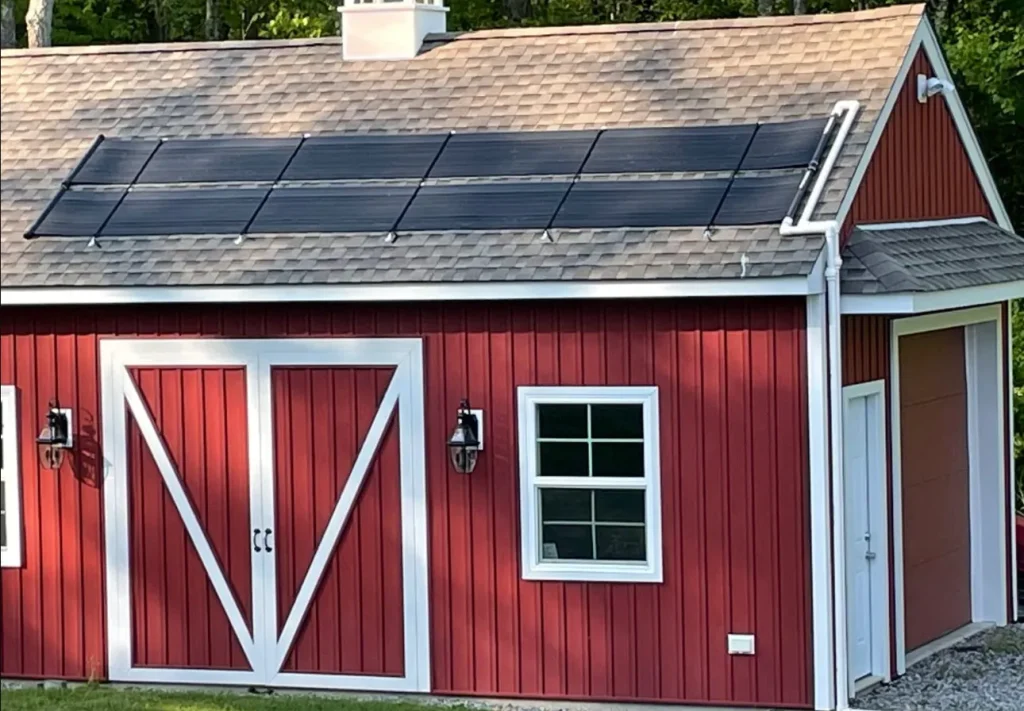
Image: Amazon
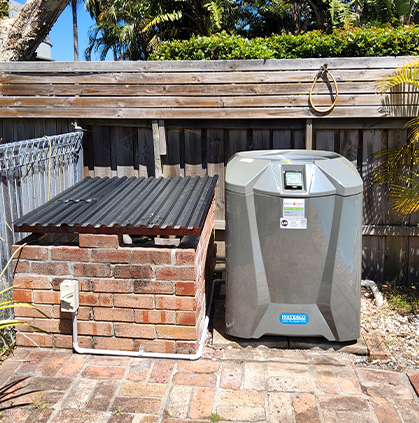
So, if you compare heat pump vs solar pool heating, solar is the slow and steady choice. A gas heater can heat the pool in under 12 hours, and an electric heat pump usually takes 1 to 3 days.
That’s why you can treat solar pool heating as a season extender, not an on-demand heater. And most pool owners keep their systems running through the swimming season because the running costs are so low.
How Much Can Solar Pool Heating Raise the Temperature Per Day?
Knowing how many degrees solar heating adds each day helps you calculate exactly when your pool will reach your target temperature.
In Sydney, a well-sized solar system typically raises water temperatures by 2–4°C daily, reaching 5.5°C on sunny summer days. In cooler cities like Melbourne, expect 2–2.5°C per day.
However, that is the gross gain. The net gain, which is the temperature you actually wake up to, is lower because pools lose heat through evaporation, wind, and cool air.
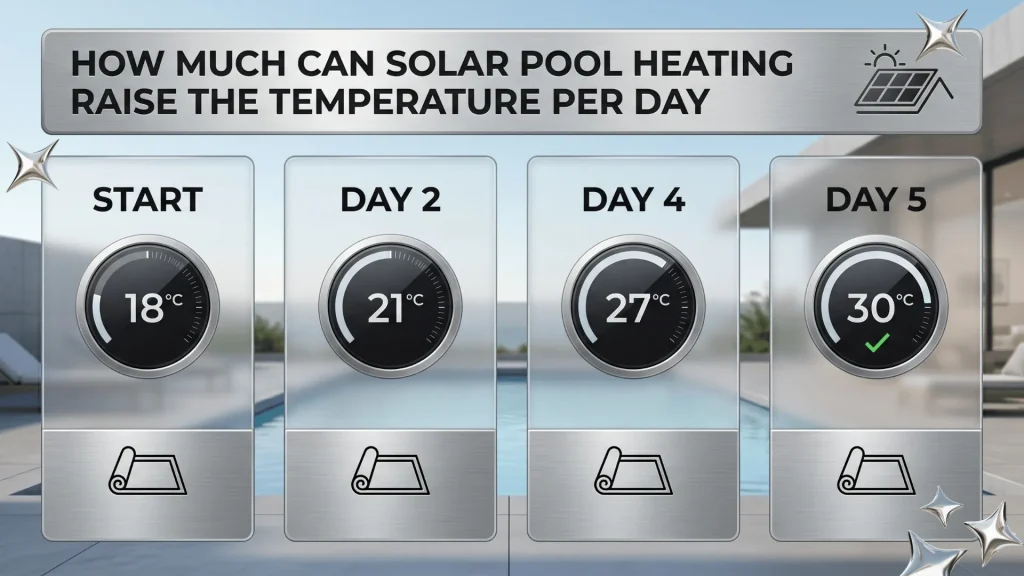
For larger or deeper pools, add a day or two. If yours is small and sunny, you may reach your goal in two days.
Most people in Sydney keep their pool between 26 and 28°C. Check out our article on ideal pool temperature to find the temperature that feels best for you.
5 Factors That Affect How Fast Solar Pool Heating Works
Several factors affect how fast your solar heater works. Here are the five most important ones:
1. Collector Size and Coverage
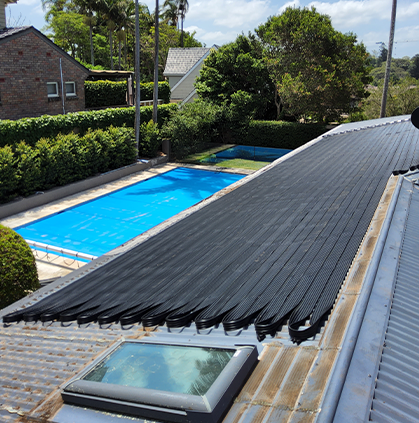
Solar collector size is the primary factor in pool heating speed. While Australian Standard AS3634 suggests 60% coverage for Sydney, this assumes perfect conditions like north-facing roofs and pool covers.
For reliability, SPASA recommends 80% coverage. That means for a 32 m² pool, you would need 25.6 m².
At Lightning Bult, we advise 80–100% coverage. If you only go for 60–70%, you’ll cut your daily heat gains by 20–40%, and it could take 5–8 days to warm your pool.
2. Roof Orientation
In Sydney, north-facing roofs are optimal, receiving 5.5 kWh/m² daily in summer and 2.5–3 kWh/m² in autumn. North-west or west-facing roofs need 15–20% more panels, while east-facing roofs need 20–25% more space.
To maximise performance, keep panels clear of shade between 10 am and 4 pm, as minor shading can reduce power by 20–30%. And for best results, make sure you have a roof tilt of 20–30 degrees.
3. Pool Size and Starting Temperature
Heating more water takes more energy and time. A 60,000-litre pool takes about 1.5 times longer to heat than a 40,000-litre one.
Your starting temperature matters, too. If your pool is 14°C in September, it’ll take 3–4 days longer to reach 28°C than if it were 20°C in November.
In Sydney, unheated pools usually sit at 10–14°C in winter and 17–24°C in summer. If you want a spring swim, you’re fighting both the cold and the volume, so give it extra time for heating.
4. Wind and Heat Loss
Wind speeds up evaporation. As air moves over your pool, water evaporates and you lose heat.
Your location matters. Coastal suburbs like Bondi see average easterly winds of 12–18 km/h, while sheltered areas only see 5–8 km/h. That difference is significant.
Did you know that an uncovered 8m x 4m pool loses 150–200 litres daily? And it’s worse in 15 km/h winds.
Each litre carries away 2,450 kJ of heat, so losing just a few litres wastes as much energy as your solar collectors generate in 30–45 minutes of peak sun.
5. Time of Year
In Sydney, solar intensity drops from 5.5 kWh/m² daily in January to 2 kWh/m² in June. Daylight also shrinks from nearly 14.5 hours in December to under 10 in June, which gives you less time to collect heat.
Here is how long it usually takes to reach 28°C from a cool start:
- November–January: 3–4 days.
- February–March: 4–5 days.
- April–May: 6–8 days (temps might plateau at 24–26°C).
- June–August: 10+ days, or impossible without a booster heater.
- September–October: 5–7 days as the sun gets stronger.
Want to swim year-round? Solar heating alone isn’t enough. While it keeps pools 5–10°C warmer, you’ll need a gas heater or heat pump to reach comfortable winter temperatures.
How to Heat Your Pool Faster with Solar Pool Heating
Image: Amazon
You can’t control how much sun Sydney gets, but you can control how well your system holds onto that heat:
1. Use a Pool Cover Every Night
If you want the best results, get a quality solar blanket. Are pool covers worth it? Yes, they stop up to 75% of heat loss by preventing evaporation.
Without a cover, your pool loses 1.5–3°C Even a 2°C loss means your solar system spends the first few hours of the morning just catching up instead of actually heating your pool.
With a blanket, you’ll only lose about 0.5–1°C. The heat stays in the water and builds up day after day.
2. Run Your Pump During Peak Sun
To heat your pool fast, run your pump when the sun is strongest, usually between 10 am and 3 pm. During these hours, a good system can raise your pool’s temperature by 2–4°C.
Don’t run the pump at night. It will just cool the water down as it travels through the cold panels on your roof.
A solar controller does this for you automatically. It checks the temperature difference between your roof and your pool, only turning the pump on when the roof is 6–8°C warmer than the water.
Most modern solar pool heating systems include a digital controller, which can be easily retrofitted if needed.
3. Choose the Correct System Size
An undersized system costs almost as much to install but gives you much less heat. It’s frustrating to realise your pool is still cold on a September afternoon.
So plan for 80–100% coverage of your pool’s surface area from the start. For example, if you have a 32m² pool, you need 25.6m² to 32m² of solar tubing on your roof.
Think of your roof like an engine. With 100% coverage, you can expect the water to warm up by 3°C to 4°C on a clear day. The upfront price difference is small, but the performance boost is huge.
If you’re not sure what size you need, check out our guide to solar pool heating cost for sizing and cost guidance.
4. Add Windbreaks Around the Pool
Stop the wind from cooling your pool by using glass fences, solid walls, or thick hedges. A windbreak can boost your solar heating efficiency by up to 30%.
Sheltering your pool keeps the heat from your solar collectors inside. This is a must if you live in Sydney on a ridge or near the coast, where the wind never stops.
By blocking the breeze, your pool will reach a swimmable temperature one to two days faster. You’ll also save on chemicals and water by slowing down evaporation.
5. Use Hybrid Systems
Need your pool ready by a certain date, like for a party or school holidays? Then, solar alone might be too slow.
A hybrid setup uses solar to heat your pool during the day, with a gas booster or heat pump as a backup. This keeps your bills low while letting you control exactly when the pool is warm.
This approach is ideal if your roof space is limited, you swim year-round, or you want the pool ready at short notice in spring and autumn.
Since the backup only kicks in when you need it, you aren’t paying for extra energy every day. If you want the savings of solar but need a boost now and then, a hybrid system is your best bet.
See all pool heating options to compare what suits your setup.
FAQ About How Long Solar Pool Heating Takes
Still have questions? Here are the ones we hear most often from Sydney pool owners.
Does solar pool heating work on cloudy days?
Yes, but at reduced output. Good solar collectors can still capture scattered sunlight, providing 30–50% of their clear-day performance. A well-sized system handles this well, especially when used with a pool cover.
How much can solar pool heating raise a pool’s temperature per day?
Solar pool heating can raise temperatures by 2.5–5.5°C daily in sunny weather. For best results, use a properly sized system, a nighttime solar blanket, and run the pump during peak sunlight.
Do I need a pool cover with solar pool heating?
Technically no, but practically yes. Without a cover, your “net gain” is so low that reaching 28°C in the shoulder seasons is unlikely. So, use one to avoid stressing your system and causing solar pool heater issues.
Is a solar pool heating faster than a heat pump?
No. A heat pump is faster and more consistent, typically warming a pool in 24–72 hours regardless of sunlight. Solar is preferred for its near-zero running costs once the initial 3-to-5-day period is over.
So, How Long Does It Take to Heat a Pool?
Solar pool heating won’t get your pool ready for a swim by tomorrow morning. For a standard Sydney pool, a good system with a cover can reach 28°C in 3–5 sunny days. While not instant, it offers near-zero running costs.
Not sure if this system is right for your pool, roof, and swimming habits? Reach out to the team at Lightning Bult. We’ll assess your property, suggest the best collector size, and give you a clear idea of what to expect.