





AC maintenance gives results. But most homeowners won’t do it until they know what they’ll get in return.
Your thermostat says 22°C, but the house feels like 26°C, and your quarterly bill jumped from 400 to 650. That’s a double hit every summer. In this case, aircon maintenance could be the answer.
Here, you’ll learn how to do preventive maintenance yourself and when to call for air conditioning services if things get complicated.
Key Takeaways
- Dirty filters are the biggest cause of rising bills and weak cooling. Clogged filters force your split system to use up to 15% more electricity to push the same air volume. Clean filters every 2–4 weeks in summer.
- Neglected systems cost more to run. A clean evaporator coil moves heat fast. A dusty coil makes your compressor work 20–40% harder for the same cooling, which adds 150–300 to your summer electric bill.
- DIY cleans surfaces, but professional service covers the system. While you can handle filters, louvres, and debris, refrigerant checks, deep coil cleans, and electrical inspections need an ARCtick-licensed technician.
- Book HVAC service in September or October. Technicians are usually fully booked from late November through summer. Spring servicing ensures availability and allows time to address issues before extreme heat.
- Annual service can extend your AC life. Split systems cost 3,000–$6,000 installed. Without maintenance, expect 10 years. With annual service, expect 15–20 years. That’s an extra 5 to 10 years for just 180 a year.
Safety Tips Before Doing AC Maintenance
Before touching your air conditioner, run through this checklist. These aren’t optional:
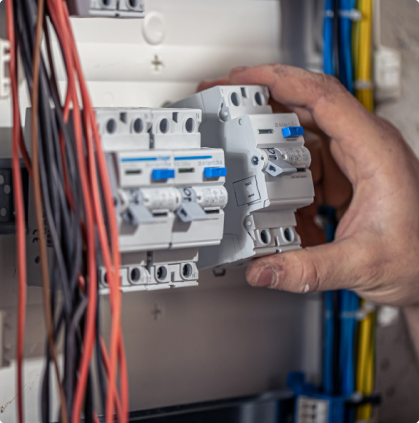
- Cut the power completely — Don’t rely on the remote. It only puts the system in standby. Turn off the dedicated circuit breaker at the switchboard. Assume everything is live until you’ve cut all power before any AC maintenance.
- Label your AC breaker — Don’t wait for an emergency to figure out which breaker controls your AC. Go to your electrical panel, turn off breakers one by one until you find the AC breaker, and label it with a permanent marker.
- Use a real ladder for wall-mounted units — Split system air conditioners sit 2–3 meters up. Don’t use chairs. Don’t use boxes. Use a stepladder with non-slip feet. And have someone spot you. Falling from 2 meters onto tile can seriously hurt you.
- Never spray water near live components — Spraying water or cleaners near live components is acceptance of risk, not AC maintenance. So, always check the unit’s off with a no-contact voltage tester first. Only then, you can use water or the right cleaners on the condenser coils, evaporator coils, or AC filters.
- Keep panels closed unless trained to open them — Removing plastic covers from the indoor unit exposes live electrical components. If you’re not 100% sure the split system is completely turned off, just leave the panels closed.
- Treat fins as glass, not metal — The aluminium fins are thin and damage easily. A gentle rinse from a garden hose is all you should apply. High pressure bruises and folds outdoor condenser fins.
- Wear gloves around condenser fins — Aluminum bends easily and can cut skin. For bent fins, use a fin comb (around $15-25). Avoid improvising with screwdrivers, which can cause further damage or puncture refrigerant coils.
- Don’t touch refrigerants — Refrigerant work needs an ARC tick license. DIY is illegal and carries fines up to $66,600. Worse, incorrect levels can also destroy compressors and void warranties. So, leave refrigerant to licensed technicians.
- Keep the entire work zone clear — Children and pets may see the outdoor unit as a curiosity, not a hazard. They might lean on it, touch the fan, or walk through drainage spills. Restrict access completely. Make sure safety during maintenance by checking manufacturer specifications for clearance.
10 Essential AC Maintenance Tips
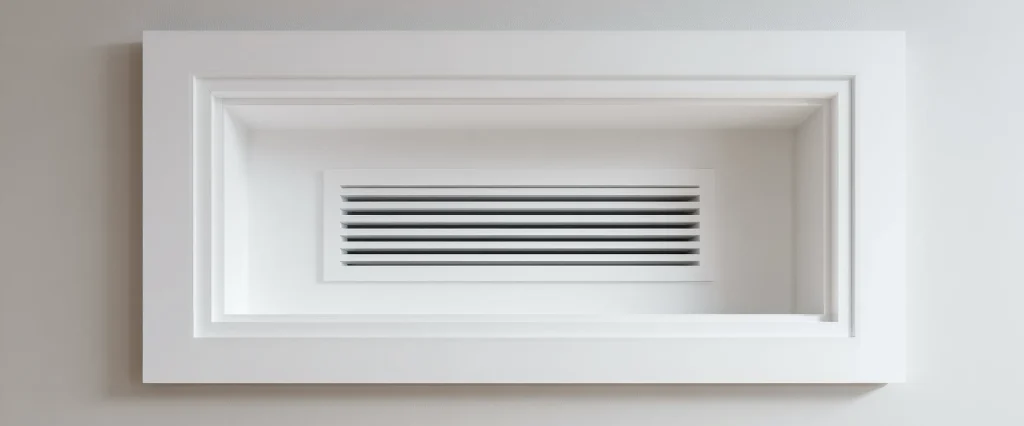
Ac Vent Stock photos by Vecteezy
Here are the essential steps you need to know about air conditioning maintenance:
1. Set Your System to 24°C
No need to wait for your system to break before thinking about maintenance. Keep the thermostat around 24°C and you’re doing the most basic air conditioning maintenance.
Most people set the AC to 20°C. They think cooler is faster. It’s not. Your air conditioner cools the same speed no matter what setting. It just runs longer to hit that temperature.
And every degree below 25°C adds about 10% to your energy bill. Dropping from 24°C to 20°C? That’s 40% more for the same comfort.
Sydney summers already run 500–700–1,100.
2. Test Your Thermostat for Performance Check
When your thermostat shows 24°C, is it really 24? That’s why doing a quick remote and thermostat check is one of the AC maintenance tips that’s still worth it in 2026.
If it reads 24°C but the room feels like 27°C, your batteries might be dead or the sensor could be off. So, what you need to do is:
- Check if the display is dim, blank, or the buttons slow. If so, swap the batteries to rule out low voltage as the sensor error causes.
- Place a standalone thermometer beside the thermostat. Wait 30 minutes to settle.
- If the readings are off by 2°C or more, the thermostat is miscalibrated. You need professional help for this.
3. Clean Your Filter Monthly
Ten minutes cleaning the AC filter can make a difference. Did you know that clogged filters cut airflow by up to 50%? That means your AC has to run longer to reach the same temperature.
The result? Your energy use climbs 10–15% and your quarterly bills rise by 80–150 from dirty filters alone.
So , what do you need to do? You need to know how to clean your air conditioner filter:
- For split system maintenance, turn the unit off at the wall, lift the front panel, and slide out the mesh filter. Vacuum loose dust, rinse with lukewarm water, and air-dry completely before reinserting.
- For ducted air conditioning maintenance, if there’s a grille, remove it and pull out the flat panel filter. If reusable, rinse and dry. If disposable, check the size, and swap every 30–60 days.
4. Wipe Down the Indoor Unit Louvres and Vents
Dust on the louvres and supply vents doesn’t just look bad. It keeps circling back into your room. If anyone at home has asthma or dust allergies, this AC maintenance step has the biggest health payoff.
Grab a damp microfiber cloth for this. And no sprays on the indoor unit. Just wipe along the louvre slats, the return grille, and every supply vent around the house.
5. Check for Mould Inside the Unit
Mould in the AC unit is common in Sydney due to humidity, dust, and cool evaporator surfaces. And this needs regular AC maintenance.
Early signs include a musty smell when the unit starts, dark spots on inner louvres, or family members whose allergy symptoms improve when the AC is off.
Surface mould on louvres can be wiped away, but if the smell lingers, mould is on the evaporator coil or inside the housing. You need a professional to clean the AC coils.
6. Check Condensate Drain
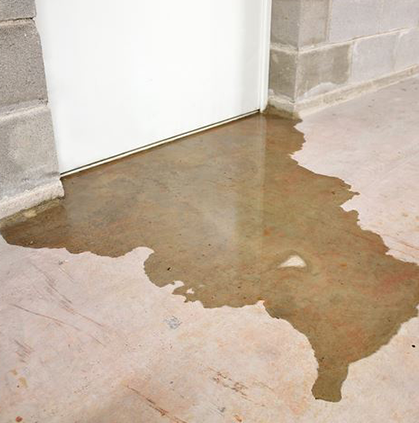
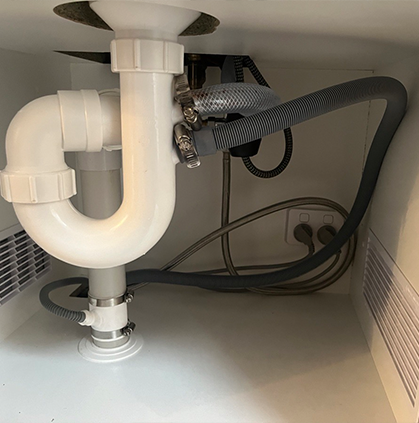
Your AC pulls moisture from the humid Sydney air. Water sits in a drip tray inside, then exits through a PVC pipe. If algae or mould blocks it, water backs up, overflows, and can wreck your ceiling, walls, and floor.
Water damage repairs can run up to 5,000, and an emergency drain unblocking callout typically costs between $150 and 300.
Or, you can spend 5 minutes checking the drain quarterly. This is one of the DIY split system maintenance tasks:
- Look for a small PVC pipe near your outdoor unit
- With the AC running, make sure the pipe drip steadily
- If the pipe is dry while the AC is blasting, a clog is likely forming, clean the AC drain line.
- If the T-junction is reachable, pour one cup of distilled white vinegar down it to kill algae and clear “gunk”
7. Keep Enough Space Around the Outdoor Unit
Your outdoor unit needs space to breathe. Manufacturers say: at least 30 cm on the sides, 60 cm in front, and 150 cm above. But, in many Sydney homes, these clearances aren’t met.
Nearby items block it. Shrubs get bushy. Fences sit too close. This causes recirculation. You end up pulling hot exhaust back in instead of cooler outside air.
The compressor fights the higher temps, thinking the outdoor temperature is 45°C when it’s actually 35°C. It overheats and dies years sooner.
- Grab a tape measure to make sure nothing new is creeping into the zone
- Cut back bushes and shrubs hard to keep the airflow going
- Move bikes, bins, and outdoor furniture away from the unit
- Don’t box in your unit with solid decorative enclosures unless they’re built with high‑airflow louvres
8. Check Your Insulation
A factor that affects your cooling system efficiency is insulation. It’s about the space the unit is trying to cool.
What if your AC cools the room, but heat leaks in through drafty windows, door frames, and ceiling gaps? You’re basically fighting a losing battle. Every degree of heat that sneaks in adds to what your AC has to take out.
That can double how long your system runs and your monthly bills. To fix this, your AC maintenance should include:
- If warm air slips past window frames, seal with weatherstripping or swap worn rubber seals
- If you see gaps in cornices, fill them to block hot attic air
- If door seals let light in when closed, add a door sweep at the bottom and weatherstrip the frame
- If skirting boards pull away from walls, fill the gaps to stop outdoor heat
9. Check the Refrigerant Isn’t Leaking
If you’ve handled the AC maintenance tasks above, not for this one. You can’t touch the refrigerant yourself. It’s legally restricted to ARCtick-licensed technicians.
Low refrigerant is a common reason your system won’t cool. So, knowing the warning signs matters.
Refrigerants aren’t used up like gas. When levels drop, there’s a leak. The system will lose cooling power. You need to do these steps:
- If the room stays above 26°C after two hours, the refrigerant is probably low.
- Check the indoor unit’s copper pipes for frost or ice.
- Stand by the outdoor unit and listen for hissing or bubbling.
- Call licensed technicians to pressure-test, locate and seal leaks, and recharge the refrigerant.
10. Book an Annual Professional
Refrigerant checks aren’t the only AC maintenance that needs a professional. Many critical tasks need special gear and ARCtick licensing. So they’re beyond DIY, no matter how confident you are with the basics.
As a homeowner, you handle the simple AC maintenance. Clean filters monthly, check thermostat calibration, and seal gaps in insulation. These steps stop common problems.
But they can’t fix internal AC unit parts or electrical connections that decide whether your AC runs full blast or slowly heads toward an expensive failure.
How Often Should You Service Your Air Conditioner?
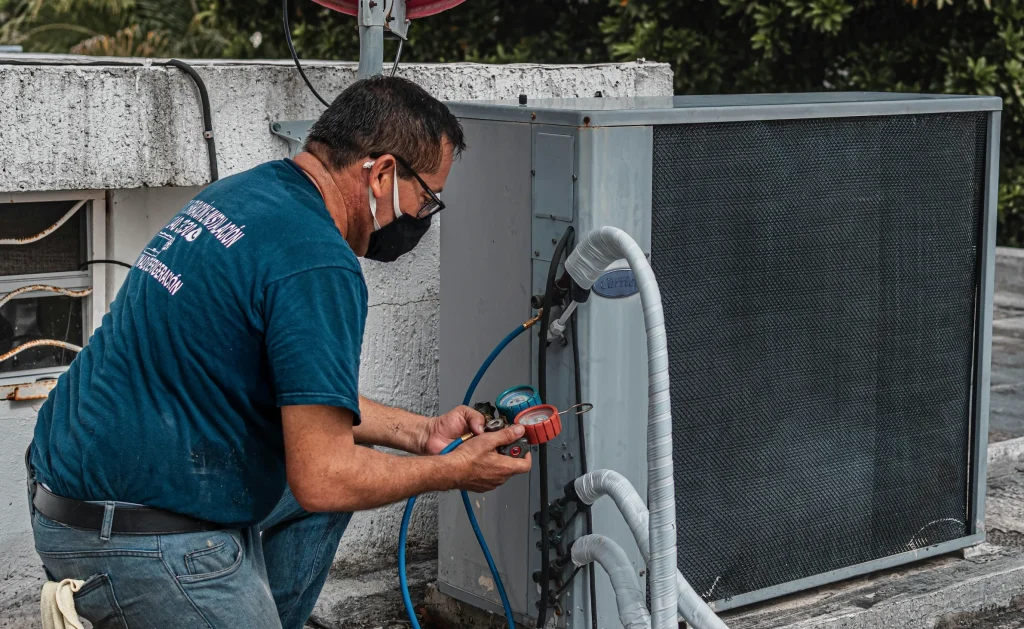
Photo by José Andrés Pacheco Cortes on Unsplash
Service frequency depends on your system type, usage patterns, and location. Here’s how to set your schedule:
- Monthly DIY is for both wall-mounted split or ducted systems. Clean filters, check the outdoor unit, and quickly inspect the indoor unit. It’s about 10–15 minutes for noticeable performance boosts and bill savings.
- Every 6–12 months works if you’re near the coast, a heavy user, or anyone with asthma at home. It’s also recommended for a multi-split system with longer pipes, or if you run it continuously with higher wear risks.
- Annual AC tune-ups are recommended for single-room and dual-zone split systems. A professional service in September resets the system after winter and catches issues before you rely on it for smooth operation.
Signs It’s Time to Call a Professional (Don’t DIY These)
You know some problems need a licensed technician. Here’s when to stop troubleshooting and book an AC service:
- Weak airflow or warm air after filter cleaning means issues downstream (coils, ductwork, or fan motor).
- If you see frequent circuit trips, electrical smells, or buzzing, turn off at the breaker. These are fire risk signs.
- Ice on the indoor unit or copper lines means airflow is blocked or refrigerant is low.
- Water leaking continuously from the indoor unit means the condensate system is blocked or damaged.
- Grinding, squealing, or rattling noises point to failing parts. Running on a bad fan motor can hike costs.
- Suspected refrigerant leak because of hissing sound, AC blows hot air, or ice on the pipes.
FAQ About AC Maintenance
Sydney homeowners ask these questions repeatedly. Here are the answers to them:
How often should I clean my AC filter?
Every 2–4 weeks in summer is the right frequency for most Sydney split systems. In dusty areas, homes with pets, or after bushfire smoke events, change your AC filter every two weeks. Filters might look fine but still block airflow.
What is the 3-minute rule for air conditioners?
Wait 3 minutes after turning off the AC before restarting. This protects the compressor and extends life. Restarting too quickly can shorten the usual 12–15 year lifespan. And replacing it can cost $1,500–$3,600.
Should I get an AC service every year?
Yes, schedule it once a year in September or October to prepare for summer. And if you live in coastal areas or use a year‑round unit, do a mid‑year check in March or April to clear salt buildup and keep your system running well.
Conclusion
AC maintenance isn’t complicated. And you don’t have to wait for problems to show up to start thinking you need one.
Change filters every few weeks. Keep the outdoor unit clear. Check for mould and warning signs. This routine keeps your split system at the target temp and your bills reasonable.
But for tasks beyond DIY like coil refrigerant checks, contact Lightning Bult. Our licensed team handles the technical work that prevents costly failures and keeps your system running at full capacity.