




Running your heater for hours only to find a lukewarm pool is frustrating. But wincing at the energy bill is even worse.
Many homeowners think they need a new system. But most issues come down to bad habits, rather than the heater itself—especially if you have a solid pool heating installation.
This guide shows you how to maximise pool heating efficiency. So, you can stop wasting money and get the comfortable swim you paid for. Read on!
Why Pool Heating Efficiency Matters (and What’s Costing You Money)
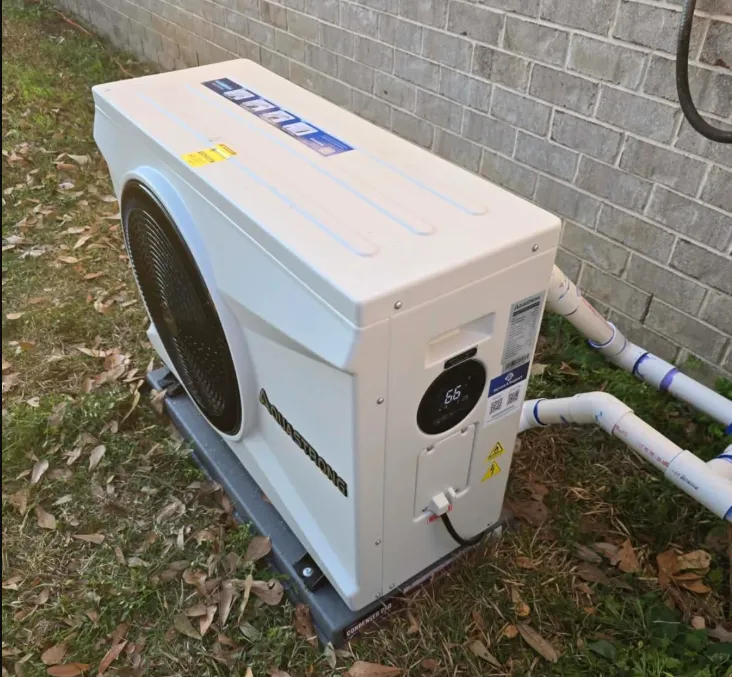
Image: Amazon
Pool heating efficiency depends on how much heat stays in the water. Even the best heater fails if heat escapes faster than it’s added. And that drives up costs and shortens your swimming season.
In many Sydney homes, an inefficient pool heater is a major energy drain. And evaporation is the biggest thief. It steals 50 to 70 per cent of your heat.
Adding to that, radiation sends another 20 to 30 percent into cooler air as infrared rays. And conduction through pool walls and floor accounts for about 10 percent.
So maximising efficiency isn’t about running your heater harder or buying a bigger system. It starts by reducing heat loss, then optimising how your existing heater works.
The Real Cost of an Inefficient Setup
Heat loss and poor habits are expensive. A typical 50,000-litre Sydney pool with a gas heater and no cover costs $1,800 to $2,500 a year. Add a pool cover, and that cost often drops below $900.
The same logic applies to heat pumps. Running one during peak hours (2–8 pm) can cost over 60 cents per kWh. That’s more than double the off-peak rate of 8–22 cents per kWh (11 am–4 pm).
When heat pump efficiency drops, your heater runs longer, forcing you to pay premium rates for unnecessary hours.
Quick Win #1: Use a Pool Cover (Every Time)
So, how to maximise pool heating efficiency? Use a pool cover whenever you aren’t swimming, especially at night.
Covers prevent heat loss from evaporation, blocking up to 70 percent of it. For a standard 8 × 4 metre pool, this reduces annual heating costs from about $1,832 to $855—almost half.
To deal with this, you can start with a bubble blanket. It’s the most affordable option which stops evaporation at night while adding free solar heat during the day.
Remember, even part-time use makes a significant difference. And this simple change is the foundation for everything else.
Quick Win #2: Set the Right Temperature (Not the Highest)
Many Sydney pool owners overheat their pools without realising the cost. Every extra 1°C adds 10–15% to your power bill, and those costs mount quickly.
It is recommended to match your thermostat to your actual needs:
| Activity | Recommended Temperature | Notes |
|---|---|---|
| Leisure swimming | 24–26°C | Best for Sydney summers |
| Fitness / lap swimming | 25–28°C | Comfortable for exercise |
| Hydrotherapy | 32–34°C | Warmer for muscle relief |
| Young children | 26–28°C | Warmer for shorter swims |
Dropping your lap temperature from 28°C to 26°C saves about $180 over a six-month Sydney season.
So, set your thermostat for how you use the pool, not just “warm in case.” You will see the savings immediately, and your ideal pool temperature is lower than you think.
Quick Win #3: Time Your Heater Smartly
Run your pool heater when it’s warmest outside. You need to adjust your schedule to match the weather and your electricity rates.
If you have a heat pump, the difference is huge. In Sydney, the air is warmest from 10 am to 3 pm. Your heat pump’s COP peaks at 5–7 at 20°C.
Basically, you’ll get more heat per unit of electricity by running it during the day.
Plus, you’ll save on power bills. NSW off-peak daytime rates are 8–22 cents per kWh, compared to over 60 cents during evening peaks. Using a timer to heat your pool during the day could cut your running costs in half.
How about gas heater users? Heating your pool in the afternoon is more efficient than starting from cold in the morning. Warmer air reduces heater workload, keeping the pool warm longer.
You need to learn more about gas vs electric pool heater to know how the efficiency works.
Quick Win #4: Reduce Wind Exposure Around Your Pool
Wind strips away the warm air above your pool, accelerating evaporation and heat loss. Even with a heater, a steady breeze can increase your total heat loss by 20–40%.
Here are practical ways to save, ranked from cheapest to most expensive:
- Pool fence or privacy screen — Place this on the side where the wind usually forms.
- Dense hedge or garden bed — A natural windbreak planted a short distance back from the edge of the pool.
- Shade sail or pergola — Structures that block the wind without completely covering the pool.
- Retractable pool enclosure — Best for properties that get very strong or constant wind.
Even a basic windbreak can cut heating demand by 25–30%. Paired with a pool cover, it’s one of the most effective, low-cost upgrades for Sydney pool owners.
System-Level Fix #1: Make Sure Your Heater Is the Right Size
Quick wins are just hacks. Fixing the root cause is how you stop inefficiency. The most common problem is a pool heater that is the wrong size.
If your heater is undersized, it runs non-stop, struggles to reach your target temperature, and wastes energy.
Conversely, an oversized heater warms the water too quickly and constantly cycles on and off. This short-cycling wears out the unit, kills efficiency, and inflates your costs.
Both scenarios are a headache. To find the right size, consider your pool’s volume, desired temperature rise, wind exposure, usage, and Sydney’s climate.
Match your heater to your pool to reach your target temperature easily. Use this table as a guide or you can check on our heat pump sizing guide:
| Pool Volume | Recommended Gas Heater | Recommended Heat Pump |
|---|---|---|
| Up to 30,000 L | 150–200 MJ/hr | 10–14 kW |
| 30,000–50,000 L | 200–300 MJ/hr | 14–20 kW |
| 50,000–80,000 L | 300–400 MJ/hr | 20–28 kW |
| 80,000 L+ | 400 MJ/hr+ | 28 kW+ |
System-Level Fix #2: Service Your Heater Annually
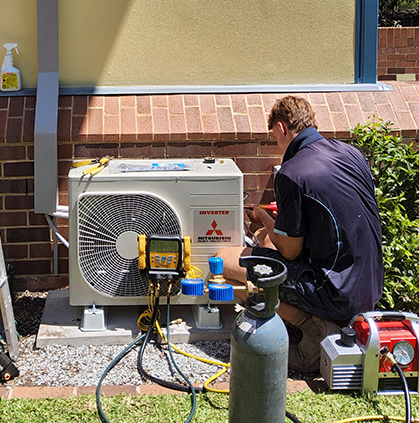
Proper sizing is just the start. Even the best heater loses efficiency without maintenance. Over time, scale, clogs, and leaks drain your system’s ability to convert energy into heat.
Neglected units can lose 15–30% of their performance in just two seasons. If your heater runs longer, struggles to hit target temperatures, or spikes your energy bills, it’s time for a checkup.
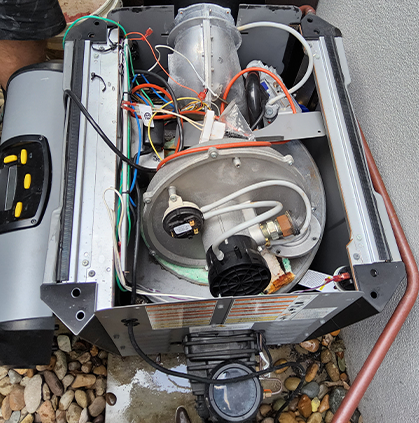
- For gas heaters — Dirty burners, carbon build-up, and blocked heat exchangers make your heater work harder and use more gas. When this happens, you need to call a gas pool heater service.
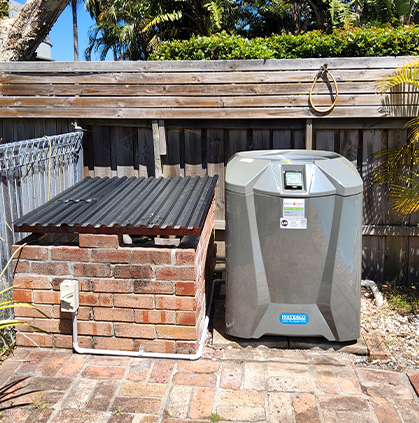
- For heat pumps — Even a thin layer of debris on the evaporator coils cuts airflow and drops COP by 10–20% compared to a clean unit.
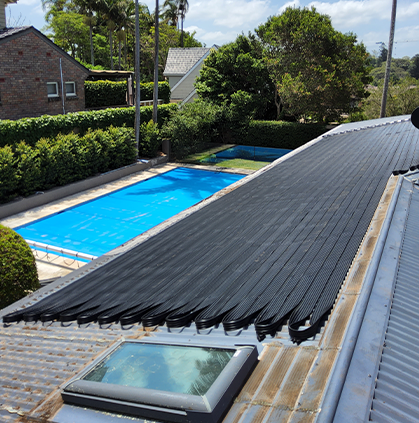
- For solar systems— When leaves fall, grime builds up, or lines get clogged, your system can’t capture full heat. That adds up to a big loss throughout the September–April solar season.
What a Pool Heater Service Includes
A thorough annual Sydney pool heater service includes:
- Cleaning heat exchangers or evaporator coils to ensure efficient heat transfer.
- Verifying gas pressure and burner performance
- Checking refrigerant levels and compressor function.
- Inspecting solar collectors and flow lines.
- Testing thermostats, safety switches, and electrical connections.
- Checking for water leaks, gas leaks, and any corrosion.
This full tune-up restores performance beyond a simple filter change. For most Sydney homeowners, this costs about $150. But it can protect your $3,000–$8,000 investment.
System-Level Fix #3: Keep Filters and Circulation Clean
A dirty pool filter forces your heater to work harder for less warmth. Most owners don’t realize this.
In Sydney, humidity, salt air, and pollen clog filters quickly. When water flow drops, your heater loses 20–35% of its efficiency, even if the unit is clean and properly sized.
If your pool water feels cool near the returns or your pump sounds strained, your filter is likely having a problem.
For a standard pool, run your pump 8–10 hours daily while heating to maintain circulation. If you use a variable speed pump, run it at 1,800–2,200 RPM while heating, then switch to a lower speed for routine filtration.
Remember to always clean your filters before starting a heavy heating cycle and check flow rates monthly during winter and shoulder seasons.
System-Level Fix #4: Consider Pairing Your Heater with Solar
Solar pool heating is one of the most affordable pool heating options. With booster pumps costing under $1 daily, a well-designed hybrid system covers 70–85% of your seasonal heating load.
Solar handles most heating from September to April, while your secondary heater only tops up warmth during evenings or cloudy periods. This approach cuts annual costs by 40–60% compared to standalone systems.
| Heater Type | Avg Annual Cost | Best For | Sydney Winter |
|---|---|---|---|
| Gas heater | $900–$1,800 | Fast heat-up | Excellent |
| Inverter heat pump | $400–$900 | Year-round | Good |
| Solar (standalone) | $150–$300 | Sept–April | Poor |
| Solar + gas hybrid | $350–$650 | Efficiency | Excellent |
To get the best results including when you need a heated pool in winter, combine the hybrid with your pool cover, correct thermostat setting, and clean filters.
Pool Heating Efficiency Checklist
Here’s the most effective order to maximise your pool heating efficiency in Sydney:
- Install and use a pool cover whenever the pool is not in use.
- Lower your thermostat to match actual swimming needs.
- Schedule heat pump run times (off peak).
- Clean your filter monthly and maintain strong water circulation.
- Upgrade to a variable-speed pump (VSP) if using a single-speed model.
- Book an annual professional service before the swimming season starts.
If any of these steps need a professional hand, Lightning Bult’s pool heating team in Sydney can assess your setup and help you get the best performance from your existing pool heating system.
FAQ about Pool Heating Efficiency
Here are the questions Sydney pool owners most often ask about heating their pool more efficiently:
Does a pool cover really make that much difference?
Yes, it’s the highest-impact efficiency measure. A pool cover blocks evaporation, which causes up to 70% of heat loss. For a typical Sydney pool, consistent use saves nearly $1,000 annually, regardless of the heater type.
Should I turn my pool heater off when I’m not using the pool?
If you swim three times a week or less, turn the heater off and reheat as needed. For daily swimmers, using a pool cover to maintain a consistent temperature is more cost-effective.
What temperature should I set my pool heater to for maximum efficiency?
Always set the lowest comfortable temperature. Every extra degree increases running costs by 10–15%. For leisure swimming in Sydney, 24–26°C is comfortable and cost-effective year-round.
How do I know if my pool heater is running efficiently?
Watch for longer heat-up times, failure to reach target temperatures, rising bills, or unusual noises. These signs indicate a need for inspection, especially for gas heaters.
Is a heat pump or gas heater more efficient for a Sydney pool?
Heat pumps are more energy-efficient. Yet, gas remains faster and more reliable in extreme cold. For maximum efficiency, a solar-paired heat pump is the most cost-effective choice.
Ready to Get Your Pool Running at Full Efficiency?
Maximising pool heating efficiency isn’t about buying a better heater. It’s about choosing the right system and using it correctly.
A covered pool, smart scheduling, and routine maintenance will always outperform an uncovered pool with a new heater running at the wrong time.
Want to make sure your system is efficient? Lightning Bult‘s pool heating team can audit your setup, service your system, or recommend cost-effective upgrades. Get in touch today!