





When your gas fireplace fan is not working, it is easy to instantly panic and assume you need a massive and expensive replacement.
Fortunately, in many cases, the issue is something surprisingly simple, such as an incorrect setting, a tripped sensor, or a heavy buildup of household dust. However, some mechanical faults do require immediate professional attention to ensure your fireplace remains completely safe to operate.
Today, we will explain exactly why your blower stops working, what you can safely check yourself, and when it is time to put down the tools and call a licensed gas plumber.
Wait Before You Panic: Understanding the Built-In Delay
One of the most common misconceptions homeowners have is that the blower should kick on the exact second the fireplace ignites.
In reality, most modern gas fireplaces are purposefully designed to wait until the firebox reaches a specific operating temperature before the blower switches on automatically. They achieve this using a heat-activated component called a thermal snap disc.
This ingenious sensor prevents the fan from blasting freezing cold air into your room while the unit is still warming up.
Depending on your specific fireplace model and how cold the ambient temperature of the room is, this process can take anywhere from 10 to 20 minutes. If the fan still hasn’t started after a full half-hour of the flames running, then it is time to start investigating further.
4 Common Reasons Your Gas Fireplace Fan is Not Working
Instead of looking at a dozen different tiny issues, most blower failures boil down to these four primary categories.
1. Incorrect Fan Settings or Dead Controls
Make sure the blower switch is actually turned on and that the thermostat is calling for heat. If your fireplace is operated by a wall dial, ensure the rheostat (the variable speed control switch) hasn’t been accidentally bumped to the lowest, silent setting. Additionally, do not forget to check the batteries in your remote control, as a dead remote can often disrupt the communication to the fan’s receiver module.
2. Heavy Dust and Debris Blockages
Over time, dust, pet hair, and general household debris can build up aggressively around the blower motor. Because these fans are located at the very bottom of the unit near the floor, they act like a magnet for pet dander.
This debris can tightly bind to the motor’s internal bearings, restricting airflow, causing grinding noises, and eventually forcing the motor to overheat and seize completely.
3. A Faulty Blower Motor or Thermal Switch
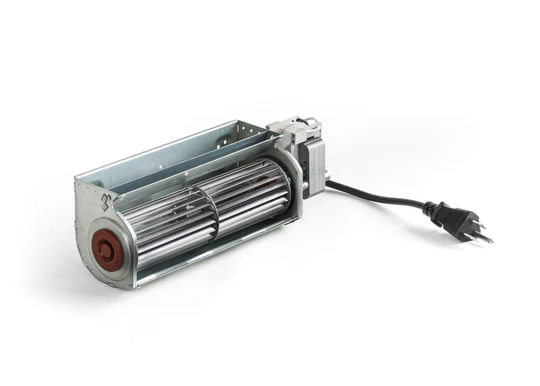
If your fireplace has confirmed power but the fan never starts, the blower motor itself or the temperature sensor may have failed. Many gas fireplaces utilize a cylindrical “squirrel cage” style blower.
Signs of a failing motor include grinding or squealing sounds, the fan starting and stopping unexpectedly, or a loud electrical humming noise with absolutely no air movement. Because these motors naturally wear out over years of heavy winter use, replacing them is a standard job for a qualified technician.
4. Disconnected or Tripped Electrical Supply
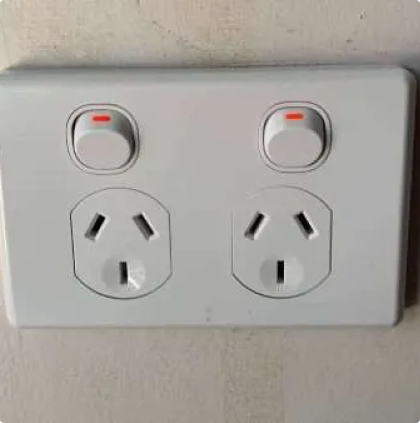
Even though your fireplace runs on gas, the blower motor operates on a standard 240V electrical circuit that is completely separate from the gas line.
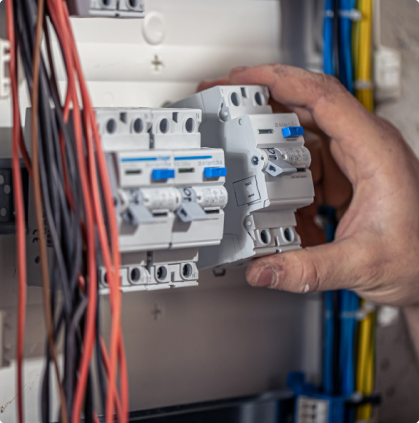
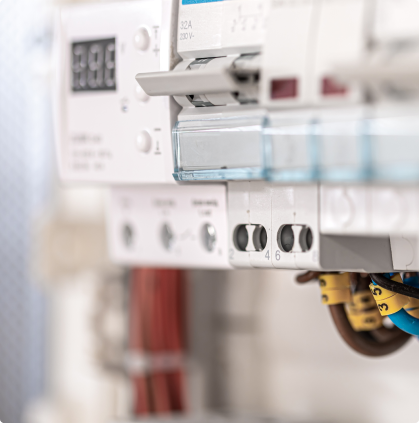
Possible electrical issues include a tripped circuit breaker in your main switchboard, a damaged power lead, loose internal wiring, or a failed control module.
If you suspect an electrical fault, avoid touching any internal wiring and leave the inspection to a professional electrician.
Safe DIY Troubleshooting
While gas appliances are complex, there are a few simple and safe checks you can carry out before calling for backup:
- Confirm the main power supply is working by checking your home’s electrical switchboard for tripped breakers.
- Wait at least 20 minutes with the flames running to ensure the thermal sensor has had time to activate.
- Use a bright flashlight to inspect the lower louvers for visible blockages or massive dust bunnies.
- Carefully remove external dust from the vents using the soft brush attachment of your vacuum cleaner.
Crucially, you should absolutely never open the sealed glass front of the gas appliance, tamper with the internal electrical wiring, or attempt to adjust the gas control valves. DIY gas tampering is highly illegal, voids your home insurance, and can lead to lethal carbon monoxide leaks.
How to Prevent Future Blower Problems
Routine preventative maintenance is always much cheaper than emergency mid-winter repairs. To keep your gas fireplace running at peak efficiency:
- Schedule a professional servicing every 1 to 2 years to inspect the gas pressure and mechanical parts.
- Keep the external vents completely free from dust and never block the lower grilles with furniture or rugs.
- Replace remote batteries annually right before winter begins.
- If you hear a slight ticking or whining noise developing, call a technician immediately to lubricate the blower bearings before the entire motor burns out.
You can join our exclusive preventative maintenance membership so you never have to worry about missing a critical service again.
We handle the annual scheduling for you, providing priority booking, thorough safety inspections, and exclusive member discounts on parts and labour.
Need Expert Help with Your Gas Fireplace?
If your gas fireplace fan is not working, it is always best to have the problem accurately diagnosed by an expert before a minor electrical fault turns into an expensive full-system repair.
At Lightning Bult, we provide premium, professional gas fireplace servicing, repairs, and preventative maintenance to keep your home’s heating system running safely and efficiently all year round.
Your blower has completely stopped working? Or is your fireplace making strange noises? Perhaps, you simply want peace of mind before the deep winter sets in? We have you covered!
Call us today to book your comprehensive gas fireplace inspection!