





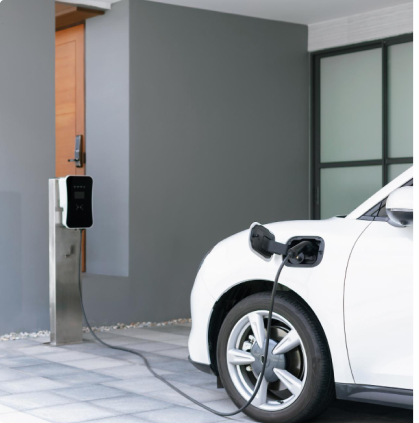

Most Sydney homeowners spend around $1,800 to $3,000 on a professional EV charger installation. This covers the wall unit, standard labour, and the Certificate of Compliance for Electrical Work.
But if you have complex cable runs, smart-energy hardware, or need a switchboard upgrade, the EV charger installation cost can go over $4,000.
Here’s a simple breakdown of equipment, labour, compliance, and common extras before you ask for a quote.
EV Charger Installation Cost in Sydney
For a standard single-phase installation, expect to pay about $1,800 to $3,000, supplied and installed. That includes a 7.4kW smart charger ($750–$1,500) and $800–$1,500 for labour and materials.
This range applies to simpler jobs like when your switchboard has spare capacity, the cable run is under 15 metres, and the charger is in an attached garage or carport.
Keep in mind, the charger’s price isn’t the installation cost. A $900 unit is just the start. You’ll need a dedicated 32-amp circuit and RCD protection, plus a NSW Certificate of Compliance (CCEW).
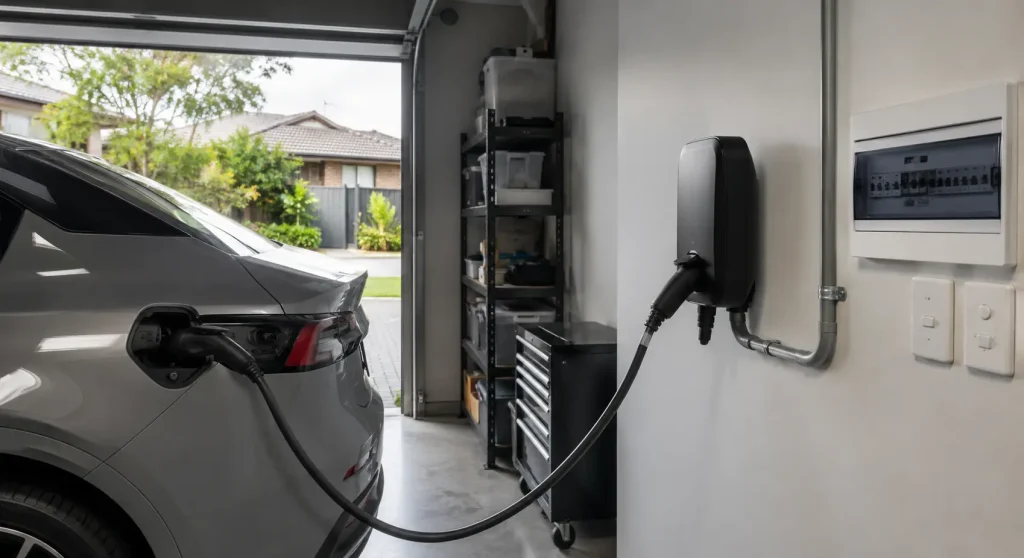
Costs can rise quickly with older switchboards, complex cable runs, or if you need three-phase power. Please check all the possible scenarios below.
What’s Actually Included in the Cost
Your EV charger quote should break the price into three separate costs:
1. Charger Hardware
Basic wall units can cost around $900, but premium smart models can run over $2,200.
Reliable options like Wallbox Pulsar Max cost $1,200–$1,800 before installation, while commercial systems like Smappee can exceed $2,500.
Also, the final price depends on features like Wi-Fi, 4G connectivity, dynamic load balancing, or solar diversion.
Keep in mind, choosing the right charger depends on your vehicle’s charging limit, your solar setup, parking spot, and your home’s electrical capacity.
2. Installation Labour
Installing an EV charger isn’t just about mounting it. Your electrician needs to run heavy-duty wiring to the main panel and install circuit protection.
If the charger has 6mA DC fault detection, a standard Type A RCBO is fine. But budget imports without it require a Type B RCD, which can add $250–$400 to the component cost. You need to factor this in.
Labour is harder to estimate than hardware, as every home has a different cable route.
In Sydney, installing a charger near a modern outdoor meter box takes about two to three hours. It will take longer if the cable needs to go 25 metres through double-brick walls or under a concrete driveway.
3. Compliance and Certification
In NSW, every new electrical circuit needs safety testing and a Certificate of Compliance for Electrical Work (CCEW) under AS/NZS 3000.
After testing, your electrician must submit the certificate via the Building Commission NSW eCert portal within seven days, provide copies to the regulator and your electricity distributor, and keep one for your records.
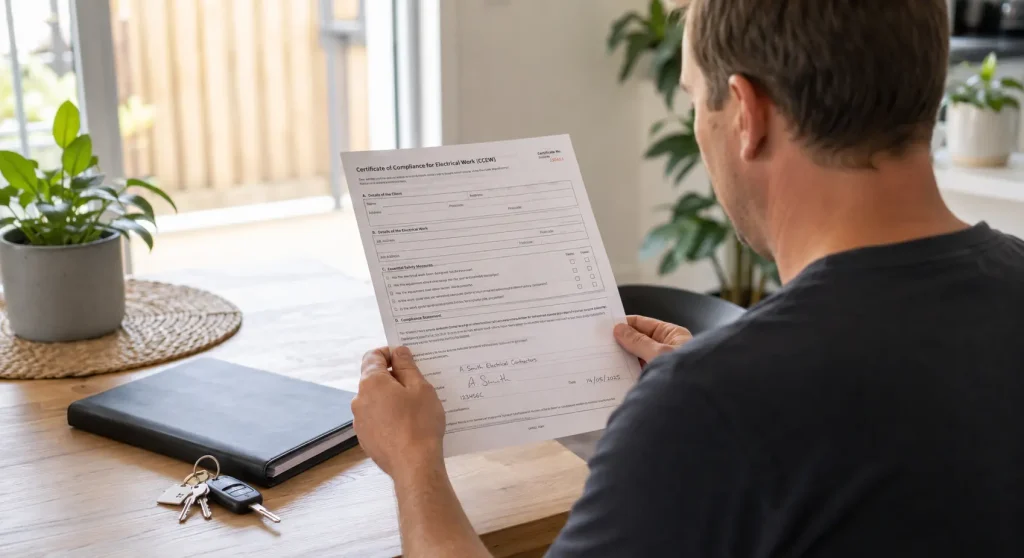
Without this certificate, your insurer might not cover damage caused by an electrical fault.
The NSW Government doesn’t charge a public fee for the CCEW, but your contractor’s quote should include the full cost of testing, portal submission, and commissioning.
Key Factors That Affect Your EV Charger Installation Cost
Two Sydney homes can get very different quotes for what sounds like the same job. Here’s why:
1. Single-Phase vs Three-Phase Power
Most Sydney homes run on single-phase power, which works with a standard 7kW charger for overnight EV charging.
Three-phase power can handle up to 22kW, but you’ll need the right supply. It costs more, but it’s worth it if you have multiple EVs or need fast charging. But, don’t bother if your car can’t use the extra power.
Remember, upgrading to three-phase is a separate job. You might need the electricity distributor or an accredited provider.
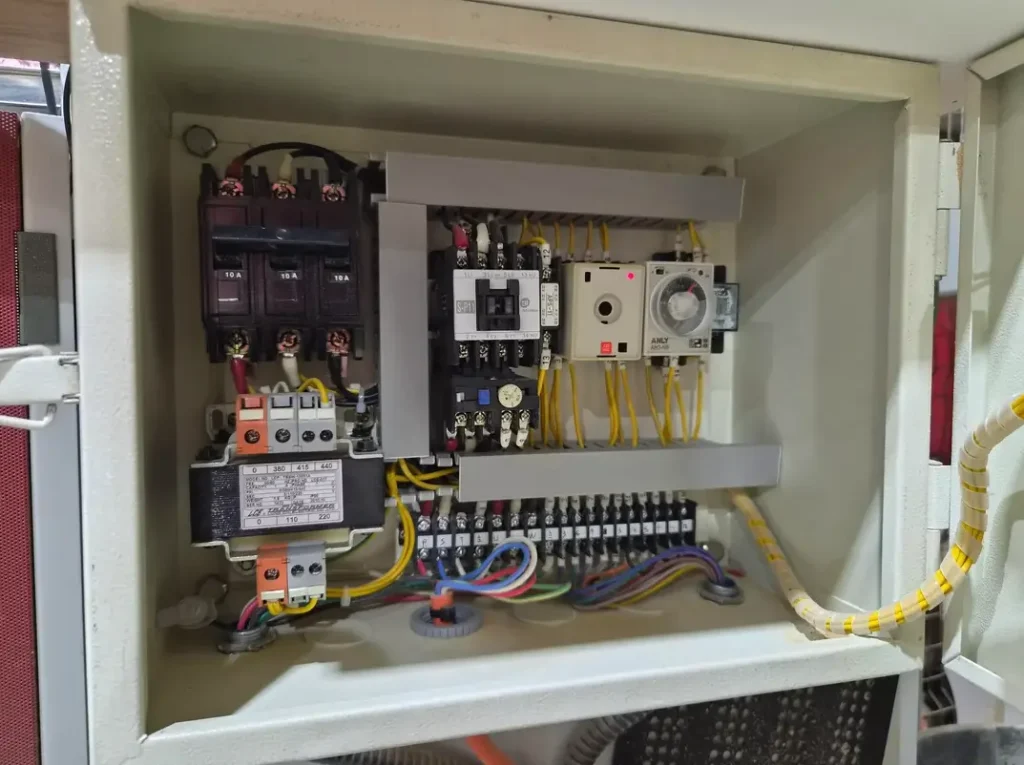
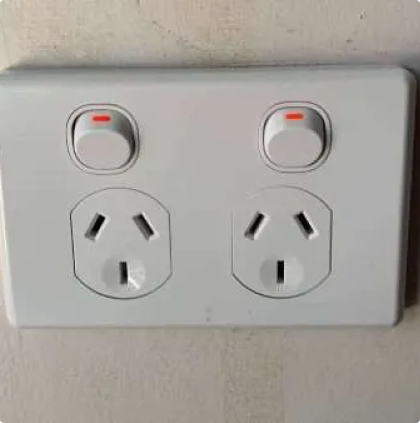
Image: Existing_Profit1833 on Reddit
2. Distance From Switchboard to Charger
Cable run length is a major cost factor. It’s often simplest and cheapest if your garage or carport is near the switchboard.
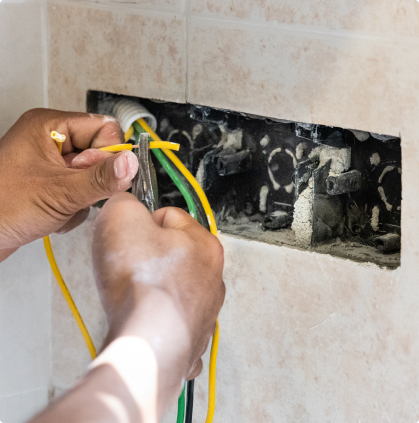
EV charger installation costs can increase if the cable needs to go through a roof, finished ceiling, or masonry wall. Longer outdoor runs might require conduit or trenching, adding to labour and material expenses.
Ask your electrician to detail the cable route in their quote so you can accurately compare the scope.
3. Switchboard Age and Capacity
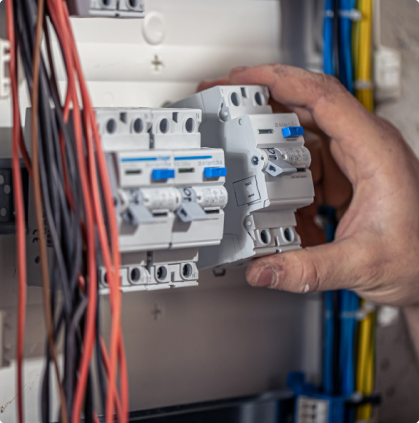
An older switchboard might need upgrading before safely adding a dedicated EV circuit. Your electrician should check its condition, space, protection, demand, and supply.
They’ll also need to consider major loads like solar, batteries, AC, and induction cooktops. Even newer switchboards can have limited capacity.
It’s worth checking period homes, but the switchboard’s age doesn’t automatically mean an upgrade’s needed. Learn about switchboard and safety switch upgrades for more information.
4. Charger Type and Smart Features
A basic charger does one main job: it supplies power to your vehicle. Smart chargers add features like app control, scheduled charging, solar integration, and load balancing.
Solar integration is best when your car is home while panels produce power. Load balancing adjusts the charging rate to manage your property’s capacity when other appliances are running.
So yes, smart chargers do cost more upfront and to install. Make sure you choose the best home EV charger available.
5. Ausgrid Network Notification
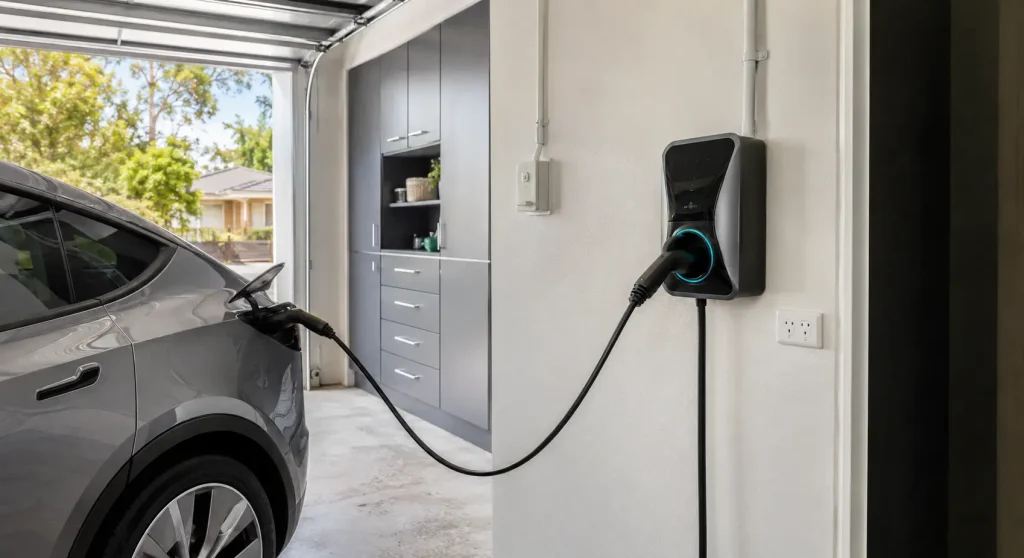
Higher-capacity chargers or supply upgrades need Ausgrid notification before work starts. Your licensed electrician can check if an application or approval is needed.
It might add some lead time, particularly if the property connection needs modification. It’s best to resolve the requirement before booking the installation.
If you’re in an apartment or strata property, make sure you have approval before scheduling electrical work.
EV Charger Installation Cost by Scenario
The table below combines hardware, standard labour, and compliance into realistic total packages:
| Scenario | What’s typically involved | Approx. price range |
|---|---|---|
| Straightforward single-phase | 7–7.4kW smart charger ($800–$1,400), a modern switchboard with spare DIN space and a short surface-run cable under 15 metres. Usually completed the same day. | $1,800–$3,000 |
| Single-phase with complex cable run | A 7–7.4kW charger with a 15–30 metre cable run through tight ceiling cavities or under-floor spaces, through double-brick walls or in external UV-rated conduit. | $2,500–$4,500 |
| Switchboard upgrade required | A 7–7.4kW charger installed alongside a full domestic switchboard rebuild, including replacing ceramic fuses with modern RCBOs, fitting a new enclosure and upgrading the earthing stake. | $3,500–$7,000+ |
| Three-phase 22kW smart charger | A high-output 22kW smart charger, three-pole circuit protection and heavy four-core cabling. Assumes an active three-phase supply is already connected at the street. | $2,800–$5,000 |
When comparing quotes, check GST inclusion and DC protection in the charger. Make sure the quote details the cable route.
Is There a Rebate for EV Chargers in NSW?
The NSW Government’s Home Energy Saver program offers eligible households zero-interest loans of up to $15,000 for upgrades like chargers and switchboards, subject to requirements.
Lower-income or concession-card households might qualify for discounts up to $4,000. But, it’s a loan, not a rebate. So double-check the rules and approved suppliers before you sign a quote.
Don’t assume a novated lease means the charger is tax-free. The ATO’s EV and FBT guidance considers employer-provided home charging equipment as a separate fringe benefit with FBT, even if the car is exempt.
DIY vs Licensed Electrician: Why You Can’t Install It Yourself
You need licensed Sydney electricians to install a dedicated EV charging circuit. Yes, a hardwired charger must be installed by a professional.
An EV charger draws a high load for hours. So, the electrician needs to check the circuit, protection, switchboard, and incoming supply together. They then need to make sure the full system is safe and compliant.
That said, doing the work yourself can void the charger’s manufacturer warranty and ruin a home insurance claim if an electrical fault causes damage.
What to Expect During Installation
Here’s what a straightforward EV charger installation with Lightning Bult looks like:
Step 1: Site Assessment and Quote
Before work starts, our electrician checks your switchboard, capacity, and protection. They will trace the cable route, confirm charger placement, and discuss any smart features you’d like.
Your quote should list the proposed hardware, labour, compliance work, and any exclusions clearly.
Step 2: Switchboard and Circuit Preparation
If the switchboard needs adjustments, those are completed first. Then, our electrician installs a dedicated charging circuit with the necessary protection for the charger and installation.
Step 3: Charger Mounting and Wiring
The charger is mounted securely on the garage or carport wall. Wiring is run along the approved route, with containment added where needed, before it’s connected to its dedicated circuit.
Step 4: Testing and Certificate of Compliance
After installation, our electrician tests the circuit and charger, sets up any smart features, and shows you how everything works.
They will also submit the Certificate of Compliance for Electrical Work (CCEW) through the standard NSW process and give you a copy for your records.
How to Get an Accurate EV Charger Installation Quote
An on-site assessment is the most reliable option. If that’s not possible, send clear photos, measurements, and switchboard details. A phone estimate can’t reliably account for the property’s capacity, cable route, or access.
A useful quote should itemise:
- the charger model and included accessories
- labour, including the assumed cable length and route
- circuit protection and any load-management hardware
- switchboard, supply, trenching and making-good work
- testing, commissioning and the CCEW
- GST, exclusions and possible variations
Compare the scope before comparing the price. A lower quote could cost more if unexpected extras like a charger, cable route, or compliance work show up later.
FAQ About EV Charger Installation Cost
Here are a few common Sydney homeowner questions on EV charger installation cost:
How much does it cost to run an EV charger at home in Sydney?
It depends on your electricity plan, how much energy you add, and your vehicle’s battery size. Charging off-peak, using an EV plan, or solar can cut full-charge costs.
Compare the whole electricity plan, as cheaper charging periods may come with higher rates at other times.
Do I need a switchboard upgrade for an EV charger?
Not always. It depends on your switchboard’s age, condition, and spare capacity. But, upgrades are more common in older homes.
Your electrician still needs to inspect the board, existing protection, and supply before confirming the required work.
Is there a rebate for installing an EV charger in NSW?
There is no direct rebate for the installation of a standard home charger. See the earlier NSW rebate section for information on available finance support and eligibility requirements.
How long does EV charger installation take?
A straightforward single-phase install takes a few hours. However, switchboard upgrades, longer cable runs, trenching, strata approvals, or network needs will add time to the job.
Is single-phase or three-phase better for a home charger?
Most homes with one EV should use single-phase charging. Three-phase might be worth it if you have multiple EVs or want the quickest home charging, provided the property and vehicle can handle it.
Ready to Plan Your Home EV Charger Installation?
Every home is different. Your final EV charger installation cost comes down to switchboard capacity, cable run distance and charger type.
The $1,800 to $3,000 range is a useful starting point, not a fixed price. An on-site inspection is the most reliable way to confirm the scope and cost.
For an itemised quote and safe installation, Lightning Bult can assess your switchboard and prepare your home for EV charging. We assist our clients throughout many suburbs including Dee Why, Manly, Mona Vale, Narraweena, and other surrounding areas!