








Installing a ceiling fan is licensed electrical work in NSW, even for basic replacements. Old wiring isn’t a DIY job, and existing cables don’t guarantee your ceiling can support a new fan.
Before you compare electrician ceiling fan installation quotes, figure out if you are replacing a fan, turning a light into a fan, or adding a new one.
This guide breaks down what each job takes, what your licensed electricians is going to check, and what drives the price.
Why Ceiling Fan Installation Needs a Licensed Electrician in NSW
Ceiling fan installation requires a licensed electrician because connecting the fan to fixed wiring is electrical work.
While you can unpack and assemble the fan parts, you can’t touch the main wires without a proper license. And just because there’s already wiring for a light doesn’t mean your ceiling can hold a fan’s weight and movement.
On site, the electrician will check the mounting point. They will also make sure your hardware and electrical box match the manufacturer’s guide.
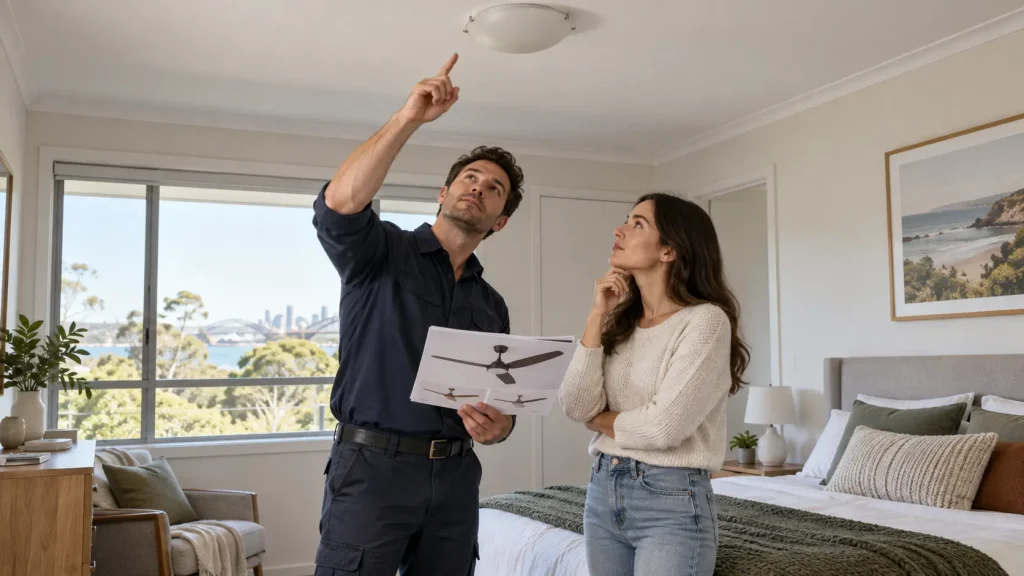
That’s why you shouldn’t try a DIY install even if you have the right experience and tools. It isn’t worth the risk.
If you’re caught doing unlicensed electrical work, NSW Government fines can reach $22,000 for individuals and $110,000 for companies.
Not only that, if you ever need a warranty repair, the manufacturer will ask for an electrician’s invoice which is something you won’t have if you DIY.
What a Certificate of Compliance Is and Why to Ask for One
A Certificate of Compliance for Electrical Work (CCEW) records completed electrical work and confirms that safety testing is done.
Once the job is finished, your licensed electrician has seven days to submit the CCEW through the Building Commission NSW eCert system and give you a copy.
Always ask for it, then make sure it lists the correct property and work details. Keep the certificate with your invoice and home records because you’ll need it for future electrical jobs, insurance, or selling your home.
If your electrician doesn’t supply the certificate, they can face penalties, including on-the-spot fines of up to $1,000.
Determining Your Ceiling Fan Project: Replacement, Conversion, or New Installation?
Your ceiling’s current setup dictates the time, labor, and cabling you’ll need. Every ceiling fan job falls into one of three categories.
Replacing an Existing Fan
Replacing an old fan seems straightforward. But remember, your existing wall switches and controllers might not be compatible with the new model. Your electrician still needs to check the support, wiring, and mounting.
While a standard replacement takes one to two hours, issues or difficult access can extend this. To avoid delays and get an accurate upfront quote, share your fan’s model details before booking.
Converting a Light Point to a Fan Point
A working ceiling light shows there’s power at that position, but it doesn’t mean the existing mounting can support a moving fan.
An electrician must first check the structure. They may install timber bracing in a joist or a rated metal bracket via the ceiling cavity. Plus, they will rewire circuits so the fan and light run independently via wall controls or a remote.
If you’re updating fixtures across the room, bundling this work with a broader lighting installation keeps overall trade costs down.
Adding a Fan Where There Is No Wiring
Adding a ceiling fan where there’s no wiring is usually the highest-cost fan installation. An electrician may need to run a new cable, add a wall switch, and install a ceiling support.
Much like a standard power point installation, the exact work depends on the cable route and current power supply. The electrician will check circuit capacity and whether you need separate controls for the fan and light.
Please note, roof-space access is the biggest cost variable. Clear access speeds up the job, while flat roofs, skillion ceilings, or tight routes add time and labor.
Photos provide ballpark estimates, but an on-site visit is needed for a firm quote. Always ask if the price covers cutting, testing, and patching wall or ceiling holes.
What an Electrician Checks Before Installing Your Ceiling Fan
Before mounting, electricians perform structural and electrical checks to ensure optimal performance and quiet operation:
1. Ceiling Type and Fixing Point
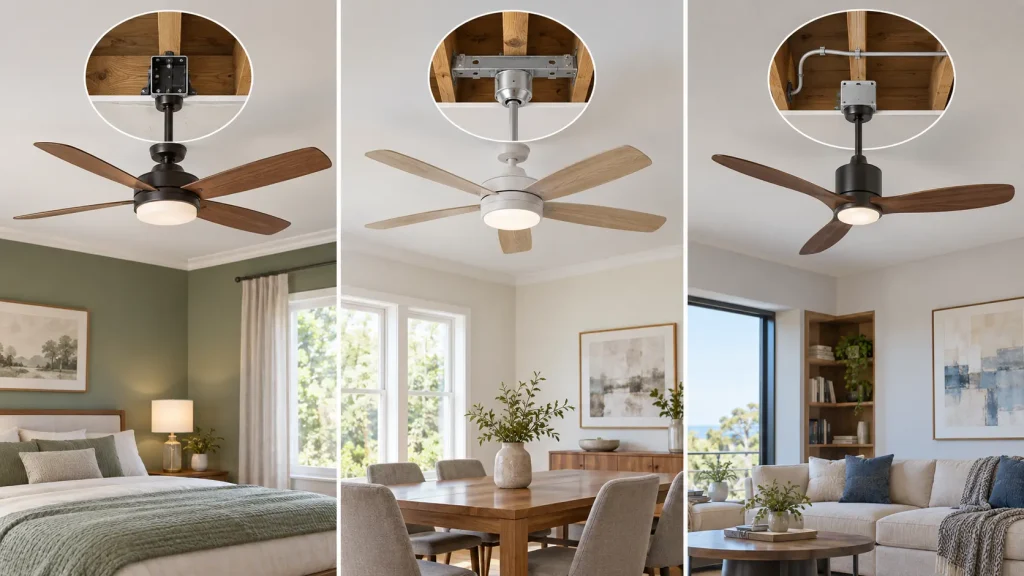
The electrician will check if your fan can attach securely to a ceiling joist or if it needs extra bracing. Plasterboard alone might not work.
Fan weight matters too, especially for larger models with lights. On a raked ceiling, the fan needs a compatible mounting canopy that suits the ceiling angle and the manufacturer’s instructions.
Share your fan model and ceiling type when you ask for a quote so the electrician can figure out what support and mounting parts you’ll need.
2. Blade Height and Room Clearance
The electrician will also check the finished blade height against the manual, though the required 2.1 m minimum clearance varies by model.
They will also make sure the fan’s dimensions suit the ceiling height. A low-profile model’s best for a lower ceiling, while a higher ceiling needs a downrod to position the fan as the manufacturer recommends.
For example, with a 2.4 m ceiling and a fan that drops 206 mm from the ceiling to the blades, the finished blade clearance is 2.194 m. The electrician uses actual measurements and checks any extra space needed for a light kit.
3. Wiring, Circuit and Switching
How about your existing wiring and circuits? They will check them and run the required safety tests, too.
Tell your electrician before the quote is final if you want to move a wall control or operate the fan and light separately. That changes the work.
Don’t forget to ask which functions the controls support. Wall controls and remotes aren’t always interchangeable, and speed, dimming, and light settings vary by fan model.
Before the electrician leaves, have them show you how to operate the fan, light, and isolation switch.
4. Indoor or Outdoor Rating
A fan made for a covered outdoor area won’t always survive wind and rain. Use it outside the manufacturer’s rules, and you’ll void the warranty.
Salty coastal air makes things worse. Salt and pool chemicals speed up rust, even inside if you live near the beach.
Your electrician will think about that location when they recommend a fan. For homes near the coast, our electricians on the Northern Beaches can help check the job.

How to Choose an Electrician for Ceiling Fan Installation
You need to check three things to find the right electrician for a ceiling fan installation:
1. Check the Licence
Always check your electrician’s credentials with Service NSW’s official licence checker before you accept a quote. A licensed tradie will gladly give you their licence number.
Make sure the business name on your quote matches an active Contractor Licence holder, not just an individual supervisor card.
If you hire unlicensed workers, you’ll cancel out your home building insurance if an electrical fault happens.
2. Get a Fixed Quote in Writing
Ask for a fixed, detailed quote that lists the fan count, job type, fan supplier, control methods, and structural bracing work.
Sending your electrician clear photos of your ceiling type and chosen fan model helps them spot access issues early and quote accurately.
If you choose Lightning Bult, we will agree on fixed pricing before starting work. This protects you from extra hourly charges if hidden roof delays happen.
3. Ask About Paperwork and Guarantees
Always request a Certificate of Compliance for Electrical Work (CCEW) when the job is done. It legally certifies the installation, separates product warranties from workmanship guarantees, and stops invalid call-out fees.
No worries. Lightning Bult includes a lifetime workmanship guarantee and a free safety and energy inspection with every job. Plus, as a family-owned business since 1995, we’ve earned over 400 five-star Google reviews across Sydney.

Ceiling Fan Installation FAQs
Here are common questions Sydney homeowners ask Lightning Bult about ceiling fan installation:
Can I install a ceiling fan myself in NSW?
Don’t wire it yourself. NSW law requires a licensed electrician even for replacements. Remember, handling a heavy, moving appliance at height means you should always follow the manufacturer’s professional installation rules.
How long does ceiling fan installation take?
A basic job takes one to two hours. But new wiring, extra support, high ceilings, custom controls, or multiple fans will change that. Send your model and room details before you book, and ask how long your specific job will take.
Can you install a ceiling fan where there is no existing light?
Yes, but it depends on a structural and electrical check. A new position needs proper bracing, wiring, and a switch. And no light doesn’t rule out the room. Photos or a site visit help figure out what’s needed before a firm quote.
Can I put a ceiling fan in a room with a low ceiling?
Yes, only if finished clearances meet instructions. Reviewed manuals require at least 2.1 m from floor to blades. Low-profile options help, but always measure actual ceiling drop. Don’t assume a flush-mount label means any low ceiling works.
Can the fan and light be on separate switches?
Independent control needs a compatible model and proper wiring. Clarify requirements beforehand, as switches differ from remotes. Have your electrician confirm supported functions and demonstrate controls and the isolation switch at handover.
Ready To Install Your Ceiling Fan
Ceiling fan installation requires a licensed electrician, whether replacing an old unit or adding wiring. Hiring a professional guarantees peace of mind with fixed quotes and a mandatory Certificate of Compliance (CCEW).
Ready to talk about your project? To arrange your ceiling fan installation, call Lightning Bult on (02) 9905 8800 or Book Online.