


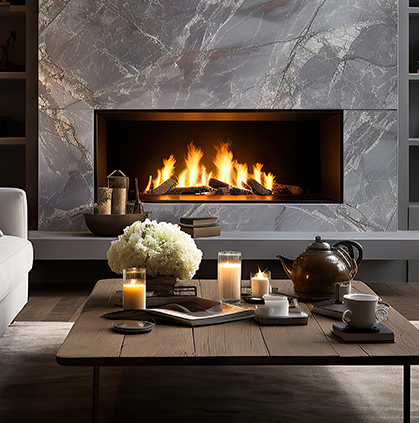


Can you have a real gas fireplace without a chimney? Yes. Modern units don’t need old brick stacks. They vent directly through a small hole in an exterior wall or roof.
This guide compares balanced-flue, direct-vent, and flueless options to help you choose. Once you’re ready, you’ll need a professional to assess your property and quote your Sydney gas fireplace installation.
Yes, a Gas Fireplace Doesn’t Need a Chimney
The belief that every fireplace needs a tall brick chimney comes from centuries of burning wood. Wood fires create heavy smoke and soot that need a massive vertical stack to pull exhaust up and out.
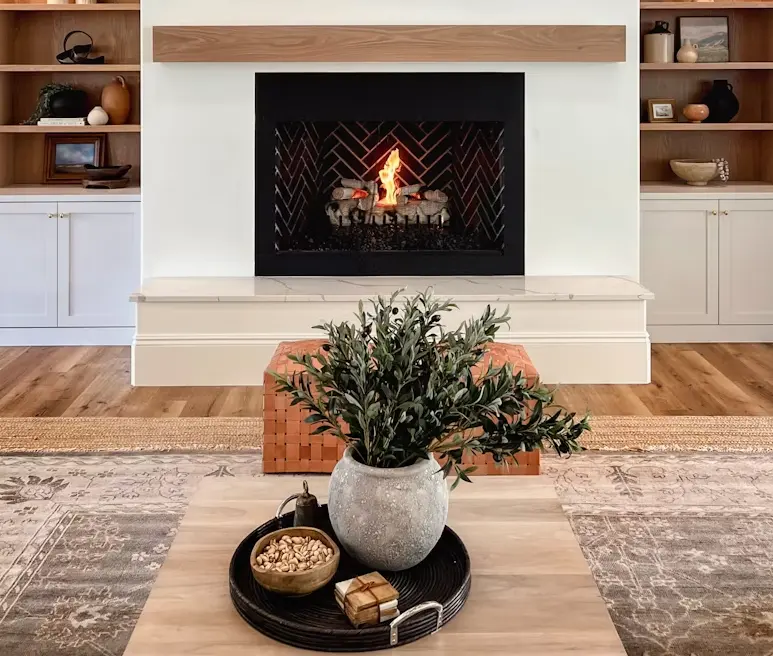
Image: mk. s on Unsplash
A gas fireplace doesn’t need a chimney because natural gas burns clean. Modern gas units use a sealed system. Combustion happens inside a closed glass firebox, and exhaust vents out through a small hole in an exterior wall or roof.
Think of it like a dryer or rangehood. Your dryer doesn’t need a brick chimney to vent air, just a compact pipe. A sealed gas fireplace uses that same principle, keeping more heat in your room than leaky masonry flues.
Because you don’t need brickwork or an existing flue, this setup is perfect for:
- Apartments — Run a direct vent line through an exterior wall (subject to strata rules).
- Renovated Terraces — Add an authentic flame without unsealing or rebuilding a decaying brick stack.
- Homes Without Existing Fireplaces — Install a feature fireplace on almost any exterior wall without sacrificing floor space to masonry.
Three Ways to Vent a Gas Fireplace Without a Chimney
You don’t need a chimney, but you still need a vent somewhere. There are three common ways modern fireplaces handle that:
| Venting Type | How It Vents | Best For |
|---|---|---|
| Balanced flue | Sealed twin-pipe system; draws outside air in and expels exhaust outside through a wall or roof | Apartments, renovations, homes with no chimney |
| Direct vent | Sealed system venting through a single wall penetration | Tight wall spaces, renovations |
| Flueless (unflued) | No external venting; relies on room ventilation | Supplementary heating only, with caution |
Balanced Flue (Room-Sealed)
A balanced flue pulls combustion air from outside and vents exhaust through a sealed twin-pipe system. Nothing from the fire touches your room air.
It’s the solution for Sydney homes without a chimney, with pipes running through an external wall or the roof.
Under AS/NZS 5601.1:2022, the terminal clearances from property boundaries depend on the installation layout. And that distance grows if it’s under a balcony or covered walkway.
This often complicates apartment installs. If your only wall is covered, the terminal may need to go through the roof, which changes your quote. That’s why a licensed gasfitter should check your site first.
In older homes, you can often run a balanced flue up an unused chimney to minimise disruption. Lightning Bult’s dedicated balanced flue gas fireplace guide covers the technology in detail.
Direct Vent
Direct vent uses the same room-sealed combustion as a balanced flue. But it routes air intake and exhaust through one compact opening on an external wall.
It uses a coaxial “pipe-within-a-pipe” design. Outdoor air enters through the outer ring while exhaust exits through the inner core.
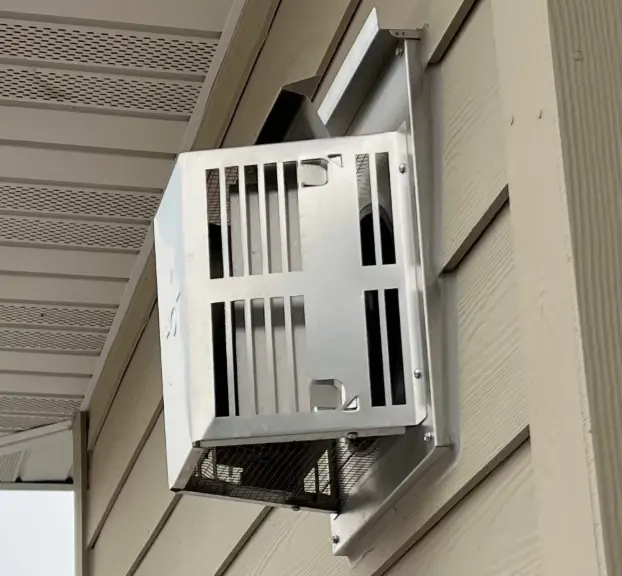
Image: SoftPut6821 on Reddit
Because it needs just one hole, direct vent can work well for Eastern Suburbs and Lower North Shore apartments or tight living room walls where roof access isn’t practical.
Flueless (Unflued)
A flueless unit burns gas with no external venting at all. It relies entirely on the room’s own ventilation to clear combustion by-products.
Flueless gas heaters are still legal in NSW, but you must follow strict health rules. NSW Health warns against running these heaters overnight in bedrooms.
If you want one, book a professional gas line assessment first. You must confirm your room size and ventilation are appropriate before you buy an appliance.
Which No-Chimney Option Suits Your Home?
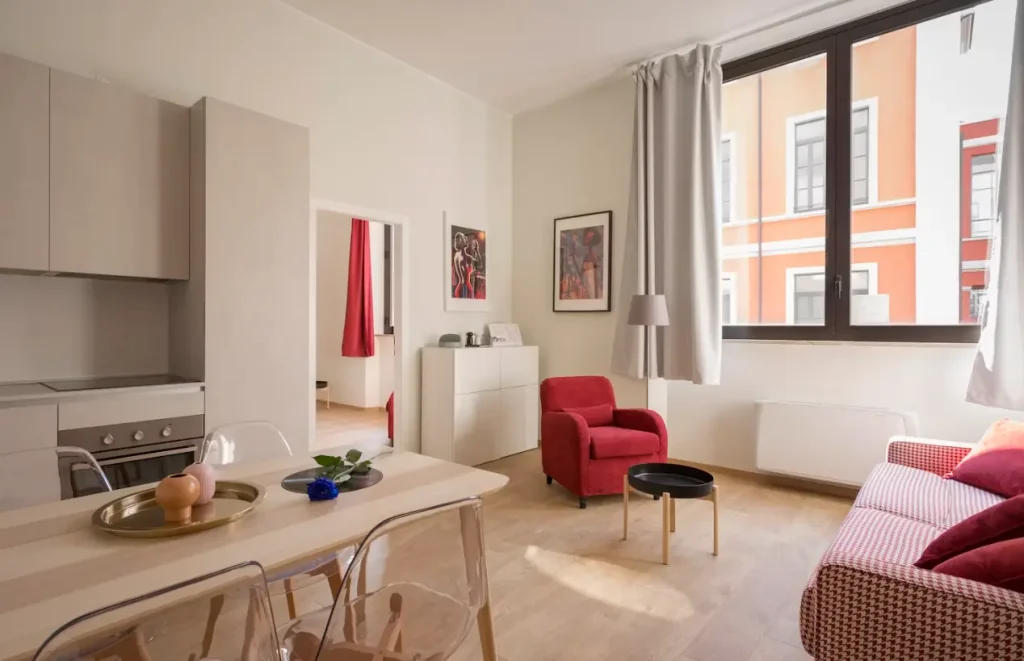
Image: deborah cortelazzi on Unsplash
The right choice depends on your home and taste. Your property type decides which venting method is even an option before cost or style comes up:
Apartments and Units
You have two main options: balanced flue or direct vent. Those are usually the ones strata rules, body corporate guidelines, and building codes let you use.
Both systems are room-sealed. They pull fresh air from outside and push exhaust straight back out. No shared airflow, no common-property air systems, no internal walls touched.
But please check with your corporate body before you buy the unit. Get strata to sign off on external wall access first, and your appliance goes in without delay.
Renovated or Heritage Homes
Have an old, blocked, or decorative fireplace? That’s often enough. A balanced flue unit can fit right into it, keeping your period mantel and hearth while swapping the venting behind it.
But “often” isn’t “always.” There are many terraces where the cavity is 480mm but the flue needs 600mm. Sometimes the chimney breast hides plumbing or electrical lines, or it’s load-bearing.
Lightning Bult’s gas fireplace retrofit service can help you check the cavity before you commit to a quote.
New Builds and Extensions
New living areas give you the best flexibility for a gas fireplace without a chimney. You can plan the flue route before you close the walls. Just make sure you lock down the fireplace position and terminal before framing.
Designing your space with that access in mind gives you broad freedom to put a feature fireplace on an exterior wall without needing a chimney build.
Is It Legal to Install a Gas Fireplace Without a Chimney in NSW?
Yes, it’s 100% legal to install a gas fireplace without a chimney in NSW. But you need a licensed gas plumber to do the job, and it has to meet AS/NZS 5601.1.
If you skip the licence, you could face significant fines under the Home Building Act 1989. That’s not just about the fine, it’s about safety.
The standard controls things like clearances, venting, gas line size, and terminal heights. Get any of that wrong, and you risk CO poisoning or fire.
A licensed gasfitter is trained to get it right, typically carries insurance, and gives you a Certificate of Compliance once the job’s done. Your gas supplier may refuse to connect your supply without that certificate.
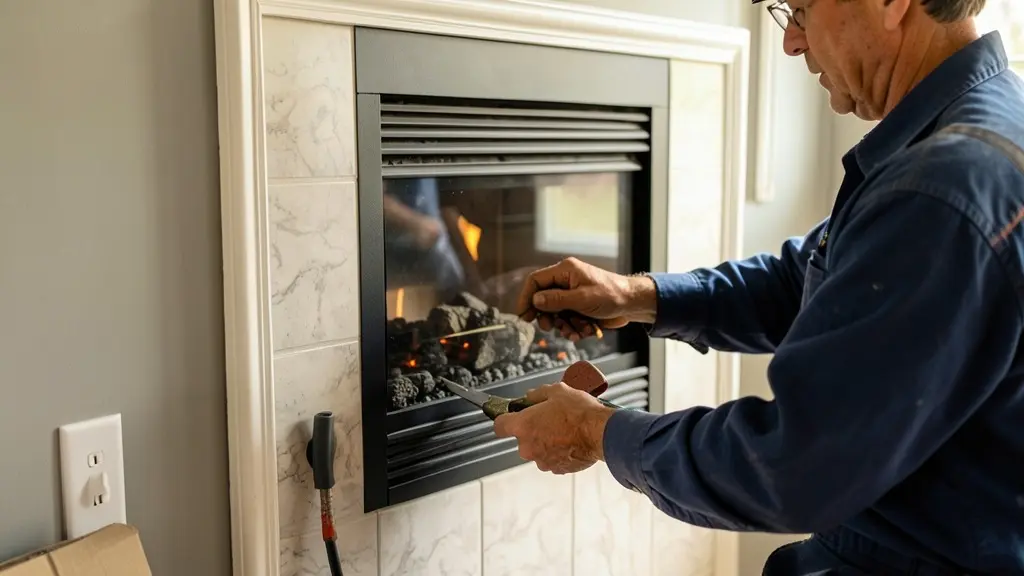
Also, if you sell your house later, a building inspector can spot unlicensed work fast. Buyers may walk or ask for a price drop. Insurance may not cover damage from an uncertified install either.
On top of that, flueless units have extra rules. NSW hasn’t imposed a blanket ban on them like Victoria has, but NSW Health and NSW Fair Trading say you need proper ventilation.
Can You Retrofit a No-Chimney Gas Fireplace Into an Existing Opening?
You can often do this. Many older Sydney homes have blocked-off fireplaces that aren’t connected to a flue. You can fit a balanced flue unit into that space with a new sealed flue, which saves you from major construction.
The retrofit works if your cavity depth meets the unit specs. Most need at least 400–425mm, and many period homes hit that mark.
You also need access to an outside wall or your roof for the flue terminal. If your chimney is solid and at least 200mm wide, you might use it for the liner, or you can run new venting outside.
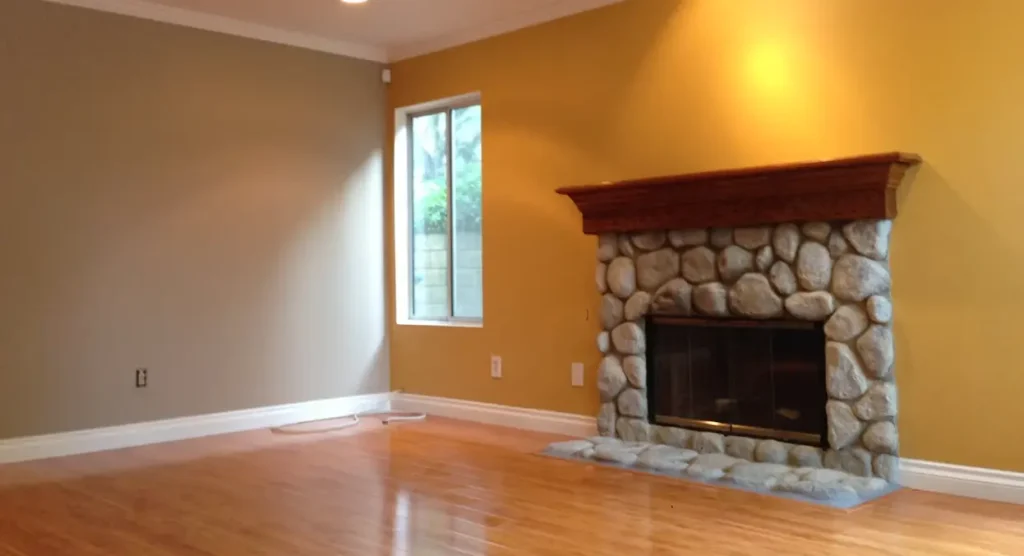
Image: T L on Unsplash
A licensed gas fitter needs to check your cavity depth, wall thickness, and chimney condition to figure out the best install method and price. Book a gas fireplace assessment before you buy your unit.
FAQ about Gas Fireplace Without a Chimney
Sydney homeowners often ask four questions before they request an assessment:
Do all gas fireplaces need a chimney?
No. Balanced flue and direct vent models vent through a small wall or roof penetration instead of a full masonry chimney.
Are flueless (unflued) gas fireplaces safe?
Yes, if installed with proper ventilation. But they’re secondary heating only, so don’t run one while sleeping. Unflued heaters release moisture and CO₂ into the room, so you need fixed ventilation and the space to breathe.
Can I put a gas fireplace in an apartment that never had a chimney?
Yes, through balanced flue or direct vent, if strata approve it. Check your by-laws first. You’ll need an external wall assessment and a licensed gasfitter’s Certificate of Compliance after installation.
Can I use my home’s old, non-working fireplace opening?
Often, yes. A licensed gasfitter can assess if a balanced flue or direct vent fits your opening. They’ll confirm it takes a sealed flue and meets safety standards. Don’t assume without an on-site check.
Can You Have A Gas Fireplace Without A Chimney?
Not having a chimney doesn’t mean no real gas fireplace. Today, many Sydney homes run on balanced flue or direct vent. The only question is which one suits your space. And that’s exactly what a site visit answers.
Ready to find out if your apartment, terrace, or house qualifies? Lightning Bult provides gas fireplace installation, service, and maintenance across Sydney, including local suburbs such as Beacon Hill, Belrose, and Collaroy Plateau.
Book a gas fireplace inspection today. Lightning Bult’s licensed team will confirm the venting, explain the install, and provide a firm quote!