


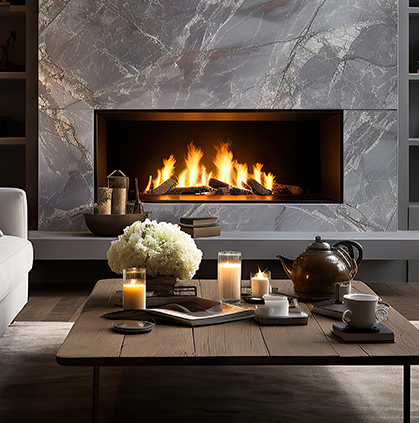


Should you rely on a single heater, or can a gas fireplace heat the whole house during freezing winter nights?
Heating a central living area is easy, but pushing warm air into back bedrooms demands specific architectural conditions and high megajoule output ratings.
Since we’re specialising in gas fireplace services, our team will break down the essential factors controlling heat distribution across your floor plan. Here is the truth.
Zone Heating vs Whole-Home Heating
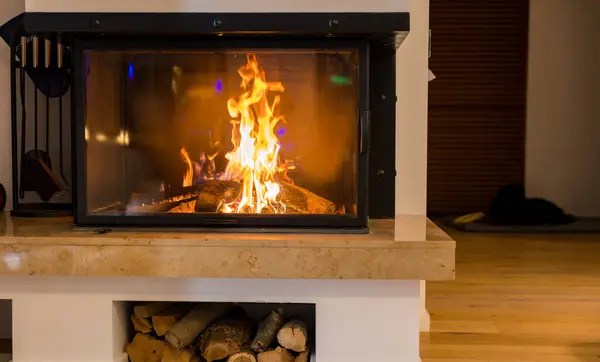
A gas fireplace works best as a zone heater. In simple terms, it is designed to warm the room where it is installed or a connected open-plan living area.
You can expect good heat in the main space, but the warmth will not travel evenly through the whole house like it can with a ducted heating system.
The layout of your home makes a big difference. A fireplace in the middle of a large open-plan living, dining and kitchen area may heat most of the space comfortably.
Add several walls, closed doors and separate bedrooms, though, and the heat has a harder time reaching those areas.
So, can a gas fireplace heat your whole house? The answer is somewhere between yes and no.
A well-placed fireplace may cover most of a smaller, open-plan home, while a larger home with several enclosed rooms may need additional heating.
How well it works depends on factors such as the fireplace’s location, the size and layout of your home, insulation and how easily warm air can move between rooms.
What Actually Determines How Far the Heat Reaches
Before choosing a fireplace, check the factors that determine how much of your home it can realistically heat below.
Home Layout: Open Plan vs Closed Rooms
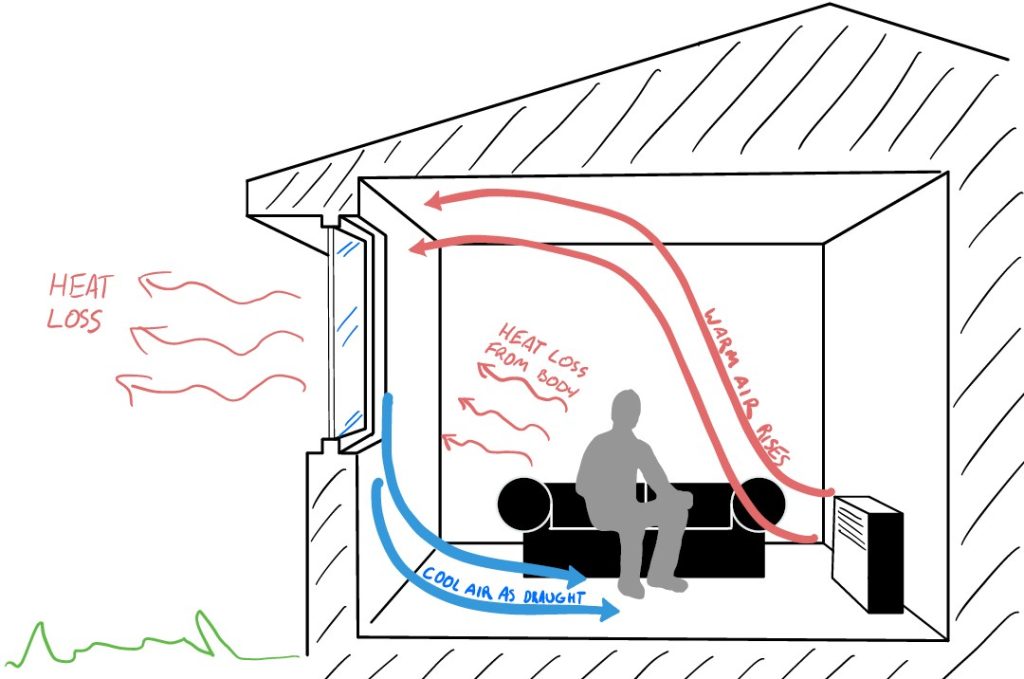
Your home’s layout has the biggest influence on how far the heat can travel. An open-plan living, kitchen and dining area allows warm air to move between connected spaces.
For example, a typical Sydney single-level home might have an open-plan living area of around 50–60 m². A correctly sized gas fireplace in the right position may heat most of that zone comfortably.
Heat has a harder time reaching rooms that are separated from the main living area. Closed doors, walls and separate bedroom wings limit airflow, so a fireplace in the living room is unlikely to heat a closed bedroom to the same level.
That said, simply increasing the fireplace’s heat output will not make much difference if the warm air cannot reach the room.
Heat Output (kW) Relative to the Space
Gas fireplaces in Australia are rated by kilowatts (kW). The right output depends on the size of the area you want to heat, along with factors such as insulation, ceiling height and the home’s construction.
As a general guide, current Australian sizing guidance places smaller units around spaces of up to 40 m², while larger models may suit open-plan areas of roughly 80–120 m².
Exact capacity varies between models, so check the manufacturer’s specifications before choosing a fireplace.
A simple rule of thumb puts heating output at around 1 kW for every 10 m² of floor area. A 150 m² space, for example, would need around 15 kW under that guideline.
The amount of heat you need is only part of the picture, though. A few other features of your home can affect how far that warmth travels:
| Factor | What It Means for Heat Reach |
| Open-Plan Layout | Warm air can move through connected living areas more easily |
| Closed Rooms | Walls and closed doors restrict heat movement |
| Fireplace Output | Higher kW capacity can cover a larger area when correctly sized |
| Insulation | Better insulation helps the room hold onto heat |
| Ceiling Height | High ceilings allow warm air to collect above the occupied area |
| Fireplace Design | Sealed and balanced flue models can deliver heat more effectively |
An undersized fireplace may struggle simply because it does not have enough output for the area. A larger unit is not automatically the answer either. The goal is to match the fireplace to the space you actually want to heat.
Insulation and Ceiling Height
Your home also needs to hold onto the warmth produced by the fireplace. Poor insulation allows heat to escape through the ceiling, walls, floors and windows, leaving less warmth available for the living space.
Several parts of the home can contribute to heat loss:
- Ceilings and Roof Spaces: Around 25–35% of winter heat loss
- Walls: Around 15–25%
- Floors: Around 10–20%
- Windows: Up to 20% of heating loss
Good insulation can also reduce heat loss through ceilings and walls by up to 60%.
Older Sydney homes, including Federation houses and 1960s brick veneer homes, may have different levels of insulation and draught protection from newer builds. Two homes with a similar floor area can therefore get very different results from the same fireplace.
A balanced flue gas fireplace can also be a practical choice when heat retention is important. Its sealed design keeps combustion gases separate from indoor air while transferring heat into the room.
Fireplace Type: Open vs Sealed/Balanced Flue
The fireplace design itself affects how much usable heat reaches the room.
Older open-fronted or masonry gas fires can lose a substantial amount of heat through the flue, limiting their heating performance.
Modern sealed and balanced flue fireplaces are designed to transfer combustion heat into the room while keeping combustion gases separate from indoor air. Some models also use fans to help distribute warm air throughout the space.
The difference is worth considering when looking at gas vs wood fireplace options. Open wood fireplaces can lose up to 90% of their heat through the chimney, while metal fireplace inserts can still lose around 70%.
A gas vs electric fireplace comparison also needs to account for how each appliance heats the space.
An electric fireplace can work well for heating a defined room, while a gas fireplace can provide higher heat output suited to larger living zones, depending on the model.
Can a Gas Fireplace Realistically Heat a Typical Sydney Home?
A gas fireplace can heat a large part of a typical Sydney home, but it is important to set realistic expectations.
A single fireplace works best when the main living areas are open and connected. It has a much harder time heating bedrooms and other enclosed spaces.
Consider a single-level Sydney home with an open-plan living, dining and kitchen area. With the right fireplace size and placement, the main living zone can stay comfortably warm.
The fireplace may also send some warmth towards nearby rooms, but bedrooms separated by a hallway and closed doors can stay several degrees cooler.
Heat distribution gets trickier when the home has two levels. A fireplace downstairs may keep the ground-floor living area warm while having little effect upstairs.
Warm air rises, but that does not mean it will spread evenly through a separate floor with walls, doors and stairwells between the rooms.
The same applies to homes with a highly compartmentalised layout. A larger fireplace can increase the heat available in the main room, but it cannot make warm air travel freely through closed rooms.
So, a gas fireplace can realistically heat most of the main living zone in the right Sydney home.
Heating every bedroom and enclosed room to the same temperature is a different requirement and may call for additional heating or a system designed to distribute heat throughout the house.
Signs Your Gas Fireplace Isn’t Enough on Its Own
A few everyday signs can tell you when the fireplace is being asked to heat more space than it can realistically handle.
- The fireplace runs constantly, but distant rooms stay cold. If the fireplace is running for long periods and bedrooms or other rooms still feel cold, its heat may not be reaching those areas effectively.
- The temperature drops when you leave the living area. A noticeable change in warmth between the fireplace room and the hallway or nearby rooms suggests the heat is staying concentrated around the main zone.
- Bedrooms stay uncomfortably cold overnight. Even after running the fireplace throughout the evening, bedrooms may still feel cold once you close their doors and go to bed.
- Your gas bills keep climbing. If you’re running the fireplace on high for hours just to keep more of the house warm, your gas fireplace running cost can rise without much improvement in rooms further away. The fireplace may simply be covering more space than its rated capacity allows.
Pairing a Gas Fireplace With Other Heating for Whole-Home Coverage
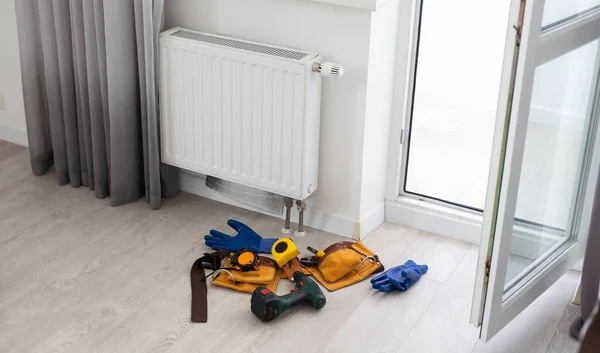
If you want your whole Sydney home to stay warm, pairing your gas fireplace with another heating system can make more sense than relying on the fireplace alone.
The fireplace can handle the main living area, while another system heats bedrooms and enclosed rooms.
A common setup is a gas fireplace in the living, dining or kitchen area combined with ducted gas heating or split system air conditioning.
The fireplace provides focused warmth where your household spends the most time, while the second system covers rooms that are separated from the main living zone.
Think of the two systems as serving different parts of the home:
- Gas Fireplace: Main living areas where you want strong, localised warmth and the visual appeal of a fireplace.
- Ducted Gas Heating: Multiple rooms across the home, with the ability to direct heating to selected zones.
- Split System Air Conditioning: Individual rooms or smaller areas where you want more targeted heating.
Using two heating sources does not mean the fireplace is inadequate. A point-source heater is designed to heat the space around it, so asking one appliance to deliver the same temperature across a large floor plan can be unrealistic.
Why Proper Gas Fireplace Installation Matters
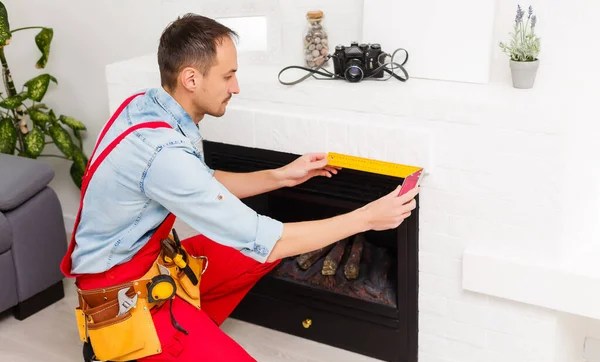
A gas fireplace needs more than the right size and a suitable location.
The installation itself affects how safely the appliance operates and whether it meets NSW requirements. Flue placement, gas connections, clearances and ventilation all need to be handled correctly.
In NSW, gas fireplace installation work must comply with the Gas and Electricity (Consumer Safety) Act 2017 and AS/NZS 5601.1:2022. The standard covers requirements such as:
- Flue terminal location
- Structural clearances
- Gas pipe sizing
- Ventilation openings
- Appliance connections
Gas fitting work, including the gas connection and flue installation, must be carried out by a licensed gas fitter. Work that does not meet the required standards is non-compliant.
After completing the installation, the licensed gas fitter must submit a Certificate of Compliance to NSW Fair Trading and provide a copy to the property owner within 5 business days.
FAQ about Gas Fireplaces and Whole-House Heating
Here are some of the most asked questions about how much of your home a gas fireplace can heat:
How many kW do I need to heat my whole house?
A 150 m² home could need around 15 kW as a rough guide, but the actual requirement depends on insulation, ceiling height, layout and climate.
High-output gas fireplaces can provide around 6.0–12.0 kW, making them suitable for larger open-plan living zones of roughly 80–120 m². Whole-home heating may need additional heating.
Will a bigger gas fireplace heat more of the house?
A higher-output fireplace can heat a larger open-plan area, but extra kW will not make much difference to rooms separated by walls and closed doors.
If warm air cannot move between spaces, the main living area may simply get warmer.
Is a gas fireplace cheaper than ducted heating for the whole house?
A gas fireplace can use less gas when heating one living zone instead of several empty rooms.
Running it on high for long periods to heat distant rooms can increase your gas fireplace running cost without providing even warmth. Zoned ducted heating may be more suitable for multiple areas.
What’s the difference between gas and wood fireplaces for whole-house heating?
Open wood fireplaces can lose up to 90% of their heat through the chimney and draw cold air into the room.
Sealed balanced flue gas fireplaces, by comparison, offer controlled heat without the same open-flue heat losses or manual refuelling. Some models can reach efficiency levels above 80%, depending on the appliance
Conclusions
So, can a gas fireplace heat the whole house? The answer depends on your home’s layout, but a single fireplace is usually best for the main living zone.
Larger or more compartmentalised homes may need additional heating for bedrooms and closed rooms.
If you’re unsure what your home needs, call our team! We’ll help you choose a setup that keeps the warmth where you actually need it.