







You live in an apartment, you’ve got an EV (or you’re about to), and your car space sits in a shared car park. Now you’re wondering who actually has to say yes before a charger goes in. That’s the big question with strata EV charging, and the answer has just changed.
In October 2026, NSW Parliament passed a “right to charge” law for apartment owners. We’ll explain what it changes, and what’s still not confirmed.
In this guide: how approval works, the new law, your setup options, what it costs, and what an electrician checks before any work starts.
Can You Install an EV Charger in a Strata Building in NSW?
Yes. But how you get there depends on two things: whether the work touches common property, and whether it’s one owner asking or the whole building.
So this guide follows two paths. One is for the owner who just wants a charger at their own car space. The other is for the strata committee weighing up charging for the whole building.
Do you need strata approval to install an EV charger?
Usually, yes. In most buildings, the car spaces, walls and cabling that feed them are common property. Changing common property normally needs the owners corporation to approve it at a general meeting.
That process is explained in the next section. Once the new right to charge law starts, things change for chargers on your own lot (more on that below).
Before you buy a charger, read your scheme’s by-laws and have a chat with your strata manager.
Can a strata committee refuse an EV charger?
They can’t refuse it just because they don’t like how it looks. Since 1 July 2025, an owners corporation can’t block sustainability infrastructure, including EV charging, on appearance grounds alone. The exception is heritage buildings.
If you think a refusal is unreasonable, you can take it to the NSW Civil and Administrative Tribunal (NCAT). The right to charge law goes further, as you’ll see below.
How Strata Approval Works Today in NSW
Until the right to charge law starts, this is the process for any EV charging work that changes common property.
How many votes does EV charging need at a general meeting?
In NSW, EV charging counts as “sustainability infrastructure” under the Strata Schemes Management Act 2015. That means it gets a lower voting bar than most common property changes.
A sustainability infrastructure resolution passes unless 50% or more of the votes cast (by value) are against it. That’s much easier to reach than the 75% needed for a special resolution, which was the old rule.
What should a strata EV charging proposal include?
The owners at the meeting will want clear answers. A good proposal covers:
- What it will cost the owners corporation, and whether that’s a one-off or ongoing cost
- Whether levies will go up for owners who don’t have an EV
- Whether the building’s power supply can handle the extra load
- What happens when more residents want to connect later
It’s also smart to include a by-law that covers installation, maintenance, cost recovery, billing and usage rules. And get a licensed electrician to assess the building before the meeting, so owners are voting on real numbers, not guesses.
Do EV chargers raise strata insurance or fire risk?
This comes up at almost every meeting, so it’s worth answering calmly. An EV charger installed by a licensed electrician, to Australian wiring rules, is a standard piece of electrical equipment, just like your oven or air conditioner.
The biggest safety factor is who installs it and how. Cheap, non-compliant work is the real risk. If owners are still worried, the committee can ask the building’s insurer or broker directly before the vote.
The Right to Charge Law: What Changes for Apartment Owners

On 15 October 2026, NSW Parliament passed the Strata Schemes Legislation Amendment (Miscellaneous) Bill 2025. Part of it gives owners the right to install an EV charging station on their own lot, without unreasonable objection from the strata committee.
The big difference is who decides. Instead of a vote at a general meeting, the strata committee responds to your request.
How will the installation notice process work?
- You send an installation notice to the strata committee, explaining what you want to install and where.
- The committee has up to three months to respond. It can say it has no objection, or it can object and give its reasons in writing.
- If the committee doesn’t respond in time, it’s treated as having no objection.
- If the committee objects and you disagree, you can apply to NCAT. The tribunal can override the committee and allow the installation.
- You pay for the work. The owner covers the installation and reasonable ongoing maintenance and running costs.
The committee must not object unreasonably, and any objection has to be in writing with reasons.
When does the right to charge start?
There’s no confirmed start date yet. Most of the new law starts on a date the government still has to announce. Until then, the current approval process above still applies.
Does a standard power point count as a charging station?
We don’t know yet. The law will define “EV charging station” through regulations, which haven’t been released. Some industry guides say a simple power point in your car space will qualify, but that isn’t confirmed. Check before you rely on it.
4 Ways to Set Up EV Charging in a Strata Building
There are four common setups. Some suit one owner, others suit the whole building. We’ve left the dollar figures for the cost section below.
1. Individual charger on your own meter or circuit
- How it works: you install and own a charger at your car space, connected to your own meter or an existing circuit.
- Who it suits: buildings where your car space is close to your unit’s switchboard and meter.
- Who pays: you.
- The catch: if the cable has to run a long way through the car park, costs climb quickly. If you’re going this way, here’s how to choose a home EV charger.
2. Shared chargers in common property car spaces
- How it works: the owners corporation sets aside one or more common spaces for charging, and residents book a time.
- Who it suits: buildings with only a few EV owners for now.
- Who pays: the owners corporation pays up front, and may recover the cost through a usage fee.
- The catch: as more residents buy EVs, the queue for the charger gets longer.
3. Modular system
- How it works: the building installs “EV-ready” connection boxes in stages, and owners connect their own chargers at their car spaces.
- Who it suits: buildings that want a planned rollout without paying for everyone at once.
- Who pays: the owners corporation usually funds the boxes (and may recover the cost over time). Owners pay for their own connection and charger.
- The catch: it still needs upfront planning, and the first stage costs more than a single charger.
4. Whole-of-building system
- How it works: the building upgrades its electrical setup so every apartment can connect a charger at its car space. It often uses load management, which shares the available power between chargers so the building doesn’t overload.
- Who it suits: larger buildings expecting lots of EV owners.
- Who pays: the owners corporation funds the infrastructure. Owners pay for their own connection and charger.
- The catch: the biggest upfront cost and the most planning.
Level 1 or Level 2: Which Charger Do You Need?
When is a Level 1 power point enough?
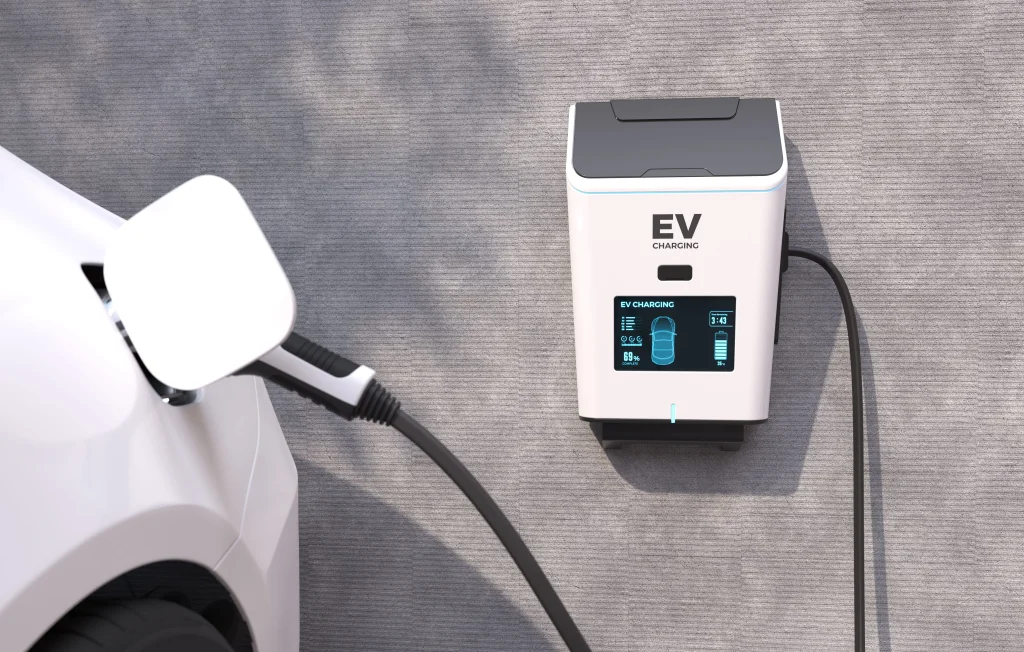
Level 1 means charging from a standard 10 A power point. It delivers about 2.3 kW, which adds roughly 10 to 15 km of driving range per hour.
Plug in overnight for 10 hours and you’ll get back around 100 to 150 km. If you drive 40 km a day, that’s more than enough. It’s also the cheapest and simplest option, especially in buildings with limited spare power.
When is a Level 2 charger worth it?
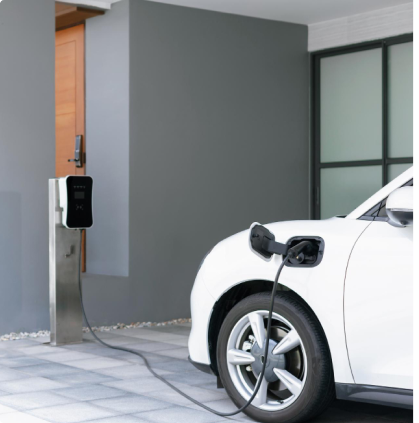
A Level 2 EV charger is a wall-mounted unit on its own circuit. On a standard single-phase supply, it usually charges at around 7 kW, which adds roughly 40 km of range per hour.
It’s worth it if you drive long distances, share one car space between two EVs, or only get a few hours to charge each night. It costs more to install, and in a strata building it often needs load management so it doesn’t strain the building’s supply.
How Much Does Strata EV Charging Cost?
This is the question most people want answered first. Here are rough ranges based on published industry guides (national figures from early 2026). Every building is different, so treat these as a starting point, not a quote.
Typical installation costs by setup
- Individual charger, no existing infrastructure: about $2,000 to $20,000 including the charger (paid by the owner)
- Individual charger using existing circuits and meter: about $2,000 to $10,000 including the charger (paid by the owner)
- Shared chargers in common property: about $20,000 to $50,000 including the chargers (paid by the owners corporation)
- Modular system: about $5,000 to $7,000 per box, plus $2,000 to $3,000 per connection
- Whole-of-building system: about $75,000 to $200,000 for the infrastructure, plus $2,000 to $3,000 per connection
For a standard install at a house, see our guide to EV charger installation costs.
What pushes the cost up or down?
- How far your car space is from the nearest switchboard
- How much spare power the building has, and whether load management is needed
- How the electricity will be metered and billed
- How hard it is to run cables through common areas
- How many chargers go in at once
Who pays for the charger, the infrastructure and the electricity?
In an individual setup, the owner pays. For shared, modular or whole-of-building setups, the owners corporation usually pays up front and often recovers the cost from EV users over time. Under the right to charge law, the owner pays to install and covers reasonable maintenance and running costs.
For the electricity itself, buildings usually use one of three options:
- A dedicated meter for each charger
- App or card billing, where residents tap on and are billed for what they use
- Common property power with reimbursement, where EV owners pay back what they use
Are there grants or rebates?
The NSW Government has run an EV ready buildings grant that co-funded assessments and upgrades for eligible strata buildings. Funding rounds open and close, so check the current status on the NSW Government EV ready buildings page before you plan around it.
What a Licensed Electrician Checks Before Installing
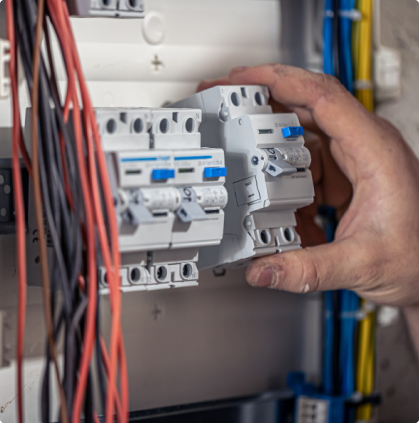
Before any charger goes in, a licensed electrician should look at the building itself. This is the step that turns a rough idea into a real plan and a real price.
What does the electrician look at?
- Spare capacity: how much extra load the building’s power supply can safely take
- Switchboards and meters: where your unit’s switchboard and meter are, and whether there’s room for a new circuit
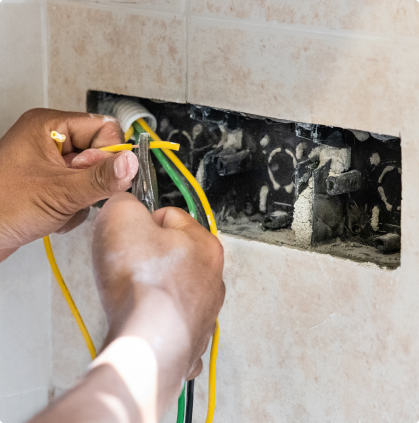
- Cable route: the safest, simplest path from the power source to your car space
- Load management: whether chargers will need to share power so the building doesn’t overload
- Network provider: whether the local network (Ausgrid across most of Sydney) needs to be told about, or approve, the extra load
- Paperwork: in NSW, the electrician must give you a Certificate of Compliance for Electrical Work (CCEW) when the job is done
How do you choose an electrician?
Check their licence on the Service NSW website, ask whether they’ve installed chargers in strata buildings before, and get an itemised quote. Our guide to choosing an electrician for EV charger installation has more tips.
If you’re ready for a site check, we offer EV charger installation in Sydney.
Where to Start?
If you’re an owner who wants one charger:
- Read your scheme’s by-laws.
- Talk to your strata manager.
- Get a quote from a licensed electrician.
- Follow the approval route that applies: a general meeting vote today, or an installation notice once the right to charge starts.
If you’re on a committee looking at the whole building:
- Survey residents to see who has, or plans to buy, an EV.
- Get an electrical capacity assessment.
- Choose a setup.
- Prepare the motion and put it to a vote.
Conclusion
The right path depends on who’s installing the charger and where it’s going. The rules are also still changing, with the right to charge law passed but not yet in force. So check the latest position before you commit to anything.
Thinking about EV charging in your apartment building? Lightning Bult’s licensed electricians can check your car park, switchboard and metering, explain your options in plain English, and install the charger safely. We cover the Northern Beaches, North Shore, Eastern Suburbs and Inner West. Book a site visit for EV charger installation in Sydney!