




One friend says gas heaters heat fast. Another swears heat pumps cut summer bills. But you’re thinking of a solar heating system.
With so many pool heating options, it’s easy to feel like you’re guessing. And most people choose based on bad priorities and end up with a pool they can’t afford to run or one that’s never warm enough.
This guide breaks down the pros, cons, and real costs for each system, so you can choose the right one and go straight to professional pool heating installation. Let’s dive in!
Why Pool Heating Matters
Before we look at pool heating options, let’s talk about why you need one. The first reason is even with Sydney’s mild weather, your pool is often too cold for a comfortable swim.
A 20°C day feels great on the deck, but your pool won’t be ready for a dip. Water needs to be 25–28°C to feel good, and the sun can’t heat that much water fast enough.
Also, keep in mind that your pool may be 24–25°C in March, but drops to 18–20°C by May. Without a heater, your pool sits empty for six months.
So, instead of a go-to spot after school or on weekends, it just becomes a place where you dip a toe in and ask, “Can we swim?”
On top of that, a pool heating solution is a must if you use it for therapy or wellness. You’ll want it at 26–28 °C for regular laps, or 32–34 °C to soothe sore joints.
That’s why you need a pool heating system. It’s not about luxury. It’s about getting your money’s worth.
The 5 Main Pool Heating Options in Australia
Now that you know why heating matters, let’s look at your pool heater options:
1. Solar Pool Heating
- Best for: Pool owners with roof space who swim spring to autumn and want affordable long-term costs.
- Installation cost: Around $3,500–$7,500
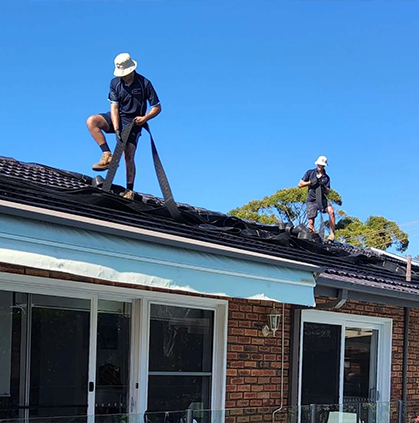
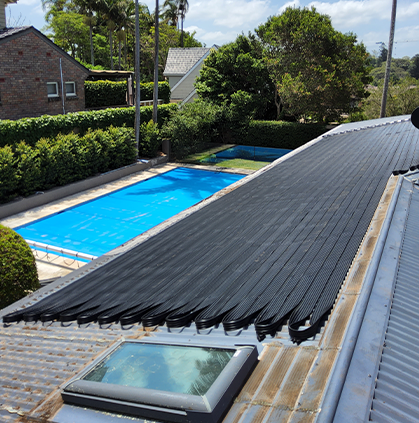
If you have a north-facing roof and spring-to-autumn swimming, solar pool heating in Sydney is your best low-cost pool heating option. It pumps pool water through roof collectors that heat and return it.
For this pool heater, sizing is key. You need panels covering 80–100% of your pool’s surface for the best results. For an 8m × 4m pool, that means 25–32 sqm of sunny, north-facing roof. If you have that space, you’re set.
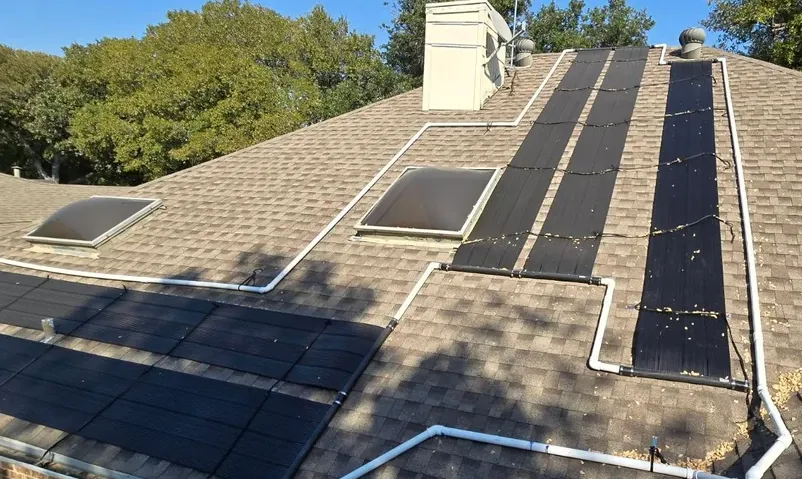
image: reddit.com @stumper66
Once it’s installed, you only pay for the electricity to run the pump. That’s around $150–$300 a year.
Pros:
- Lowest long-term running costs
- Eco-friendly
- Quiet and simple with minimal maintenance
- 15–20 year lifespan
Cons:
- Weather-dependent
- Requires 25–35 sqm of unshaded, north-facing roof space
- Needs a booster system to stay comfortable during Sydney winters
The text has been reviewed for grammar, spelling, and punctuation in Australian English, with no changes to meaning or style, and no additional spaces or line breaks added.
2. Electric Heat Pump
- Best for: Pool owners seeking year-round swimming and consistent temperatures without gas bills.
- Installation cost: Around $4,000–$9,000
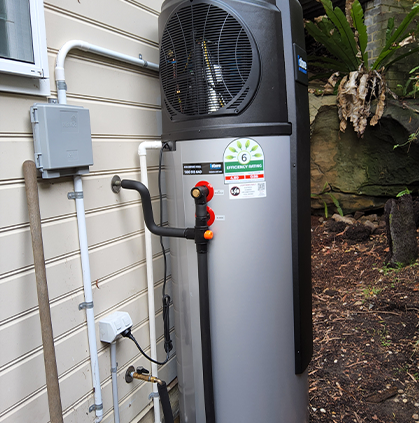
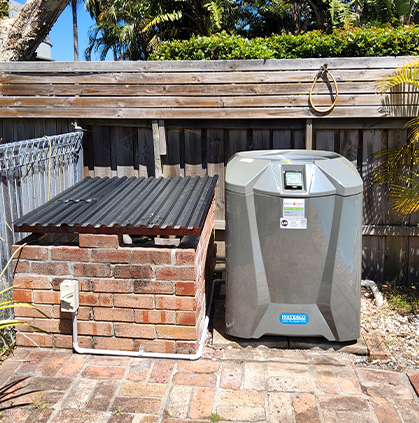
Want to swim all year? A pool heat pump can be a good pool heating option. It works like a reverse-cycle air conditioner for your pool.
Even on a cold 10°C winter day in Sydney, your pump still pulls heat from the air to warm your pool. That makes heat pumps far more efficient than traditional electric heaters, which just turn electricity into heat.
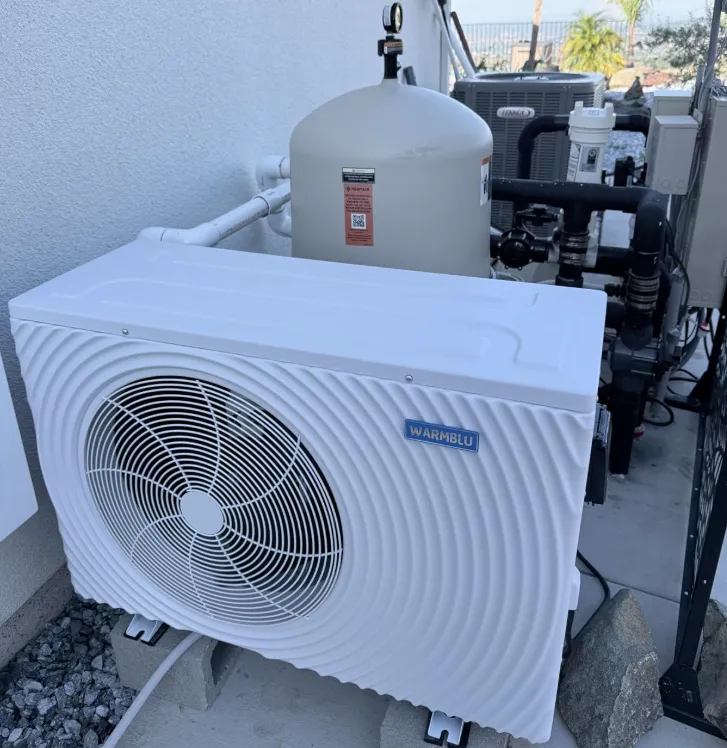
Image: amazon.com @Nguyen
Most models have a Coefficient of Performance of 5. That means you get five units of heat for every unit of electricity. At that efficiency, you’ll spend about $700–$2,500 a year.
But remember, heat pumps are slower than gas. If your pool is cold, you’ll need to wait 24–48 hours to warm it up. That’s why understanding gas vs electric pool heater matters.
Pros:
- Consistent year-round temperature control
- Effective in overcast or cool conditions
- Inverter models offer quiet, energy-saving operation
- Convenient thermostat and timer management
Cons:
- Slower heating than gas
- Needs good airflow around the unit
- May need a dedicated electrical circuit
3. Gas Pool Heater
- Best for: Pool owners who need rapid heating or occasional swimmers wanting on-demand temperatures.
- Installation cost: Around $2,500–$5,000
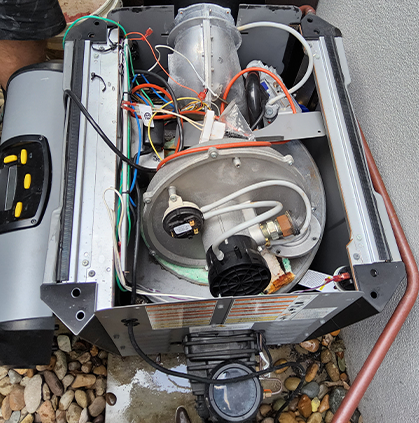
When you need your pool hot now, nothing beats gas. It warms cold water in hours, outperforming every other pool heating system. It’s also the only realistic choice for heating a spa to 38–40°C.
The gas pool heating process is simple. The heater burns natural gas or LPG to warm the water directly. Flip the switch, and it’s ready. But there are trade-offs—the running cost.
In NSW, natural gas costs $8–$16 per hour. Heating a cold pool several times a week in winter can cost $2,000–$4,000 a year. Using LPG can double or triple that.
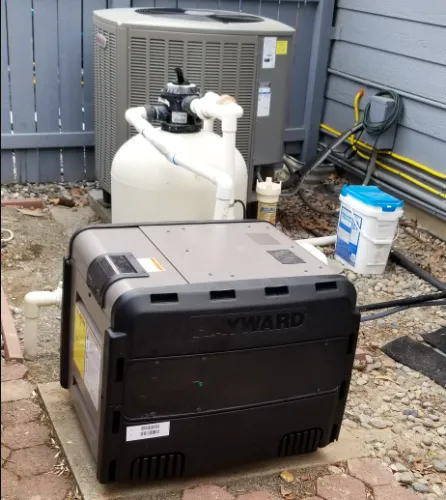
Image: amazon.com @Matt
Also, gas heaters have shorter lifespans. You can expect 8–12 years from them, while a heat pump lasts 10–15 years and solar lasts 15–20 years.
Plus, installation requires a licensed gas fitter to ensure the flue is safely positioned away from windows and buildings.
Pros:
- Fastest heating of any pool heating options
- Works in any weather, any season
- Compact and straightforward
- Instantly controllable temperature
Cons:
- Highest ongoing running costs
- Gas price volatility makes budgeting unpredictable
- Higher carbon emissions than solar or heat pump
4. Electric Resistance Heater
- Best for: Small above-ground pools, spa top-ups, or temporary heating only—not standard in-ground pools.
- Installation cost: Under $1,500
Electric resistance heaters seem cheap upfront, often half the cost of a heat pump or gas heater. But you’ll pay more later in power bills.
Basically, they work like a giant kettle, turning electricity directly into heat. It’s simple, but it’s not efficient. With a COP of 1.0, they use three to five times more electricity than a heat pump for the same result.
Running one for a standard in-ground pool all winter costs $2,500–$4,000 a year, compared to $500–$900 for a heat pump.
Over five years, that’s $12,500–$20,000 wasted on electricity. Plus, your home may need costly wiring upgrades. That $1,500 job can easily grow once an electrician checks your switchboard.
Pros:
- Lowest upfront cost
- Simple, no-moving-parts operation
- Effective regardless of air temperature
Cons:
- Extremely high running costs
- Impractical for standard Sydney in-ground pools
- Needs heavy-duty wiring and potential switchboard upgrades
- Poor long-term value
5. Solar Pool Cover (Pool Blanket)
- Best for: Pool owners who want to halve heating costs, extend their season, or cut water and chemical use.
- Cost: $200–$1,000
Before buying any heater, add a solar pool cover to your list. It looks like giant bubble wrap and floats on your water. It doesn’t burn gas or use a compressor. It catches daytime warmth and stops heat loss at night.
A cover prevents 50–75% of heat loss and cuts evaporation by up to 98%. You’ll also use 30–60% fewer chemicals.
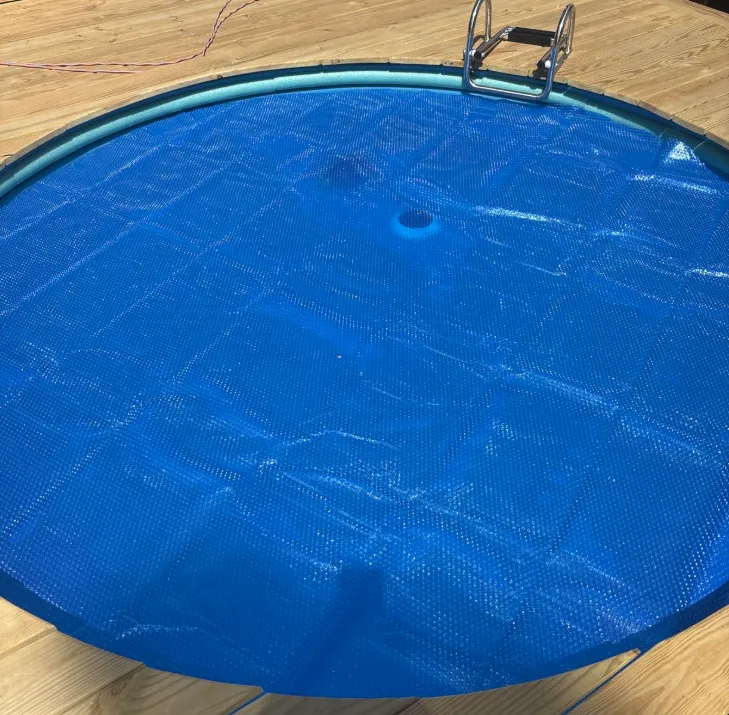
Image: amazon.com
And if you have a heat pump, gas heater, or solar system, a cover cuts running costs. A $700 heat pump drops to $350, while a $1,500 gas heater goes to $750.
For serious pool heating in Sydney, a solar cover isn’t optional—it’s the best investment. A $300 cover can save you $400 a year.
Pros:
- Lowest-cost temperature-extending option
- Works with any heating system—or none
- Extends swimming season by weeks on either side of summer
Cons:
- Can’t keep a set temperature in cooler months alone
- Needs manual removal and storage (rollers help)
- Not a replacement for a mechanical heater for year-round use
Running Cost Comparison for Sydney Pools
What will it cost to run each year? Here’s the honest breakdown, based on a typical 48,000-litre Sydney pool heated from September to April with consistent cover use:
| Heating Option | Upfront Cost (Installed) | Est. Annual Running Cost | Lifespan | Best For |
|---|---|---|---|---|
| Solar | $3,500–$7,000 | $150–$300 (pump only) | 15–20 years | Low running costs, eco-conscious |
| Heat Pump (Standard) | $3,600–$7,000 | $500–$900 | 10–15 years | Year-round swimming |
| Heat Pump (Inverter) | $5,000–$9,000 | $350–$650 | 12–18 years | Best efficiency, quietest |
| Gas | $2,000–$6,000 | $800–$3,000 | 5–10 years | Occasional use, rapid heating |
| Electric Resistance | $1,000–$1,500 | $2,500–$4,000+ | 8–12 years | Small pools/spas only |
| Solar Cover | $200–$1,000 | $0 | 3–5 years | Budget option |
These are rough estimates based on typical Sydney pools and current NSW energy prices (28–36 ¢/kWh for electricity, 3.6–4.1 ¢/MJ for gas as of 2026).
Hybrid and Combination Systems
Most Sydney pool owners don’t realise you can pair two heating systems for better results:
Solar and gas booster. Use solar from spring through autumn for free heat. In winter, the gas heater keeps your pool at 26–28 °C.
Since most families use gas for only 2–4 months, yearly bills stay low. It’s a great choice for larger pools or winter swimming.
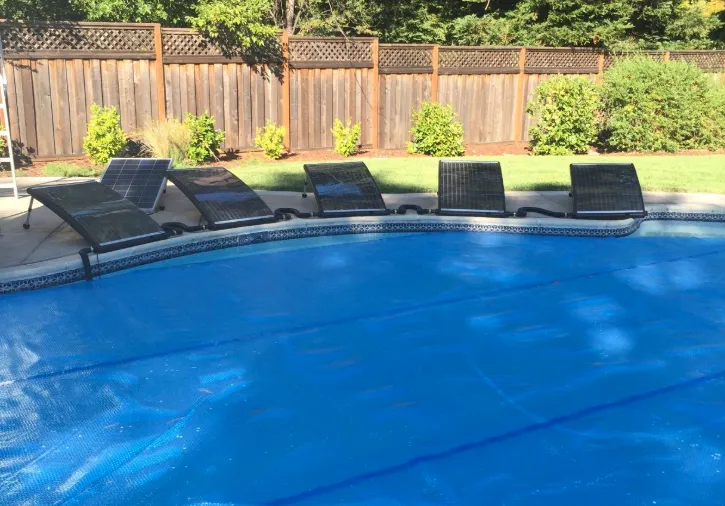
Image: amazon.com @Brendan
Solar and inverter heat pump. You’ll love this for year‑round swimming. It’s the cheapest long‑term pool heating option and doesn’t need a gas connection.
Solar handles warmer months for free, while the heat pump runs efficiently when it’s cold. Most Sydney families spend $600–$1,200 a year with this hybrid system.
So, if you’ve been comparing solar pool heating vs heat pump, why not use both with a combo system?
Which Pool Heating Option Is Right for You?
Now that you’ve seen the pool heating options, which one fits your Sydney pool and lifestyle best?
- If you have north-facing roof space and only swim from spring to autumn, use solar heating and a pool cover. It pays for itself in 5–7 years, then costs almost nothing to run.
- If you want to swim year-round and at a predictable water temperature, get an inverter heat pump. Your pool stays the same temperature no matter the weather.
- If you use the pool occasionally or need a spa to heat up fast, a gas heater is your best bet. You only pay when you turn it on. It’s the fastest option to warm your pool.
- If you have a small above-ground pool and a tight budget, electric resistance heating with a cover works, but only for pools under 20,000 litres.
- If you want year-round comfort without high bills, pair solar with a gas booster or a heat pump. Solar does the heavy lifting from spring through autumn, and your backup system handles the winter.
(Note: The text was reviewed for grammar, spelling, and punctuation in Australian English, with no changes to meaning or style, and no additional spaces or line breaks were added.)
Whichever option you choose, ensure it delivers the ideal pool temperature for how you use it.
Factors That Can Affect Your Choice
Before you decide, keep a few things in mind because every pool is different:
- Roof size and orientation: This affects if solar is a good choice. A sunny, north‑facing roof works best. If your roof is shaded or a weird shape, a heat pump is usually better.
- Climate, shade, and wind: These change how hard the heater has to work. Sheltered areas keep heat longer, but windy places like Manly or Cronulla lose heat fast.
- How often you swim: If you swim only sometimes, you may want quick heat on demand, so gas can be best. If you swim every day, you want steady control, so a heat pump is better.
- Your budget: Don’t only look at the price. Some “cheap” heaters cost a lot to run. Electric resistance heaters are a common example.
- Pool cover use: A cover makes a big difference. If you won’t use one, you’ll likely need a bigger and more efficient system.
- Gas connection: Main gas makes gas heating a better deal. LPG can be okay for spas or occasional use, but it’s often too expensive for regular heating.
- Electrical capacity: Heat pumps and electric heaters may need their own power line and an upgraded panel. Check before getting quotes to avoid surprises.
FAQ about Pool Heating Options
Here are the questions Sydney pool owners ask most about pool heating options:
What’s the cheapest way to heat a pool in Sydney?
Solar heating has the lowest running costs. But a pool cover is your cheapest start at $200–$500. For most Sydney homes, pairing solar with a cover is the best way to save all season.
Is a heat pump or gas heater better for Sydney?
It depends on how you use your pool. If you swim regularly, a heat pump will save you money. If you only use your pool occasionally or have a spa, gas is faster.
Do I need a pool cover if I already have a heater?
Yes, that’s how to heat a swimming pool properly. A pool cover stops heat from escaping overnight, which is why your heater has to work so hard every day. If you use one, you can cut your heating costs by 40–50%.
Can solar heating work in Sydney winter?
Solar won’t cut it on its own. It works great from September to April, but you’ll need a gas or heat pump booster from May to August. That’s why hybrid systems are so popular.
Conclusion
No single pool heating option suits every Sydney home. It depends on swim frequency, roof layout, and balancing upfront cost with power bills.
The key is getting the right advice first. Lightning Built‘s pool heating team has installed solar, heat pumps, and gas heaters across Sydney for over 25 years. We’ll check your pool and give you a straight answer on what works best.